
 By Suherman Candra Maholtra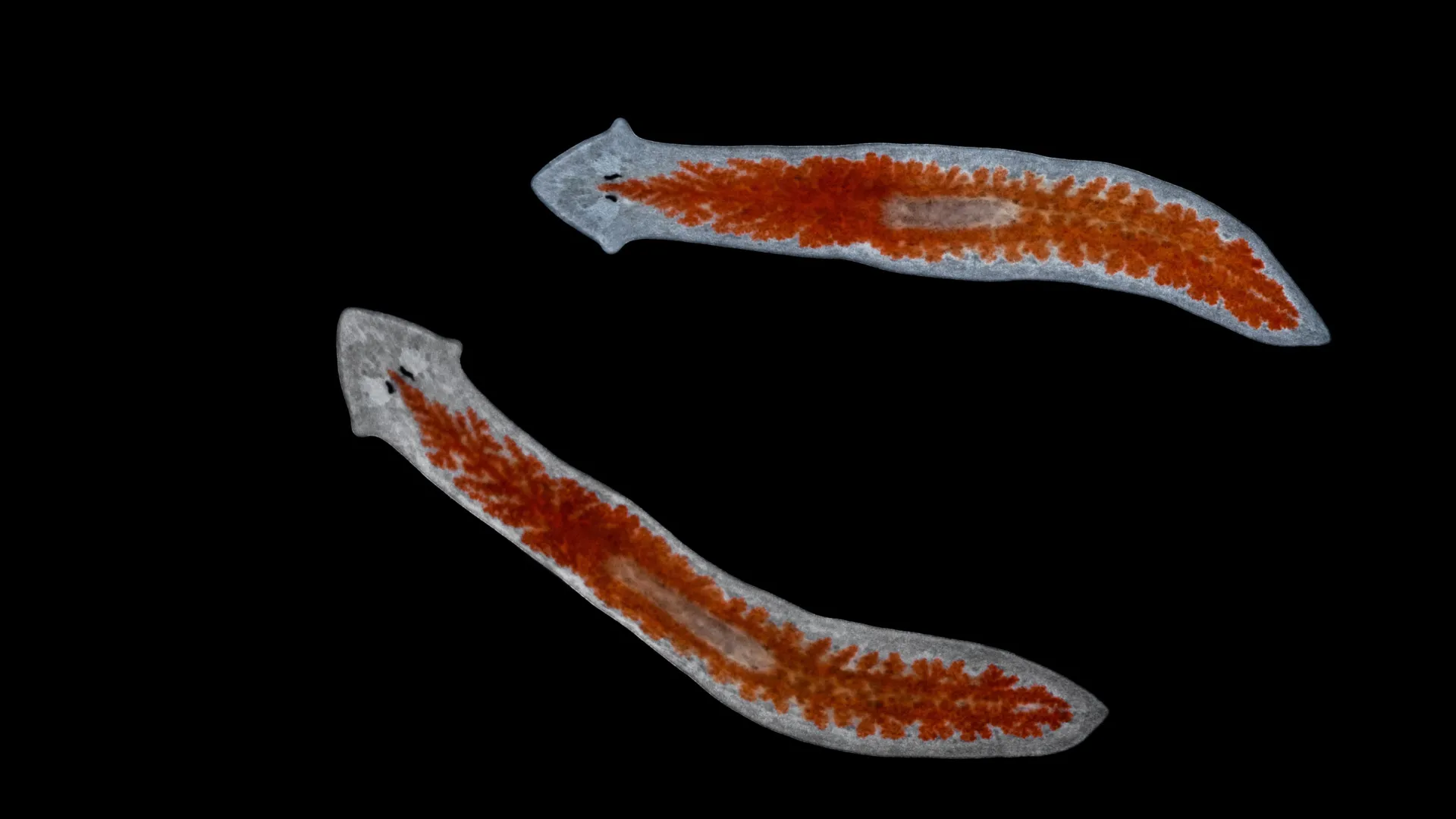
A groundbreaking study from the Stowers Institute for Medical Research has unveiled a significant departure from established biological norms regarding how stem cells are governed within living organisms. Published in the journal Cell Reports on October 15, 2025, the research demonstrates that the stem cells of planarian flatworms—famed for their near-mythical ability to regenerate entire bodies from tiny fragments—operate with a degree of independence previously thought impossible in complex multicellular life. While most animal stem cells rely on a strictly defined, localized environment known as a "niche" to dictate their behavior, planarian stem cells appear to bypass their immediate neighbors, instead receiving critical instructions from cells located in distant parts of the body.
The study, led by Postdoctoral Research Associate Frederick "Biff" Mann, Ph.D., in the laboratory of Stowers President and Chief Scientific Officer Alejandro Sánchez Alvarado, Ph.D., challenges a cornerstone of regenerative biology. For decades, the prevailing scientific consensus has been that stem cells are essentially passive recipients of local signals. This research suggests that in the case of the planarian, the "niche" is not a fixed physical location but a dynamic, global network of communication that allows for unprecedented flexibility in tissue repair.
The Traditional Niche vs. Planarian Autonomy
To appreciate the significance of this discovery, one must look at how stem cells typically function in the human body. In humans and most other vertebrates, stem cells are sequestered in specialized microenvironments called niches. These niches act as regulatory hubs where neighboring cells use chemical and physical signals to "micromanage" the stem cell’s activity. For example, hematopoietic (blood-forming) stem cells reside in specific niches within the bone marrow. Here, the surrounding cells provide the necessary cues that tell the stem cells when to remain dormant, when to divide to self-renew, and when to differentiate into specific blood components like oxygen-carrying red cells or infection-fighting white cells.
"The role of a traditional niche may be more in line with a micromanager—instructing cells, ‘You can be a stem cell, but only one particular type,’" explained Dr. Mann. "However, we’ve now shown having a normal niche may not be essential for stem cells to work. Some stem cells, like those in the planarian flatworm, have figured out a way to be independent and can turn into any type of cell without needing a nearby niche."
In planarians, this independence is vital for their survival. Because these flatworms can be sliced into hundreds of pieces—each capable of regrowing a full, functional organism—their stem cells cannot afford to be tethered to a specific physical location that might be lost during an injury. Instead, their stem cells are pluripotent, meaning they retain the ability to become any cell type in the body, and they maintain this potential throughout their adult lives.
Discovering the Hecatonoblast: A New Cellular Neighbor
The research team utilized a cutting-edge technology known as spatial transcriptomics to map the cellular landscape of the planarian. This method allows scientists to see not only which genes are active within individual cells but also exactly where those cells are located in relation to one another. By analyzing thousands of individual cells, the researchers expected to find a specific "niche cell" that sat adjacent to the stem cells and controlled their fate.
What they found instead was a biological surprise. The data revealed a previously unknown cell type that was consistently found in close proximity to the stem cells. This new cell was characterized by its large size and numerous fingerlike projections extending from its surface. The team named this discovery the "hecatonoblast," drawing inspiration from the Hecatoncheires—the hundred-armed giants of Greek mythology.
Despite their physical proximity, the hecatonoblasts did not exhibit the regulatory behavior typical of niche cells. "Because they were located so close to stem cells, we were surprised to find that hecatonoblasts were not controlling their fate nor function, which is counterintuitive to a typical stem cell-niche connection," said Mann. This finding effectively decoupled physical proximity from regulatory control, forcing the researchers to look further afield for the source of the stem cells’ instructions.
The Role of Distant Signaling and the Intestinal Network
Upon expanding their search, the team discovered that the strongest regulatory signals influencing stem cell position and function were originating from the planarian’s intestinal cells. Even though these cells were not in direct contact with the stem cells, they appeared to exert a "global" influence over the regenerative process.
This shift from local to global signaling suggests that the planarian body functions as a highly integrated communication network. Dr. Blair Benham-Pyle, a co-corresponding author and Assistant Professor at the Baylor College of Medicine, noted the importance of this distinction. "I tend to think about this as local versus global communication networks," she stated. "While interactions between stem cells and their neighboring cells influence how a stem cell reacts immediately, distant interactions may control how that same stem cell responds to big changes in an organism."
This global signaling mechanism explains how a planarian can coordinate the complex task of rebuilding a head, a tail, or an internal organ system simultaneously. The stem cells are not waiting for a local neighbor to tell them what to do; they are listening to the "state of the union" provided by the body’s larger systems, such as the gut.
Timeline and Methodology of the Study
The investigation was a multi-year effort that combined classical biology with modern computational power. The chronology of the project highlights the evolution of the team’s approach:
- Initial Phase: The team began by characterizing the adult stem cell population in Schmidtea mediterranea, the primary species of planarian used in research.
- Technological Integration: The researchers implemented spatial transcriptomics to bridge the gap between single-cell sequencing and traditional histology. This allowed them to preserve the spatial context of gene expression.
- Identification of Hecatonoblasts: Mid-way through the study, the team identified the unique gene expression signature of the "hecatonoblast," initially suspecting it to be the elusive niche cell.
- Functional Analysis: By late 2024, functional assays and further transcriptomic mapping revealed that the hecatonoblasts were not the primary regulators.
- Discovery of Distant Regulation: The final phase of the study involved mapping the signals from the intestinal tract to the stem cell populations, confirming the "global niche" theory.
- Publication: The findings were finalized and published in Cell Reports in October 2025.
Implications for Cancer Research and Regenerative Medicine
The discovery has profound implications for human health, particularly in the fields of oncology and tissue engineering. In humans, when stem cells "go rogue" and stop following the instructions of their niche, the result is often the formation of tumors. Cancer is, in many ways, a failure of stem cell regulation.
"Our hope is to uncover the basic rules that guide stem cells to become specific tissues as opposed to going rogue, as most tumors in humans begin when stem cells stop following these rules," said Dr. Sánchez Alvarado. By studying how planarians maintain such high levels of stem cell activity without developing cancer, researchers may identify new ways to "re-program" human stem cells or reinforce the regulatory signals that keep them in check.
Furthermore, the study suggests that scientists might not need to recreate a complex, physical niche to successfully transplant or activate stem cells in human patients. If stem cells can be controlled via distant signaling or systemic factors, it could simplify the development of regenerative therapies for damaged organs, spinal cord injuries, or degenerative diseases.
A Dynamic Environment: "Friends" Along the Way
The research concludes that the environment surrounding a stem cell is far more fluid than previously imagined. Rather than being born into a fixed "room" (the niche) that determines their life’s work, planarian stem cells navigate a dynamic landscape.
"The most surprising finding is that, at least in planarians, the environment in which the stem cells reside is not fixed," Sánchez Alvarado remarked. "Instead, it’s dynamic—where stem cells reside is essentially made up by ‘friends’ that the stem cells and their progeny make along the way to differentiation."
This concept of a "mobile" or "emergent" niche suggests that as stem cells begin to transform into specific tissues, they and their descendant cells create the very environment they need to succeed. This self-sustaining loop of regeneration could be the secret to the planarian’s biological immortality.
Collaborative Effort and Funding
The study was a collaborative achievement involving a diverse team of scientists. Additional authors include Carolyn Brewster, Ph.D., Dung Vuu, Riley Galton, Ph.D., Enya Dewars, Mol Mir, Carlos Guerrero-Hernández, Jason Morrison, Mary McKinney, Ph.D., Lucinda Maddera, Kate Hall, Seth Malloy, Shiyuan Chen, Brian Slaughter, Ph.D., Sean McKinney, Ph.D., Stephanie Nowotarski, Ph.D., and Anoja Perera.
The research was supported by the National Institute of General Medical Sciences of the National Institutes of Health (NIH) under award number R37GM057260, alongside significant institutional support from the Stowers Institute for Medical Research.
As the scientific community digests these findings, the focus will likely shift to identifying the specific molecules used by the planarian intestine to communicate with distant stem cells. If these "global" signals have human counterparts, the door to a new era of regenerative medicine—one where the body’s own healing power can be remotely activated—may have just swung open.
