
 By Gabriel Paijo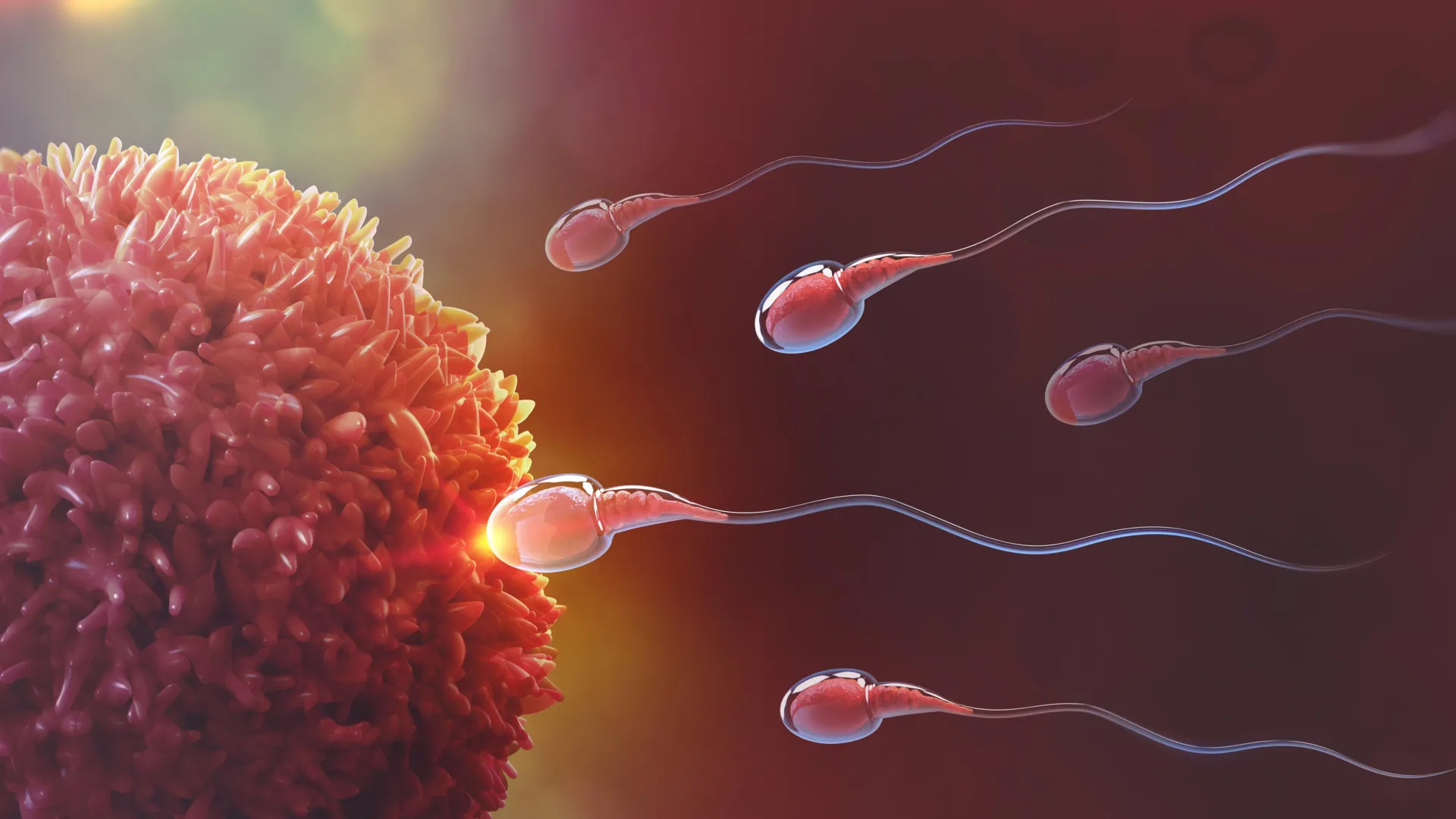
In a milestone for reproductive science, a team of researchers at Cornell University has identified a pathway toward a safe, long-acting, and 100% effective nonhormonal male contraceptive. The study, which represents a significant departure from traditional hormonal approaches, focuses on the intricate process of meiosis—the specialized cell division that produces sperm. By successfully interrupting this process in a reversible manner, the team has addressed what many in the medical community call the "holy grail" of reproductive health: a reliable male birth control option that does not rely on altering testosterone levels or undergoing permanent surgery.
The findings, the culmination of a six-year proof-of-principle study conducted in mice, were published in the April 7 issue of the Proceedings of the National Academy of Sciences (PNAS). The research demonstrates that targeting specific proteins during the early stages of sperm development can temporarily halt fertility without causing permanent damage to the reproductive system or affecting the health of future offspring.
The Biological Mechanism: Targeting Meiosis
The core of the Cornell study lies in the strategic interruption of meiosis, specifically during its first phase, known as prophase 1. To understand the significance of this approach, one must look at the three distinct stages of sperm production, or spermatogenesis. The process begins with spermatogonial stem cells, which divide to create a continuous supply of new cells. These cells then enter meiosis, where they undergo two rounds of division to halve their chromosome count. Finally, they undergo spermiogenesis, the transformative stage where they develop the tails and structures necessary to become swimming sperm.
Paula Cohen, a professor of genetics and director of the Cornell Reproductive Sciences Center, explained that the team’s decision to target meiosis was deliberate. If a contraceptive were to target the initial stem cells, it would risk permanent infertility by depleting the source of all future sperm. Conversely, if a drug targets the final stage of spermiogenesis, there is a significant risk of "leakage," where some viable sperm might still escape and fertilize an egg, leading to contraceptive failure.
"We’re practically the only group that’s pushing the idea that contraception targets in the testis are a feasible way to stop sperm production," Cohen stated. By targeting the middle stage—meiosis—the researchers found they could effectively "turn off the tap" of sperm production while ensuring the stem cells remained healthy and ready to resume production once the treatment ceased.
The Role of JQ1 and the Bromodomain Protein
To achieve this targeted interruption, the researchers utilized a small molecule inhibitor known as JQ1. Originally developed to study cancer and inflammatory diseases, JQ1 is a potent inhibitor of the BET (bromodomain and extra-terminal) family of proteins. In the context of the testes, JQ1 specifically interferes with BRDT (bromodomain testis-specific protein), which is essential for the proper progression of meiosis.
During the study, male mice were administered JQ1 for a period of three weeks. The results were definitive: sperm production stopped completely. Observations of the testicular tissue showed that the cells were dying off during prophase 1 of meiosis because they could no longer navigate the complex chromosomal rearrangements required for healthy division.
While JQ1 itself is not considered a viable candidate for a human drug due to its potential for neurological side effects and its impact on other BET proteins throughout the body, its use in this study serves as a vital proof-of-concept. It proves that a molecule capable of crossing the blood-testis barrier can selectively target meiotic proteins to achieve total, but temporary, sterility.
A Six-Year Chronology of Discovery
The journey to these findings was a rigorous, multi-year endeavor. The research timeline reflects the high standards required to prove both efficacy and safety in reproductive science:
- Years 1-2: Identifying the Target. The team focused on the specific window of meiosis where BRDT is most active. They sought to confirm that inhibiting this protein would result in a complete cessation of sperm production rather than just a reduction in count.
- Years 3-4: Testing Efficacy. Using mouse models, the researchers established the dosage and duration of JQ1 administration needed to achieve 100% infertility. They documented the cellular breakdown that occurred when meiosis was interrupted.
- Year 5: Assessing Reversibility. This phase was critical. After stopping the JQ1 treatment, the researchers monitored the mice to see how quickly sperm production returned. They found that within approximately six weeks—the time it takes for a full cycle of spermatogenesis in mice—normal meiotic processes resumed.
- Year 6: Long-term Health and Offspring. The final stage involved breeding the recovered mice to ensure that the temporary interruption of meiosis did not lead to genetic defects. The resulting offspring were born healthy, exhibited normal development, and were themselves fertile, proving that the intervention did not have transgenerational side effects.
Supporting Data and Safety Metrics
The quantitative data from the Cornell study provides a compelling case for the viability of this method. During the treatment phase, the mice exhibited a 0% pregnancy rate when paired with fertile females. Histological analysis of the testes showed a complete absence of mature spermatozoa in the seminiferous tubules.
Safety metrics were equally robust. Unlike hormonal trials, which often result in fluctuations in mood, libido, and weight, the mice treated with JQ1 maintained normal testosterone levels and social behaviors. The "washout" period of six weeks showed a return to baseline sperm concentrations and motility levels that were indistinguishable from the control group.
"Our study shows that mostly we recover normal meiosis and complete sperm function," Cohen noted. "And more importantly, the offspring are completely normal."
The Gap in Current Male Contraceptive Options
The necessity for a new male contraceptive is driven by a stark lack of innovation in the field over the last century. Currently, men have only two primary options: condoms and vasectomies.
Condoms, while effective at preventing sexually transmitted infections, have a "typical use" failure rate of approximately 13% for pregnancy prevention. Vasectomies are highly effective but are intended to be permanent. Although reversal surgeries exist, they are expensive, not always successful, and involve additional surgical risks.
For decades, the pharmaceutical industry has focused on hormonal methods for men, similar to the birth control pill for women. These methods typically involve high doses of testosterone or progestins to signal the brain to stop sperm production. However, these trials have frequently been halted due to side effects such as severe acne, mood swings, and increased risk of cardiovascular issues. Furthermore, many men are reluctant to take hormones that might interfere with their secondary sexual characteristics or libido.
The Cornell research offers a "nonhormonal" alternative that bypasses the endocrine system entirely, targeting the "machinery" of sperm production directly in the testes.
Official Responses and Scientific Implications
While the broader scientific community has reacted with cautious optimism, the Cornell study is being hailed as a major shift in strategy. Independent reproductive biologists note that by focusing on meiosis, the Cornell team has circumvented the most common pitfalls of male contraceptive research.
"The challenge has always been achieving 100% effectiveness without permanent damage," said one independent researcher in the field of reproductive medicine. "Targeting the meiotic stage is biologically elegant because it utilizes a natural checkpoint in cell development. If the cell can’t pass meiosis, it simply doesn’t become a sperm."
The implications of this research extend beyond the laboratory. If successfully translated to humans, this could fundamentally change the dynamics of family planning. Historically, the burden of contraception has fallen disproportionately on women, who face a variety of health risks associated with hormonal birth control, including blood clots and increased risks of certain cancers. A reliable, reversible male option would allow for a more equitable distribution of reproductive responsibility.
Future Outlook: From Mice to Men
The transition from a mouse study to a human pharmaceutical product is a long and arduous process. The next steps for the Cornell team and the wider research community involve developing a "refined" version of JQ1.
The ideal human drug would be a highly selective inhibitor that only targets the BRDT protein found in the testes, avoiding the other BET proteins found in the brain and other organs. This would eliminate the neurological side effects observed with the original JQ1 molecule.
Paula Cohen envisions a future where this contraceptive could be administered in a user-friendly format. "If developed for human use, this type of male contraceptive could be delivered as an injection given every three months or possibly as a patch to maintain effectiveness," she said.
A three-month injection cycle would mirror the "Depo-Provera" shot available for women, providing a "set-and-forget" convenience that improves compliance and effectiveness.
Conclusion and Broader Impact
The Cornell study marks a definitive turning point in the quest for a male birth control pill. By proving that the interruption of meiosis is a safe, effective, and reversible strategy, the researchers have provided a roadmap for future drug development.
As the global population continues to grow and the demand for autonomy in family planning increases, the development of a nonhormonal male contraceptive is no longer just a scientific curiosity—it is a public health necessity. While clinical trials in humans may still be years away, the biological "proof of principle" established by Cohen and her team suggests that the holy grail of male contraception is finally within reach.
The success of this research highlights the importance of long-term funding for basic biological research. Without the six years of meticulous study into the fundamentals of meiosis, this breakthrough in reproductive technology would not have been possible. As the project moves into its next phase, the focus will shift to medicinal chemistry and pharmacology, with the ultimate goal of providing men with the same level of reproductive agency that women have held for over sixty years.
