
 By admin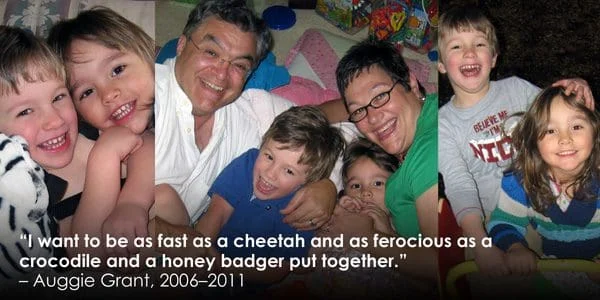
The life of Augusto “Auggie” Grant was defined by a boundless imagination and a relentless spirit that seemed to defy the physical constraints of his five years. A resident of a world where he could be an astronaut, a superhero, or a ninja warrior named Sherman, Auggie was known by his family and community for a personality that “consumed the room.” Whether donning full firefighter gear for a routine trip to an auto repair shop or sprinting with the speed he attributed to a cheetah, Auggie lived with a jubilant ferocity. However, beneath this exterior of vibrant health, a silent and aggressive malignancy was developing. In late 2011, the Grant family’s life was irrevocably altered when a five-minute blood test revealed that Auggie was suffering from acute monoblastic leukemia. Just five days after the diagnosis, on December 5, 2011, Auggie passed away. This sudden loss transitioned his parents, Jon and Cheryl Grant, into a lifelong mission to ensure that other families would not endure the same trajectory of grief, leading to a decade-long partnership with CureSearch for Children’s Cancer and the establishment of a philanthropic legacy that continues to fund critical medical breakthroughs.
The Clinical Reality of Acute Monoblastic Leukemia
Acute monoblastic leukemia (AML-M5) is a subtype of acute myeloid leukemia, a cancer of the blood and bone marrow. In pediatric patients, this specific form is characterized by the rapid proliferation of immature white blood cells known as monoblasts. These cells crowd out healthy blood cells, leading to a quick onset of symptoms such as fatigue, bruising, and susceptibility to infection. In Auggie’s case, the progression was remarkably stealthy; his parents recall him running and playing with high energy even as the disease moved through his system.
The speed with which Auggie succumbed to the disease underscores a significant challenge in pediatric oncology: the need for rapid diagnostic tools and immediate, effective intervention. Cheryl Grant’s reflection that a "five-minute blood test" was the only barrier between ignorance of the disease and the realization of its terminal stage highlights the diagnostic gap that many families face. When the diagnosis finally came, the window for treatment had already narrowed to nearly nothing, a reality that drives the current urgency for more sophisticated screening and therapeutic options.
From Obituary to Advocacy: The Genesis of Auggie’s Honey Badgers
In the immediate aftermath of Auggie’s death, Cheryl and Jon Grant sought a way to channel the outpouring of community support into a tangible benefit for other children. Eschewing the traditional request for funeral flowers, the family asked for donations to be directed toward childhood cancer research. Upon consulting with Auggie’s oncologists, the family was introduced to CureSearch for Children’s Cancer, a national non-profit organization focused on accelerating the development of safer, more effective treatments.
The decision to support CureSearch was rooted in the organization’s specific operational model. Unlike many foundations that focus on a single type of cancer, CureSearch funds research across the entire spectrum of pediatric malignancies. Furthermore, the organization prioritizes "translational research"—projects that are specifically designed to move quickly from the laboratory setting into clinical trials. For the Grants, this focus on speed was essential, as their own experience had proven that for children with aggressive leukemias, every hour is critical.
This advocacy eventually manifested in the creation of "Auggie’s Honey Badgers," a fundraising team named after one of Auggie’s favorite animals, known for its fearlessness. The team became a staple of the "Ultimate Hike," CureSearch’s signature endurance program. These hikes, which often cover nearly 30 miles in a single day, serve as both a physical challenge and a metaphor for the arduous journey faced by children undergoing cancer treatment.
The Statistical Landscape of Pediatric Cancer
The tragedy of Auggie Grant is not an isolated incident but a reflection of a broader public health crisis. According to data from the National Cancer Institute (NCI) and the American Cancer Society, cancer remains the leading cause of death by disease among children in the United States. Each year, approximately 15,000 children and adolescents under the age of 19 are diagnosed with cancer.
While survival rates for some forms of pediatric cancer, such as certain types of Hodgkin lymphoma, have reached nearly 90%, others—including specific subtypes of leukemia and brain tumors—remain stubbornly resistant to current protocols. Furthermore, the treatments that do exist often come with a heavy toll. Because pediatric patients are still developing, the "standard of care" (which often involves high-dose chemotherapy and radiation designed for adults) can result in severe long-term side effects, including secondary cancers, organ damage, and cognitive impairments.
A significant hurdle in changing these outcomes is the disparity in research funding. Historically, only about 4% of the federal budget for cancer research via the NCI has been allocated specifically to pediatric cancers. This "4% problem" has forced private organizations like CureSearch to fill the gap, funding the early-stage trials that pharmaceutical companies often overlook due to the smaller market size of pediatric patients compared to adult oncology.
The Ultimate Hike: Community and Catharsis
For Jon Grant, participation in the Ultimate Hike has been a transformative element of the grieving process. He describes the experience as evolving from a mere team effort into a familial bond with other hikers, many of whom are also "legacy hikers" walking in memory of children lost to the disease. This communal aspect of philanthropy provides a support structure that traditional clinical settings often lack.
The Ultimate Hike serves a dual purpose: it raises the millions of dollars necessary to fund clinical trials and it maintains public visibility for Childhood Cancer Awareness Month, observed every September. By sharing Auggie’s story through these events, the Grants ensure that his memory remains a catalyst for action. Jon Grant notes that telling Auggie’s story is a way to "keep him alive just a little longer," transforming a private sorrow into a public service.
Strategic Implications and the Future of Pediatric Research
The work done in Auggie’s name contributes to a shifting landscape in oncology. The current trend in research is moving toward "precision medicine," which involves tailoring treatments to the genetic profile of an individual’s tumor. CureSearch has been a vocal proponent of this approach, funding researchers who are identifying specific biomarkers in pediatric cancers that can be targeted with newer, less toxic drugs.
Furthermore, the advocacy of families like the Grants has led to significant legislative milestones. The Research to Accelerate Cure and Equity (RACE) for Children Act, for example, now requires pharmaceutical companies to test new adult cancer drugs in children if the molecular targets are relevant to pediatric tumors. This legislative shift ensures that the "fast-track" mentality Cheryl Grant sought when she first called an oncologist’s office in 2011 is becoming a legal and clinical standard.
The Grants’ emphasis on "five minutes"—the time it takes to set up a recurring donation—serves as a poignant reminder of the thin margin between life and death in pediatric oncology. In their view, those five minutes of administrative action by a donor could eventually provide the years of life that were denied to Auggie.
Conclusion: A Legacy of Jubilant Ferocity
As Childhood Cancer Awareness Month continues to draw attention to the needs of young patients, the story of Auggie Grant stands as a testament to the impact of "jubilant ferocity." The transition from a five-year-old’s dreams of being a ninja warrior to a national movement for medical research illustrates the power of parental advocacy.
The "Honey Badgers" continue to hike, and CureSearch continues to fund the trials that may one day render five-day terminal diagnoses a thing of the past. For the Grant family, the mission is clear: to ensure that every child has the opportunity not just to dream of being a superhero, but to grow up and become one. Through the integration of community support, rigorous scientific funding, and relentless public awareness, Auggie’s legacy has become a permanent fixture in the fight against childhood cancer, proving that even a life cut short can cast a long and transformative shadow.
