
 By admin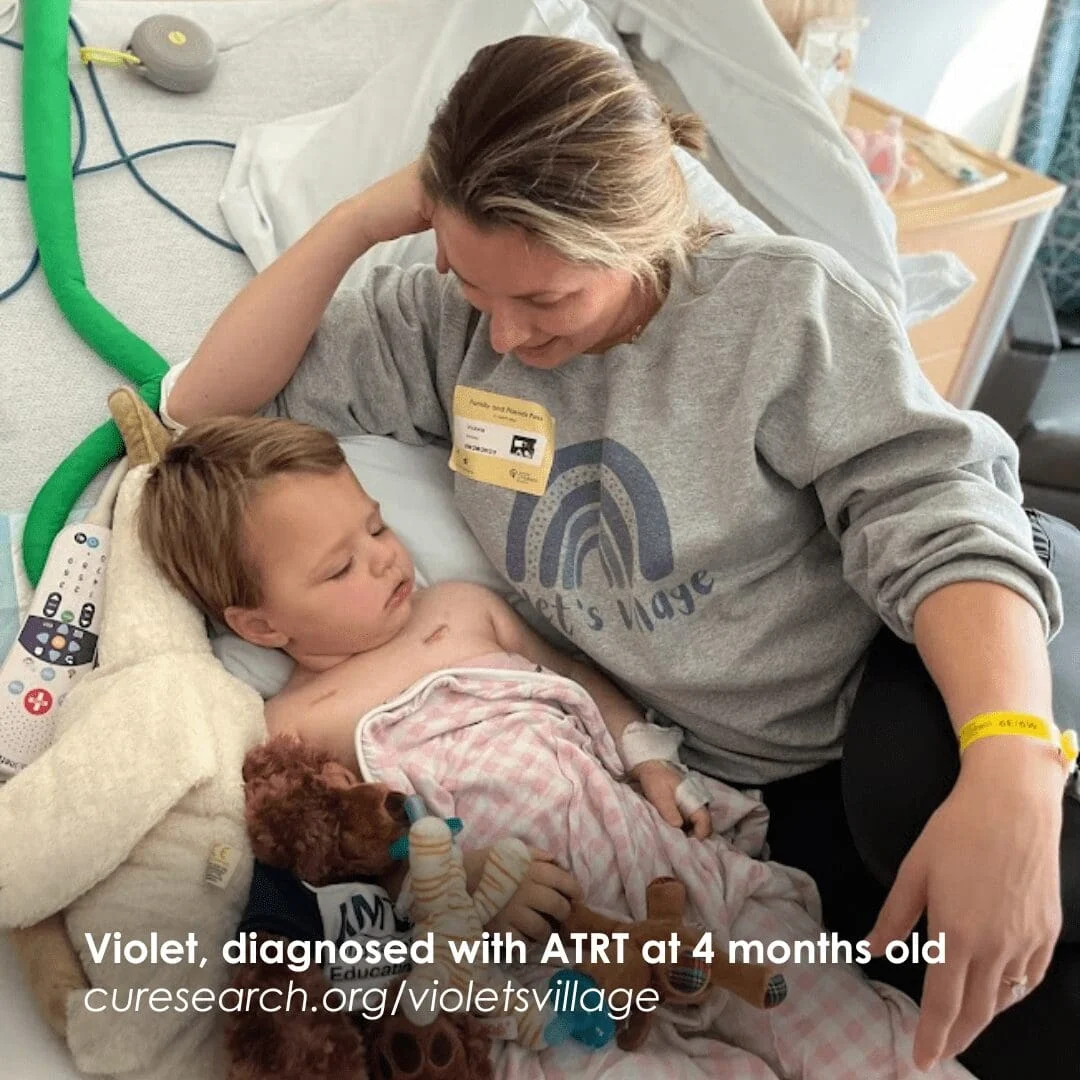
The landscape of pediatric oncology is poised for a significant shift as CureSearch for Children’s Cancer officially announces Dr. John Prensner of the University of Michigan as the recipient of the 2025 Young Investigator Award. This prestigious grant is designed to facilitate high-impact research into Atypical Teratoid Rhabdoid Tumors (ATRT), an exceptionally rare and aggressive form of brain cancer that predominantly affects infants and children under the age of three. By focusing on the "dark matter" of the human genome—specifically small open reading frames (sORFs) and the microproteins they produce—Dr. Prensner’s work aims to uncover hidden vulnerabilities in a disease that has long eluded traditional targeted therapies.
The selection of Dr. Prensner comes at a critical juncture in pediatric neuro-oncology. While survival rates for many childhood cancers have improved significantly over the last several decades, ATRT remains a formidable challenge. Current standard-of-care protocols, which involve intensive combinations of surgical resection, high-dose chemotherapy, and occasionally radiation, are often insufficient for long-term survival and can lead to severe, life-long developmental side effects in the very young patients who survive. The 2025 Young Investigator Award provides the necessary financial and institutional support to bridge the gap between laboratory discovery and clinical application.
The Medical Landscape: Understanding Atypical Teratoid Rhabdoid Tumors
Atypical Teratoid Rhabdoid Tumors are characterized by their rapid growth and tendency to arise in the central nervous system, most frequently in the cerebellum or the brainstem. These regions are responsible for vital functions, including motor coordination, balance, and autonomic processes like breathing and heart rate regulation. Because these tumors strike during peak windows of brain development, the clinical management of ATRT is a delicate balancing act between aggressive tumor eradication and the preservation of neurological function.
Statistically, ATRT accounts for approximately 1% to 2% of all pediatric brain tumors, but it represents nearly 20% of brain tumors in children younger than one year old. The prognosis remains sobering; historically, the three-year survival rate has hovered between 30% and 50%, depending on the extent of the tumor at diagnosis and the patient’s age. One of the most frustrating aspects for researchers is the "genetically quiet" nature of ATRT. Unlike many adult cancers, which are driven by numerous genetic mutations that can be targeted with specific drugs, ATRT is almost always driven by a single genetic event: the loss or mutation of the SMARCB1 (or rarely SMARCA4) gene. Because the tumor lacks a complex map of mutations, scientists have struggled to find "hooks" for targeted drug development.
A Paradigm Shift in Genetic Research: The Role of sORFs
Dr. Prensner’s research at the University of Michigan seeks to move beyond the traditional focus on well-known genes. For years, a significant portion of the human genome was dismissed as "junk DNA" because it did not appear to encode instructions for large, functional proteins. However, recent advances in genomic sequencing have revealed that these regions are far from useless. Within these sequences lie small open reading frames (sORFs), which are genetic segments capable of producing microproteins—tiny molecules that are less than 100 amino acids long.
"ATRT operates in the shadows," Dr. Prensner noted during the award announcement. His project posits that these microproteins may be the hidden engines driving tumor growth and survival in the absence of traditional genetic mutations. By mapping the "sORF-ome" of ATRT cells, Dr. Prensner hopes to identify specific microproteins that the cancer depends on. If a particular microprotein is found to be essential for the tumor’s survival but is not required by healthy cells, it becomes an ideal candidate for a new class of targeted drugs. This approach represents a new frontier in precision medicine, moving from targeting large, mutated proteins to targeting the subtle molecular machinery of the cell.
The 2025 Young Investigator Award: Cultivating Scientific Talent
The Young Investigator Award is a cornerstone of CureSearch’s strategy to address the "pipeline problem" in pediatric cancer research. Developing a new cancer drug can take over a decade and cost hundreds of millions of dollars. Early-career scientists often face a "valley of death," where they lack the preliminary data to secure large federal grants from the National Institutes of Health (NIH), yet they require funding to generate that very data.
By providing financial support at this precarious stage, CureSearch ensures that promising researchers like Dr. Prensner remain in the field of pediatric oncology rather than transitioning to adult cancer research or private industry, where funding is often more plentiful. Dr. Paisley Myers, Director of Research and Programs at CureSearch, emphasized that the organization’s mission is to ensure every child has a safe and effective treatment option. "Children with ATRT don’t have the same opportunities to benefit from cutting-edge, targeted treatments that are available for other cancers," she stated. "We urgently need to change that narrative."
Collaborative Philanthropy: The Role of JGCF and Violet’s Village
The funding for Dr. Prensner’s project is a result of a collaborative co-funding model, involving the Jeff Gordon Children’s Foundation (JGCF) and Violet’s Village: The Violet Kenney Legacy Fund. This partnership highlights the importance of community-driven philanthropy in tackling rare diseases.
The Jeff Gordon Children’s Foundation, established by the four-time NASCAR Cup Series champion, has been a major player in pediatric cancer advocacy since 1999. "Brain tumors are the deadliest form of childhood cancer, so we’re eager to advance scientific knowledge and develop better therapeutics to improve outcomes for kids facing such a devastating diagnosis," said Susan Robinson, Executive Director of JGCF. The foundation’s involvement brings both financial weight and significant public visibility to the cause.
Violet’s Village was founded in memory of Violet Kenney, a young girl who battled ATRT. Such legacy funds are vital because they are driven by families who have experienced the realities of the disease firsthand. These families often become the most passionate advocates for research that moves beyond the status quo, pushing for "smarter" treatments that reduce the long-term toxicity of current therapies.
Chronology of ATRT Research and Treatment Evolution
To understand the significance of Dr. Prensner’s work, it is necessary to look at the timeline of ATRT discovery and treatment:
- 1987: ATRT was first recognized as a distinct clinical and pathological entity, having previously been misclassified as Medulloblastoma or Wilms’ tumor.
- 1998: Researchers identified the loss of the SMARCB1 gene as the primary genetic driver of ATRT, providing the first major clue into its biology.
- 2000s: Clinical trials began to focus on high-dose chemotherapy with autologous stem cell rescue to avoid the devastating effects of radiation on the infant brain.
- 2010s: Genomic sequencing confirmed that ATRT has one of the lowest mutation rates of any human cancer, leading researchers to look at epigenetic factors (how genes are turned on and off).
- 2024-2025: Dr. Prensner’s work represents the next logical step—moving into the realm of microproteins and non-canonical genetic sequences to find the "missing" drivers of the disease.
Analysis of Implications: Beyond ATRT
The implications of Dr. Prensner’s research extend beyond the specific treatment of ATRT. If sORFs and microproteins are proven to be viable therapeutic targets in one form of pediatric brain cancer, the methodology could be applied to other "genetically quiet" tumors, such as Ependymoma or certain types of Sarcoma.
Furthermore, this research reinforces the shift toward "proteogenomics"—the integrated study of the genome and the proteome. By understanding not just what the DNA says, but the tiny proteins it actually produces, scientists can gain a much more granular view of cancer biology. For the pharmaceutical industry, this opens a new library of potential drug targets that were previously invisible.
Conclusion: A Future Defined by Innovation and Hope
The announcement of Dr. John Prensner as the 2025 CureSearch Young Investigator Awardee signifies a renewed commitment to the most vulnerable patients in the oncology ward. For the families of children diagnosed with ATRT, the research represents more than just a scientific endeavor; it is a beacon of hope that the future of cancer treatment will be defined by precision and compassion rather than blunt force.
As Dr. Prensner begins this new phase of his work at the University of Michigan, the support of CureSearch, the Jeff Gordon Children’s Foundation, and Violet’s Village ensures that he has the resources to challenge the current limitations of medical science. The goal remains clear: to transform ATRT from a devastating diagnosis into a manageable, and ultimately curable, condition through the power of innovative genomic research.
