
 By admin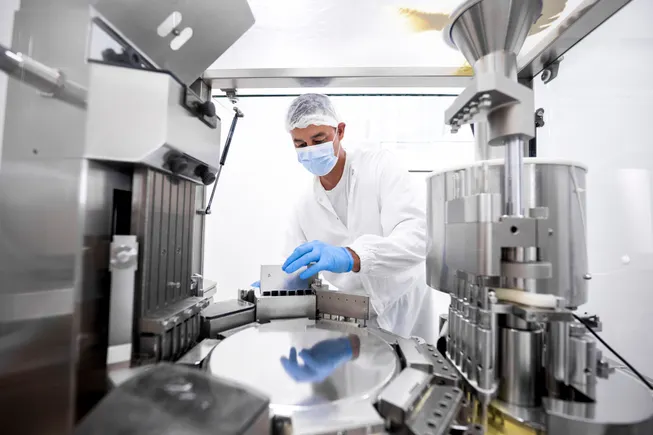
At the Raritan, New Jersey, facility, a poignant encounter unfolded where Colleen, a multiple myeloma patient, met the dedicated employees from Legend Biotech and Johnson & Johnson (J&J) who had meticulously manufactured Carvykti (ciltacabtagene autoleucel), the life-saving CAR-T cell therapy she received during her arduous battle with cancer. This deeply personal meeting underscored the profound human connection inherent in CAR-T therapies, highlighting a manufacturing paradigm where each commercial dose is not merely a product, but a unique, patient-specific intervention. This individualized approach, while revolutionary in its therapeutic potential, presents an unparalleled set of industrial and logistical challenges as demand for Carvykti continues its rapid global expansion.
Carvykti’s Rise: A Breakthrough in Multiple Myeloma Treatment
Multiple myeloma is the second most common blood cancer, a relentless and typically incurable disease characterized by the proliferation of abnormal plasma cells in the bone marrow. Patients often experience cycles of remission and relapse, with prognosis worsening with each subsequent line of therapy. The advent of CAR-T (Chimeric Antigen Receptor T-cell) therapy has represented a significant leap forward, offering a new frontier in treating refractory cases. CAR-T involves extracting a patient’s own T-cells, genetically engineering them ex vivo to express a chimeric antigen receptor that targets specific cancer markers, expanding these modified cells, and then reinfusing them into the patient to seek out and destroy cancer cells.
Carvykti, developed through a strategic collaboration between Legend Biotech and Johnson & Johnson’s Janssen Pharmaceutical Companies, is a second-generation CAR-T therapy that targets B-cell maturation antigen (BCMA), a protein highly expressed on multiple myeloma cells. Its U.S. Food and Drug Administration (FDA) approval in February 2022 and European Medicines Agency (EMA) approval in May 2022 marked a pivotal moment for patients with relapsed or refractory multiple myeloma who had exhausted prior treatment options. The therapy quickly demonstrated impressive efficacy in clinical trials, translating into significant market penetration. By the second quarter, Carvykti notched a remarkable $657 million in net trade sales, representing a robust 50% increase over the year-earlier period. The treatment is now accessible at 348 sites across 19 international markets, a testament to its clinical success and the urgent patient need it addresses.
The "Scale Out" Imperative: Navigating Autologous Manufacturing
Despite Carvykti’s commercial triumph, the fundamental constraint governing its growth remains unchanged: scaling an autologous CAR-T therapy demands adding thousands of individualized manufacturing runs, rather than simply increasing the size of conventional production batches. This distinction is crucial, as articulated by Mike O’Mara, chief operating officer of cell therapy contract development and manufacturing organization Cellipont Bioservices: "When you scale an autologous cell therapy, you don’t scale up, you scale out."
The ex vivo manufacturing process for Carvykti is intricate and highly personalized. It begins with apheresis, where a patient’s T-cells are collected. These cells are then transported to a specialized manufacturing facility, genetically engineered to express the BCMA-targeting CAR, expanded to therapeutic quantities, cryopreserved, and finally shipped back to the treatment center for infusion. Each step is critical, requiring stringent quality control and precise timing.
At small clinical volumes, a dedicated, tight-knit team can manage a limited number of patient batches. However, commercial scale introduces a new level of complexity. Manufacturers are not simply producing more of an identical product; they must reproduce a patient-specific process consistently across a multitude of individual batches, often with multiple teams working concurrently. This elevates the significance of manual steps and operator-to-operator variability. While a few highly experienced employees might maintain process consistency during early development, a commercial operation demands that numerous teams replicate the process without introducing new variability. Automation and the implementation of closed processing systems are increasingly vital tools in mitigating these risks and ensuring reproducibility, thereby enabling more predictable scale-out as highlighted in a June review of CAR-T manufacturing in the PDA Journal of Pharmaceutical Science and Technology. The industry is actively shifting from highly manual academic processes towards more standardized commercial platforms with robust process controls.
Building a Global Manufacturing Network for Individualized Doses
Recognizing the unique demands of autologous cell therapy, Legend Biotech and J&J have invested years in meticulously constructing a comprehensive manufacturing and supply chain ecosystem for Carvykti. Their strategy employs a regionalized model: U.S. manufacturing facilities primarily serve U.S. patients, while European manufacturing hubs cater to European and other international markets. This approach minimizes logistical complexities and reduces vein-to-vein time – the critical period from cell collection to final product infusion.
All four of Carvykti’s manufacturing sites are now fully operational, underpinning the global supply network. These include Legend Biotech’s expanded facility in Raritan, New Jersey; a strategic contract manufacturing site operated by Novartis in Morris Plains, New Jersey; and two facilities in Ghent, Belgium, known as Obelisc and Tech Lane. This multi-site network is designed to ensure redundancy and enhance global capacity.
The scale of this endeavor is substantial. Legend Biotech has reported that its expanded Raritan site alone possesses the installed capacity to support the treatment of up to 10,000 patients annually. In the first quarter, the company showcased impressive performance metrics: a 99% manufacturing success rate and a median turnaround time of 29 days in the U.S. Furthermore, over 95% of order releases for final product delivery dates were on schedule. These company-reported figures are crucial indicators, demonstrating how manufacturing reliability and efficiency become integral to the commercial viability and patient proposition of a personalized therapy. Sustained growth in this sector is inextricably linked to the ability to add volume without compromising consistency or speed.
Beyond the Cleanroom: The Interconnected Supply Chain and Logistics
The successful delivery of a finished CAR-T dose extends far beyond the confines of the cleanroom. It necessitates navigating a complex web of interconnected processes, each a potential bottleneck. The final product must clear rigorous testing and quality review, while production itself relies on specialized raw materials, which often carry their own unique supply chain constraints. At commercial scale, any slowdown in these ancillary steps – be it a delay in sourcing a critical reagent, a backlog in analytical testing, or a quality assurance hold – can impede the entire manufacturing flow. As O’Mara emphasizes, "At larger scale, each one of those steps must be able to keep pace with manufacturing."
Furthermore, the patient’s treatment center plays an integral role within this intricate system. Manufacturers and sponsors must meticulously align clinical recruitment and patient scheduling with the precise manufacturing slots reserved, often with a Contract Development and Manufacturing Organization (CDMO). A canceled or delayed patient procedure can leave valuable manufacturing resources stranded, incurring costs and potentially impacting other patient schedules. This creates a delicate two-way dependency: treatment center schedules directly influence manufacturing utilization, while manufacturing and release timelines dictate when a patient can ultimately receive their life-altering therapy. Effective communication, robust scheduling platforms, and flexible contingency planning are paramount to optimizing this complex coordination.
Easing the Path: Regulatory Adaptations and Patient Access Initiatives
Recognizing the unique operational challenges of CAR-T therapies, regulatory bodies have begun to adapt to facilitate broader patient access. In March 2024, the FDA took a significant step by eliminating Risk Evaluation and Mitigation Strategies (REMS) for multiple approved CAR-T therapies, including Carvykti. The agency also updated product labels to streamline post-treatment monitoring protocols and shorten the recommended periods patients are advised to remain near a healthcare facility and avoid driving, reducing these to two weeks. The FDA’s rationale for these changes was to improve access, particularly for patients in rural areas who might face greater logistical hurdles in adhering to strict monitoring requirements.
Complementing these regulatory adjustments, Legend and J&J have actively pursued strategies to expand Carvykti’s use in outpatient and community settings. This decentralization of care aims to make the therapy more accessible by reducing the burden on specialized academic medical centers and allowing more patients to receive treatment closer to home. While these developments significantly ease the "downstream" friction associated with post-infusion care, they do not alleviate the "upstream" imperative to meticulously coordinate and execute each individualized manufacturing run that ultimately reaches a patient. The core challenge of industrializing a personalized process remains central.
Designing for the Future: Proactive Process Development
For developers of cell and gene therapies, the most crucial scaling decisions are often made well in advance of commercial launch. A common pitfall, as highlighted by O’Mara, is the misconception "that there will always be time later to optimize the manufacturing process." A highly manual step, a raw material that is difficult to source, or a slow analytical assay might be tolerable in the limited scope of a small clinical trial. However, these seemingly minor choices can quickly escalate into significant operational constraints at commercial scale. Attempting to change a manufacturing process deep into development also triggers extensive comparability work, additional validation studies, and increased regulatory interactions, all of which consume valuable time and resources.
While developers do not require a fully commercialized process in Phase 1, it is imperative to possess a clear understanding of which steps are likely to become limiting as production volume escalates. This necessitates integrating manufacturability alongside efficacy and safety as a core development consideration from the earliest stages, rather than relegating it to an operational problem to be solved at the tail end of the development pipeline. Proactive design for scalability, including early adoption of automation and closed systems where feasible, can significantly de-risk commercialization.
The Next Frontier: In Vivo CAR-T and Allogeneic Solutions
The future of CAR-T therapy may ultimately address the inherent manufacturing complexities by fundamentally altering or removing parts of the ex vivo production chain. Several companies, including Legend Biotech, are exploring in vivo CAR-T options, which aim to modify immune cells directly inside the patient’s body using a gene vector delivered via a single infusion. Legend’s early-stage candidate, LB2501, is designed to generate CD19/CD20-targeting CAR-T cells in vivo for patients with B-cell non-Hodgkin lymphoma.
In June, Legend reported early proof-of-concept data from an ongoing Phase 1 study involving 12 patients. The treatment showed promising early signs of intended activity, with no dose-limiting toxicities, serious adverse events, or deaths reported at the data cutoff. While this 12-patient readout represents only a preliminary test of this novel model, it signals a potential paradigm shift. As Legend’s interim CEO Alan Bash noted, longer follow-up is necessary to establish safety and to confirm efficacy strong enough to compete with existing treatment options.
Should in vivo CAR-T therapies prove successful, the scaling model would dramatically change. Instead of requiring a separate, external cell-processing run for every single patient, the manufacturing burden could largely shift to producing a standardized gene vector reliably at commercial volumes, a process more akin to traditional biologics manufacturing. This would not eliminate manufacturing entirely, as the vector itself still requires robust production, but it could significantly simplify the overall process, reducing the "vein-to-vein" time and potentially lowering costs and increasing accessibility. Alongside in vivo approaches, the development of allogeneic, or "off-the-shelf," CAR-T therapies using donor cells represents another promising avenue to overcome the individualized manufacturing bottleneck, albeit with its own set of immunological and logistical challenges.
As cell therapy manufacturing models continue to diversify, CDMOs like Cellipont Bioservices will need to develop systems flexible enough to support a broad spectrum of approaches. Their role will expand beyond mere contract manufacturing to actively partnering with developers in designing processes that are not only effective but also inherently scalable and robust for commercialization.
For autologous CAR-T therapies like Carvykti, every additional patient currently adds another unique manufacturing run to an already intricate system. The ability of pharmaceutical companies to industrialize this highly individualized process – or to innovate by replacing parts of it entirely with novel in vivo or allogeneic approaches – will be the ultimate determinant of how far these revolutionary, life-saving therapies can reach patients worldwide. The journey from personalized miracle to global standard is paved with scientific ingenuity, operational excellence, and an unwavering commitment to overcoming unprecedented manufacturing challenges.
