
 By admin
Sarcoma, a notoriously rare and complex group of cancers originating in connective tissues, has historically presented formidable challenges for diagnosis and treatment. Affecting approximately 1% of all adult cancers and a more significant 15% of pediatric malignancies, its rarity often translates into diagnostic delays and a scarcity of specialized information, amplifying the anxiety and uncertainty for patients and their families. While conventional approaches like surgery, chemotherapy, and radiation therapy remain foundational, the advent of immunotherapy is rapidly rewriting the script for a subset of patients, creating previously unimaginable possibilities and fueling intense research to expand these life-altering options to a broader population. This Sarcoma Awareness Month, the spotlight shines on the evolving understanding of sarcoma, the revolutionary potential of immunotherapy, and the promising trajectory of future therapeutic advancements.
Understanding Sarcoma: A Diverse and Elusive Foe
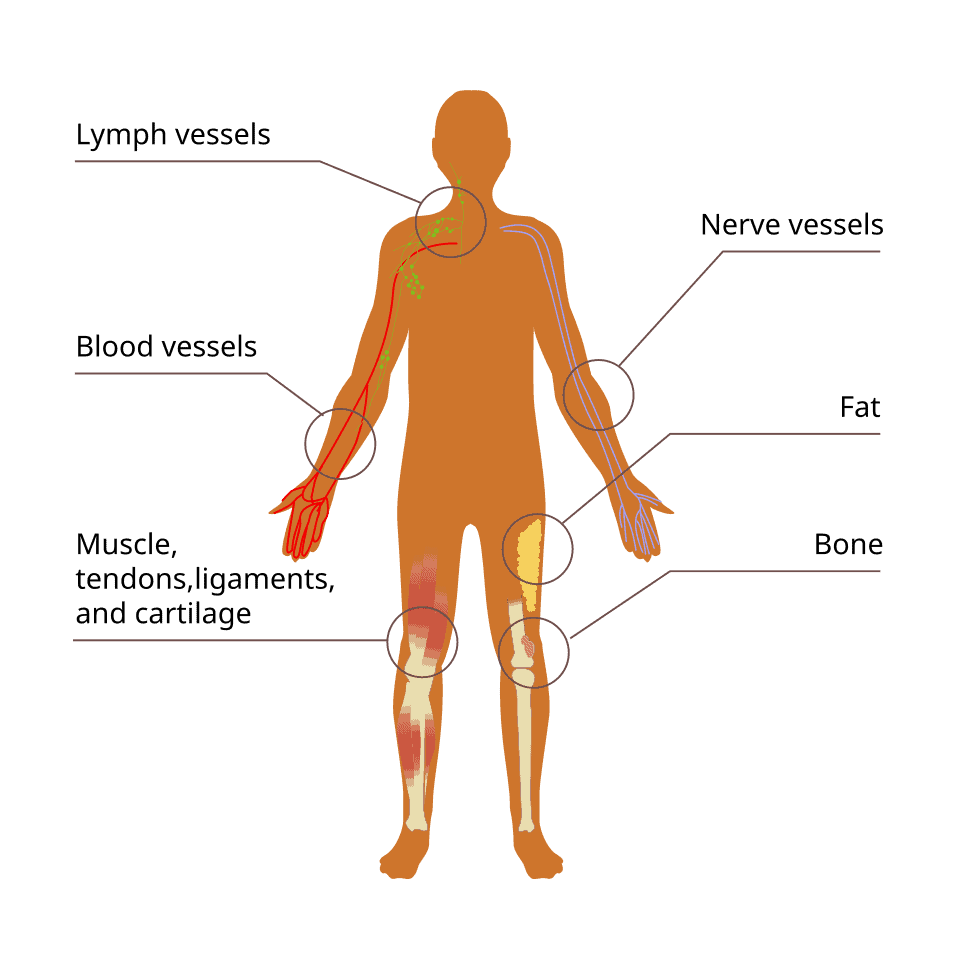
Sarcoma encompasses a remarkably heterogeneous collection of over 70 distinct subtypes, each characterized by unique cellular origins, genetic signatures, and clinical behaviors. Unlike more common carcinomas that arise from epithelial cells lining organs, sarcomas develop from mesenchymal cells, the building blocks of the body’s supportive and connective tissues. These include bone, muscle, fat, cartilage, blood vessels, nerves, and tendons, meaning a sarcoma can emerge almost anywhere from the tips of the toes to the crown of the head. This anatomical ubiquity, coupled with the sheer number of subtypes, underscores the complexity inherent in both diagnosis and treatment.
Prevalence and Impact
Globally, soft tissue sarcomas (STS) account for roughly 12,000 new cases annually in the United States, while bone sarcomas are even rarer, with approximately 3,500 new cases each year. The age distribution varies significantly across types; for instance, osteosarcoma and Ewing sarcoma predominantly affect children and young adults, whereas liposarcoma and leiomyosarcoma are more common in older adults. The rarity often means that general practitioners may encounter only a few cases in their entire careers, making referral to specialized sarcoma centers crucial for accurate diagnosis and optimal management. The average five-year survival rate for localized sarcoma is generally favorable, but this drops significantly for metastatic disease, highlighting the urgent need for advanced therapeutic interventions.
Key Subtypes and Characteristics
The broad categories of soft-tissue and bone sarcomas conceal immense diversity:
Soft Tissue Sarcomas (STS): These arise in the supportive tissues connecting and surrounding organs.
- Liposarcoma: Originates in fat cells, often found in the limbs or retroperitoneum. It has several subtypes, including well-differentiated, dedifferentiated, myxoid, pleomorphic, and round cell, each with distinct prognoses and treatment responses. Dedifferentiated liposarcoma, for example, can be highly aggressive.
- Leiomyosarcoma: Develops from smooth muscle cells, commonly affecting the uterus, gastrointestinal tract, or blood vessels. It is known for its aggressive nature and propensity for metastasis, often to the lungs and liver.
- Undifferentiated Pleomorphic Sarcoma (UPS): Once known as Malignant Fibrous Histiocytoma (MFH), this is a high-grade sarcoma often found in the limbs. It is characterized by poorly differentiated cells and a complex genetic profile, making it challenging to treat effectively with conventional therapies.
- Synovial Sarcoma: Despite its name, it rarely originates in the synovium of joints but rather in tissues surrounding joints, often in young adults. It is frequently associated with a specific chromosomal translocation, t(X;18), which drives its molecular pathology.
- Gastrointestinal Stromal Tumor (GIST): While sometimes classified separately due to its unique genetic drivers (often KIT or PDGFRA mutations), GIST is a mesenchymal tumor of the GI tract. Its treatment has been revolutionized by targeted therapies, and research into immunotherapy’s role continues, particularly in resistant cases.
- Angiosarcoma: A rare and aggressive cancer that originates in the lining of blood or lymphatic vessels. It can occur anywhere in the body, but commonly affects the skin, breast, liver, or soft tissue.
Bone Sarcomas: These are cancers originating directly in bone.
- Osteosarcoma: The most common primary bone cancer, often affecting adolescents and young adults. It typically arises in the long bones (femur, tibia, humerus) and is characterized by malignant bone-forming cells. Despite aggressive chemotherapy and surgery, metastatic disease remains a significant challenge.
- Chondrosarcoma: Originates in cartilage cells, more common in older adults, and can affect any bone, though often the pelvis, femur, or shoulder blade. It tends to be slower-growing but is notoriously resistant to conventional chemotherapy and radiation, making surgery the primary treatment.
- Ewing Sarcoma: A highly aggressive bone cancer predominantly affecting children and young adults. It is characterized by a specific chromosomal translocation, t(11;22), and often presents with pain and swelling. It can also occur in soft tissues.
Etiology and Risk Factors
The precise causes for the majority of sarcomas remain unknown. However, several factors have been identified that can increase an individual’s risk:
- Genetic Syndromes: Certain inherited conditions significantly elevate risk, including Li-Fraumeni syndrome (associated with mutations in the TP53 gene), Neurofibromatosis type 1 (NF1), Retinoblastoma, Bloom syndrome, and Werner syndrome. These syndromes often predispose individuals to multiple types of cancer, including sarcomas.
- Radiation Exposure: Previous therapeutic radiation for other cancers, particularly at high doses, is a known risk factor, with sarcomas often developing years or decades later in the irradiated field. The risk is dose-dependent and can be influenced by genetic predisposition.
- Chemical Exposure: Occupational exposure to certain chemicals, such as vinyl chloride (linked to angiosarcoma of the liver), arsenic, and some herbicides (e.g., phenoxyacetic acids), has been implicated in specific sarcoma types.
- Lymphedema: Chronic lymphedema, often secondary to surgery or radiation for breast cancer, can increase the risk of developing angiosarcoma (Stewart-Treves syndrome) in the affected limb.
- Immunosuppression: Individuals with compromised immune systems, such as organ transplant recipients on immunosuppressive drugs or those with HIV/AIDS, have a slightly increased risk of developing certain sarcomas.
Diagnosis and Traditional Treatment Limitations
Sarcomas often develop deep within tissues, remaining asymptomatic until they grow substantially large. Symptoms typically include a new, painless lump, but any mass that is growing, causing pain, or exceeds the size of a golf ball (approximately 5 cm) warrants immediate medical evaluation. Early diagnosis is paramount for better outcomes, as smaller, localized tumors are more amenable to curative resection.
The diagnostic process usually involves a combination of advanced imaging (MRI, CT scans, PET scans) and a meticulously performed biopsy. Pathological review of the biopsy specimen requires expert subspecialty knowledge due to the many subtypes and their subtle distinctions. Immunohistochemistry and molecular testing are often crucial for accurate classification. Treatment is highly individualized, depending on the sarcoma type, location, size, grade (aggressiveness), and stage (whether it has spread). Surgery remains the cornerstone for resectable tumors, aiming for complete removal with clear margins. Adjuvant or neoadjuvant (before surgery) chemotherapy and radiation therapy are often employed to shrink tumors, kill residual cancer cells, or manage advanced disease. However, many sarcomas prove resistant to conventional chemotherapy, and metastatic disease often carries a poor prognosis, with historical median survival rates for advanced soft tissue sarcomas often less than two years, underscoring the urgent need for innovative therapeutic strategies.
Immunotherapy’s Historical Roots and Modern Breakthroughs in Sarcoma
The concept of harnessing the body’s immune system to fight cancer is not new; in fact, the very genesis of modern cancer immunotherapy is intricately linked to sarcoma. More than a century ago, in the late 19th century, New York surgeon Dr. William B. Coley observed spontaneous tumor regressions in sarcoma patients who had developed severe bacterial infections. This groundbreaking observation led him to postulate that the immune system, when stimulated by infection, could recognize and destroy cancer cells. He subsequently developed "Coley’s toxins," a mixture of inactivated bacteria injected directly into tumors, which showed remarkable, albeit inconsistent, success in some sarcoma patients. While his methods were met with skepticism by the burgeoning field of radiation and chemotherapy, Coley’s pioneering work is now widely acknowledged as the foundational pillar upon which modern immunotherapy rests. His legacy was further cemented by his daughter, Helen Coley Nauts, who co-founded the Cancer Research Institute (CRI) in 1953 to champion and fund immunological approaches to cancer treatment.
For decades following Coley’s initial insights, the field of immunotherapy struggled to gain widespread acceptance. It wasn’t until the late 20th and early 21st centuries, with a deeper understanding of immunology and cancer biology, that truly transformative breakthroughs emerged. The development of monoclonal antibodies that target specific immune checkpoints — proteins on immune cells that act as "brakes" on the immune response — has revolutionized cancer treatment across numerous malignancies. These include agents that block programmed cell death protein 1 (PD-1), its ligand (PD-L1), and cytotoxic T-lymphocyte-associated protein 4 (CTLA-4). By disinhibiting the immune system, these checkpoint inhibitors allow T
