
 By admin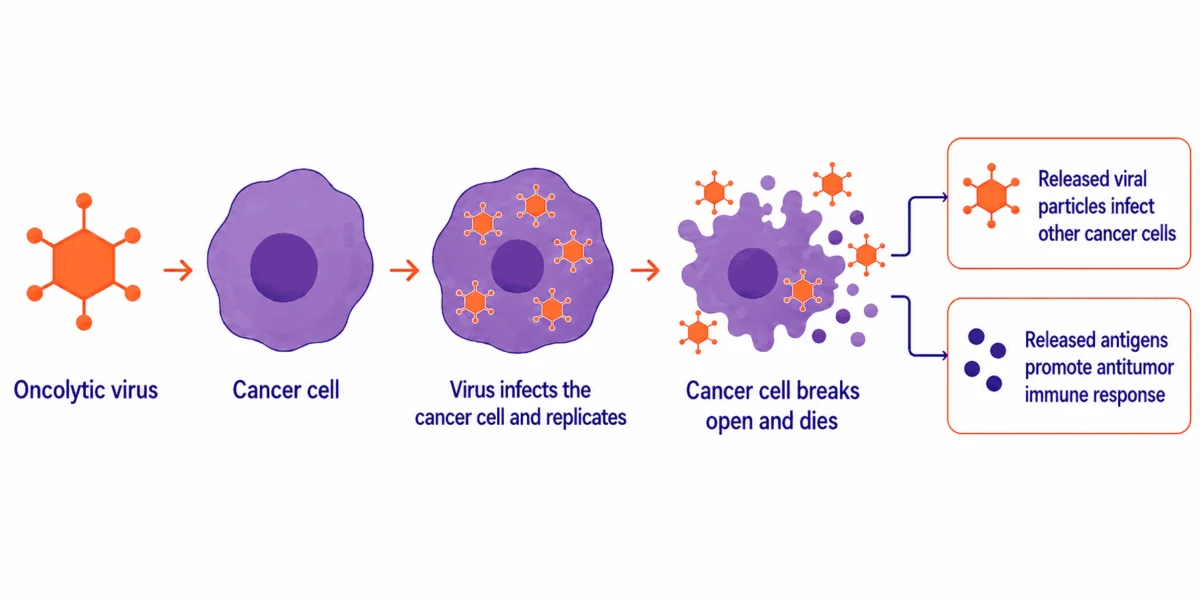
The U.S. Food and Drug Administration (FDA) announced on August 6, 2026, the accelerated approval of Tudriqev (vusolimogene oderparepvec-wtpg, formerly known as RP1) in combination with nivolumab (Opdivo®), an immune checkpoint inhibitor. This significant decision marks the FDA’s first new approval of an oncolytic virus therapy in over a decade, providing a vital expanded treatment option for adults battling unresectable advanced cutaneous melanoma that has progressed following prior treatment with a PD-1-blocking therapy. The approval underscores a renewed focus on innovative immunotherapeutic strategies, particularly for patients facing limited options after standard checkpoint inhibitor failure.
A New Frontier in Cancer Treatment: Harnessing Viruses to Fight Disease
The concept of using viruses to combat cancer, known as oncolytic virotherapy, represents a paradigm shift from conventional treatments. For generations, viruses have been primarily associated with illness, prompting efforts to avoid or eradicate them. However, scientific advancements in molecular biology and genetic engineering have enabled researchers to modify specific viruses, transforming them from pathogens into potent therapeutic agents against malignancies. These engineered oncolytic viruses are designed to selectively infect and destroy cancer cells while sparing healthy tissues, simultaneously stimulating the body’s immune system to mount a sustained attack against the tumor.
The mechanism by which oncolytic viruses exert their therapeutic effects is multifaceted and highly sophisticated. Primarily, they attack cancer cells directly. Upon entering a cancerous cell, the virus replicates extensively within it, leading to cellular lysis – the breakdown and death of the infected cell. This process releases a cascade of new viral particles, which then propagate to infect and eliminate neighboring cancer cells, creating a self-amplifying therapeutic cycle within the tumor microenvironment.
Beyond direct tumor cell destruction, oncolytic viruses play a crucial role in orchestrating a robust anti-tumor immune response. As cancer cells rupture, they release tumor-associated antigens and danger signals, such as damage-associated molecular patterns (DAMPs) and pathogen-associated molecular patterns (PAMPs). These signals act as powerful attractants for immune cells, including dendritic cells and T-cells, effectively "unmasking" the cancer to the immune system. The immune system, previously unable to adequately recognize or eliminate the cancer, is then primed to identify these cancer cells as foreign targets. Furthermore, many oncolytic viruses, including Tudriqev, are genetically engineered to express molecules that further amplify this immune activation, such as granulocyte-macrophage colony-stimulating factor (GM-CSF), which enhances antigen presentation and T-cell priming.
This synergistic immune activity is a key reason why oncolytic viruses are increasingly combined with other immunotherapies, particularly immune checkpoint inhibitors like nivolumab. Checkpoint inhibitors function by blocking inhibitory signals (molecular "brakes") that prevent T-cells from attacking cancer cells. By combining Tudriqev, which initiates an immune response and releases tumor antigens, with nivolumab, which disinhibits T-cell activity, researchers aim to achieve a more potent and durable anti-tumor effect. The oncolytic virus can transform "cold" (non-immunogenic) tumors into "hot" (immunogenic) ones, making them more susceptible to the actions of checkpoint inhibitors.
A Century in the Making: The Evolution of Oncolytic Virotherapy
The journey of oncolytic virotherapy is a testament to persistent scientific inquiry, spanning over a century. The earliest observations of viruses influencing cancer regression date back to 1904, when physicians documented instances of tumor shrinkage in patients experiencing concurrent viral infections. These anecdotal reports sparked curiosity, leading researchers in the 1950s and 1960s to deliberately explore the therapeutic potential of naturally occurring viruses in cancer patients. However, these initial endeavors were fraught with challenges. The lack of precise control over viral spread and specificity raised significant safety concerns, particularly the risk of harming healthy tissues while targeting cancerous ones. The rudimentary understanding of viral biology and genetic manipulation at the time limited the ability to refine these early approaches, leading to a period of dormancy for the field.
A pivotal turning point arrived in the 1990s with revolutionary advancements in genetic engineering. The ability to precisely modify viral genomes opened new avenues for designing viruses that could selectively target tumor cells, enhance their oncolytic potency, and incorporate safety mechanisms. This era marked the birth of modern oncolytic virotherapy, enabling scientists to engineer viruses that were not only tumor-selective but also capable of stimulating a robust anti-tumor immune response.

This renewed scientific vigor culminated in 2015 with the FDA approval of T-VEC (talimogene laherparepvec, Imlygic®), which became the first oncolytic virus therapy sanctioned for use in the U.S. T-VEC, also a genetically modified herpes simplex virus (HSV), was approved for certain patients with melanoma, specifically for the treatment of unresectable cutaneous, subcutaneous, and nodal lesions in patients with melanoma that is recurrent after initial surgery. Its approval validated the concept of oncolytic virotherapy and paved the way for further research and development in this innovative field.
Despite T-VEC’s groundbreaking approval, the category of approved oncolytic virus therapies remained small. Before Tudriqev, oncolytic viruses constituted only a fraction of the 156 FDA cancer immunotherapy approvals tracked by organizations like the Cancer Research Institute (CRI). The approval of Tudriqev more than a decade later signals a significant expansion of this category, offering new hope and reinforcing the potential of viral immunotherapies.
Tudriqev’s Clinical Efficacy: Insights from the IGNYTE Trial
The accelerated approval of Tudriqev, developed by Replimune, is based on the compelling results from the IGNYTE clinical trial. This pivotal Phase 1/2 trial investigated the safety and efficacy of Tudriqev in combination with nivolumab in patients with advanced melanoma whose disease had progressed following prior treatment with a PD-1 checkpoint inhibitor. The patient population in IGNYTE represented a critical unmet need, as individuals who fail PD-1 blockade often face particularly grim prognoses with limited subsequent treatment options.
The IGNYTE trial enrolled a total of 140 patients. The primary efficacy analysis focused on a subset of 91 patients who had at least one tumor lesion that was not directly injected with Tudriqev, providing crucial data on the systemic immune response induced by the therapy. In this challenging patient cohort, 24.2% achieved an objective response to treatment, defined as a predefined reduction in tumor size. This response rate is particularly notable given the advanced and refractory nature of the patients’ disease. Furthermore, among those patients who responded, the median duration of response was an encouraging 14.1 months, indicating a sustained clinical benefit for a significant period. These results highlight Tudriqev’s potential to re-sensitize tumors to immunotherapy and elicit durable responses in a difficult-to-treat population.
Understanding Accelerated Approval and Its Implications
Tudriqev received accelerated approval from the FDA, a regulatory pathway designed to expedite the availability of promising new drugs for serious conditions where there is an unmet medical need. This pathway allows for approval based on surrogate endpoints or intermediate clinical endpoints that are reasonably likely to predict clinical benefit, rather than requiring extensive, long-term survival data upfront. For Tudriqev, the objective response rate and duration of response in a highly refractory melanoma population served as the basis for this accelerated pathway.
As part of the accelerated approval process, Replimune is obligated to conduct additional post-marketing research to confirm the clinical benefit of Tudriqev plus nivolumab. This typically involves conducting larger, confirmatory trials to gather more definitive data on overall survival or progression-free survival. Continued approval of Tudriqev will be contingent upon the successful completion of these confirmatory studies and the demonstration of sustained clinical benefit. This mechanism allows patients to access innovative therapies sooner while ensuring that robust evidence of efficacy is eventually collected.
Safety Profile and Patient Guidance
As with all potent cancer therapies, treatment with Tudriqev plus nivolumab is associated with potential side effects. The IGNYTE clinical trial reported common adverse events, which included fatigue, fever, chills, nausea, reactions at the injection site, and flu-like symptoms. These systemic effects are often indicative of the immune system’s activation in response to the viral therapy.
Importantly, Tudriqev, being a genetically modified herpes simplex virus, carries specific warnings regarding the potential for herpes infection and the risk of accidental exposure to the virus. Patients are advised to take precautions to prevent viral transmission. It is paramount for patients to engage in open and thorough discussions with their healthcare team regarding the potential benefits and risks of treatment, as well as to be educated on what side effects to monitor for and how to manage them effectively. Comprehensive patient guides, such as the Cancer Research Institute’s Patient’s Guide to Immunotherapy for Melanoma, serve as invaluable resources for understanding these complex treatments.
Expert Perspectives and Industry Reactions
The approval of Tudriqev has been met with significant optimism across the oncology community. Dr. Sarah Goldberg, an oncologist specializing in melanoma, commented, "For patients whose melanoma has progressed after PD-1 blockade, treatment options are often limited and outcomes are poor. Tudriqev’s approval provides a novel mechanism of action in combination with nivolumab, potentially offering a new lifeline and highlighting the power of combining distinct immunotherapy approaches."
An FDA spokesperson, while not directly quoted, likely emphasized the agency’s commitment to facilitating access to innovative therapies for patients with serious diseases, particularly when current treatments are insufficient. "The FDA’s accelerated approval pathway enables us to bring promising treatments to patients faster, especially in areas of high unmet need like advanced melanoma," an inferred statement from the agency might suggest. "This approval reflects ongoing progress in understanding and harnessing the immune system to fight cancer."
Replimune, the developer of Tudriqev, expressed profound gratitude and commitment. "This accelerated approval represents a monumental achievement for Replimune and, more importantly, for patients grappling with advanced melanoma," stated a representative from the company. "We are dedicated to fulfilling our post-marketing commitments and continuing our research to explore the full potential of oncolytic virus therapies across various cancer types."
The Cancer Research Institute (CRI) also lauded the approval, noting its broader implications for immunotherapy. "The addition of Tudriqev to the arsenal against melanoma underscores the dynamism of immunotherapy research," a CRI spokesperson might have noted. "This approval reinforces the importance of exploring diverse mechanisms to stimulate anti-cancer immunity, offering hope for more effective and durable treatments."
Broader Impact and the Future of Oncolytic Virotherapy
The approval of Tudriqev significantly impacts the treatment landscape for advanced melanoma, particularly for a subset of patients who have exhausted first-line immunotherapy options. Melanoma, a highly aggressive form of skin cancer, claims tens of thousands of lives globally each year. While checkpoint inhibitors have revolutionized its treatment, a substantial proportion of patients either do not respond initially (primary resistance) or develop resistance over time (acquired resistance). For these patients, the availability of a new therapy that can re-engage the immune system and directly attack tumor cells is a critical advancement.
Currently, for patients in the U.S., approved oncolytic virus therapy remains primarily limited to those with melanoma. However, the field is rapidly expanding. Hundreds of other oncolytic virus approaches are under investigation for dozens of different cancer types in various clinical trial phases. Researchers are actively exploring different viral backbones (e.g., adenovirus, vaccinia virus, measles virus), various genetic modifications to enhance tumor selectivity and immune stimulation, and novel combination strategies with other immunotherapies, chemotherapy, or radiation.
The ongoing research efforts by institutions and companies worldwide aim to answer critical questions: Which specific tumors are most responsive to oncolytic viruses? What are the optimal combination partners for different viral platforms? How can patient selection be refined to identify those most likely to benefit? How can manufacturing and delivery challenges be overcome to make these therapies more widely accessible?
The approval of Tudriqev serves as a powerful validation of the scientific community’s long-standing commitment to developing innovative cancer therapies. It reinforces the potential of oncolytic viruses not just as direct tumor killers, but as potent immune system activators, capable of turning the body’s own defenses against cancer. As research progresses, oncolytic virotherapy is poised to become an increasingly important pillar in the personalized treatment of cancer, offering renewed hope for patients facing difficult diagnoses.
