
 By Suherman Candra Maholtra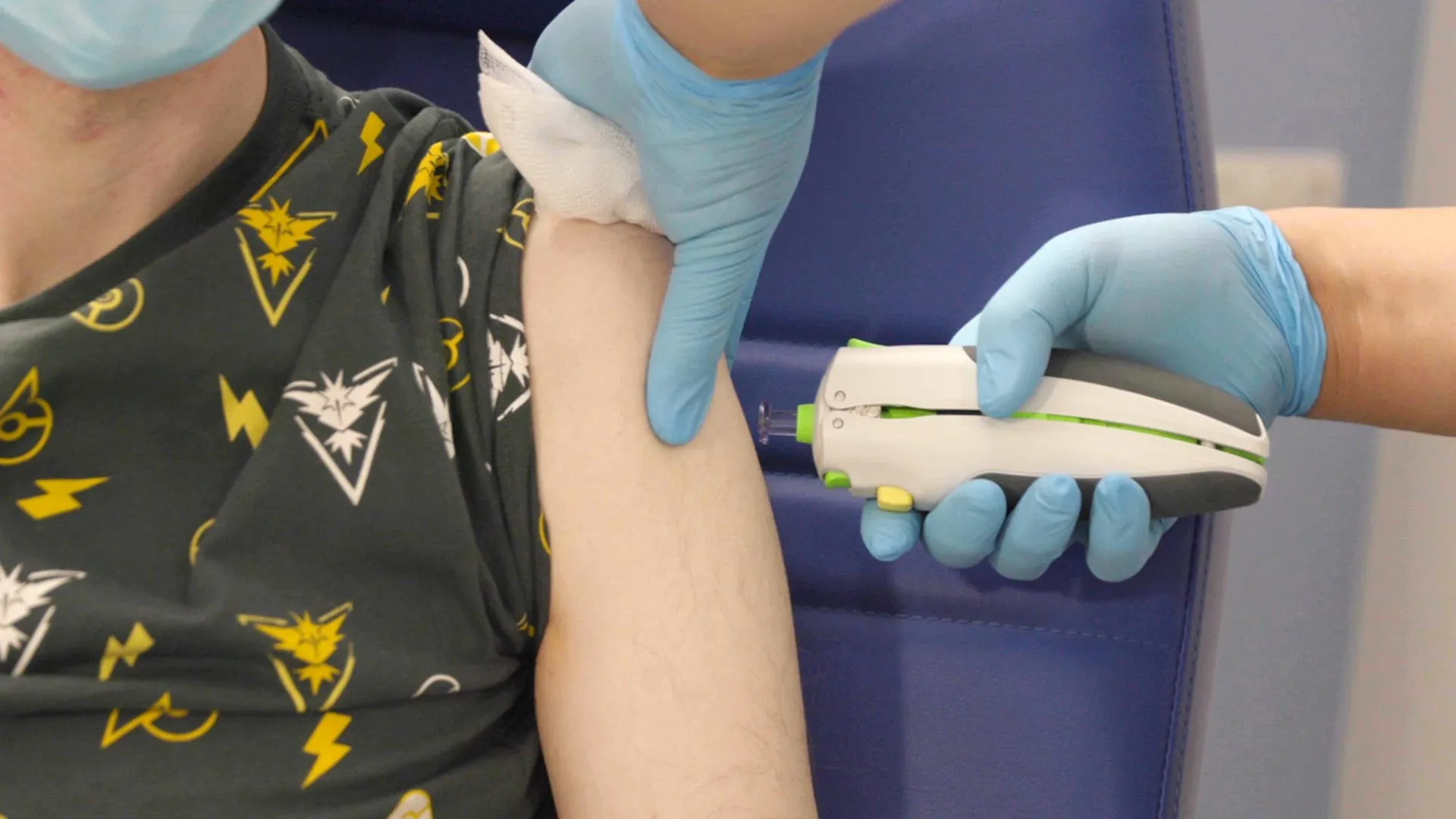
The landscape of global vaccinology has reached a significant milestone as a novel universal coronavirus vaccine, developed through advanced artificial intelligence and machine learning, has successfully navigated its first human clinical trial. Researchers from the University of Cambridge and its spinout biotechnology firm, DIOSynVax (DVX) Ltd, announced that the experimental candidate proved both safe and immunogenic in a Phase 1 study. This development signals a paradigm shift from reactive vaccine design, which responds to existing viral strains, to a proactive, "future-proof" strategy aimed at neutralizing viruses before they can trigger the next global health crisis.
The trial, the results of which were recently documented in the Journal of Infection, involved 39 healthy adult volunteers. The primary objective was to assess the safety profile of the vaccine and its ability to stimulate an immune response against a broad spectrum of coronaviruses. Unlike the first generation of COVID-19 vaccines, which targeted the specific spike protein of the original SARS-CoV-2 strain, this new candidate utilizes a digitally optimized "super-antigen" designed to recognize shared features across the entire Sarbecovirus family. This group includes not only the virus responsible for the COVID-19 pandemic but also the original SARS-CoV-1 and various high-risk bat-borne coronaviruses that have yet to spill over into human populations.
The Science of the Super-Antigen: AI-Driven Vaccine Design
At the core of this breakthrough is the application of generative artificial intelligence and machine learning to the field of immunology. Traditionally, vaccine development begins with a physical sample of a virus or its genetic sequence. Researchers then identify a part of the virus—the antigen—that the human immune system can learn to recognize. However, as viruses mutate, these antigens often change, rendering older vaccines less effective. This "antigenic drift" is the reason why influenza vaccines must be updated annually and why COVID-19 boosters have been repeatedly reformulated to address variants like Delta and Omicron.
The Cambridge team sought to break this cycle by looking for "conserved regions" of the virus—parts of the genetic code that remain virtually identical across hundreds of different strains and species within the Sarbecovirus family. By utilizing AI to analyze vast libraries of genetic data collected from global surveillance programs, the researchers were able to synthesize a single, optimized antigen. This "super-antigen" does not exist in nature; rather, it is a mathematical composite of the most stable and vital components of the virus family.
The trial represents the first time a vaccine whose active component was created entirely through computer simulations has been tested in humans. The success of this computational approach suggests that the "active ingredient" of future vaccines can be designed in silico, significantly reducing the time required to respond to emerging threats.
Clinical Trial Parameters and Safety Outcomes
The Phase 1 clinical trial was conducted at National Institute for Health and Care Research (NIHR) Clinical Research Facilities in Southampton and Cambridge, with sponsorship from the University Hospital Southampton NHS Foundation Trust (UHSFT). The cohort consisted of volunteers between the ages of 18 and 50 who were monitored closely for adverse reactions.
The results indicated that the vaccine was well-tolerated, with no significant side effects reported among the participants. Beyond safety, the trial provided crucial data on the vaccine’s efficacy in "training" the immune system. Laboratory analysis of the volunteers’ blood samples showed that the vaccine stimulated robust immune responses not only against the known SARS-CoV-2 and SARS-CoV-1 viruses but also against related bat coronaviruses. This cross-reactivity is the "holy grail" of universal vaccine research, as it suggests the vaccine could provide a baseline level of protection against a "Disease X"—a currently unknown pathogen with pandemic potential.
Needle-Free Delivery: Revolutionizing Administration
Another innovative aspect of the trial was the delivery mechanism. Instead of a traditional needle and syringe, the vaccine was administered as a DNA vaccine using a microfluid jet system. This technology uses a high-pressure stream of fluid to deliver the vaccine through the skin without the use of a needle.
This method offers several strategic advantages. First, it addresses the issue of needle phobia, which can be a significant barrier to vaccine uptake in many populations. Second, DNA vaccines delivered via jet injection can often be engineered to be more thermostable than mRNA vaccines, potentially reducing the reliance on ultra-cold chain logistics. This is particularly critical for large-scale vaccination campaigns in low-resource settings or remote geographic areas where maintaining deep-freeze temperatures is a logistical impossibility. Researchers believe that the combination of AI-designed antigens and needle-free delivery could make future pandemic responses significantly faster and more equitable.
A Chronology of Innovation: From Spinout to Success
The path to this clinical milestone began long before the COVID-19 pandemic. DIOSynVax (Digitally Immune Optimised Synthetic Vaccines) was founded in 2017 as a spinout from the University of Cambridge, supported by Cambridge Enterprise. Led by Professor Jonathan Heeney, the company’s mission was to apply comparative pathology and digital optimization to create a new class of vaccines.
When the COVID-19 pandemic struck in early 2020, the team pivoted their existing research on coronaviruses to address the immediate threat. However, while other pharmaceutical giants focused on rapid deployment against the specific SARS-CoV-2 strain, the Cambridge team maintained a long-term focus on the broader Sarbecovirus group. By 2021, animal studies had already demonstrated that their AI-designed antigens could generate wide-ranging protection. The transition to human trials in 2023 and 2024 marks the culmination of years of interdisciplinary collaboration between computer scientists, virologists, and clinical researchers.
Shifting from Reactive to Proactive Public Health
Professor Jonathan Heeney, head of the Lab of Viral Zoonotics at the University of Cambridge, emphasized that the current "reactive" model of vaccine development is inherently flawed. "We’ve converted vaccine development from being reactive to being future-proof," Heeney stated. "Our vaccines will continue to provide protection against viruses even as they mutate into new strains. We’ve overcome the problem of traditional vaccines, which have limited protection. It means we can escape the constant cycle of chasing the virus variants circulating in humans and updating the vaccines to try to catch up, like a dog chasing its tail."
This sentiment was echoed by Professor Saul Faust, the trial’s chief investigator and a professor at the University of Southampton. Faust noted that the speed of viral evolution often outpaces the regulatory and manufacturing timelines of traditional vaccines. By the time a variant-specific shot is manufactured and distributed, the virus may have already mutated again. A universal vaccine, by contrast, targets the features the virus cannot afford to change, effectively "trapping" the pathogen.
Broader Implications for Global Health Security
The implications of this technology extend far beyond the current concerns regarding COVID-19. The AI-driven platform used to create the Sarbecovirus vaccine can, in theory, be applied to any virus family. DIOSynVax is already exploring candidates for seasonal and pandemic influenza, as well as the Ebola group and other hemorrhagic fever viruses.
The economic and social arguments for this approach are compelling. The COVID-19 pandemic resulted in millions of deaths and trillions of dollars in lost economic output due to lockdowns and disrupted supply chains. Professor Marian Knight, Scientific Director for NIHR Infrastructure, described the trial as a "pivotal leap forward." She highlighted that the ability to develop and advance this class of vaccines before an outbreak begins could save millions of lives and preserve global economic stability.
Furthermore, the threat of zoonotic spillover—where a virus jumps from animals to humans—is increasing due to climate change, habitat loss, and increased human-animal contact. Because the Cambridge vaccine targets bat-related coronaviruses that have not yet infected humans, it serves as a proactive defense against the next natural spillover event.
Future Outlook: The Road to Phase 2
While the Phase 1 results are a landmark achievement, the vaccine is not yet ready for public use. The next step is a Phase 2 clinical trial, which will involve a much larger and more diverse group of participants. This phase will focus on confirming the long-term durability of the immune response and testing the vaccine across different age groups and ethnicities to ensure universal efficacy.
Funding for the project has been primarily provided by Innovate UK, reflecting the strategic importance the British government places on life sciences and pandemic preparedness. As the global community continues to grapple with the tail end of the COVID-19 pandemic, the success of the DIOSynVax trial offers a glimpse into a future where vaccines are designed not to follow the virus, but to wait for it.
The integration of artificial intelligence into vaccine design represents more than just a technological upgrade; it represents a fundamental change in how humanity interacts with the microbial world. By using the power of computation to find the "Achilles’ heel" of entire virus families, scientists are moving closer to a world where pandemics are no longer an inevitability, but a manageable risk. For now, the successful completion of this first human trial stands as a testament to the power of British innovation and the potential of AI to safeguard human health on a global scale.
