
 By Suherman Candra Maholtra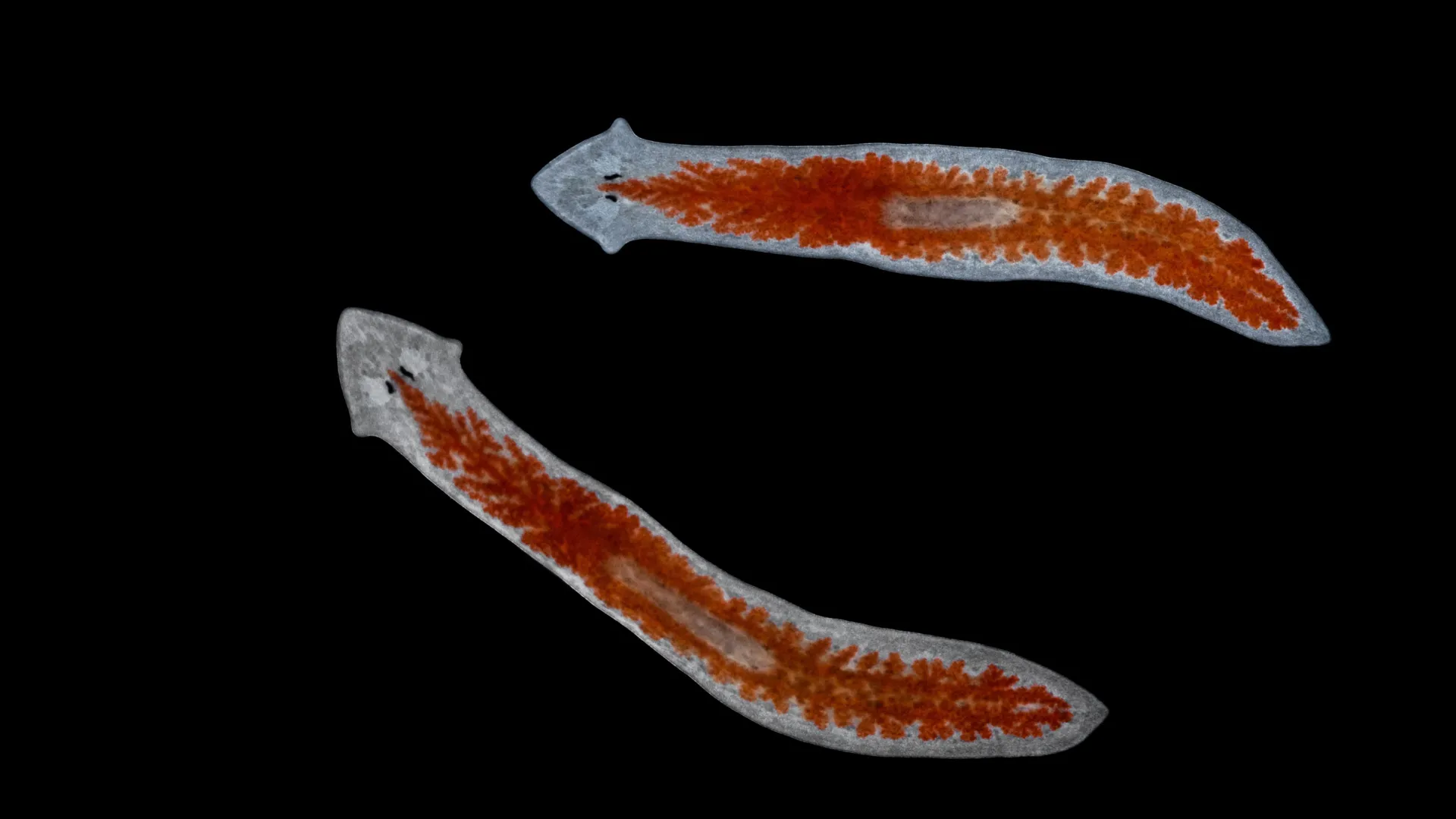
The biological world has long operated under the assumption that stem cells are essentially passive recipients of instructions, requiring a specific physical environment known as a "niche" to function. However, groundbreaking research published on October 15, 2025, in the journal Cell Reports, has fundamentally upended this paradigm. Conducted by a team at the Stowers Institute for Medical Research, the study reveals that planarian flatworms—creatures famous for their near-mythical ability to regenerate from almost any injury—possess stem cells that operate with a level of independence never before documented in the animal kingdom. Rather than relying on immediate neighbors for guidance, these cells appear to take cues from distant organs, specifically the intestine, suggesting a "global" rather than "local" regulatory network.
Led by Postdoctoral Research Associate Frederick "Biff" Mann, Ph.D., and Stowers President and Chief Scientific Officer Alejandro Sánchez Alvarado, Ph.D., the research provides a new lens through which to view regenerative medicine. By identifying how these cells remain potent without the strict "micromanagement" of a local niche, scientists may be able to unlock new methods for repairing human tissues or preventing the "rogue" behavior of stem cells that leads to oncogenesis.
The Traditional Biological Paradigm: The Stem Cell Niche
To appreciate the significance of the Stowers Institute’s discovery, one must first understand the prevailing theory of the stem cell niche. In most multicellular organisms, including humans, stem cells are sequestered in highly specific microenvironments. These niches act as control centers, providing the physical contact and chemical signaling necessary to tell a stem cell when to remain dormant, when to divide to renew itself, and when to differentiate into a specialized cell type, such as a neuron or a muscle cell.
A prime example of this is found in the human hematopoietic system. Human blood-forming stem cells reside in specialized niches within the bone marrow. Here, they are surrounded by osteoblasts and vascular cells that dictate their behavior. If these stem cells were to leave this niche without proper signaling, they would either lose their potency or begin to divide uncontrollably. This "micromanagement," as Dr. Mann describes it, is a safety feature of complex life, ensuring that cells do not grow out of place or turn into tumors.
In contrast, the planarian flatworm (Schmidtea mediterranea) appears to have evolved a more decentralized system. These organisms are composed of approximately 25% stem cells, known as neoblasts. These neoblasts are pluripotent, meaning they can become any cell type in the body—a feat that adult human stem cells generally cannot achieve. The Stowers study sought to find the "niche" for these neoblasts, only to find that the traditional rules of proximity do not apply.
Methodology: Mapping the Cellular Landscape with Spatial Transcriptomics
The breakthrough was made possible through the use of spatial transcriptomics, a high-resolution technology that allows researchers to see not just which genes are active in a cell, but exactly where that cell is located within the physical structure of the organism. This technique provides a "map" of gene expression, allowing scientists to observe the interactions—or lack thereof—between different cell types in their natural state.
During this mapping process, the team identified a previously unknown cell type that they named the "hecatonoblast." The name is derived from the Hecatoncheires, the hundred-armed giants of Greek mythology, a nod to the cell’s large size and its numerous fingerlike projections that extend into the surrounding tissue.
Initially, the researchers hypothesized that the hecatonoblast might be the elusive niche cell for the planarian stem cells. Its physical proximity and complex structure suggested it was designed to cradle and instruct the neighboring neoblasts. However, the data told a different story. Despite being physically close, the hecatonoblasts showed no significant signaling influence over the stem cells’ fate. This counterintuitive finding forced the researchers to look further afield for the source of the stem cells’ instructions.
The Intestine as a Global Signaling Hub
In a surprising twist, the study found that the strongest signals influencing the behavior and positioning of the neoblasts came from the planarian’s intestinal cells. In the hierarchy of the flatworm’s anatomy, the intestine is a massive, branching organ that reaches throughout the body. The research suggests that the intestine acts as a "global" communication network, sending signals that coordinate regeneration across the entire organism.
Dr. Blair Benham-Pyle, a co-corresponding author and Assistant Professor at the Baylor College of Medicine, explained that this distinction between local and global communication is key to understanding regeneration. While local interactions handle immediate, minute-to-minute cellular reactions, global signals—like those from the intestine—manage the organism’s response to large-scale trauma, such as the loss of a limb or a head.
This discovery implies that planarian stem cells are "independent" in the sense that they do not require a fixed, stationary home to maintain their identity. Instead, they move through a dynamic environment, interacting with various "friends" (neighboring cells and their progeny) while keeping their primary orders from a centralized, organ-wide system.
A Chronology of Planarian Research and Scientific Evolution
The study of planarian regeneration is not new; it dates back to the late 19th century. In 1898, the pioneering geneticist Thomas Hunt Morgan noted that a planarian could be cut into 279 pieces, and each piece would regenerate into a complete, perfectly proportioned miniature worm within weeks. For over a century, the question of how these "neoblasts" knew what to become remained one of biology’s greatest mysteries.
- Early 1900s: Researchers focused on the "polarity" of the worm, noting that a tail fragment always knew to grow a head at the front and a tail at the back.
- Late 20th Century: The advent of molecular biology allowed scientists to identify specific genes, such as the Wnt signaling pathway, which controls the head-to-tail axis.
- 2010s: Genomic sequencing of Schmidtea mediterranea provided a blueprint of the worm’s DNA, but the "niche" remained undiscovered.
- 2025: The Stowers Institute study utilizes spatial transcriptomics to prove that the "niche" as we know it may not exist in these worms, replacing the concept of a fixed physical location with a dynamic, global signaling network.
This timeline illustrates a shift from observing the results of regeneration to understanding the logic of the cellular communication that drives it.
Supporting Data and Implications for Cancer Research
The data presented in Cell Reports suggests that the independence of planarian stem cells is exactly what allows for their total regenerative capacity. In humans, the strict control of the niche is a double-edged sword. While it prevents cancer by limiting stem cell activity, it also limits our ability to heal. When human stem cells "go rogue" and stop following the rules of their niche, they often form tumors.
The Stowers research provides a comparative model that could lead to a breakthrough in oncology. By understanding the "basic rules" that planarians use to keep their independent stem cells from becoming cancerous, researchers may find new ways to re-educate human cancer cells. If scientists can figure out how the planarian intestine sends "global" signals that maintain cellular order without a physical niche, they might be able to replicate those signals synthetically to suppress tumor growth or encourage healthy tissue repair in humans.
Furthermore, the discovery of the hecatonoblast adds a new layer to our understanding of cellular diversity. While it does not act as a traditional niche, its presence suggests that there are still many undiscovered cell types with specialized functions in "simple" organisms that could have analogues in human biology.
Institutional and Official Responses
The scientific community has reacted to the findings with a mixture of surprise and optimism. The National Institute of General Medical Sciences (NIGMS), which funded the research, noted that the work aligns with the broader goal of understanding the fundamental principles of life that can eventually be translated into clinical applications.
Dr. Alejandro Sánchez Alvarado emphasized that this research is a call to rethink the "micromanager" model of biology. "This finding challenges our concept of a stem cell ‘niche’ and may significantly advance our understanding of how to control stem cells’ abilities to restore damaged tissues," he stated. He suggested that the future of regenerative medicine might not lie in trying to build artificial niches, but in mastering the "global" signals that allow cells to work effectively anywhere in the body.
Dr. Benham-Pyle added that the dynamic nature of the planarian environment—where stem cells make "friends" as they differentiate—suggests that the process of becoming a specialized cell is much more social and fluid than previously thought.
Conclusion: Toward a New Era of Regenerative Therapy
The Stowers Institute’s discovery marks a significant milestone in the field of developmental biology. By proving that stem cells can thrive and function without a localized niche, the study opens the door to a new philosophy of medicine.
In the long term, the implications are profound. If researchers can harness the "global signaling" mechanism discovered in flatworms, the possibilities for human medicine are vast. This could include:
- Organ Bioengineering: Creating complex tissues without needing to replicate the intricate bone marrow or organ-specific niches.
- Advanced Wound Healing: Developing therapies that signal stem cells to migrate to and repair damaged areas more effectively.
- Cancer Prevention: Understanding how planarians prevent their 25% stem cell population from forming tumors could lead to new preventative treatments for humans.
As science continues to peel back the layers of how these simple flatworms achieve the impossible, the gap between the regenerative powers of a planarian and the healing potential of a human being continues to shrink. The "independence" of the planarian stem cell, once a biological anomaly, may soon become the blueprint for the next generation of human medical breakthroughs.
