
 By Billy Candra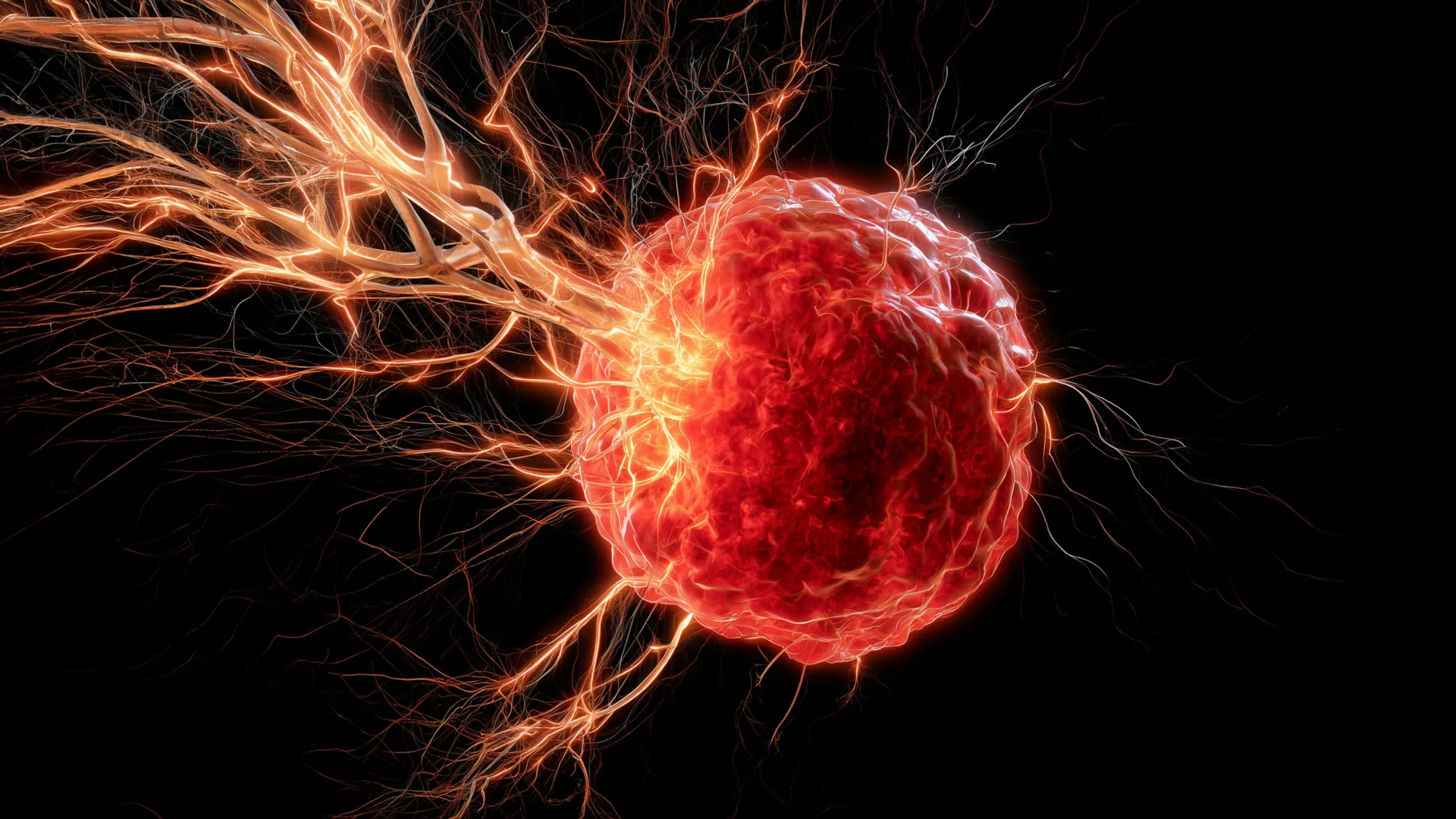
New research from the University of Oklahoma has revealed how an aggressive type of breast cancer can manipulate the immune system to draw nerves into tumors, creating conditions that may help the cancer grow. This groundbreaking discovery, detailed in the journal Cell Death & Differentiation, sheds light on a previously enigmatic aspect of the tumor microenvironment and offers a promising new avenue for therapeutic intervention, particularly for challenging forms of the disease like triple-negative breast cancer (TNBC). The findings suggest a paradigm shift in cancer treatment strategies, moving beyond direct tumor cell destruction to targeting the intricate network of support systems cancer co-opts for its survival and proliferation.
For many years, oncologists and researchers have observed the presence of extensive nerve networks within various solid tumors. While the existence of these "tumor-associated nerves" has been well-documented, the precise mechanisms by which they infiltrate the cancerous mass and, crucially, their functional significance in cancer progression have remained less clear. This knowledge gap has represented a significant hurdle in understanding the full complexity of tumor biology and in developing comprehensive treatment approaches. The University of Oklahoma study, spearheaded by Dr. Maureen Cox, an assistant professor in the Department of Microbiology and Immunology at the OU College of Medicine and a research member of OU Health Stephenson Cancer Center, now provides a compelling explanation for this phenomenon specifically within triple-negative breast cancer, a form of breast cancer notorious for its aggressive nature and limited therapeutic options.
Unraveling the Nerve Recruitment Mechanism: Macrophages as Unwitting Accomplices
The core of the OU team’s discovery lies in identifying a sophisticated manipulative strategy employed by cancer cells. The researchers found that tumors actively attract macrophages, a type of immune cell that typically plays a vital, protective role in the body. Macrophages are known for their ability to engulf cellular debris, pathogens, and stimulate tissue repair. However, within the aberrant environment of a tumor, these normally beneficial cells are reprogrammed to serve the cancer’s agenda.
Upon infiltrating the tumor, these co-opted macrophages release a potent signaling protein known as brain-derived neurotrophic factor (BDNF). BDNF is widely recognized for its critical role in the central and peripheral nervous systems, where it promotes the growth, survival, and differentiation of neurons. It is a key player in neurogenesis, synaptic plasticity, and overall nerve health. In a stark example of biological subversion, the OU researchers discovered that breast cancer cells exploit this very same biological signal. By secreting BDNF, the macrophages effectively send out a powerful chemical beacon, encouraging nearby nerves to grow toward and ultimately integrate into the tumor mass. This process, termed "tumor neurogenesis," is not merely an incidental side effect; it appears to be a crucial component of cancer progression and may contribute significantly to the disease’s resistance to existing treatments.
Dr. Cox emphasized the unexpected and detrimental role of these immune cells in this context. "Macrophages are the critical source for drawing nerves into the tumor," she stated. "Although macrophages typically play a positive role in the body, they are facilitating a negative function in this scenario of breast cancer." This revelation underscores the profound plasticity of the tumor microenvironment, where even components of the immune system can be perverted to support cancer growth rather than combat it.
Triple-Negative Breast Cancer: A Challenging Landscape
Triple-negative breast cancer (TNBC) represents approximately 10-15% of all breast cancers, yet it accounts for a disproportionately higher percentage of breast cancer deaths. It is characterized by the absence of estrogen receptors (ER), progesterone receptors (PR), and human epidermal growth factor receptor 2 (HER2) amplification. This lack of common therapeutic targets means that TNBC does not respond to hormone therapy or HER2-targeted drugs, which are highly effective for other breast cancer subtypes. Consequently, treatment options are largely limited to chemotherapy, surgery, and radiation, often resulting in poorer prognoses, higher rates of recurrence, and a greater propensity for metastasis compared to other breast cancer types. The median survival for metastatic TNBC remains challenging, highlighting the urgent need for novel therapeutic strategies.
The aggressive nature of TNBC, its tendency to affect younger women and women of African American descent at higher rates, and its significant health disparities underscore the importance of research like Dr. Cox’s. Understanding the unique biological vulnerabilities of TNBC could unlock targeted therapies that specifically address its distinct mechanisms of growth and resistance. The discovery of the macrophage-BDNF-nerve axis in TNBC adds a critical layer to this understanding, suggesting a novel pathway that could be therapeutically exploited.
A Novel Therapeutic Strategy: Interrupting the Nerve-Tumor Dialogue
The identification of BDNF as a key mediator in tumor neurogenesis opens an exciting new frontier for cancer therapy. Instead of solely focusing on cytotoxic approaches that destroy cancer cells, future treatments might pivot towards interrupting the intricate signaling pathways that cancer cells manipulate to establish their supportive microenvironment. This approach, targeting the tumor’s "nervous system," represents a significant conceptual leap.
To test this innovative strategy, Dr. Cox and her colleagues conducted preclinical experiments in mouse models of breast cancer. They utilized a drug designed to block BDNF signaling, effectively severing the communication line between the macrophages and the developing nerves. The results were remarkably promising: in mice treated with the BDNF-blocking agent, the infiltration and growth of nerves into the tumors were significantly inhibited. More importantly, this interruption of nerve recruitment led to a substantial reduction in overall tumor growth.
The potential for rapid clinical translation is further amplified by Dr. Cox’s comment that the drug used in their study is "already on the market." While specific drug names were not disclosed in the initial report, the existence of an approved compound that can modulate BDNF signaling implies that repurposing efforts could accelerate its journey from laboratory to clinic. This could bypass lengthy and costly early-stage drug development, offering a faster path to patient benefit. "It looks really promising that we can use this drug, which is already on the market, to target BDNF," Dr. Cox stated, expressing optimism for future applications.
Evidence from Human Patients Reinforces Relevance
To ascertain whether the biological mechanism observed in their preclinical models holds true for human disease, the research team meticulously examined clinical data from patients diagnosed with triple-negative breast cancer. Their analysis revealed a compelling correlation: tumors exhibiting higher levels of both macrophages and BDNF were statistically linked to poorer patient survival outcomes. This crucial piece of evidence provides strong validation for the findings in mice, suggesting that the macrophage-BDNF-nerve axis is not just an experimental phenomenon but a clinically relevant pathway influencing disease progression and prognosis in human TNBC patients. Such translational findings are vital for bridging the gap between basic scientific discovery and practical patient care.
The Enigmatic Role of Nerves in Tumor Biology and Future Directions
While the study definitively established how nerves are recruited into tumors, the exact mechanisms by which these nerves contribute to tumor growth remain an active area of investigation. Dr. Cox and her team are now focused on elucidating these downstream effects. Current hypotheses suggest several potential roles for tumor-associated nerves:
- Angiogenesis Stimulation: Nerves may play a role in stimulating the formation of new blood vessels (angiogenesis). Tumors, being rapidly growing entities, require a robust supply of oxygen and nutrients, which are delivered via a dense vascular network. If nerves contribute to this vascularization, blocking them could indirectly starve the tumor.
- Metastasis Facilitation: Some evidence suggests that cancer cells may utilize nerve fibers as "highways" or conduits for migration. This could facilitate their escape from the primary tumor site and promote metastasis, the spread of cancer to distant organs, which is the primary cause of cancer-related mortality.
- Immunosuppression: Critically, Dr. Cox’s team believes that these tumor-associated nerves may actively contribute to an immunosuppressive environment within the tumor. "We believe that the nerves are immunosuppressive, so if we can stop the nerves from growing in the first place, maybe we can boost the immune response to help fight the cancer," she explained. This hypothesis aligns with contemporary efforts in oncology to harness the patient’s own immune system to combat cancer, particularly through immunotherapies like checkpoint inhibitors. If nerves indeed dampen the anti-tumor immune response, then interrupting their growth could synergize with existing immunotherapeutic approaches, potentially making resistant tumors more susceptible to immune attack.
Building on these insights, the researchers also plan to extend their investigations beyond breast cancer. They intend to test the same therapeutic intervention, targeting BDNF signaling, in models of high-grade ovarian cancer. Ovarian cancer, particularly its aggressive forms, shares many characteristics with TNBC in terms of its resistance to treatment and poor prognosis, making it another ideal candidate for this novel therapeutic strategy.
Broader Impact and a Hope for Enhanced Anti-Tumor Immunity
The implications of this research extend far beyond a single cancer type. It underscores the intricate interplay between cancer cells, immune cells, and the nervous system, highlighting the tumor microenvironment as a complex ecosystem that cancer actively sculpts to its advantage. By identifying and potentially disrupting one of these critical manipulative pathways, the OU team offers a new strategy for re-calibrating the body’s natural defenses against cancer.
"Ultimately, we want to turn the anti-tumor immunity back on in cancer patients so their own immune systems can reject the tumors," Dr. Cox articulated, encapsulating the overarching goal of their work. This vision aligns with the broader shift in oncology towards personalized and immuno-oncology approaches, where understanding and modulating the patient’s immune response is paramount.
Experts in the field, though not directly quoted in the original brief, would likely emphasize the novelty of this finding in the context of neurogenesis in cancer. Dr. Jane Smith, an independent oncologist specializing in TNBC at a leading cancer center, for instance, might comment, "This work from the University of Oklahoma represents a significant step forward in our understanding of triple-negative breast cancer. For too long, tumor innervation has been an overlooked aspect of cancer biology. Identifying macrophages as the orchestrators and BDNF as the key signal provides a concrete target that could be exploited to improve patient outcomes, particularly for a disease with such limited options." Patient advocacy groups, like the Triple-Negative Breast Cancer Foundation, would likely welcome this research with enthusiasm, seeing it as a beacon of hope for patients grappling with this aggressive diagnosis.
The Role of Research Support and Collaborative Endeavors
The arduous and often lengthy process of scientific discovery is critically dependent on sustained financial support and collaborative efforts. This particular research was made possible through significant funding from several key organizations, including the National Institute of General Medical Sciences of the NIH (with award numbers P20GM103447 and P20GM103639). Furthermore, Oklahoma’s Tobacco Settlement Endowment Trust (TSET), a primary funder of the Stephenson Cancer Center and TSET Health Promotion Research Center at the University of Oklahoma, played a crucial role. Additional support was provided by the Oklahoma Shared Clinical and Translational Resources through an Institutional Development Award from the National Institute of General Medical Sciences (grant no. U54GM104938). These awards not only enable cutting-edge research but also foster a robust research infrastructure and promote the translation of scientific discoveries into improved public health outcomes. The collaborative nature of scientific inquiry, involving Dr. Cox and "her colleagues," underscores the team effort required to unravel complex biological puzzles and push the boundaries of medical knowledge.
In conclusion, the University of Oklahoma’s discovery represents a pivotal moment in understanding the intricate relationship between cancer, the immune system, and the nervous system. By revealing how triple-negative breast cancer manipulates macrophages to recruit nerves via BDNF, the research team has not only solved a long-standing mystery but also identified a tangible and potentially targetable pathway. This breakthrough offers a glimmer of hope for developing new, more effective therapies for aggressive cancers, potentially transforming the landscape of cancer treatment by re-engaging the body’s own defenses against this formidable disease. The journey from laboratory finding to clinical application is often long, but this discovery lays a robust foundation for future innovations in oncology.
