
 By Lina carolina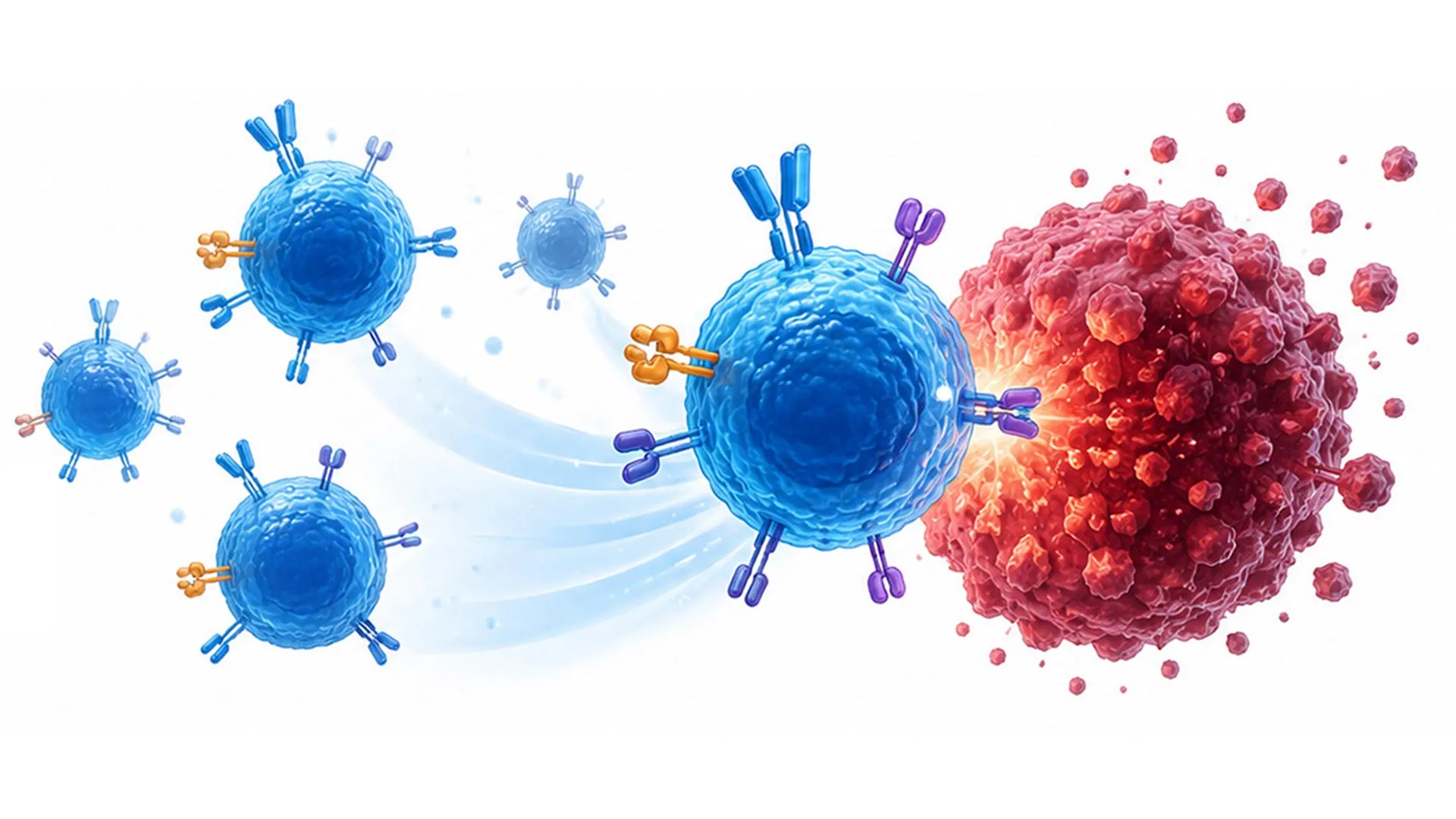
A groundbreaking advancement in cancer immunotherapy promises to overcome significant hurdles in treating solid tumors, potentially making highly precise cancer-fighting T cell therapies more accessible and affordable. Researchers at the University of California, Los Angeles (UCLA) have engineered a novel strategy to create “off-the-shelf” T cell therapies from donated cord blood, bypassing the lengthy, expensive, and sometimes risky personalized treatment models that have historically defined this field. This new approach, detailed in the journal Cell Reports Medicine, utilizes blood stem cells to generate vast quantities of cancer-targeting T cells that can be stored and deployed rapidly to a wide range of patients, significantly reducing manufacturing time and cost while mitigating the risk of adverse immune reactions.
A Paradigm Shift in T Cell Therapy
T cell receptor (TCR) therapy represents a sophisticated form of cancer treatment that involves genetically modifying a patient’s own immune cells, specifically T cells, to precisely identify and eradicate malignant cells. This method offers a distinct advantage over its predecessor, CAR T-cell therapy, by enabling T cells to recognize not only surface proteins on cancer cells but also intracellular protein fragments that are presented on the cell surface. This expanded targeting capability is particularly crucial for solid tumors, where many of the defining molecular alterations occur within the cell, often inaccessible to therapies relying on surface markers alone.
However, the widespread adoption of TCR therapy has been hampered by a critical bottleneck: the need for personalized treatments. Each patient’s therapy is typically derived from their own T cells, a process that can take several weeks to complete and incurs substantial costs, often reaching into the hundreds of thousands of dollars. This logistical and financial burden limits the accessibility of this life-saving treatment.
An alternative strategy explored by scientists involves using T cells from healthy donors, which can be manufactured in advance and stored for later use. This "off-the-shelf" model offers greater scalability and potentially lower costs. Yet, it introduces a significant risk of graft-versus-host disease (GvHD), a serious condition where the donor immune cells mistakenly attack the recipient’s healthy tissues.
The UCLA team’s innovative strategy directly addresses both of these challenges simultaneously. By leveraging blood stem cells from donated cord blood, they have developed a scalable and consistent method for producing engineered T cells capable of targeting a common protein found in numerous solid tumors. These engineered cells, termed AlloESO-T cells, have demonstrated remarkable efficacy in preclinical studies, controlling tumor growth and improving survival rates in mouse models without inducing dangerous side effects.
Building From the Ground Up: The Stem Cell Advantage
The core of UCLA’s innovation lies in its departure from conventional methods of generating T cell therapies. Instead of starting with mature T cells, the researchers begin at an earlier stage of immune cell development: the blood stem cell. These primitive cells, sourced from donated cord blood, possess the remarkable ability to differentiate into all types of blood and immune cells.
By engineering these immature stem cells, the UCLA team was able to insert a gene encoding a specific T cell receptor designed to recognize NY-ESO-1, a protein frequently expressed in various solid tumors. A key feature of NY-ESO-1 is that fragments of it are transported from inside the tumor cell to its outer surface, effectively acting as a beacon for the engineered T cells.
Crucially, engineering the stem cells at this early developmental stage offers a profound advantage. As these engineered stem cells mature into T cells in the laboratory, they naturally develop the intended cancer-targeting receptor. Importantly, they do not acquire the diverse and potentially self-reactive natural T cell receptors (TCRs) that are inherent to mature donor T cells. This "clean slate" approach significantly reduces the likelihood of the engineered T cells attacking healthy host tissues, a common concern with traditional donor-derived therapies.
"Stem cells are undifferentiated—they’re not yet mature T cells with a fixed receptor already in place," explained Yichen (John) Zhu, a graduate student at the UCLA Broad Stem Cell Research Center and co-first author of the study. "When we differentiate our engineered stem cells into T cells, essentially all of the resulting cells carry the same receptor and go after the same tumor target." This uniformity and specificity are paramount for ensuring both efficacy and safety.
A Dual-Action Defense Against Cancer Evasion
A persistent challenge in the treatment of solid tumors is their inherent heterogeneity. Cancer cells within a single tumor can exhibit significant variations, and some may cease to display the specific molecular markers targeted by therapies. This phenomenon, known as antigen escape, can lead to treatment failure as surviving cancer cells repopulate the tumor.
To counter this evasive tactic, the UCLA researchers have equipped their AlloESO-T cells with a secondary defense mechanism. In addition to the engineered TCR that targets NY-ESO-1, these cells are equipped with natural killer (NK) cell receptors. These receptors are designed to recognize stress signals that are commonly displayed by many tumor cells, regardless of their NY-ESO-1 expression.
This dual-receptor system provides the AlloESO-T cells with an additional means of identifying and eliminating cancer cells. Even if a tumor cell downregulates or loses the NY-ESO-1 protein, the NK cell receptors can still detect it as a distressed cell and trigger its destruction.
"Solid tumors are very diverse," Zhu elaborated. "Some tumor cells lose or hide the antigen a therapy is designed to find—what we call antigen escape. When that happens, a therapy built around a single target loses its grip. Our stem cell-derived cells still have a second mechanism to kill those tumor cells." Laboratory experiments involving human melanoma, ovarian, and prostate cancer cells have corroborated this dual-action capability, demonstrating that the engineered T cells could eliminate cancer cells that were resistant to NY-ESO-1 targeting alone. This built-in redundancy offers a crucial advantage in overcoming tumor resistance mechanisms.
Preclinical Success: Controlling Tumors and Extending Survival in Mice
The efficacy and safety of the AlloESO-T cells were rigorously tested in preclinical models. In mouse models of ovarian cancer, a single dose of the engineered cells resulted in sustained tumor control and significantly improved survival rates. This outcome starkly contrasted with the performance of conventionally engineered donor T cells, which provided only partial tumor control and induced GvHD in the treated animals.
Similar encouraging results were observed in a melanoma model. The AlloESO-T cells effectively slowed tumor growth and delayed cancer recurrence, whereas the comparison group of conventionally engineered cells offered only transient tumor suppression.
Beyond tumor control, the researchers noted significant differences in the post-treatment behavior of the two cell types. Following a single infusion, the AlloESO-T cells demonstrated remarkable expansion, increasing in number by approximately 100-fold. They effectively infiltrated tumors, proliferated at the tumor site, and remained active for extended periods, largely sparing healthy organs. In contrast, the conventionally engineered donor T cells showed a tendency to accumulate in vital organs like the liver and lungs, leading to the type of toxicity that the new strategy aims to prevent. This indicates a more targeted and safer distribution profile for the stem cell-derived AlloESO-T cells.
Scalable Manufacturing and Cost Reduction: A Game Changer
The potential for large-scale manufacturing is one of the most significant advantages of the UCLA team’s platform. Traditional personalized T cell therapies necessitate the collection, processing, and administration of cells for each individual patient, a process that is inherently labor-intensive and costly. By starting with cord blood stem cells, the researchers envision a manufacturing process that can generate therapeutic cells on an industrial scale.
Cord blood stem cells are prolific producers of immune cells. A modest initial supply of these stem cells can be cultivated to yield trillions of therapeutic cells, enough to produce thousands of treatment doses. This scalability is poised to dramatically reduce the cost of TCR therapy.
"From a small number of cord blood stem cells, we can generate trillions of therapeutic cells—enough for thousands of doses—within about six weeks," stated Yanruide (Charlie) Li, a postdoctoral scholar in the Yang lab and co-senior author. "At an estimated $5,000 per dose, this approach would be far more accessible than today’s therapies." This projected cost is a fraction of the hundreds of thousands of dollars typically associated with current personalized cell therapies, representing a transformative leap in accessibility for patients worldwide.
A Versatile Platform for Diverse Solid Tumors
The AlloESO-T system is designed to be more than just a single-target therapy. Many solid tumors present a significant challenge for conventional immunotherapies due to the lack of suitable target proteins on their surface. TCR-based treatments, with their ability to recognize intracellular protein fragments, offer a promising alternative. The UCLA platform, by enabling the rapid generation of T cells specific to various cancer antigens, holds the potential to target a much broader spectrum of cancers that have historically been difficult to treat with existing cell therapies.
"We’re not just presenting one therapy for one target. We want to share the platform itself," Li emphasized. "As long as a receptor for a given cancer antigen has been validated, we can build it into this system and generate T cells specific to that target." This adaptability suggests that the platform could be readily customized to address numerous types of solid tumors by simply incorporating different validated TCRs.
Furthermore, the AlloESO-T system builds upon established manufacturing protocols developed by Dr. Yang’s laboratory for its CAR-NKT platform, another off-the-shelf immunotherapy strategy. This existing infrastructure and partnership with the UCLA Health Center for Advanced Biotherapies for manufacturing clinical-grade cells are expected to accelerate the transition of the AlloESO-T technology towards human clinical trials.
The Road Ahead: Human Trials and Regulatory Approval
While the preclinical results are highly promising, it is important to note that the therapeutic cells described in this research have not yet been tested in human clinical trials. They have not undergone rigorous evaluation by regulatory bodies such as the U.S. Food and Drug Administration (FDA) to establish their safety and efficacy for human use. The next critical step will involve initiating human trials to translate these groundbreaking preclinical findings into a tangible clinical benefit for patients battling solid tumors. The development of such innovative therapies underscores the relentless pursuit of more effective, accessible, and safer cancer treatments in modern medicine.
