
 By Suherman Candra Maholtra
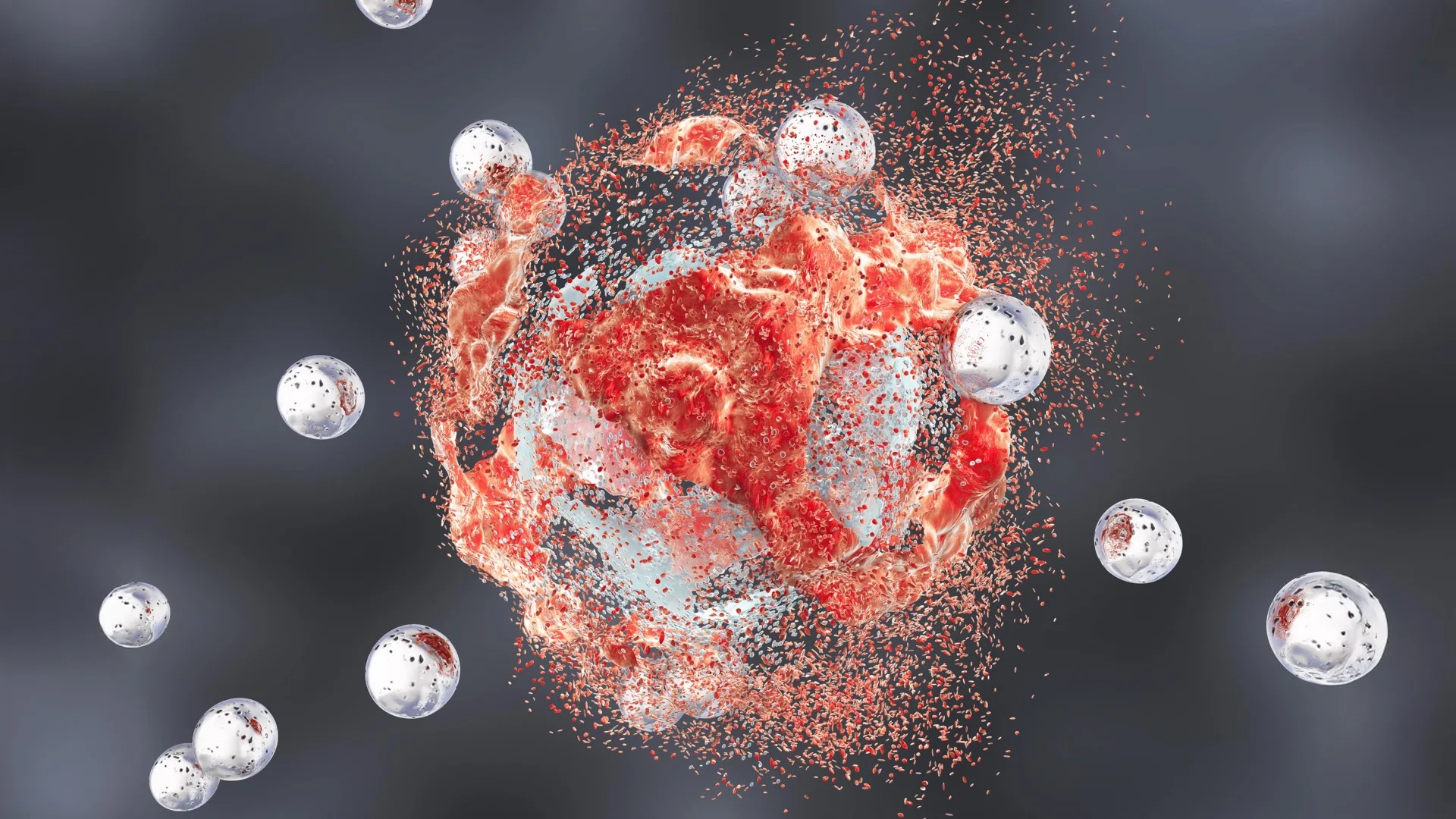
In a significant advancement for oncology, researchers at the Walter and Eliza Hall Institute of Medical Research (WEHI) in Melbourne, Australia, have identified a specialized type of immune cell capable of detecting and eradicating small cell lung cancer (SCLC). This discovery, published in the prestigious journal Cancer Cell, addresses one of the most formidable challenges in modern respiratory medicine: the aggressive and often treatment-resistant nature of SCLC. By uncovering the role of gamma delta T cells, the study provides a blueprint for a new era of immunotherapy that could bypass the biological "cloaking devices" used by the deadliest forms of lung cancer.
Small cell lung cancer represents approximately 15% of all lung cancer cases globally. Unlike the more common non-small cell lung cancer (NSCLC), SCLC is characterized by a rapid doubling time, early systemic metastasis, and a tendency to develop resistance to chemotherapy. For decades, the five-year survival rate for SCLC has remained stubbornly low, hovering below 7%. While the introduction of immunotherapy—specifically checkpoint inhibitors—has revolutionized treatment for many solid tumors, its impact on SCLC has been marginal. The WEHI study suggests that the reason for this limited success lies in the tumor’s ability to hide from the conventional T cells targeted by current drugs, making the discovery of gamma delta T cells a potential turning point in clinical care.
The Biological Shield: Why Small Cell Lung Cancer Evades Treatment
To understand the significance of the WEHI discovery, one must first examine the mechanism by which SCLC evades the human immune system. Conventional immunotherapy relies primarily on "alpha beta" T cells. These cells identify cancer by recognizing specific proteins presented on the surface of tumor cells via a molecule called Major Histocompatibility Complex (MHC) Class I.
Small cell lung cancers are master manipulators of this system. They frequently downregulate or entirely "silence" their MHC Class I molecules. Without this molecular "flag," alpha beta T cells remain blind to the presence of the tumor, allowing the cancer to grow and spread unchecked. This phenomenon, known as immune evasion, is the primary reason why many SCLC patients do not respond to standard PD-1 or PD-L1 inhibitors, such as pembrolizumab or atezolizumab.
Professor Kate Sutherland, the study’s senior author and a laboratory head at WEHI, noted that this "invisibility" has been a brick wall for researchers for years. "For decades, we’ve known that small cell lung cancer is exceptionally good at hiding from the immune system," Professor Sutherland explained. The identification of gamma delta T cells changes this dynamic because these cells do not require MHC Class I to recognize their targets. They possess an innate ability to sense "stress signals" on cancer cells, effectively seeing through the disguise that baffles other immune components.
Miniature Tumors and the Breakthrough in the Lab
The research team, led by first author Dr. Jin Ng, employed cutting-edge methodology to validate their findings. In collaboration with the Royal Melbourne Hospital and the Victorian Cancer Biobank, the scientists utilized tissue samples donated by patients to grow "mini-tumors" or organoids in a laboratory setting. These three-dimensional models are far more sophisticated than traditional cell cultures, as they mimic the complex architecture and genetic diversity of a patient’s actual tumor.
When the researchers introduced gamma delta T cells—extracted from the blood of the same patients—into these mini-tumor environments, the results were definitive. The gamma delta T cells actively sought out the SCLC cells and initiated a lethal immune response. This marked the first time that the direct anti-tumor activity of these specific cells had been demonstrated so clearly in a realistic SCLC model.
The study further correlated these laboratory findings with real-world patient data. By analyzing the genomic profiles of patients from major clinical trials, the team found a striking trend: individuals whose tumors naturally contained higher concentrations of gamma delta T cells had significantly better survival outcomes. This clinical correlation provides the strongest evidence to date that these cells are not just passive observers but are active participants in the body’s defense against SCLC.
A Synergistic Strategy: Repurposing Existing Medications
A critical component of the WEHI research is its immediate relevance to clinical practice. Rather than focusing solely on long-term drug development, the team investigated how existing, approved medications could be used to amplify the natural power of gamma delta T cells. They focused on two drugs: tarlatamab and zoledronate.
Zoledronate is a bisphosphonate commonly used to treat osteoporosis and prevent bone complications in cancer patients. The WEHI researchers discovered that zoledronate acts as a potent activator for gamma delta T cells. It increases their proliferation and enhances their ability to recognize the metabolic changes occurring within SCLC cells.
Tarlatamab is a newer class of drug known as a Bispecific T-cell Engager (BiTE), which was recently approved for use in certain SCLC cases. Tarlatamab works by acting as a molecular bridge, physically pulling the immune cell and the cancer cell together to facilitate a kill.
When the researchers combined these two drugs in their mini-tumor models, the results were synergistic. The zoledronate increased the "army" of gamma delta T cells and sharpened their focus, while the tarlatamab ensured they could lock onto their targets with precision. This dual-action approach significantly increased the rate of cancer cell destruction, suggesting a new combination therapy that could be tested in human trials relatively quickly.
Data from IMpower133 and CASPIAN Trials
The research was grounded in a deep dive into data from two of the most influential lung cancer trials of the last decade: IMpower133 and CASPIAN. These trials were responsible for the FDA and global approval of combining chemotherapy with immunotherapy (atezolizumab and durvalumab, respectively) as a first-line treatment for extensive-stage SCLC.
While these trials were considered successes, the "tail on the curve"—the small percentage of patients who achieved long-term survival—remained poorly understood. The WEHI team used sophisticated bioinformatics and computational modeling to re-examine the genomic signatures of the trial participants.
They found that the presence of a "gamma delta T cell signature" was a more accurate predictor of long-term survival than many traditional biomarkers. This insight suggests that the modest success of current immunotherapies in SCLC might actually be driven, in part, by the unintentional activation or presence of these specialized cells. By intentionally targeting and boosting this pathway, doctors could potentially move more patients into that "long-term survivor" category.
Implications for Adoptive Cell Transfer and Personalized Medicine
The discovery opens the door to a specialized form of treatment known as adoptive cell transfer (ACT). In this process, a patient’s own gamma delta T cells would be harvested, expanded to massive numbers in a laboratory, and then re-infused into the patient’s bloodstream.
Dr. Jin Ng emphasized that because the infrastructure for expanding gamma delta T cells already exists for other research purposes, the path to clinical application is shorter than it would be for a brand-new drug. "As therapies that expand and reinfuse gamma delta T cells already exist, our findings raise the exciting possibility of rapidly translating this discovery into new treatment strategies," Dr. Ng stated.
This approach could be particularly beneficial for patients who are "immunologically cold"—those whose tumors lack any significant immune cell infiltration. By artificially introducing a high volume of activated gamma delta T cells, physicians might be able to trigger an immune response in patients who previously had no options.
A Timeline of Progress and Future Directions
The journey toward this discovery has been one of incremental gains in the face of a devastating disease.
- 1980s-2010s: SCLC treatment remains largely stagnant, relying almost exclusively on platinum-based chemotherapy.
- 2018-2019: The IMpower133 and CASPIAN trials prove that adding checkpoint inhibitors to chemotherapy slightly improves survival, marking the first major breakthrough in decades.
- 2020-2023: WEHI researchers begin utilizing the Victorian Cancer Biobank to develop sophisticated organoid models to study immune resistance.
- 2024: The publication in Cancer Cell identifies gamma delta T cells as the "hidden" defenders against SCLC and demonstrates the effectiveness of the tarlatamab-zoledronate combination.
Looking ahead, the WEHI team is now collaborating with experts at the Peter Doherty Institute for Infection and Immunity. The goal is to refine these findings into a new class of immunotherapy drugs specifically designed for SCLC. Beyond lung cancer, this research may have implications for other "cold" tumors, such as certain types of prostate, pancreatic, and brain cancers, which also use MHC downregulation to hide from the immune system.
Conclusion and Global Impact
The identification of gamma delta T cells as a potent force against small cell lung cancer represents a paradigm shift in how scientists view the "untreatable" nature of this disease. By moving away from the conventional reliance on alpha beta T cells and MHC-dependent recognition, the WEHI team has exposed a critical vulnerability in SCLC’s defense.
The research was supported by a coalition of major health organizations, including Cancer Council Victoria, the National Health and Medical Research Council (NHMRC), and the International Association for the Study of Lung Cancer. As the global medical community shifts toward more personalized and biologically targeted treatments, the role of specialized immune cells like the gamma delta T cell is likely to become a cornerstone of next-generation oncology. For the hundreds of thousands of patients diagnosed with SCLC each year, this discovery offers more than just a new scientific insight; it offers a tangible path toward hope and survival.
