
 By Gilang Cahya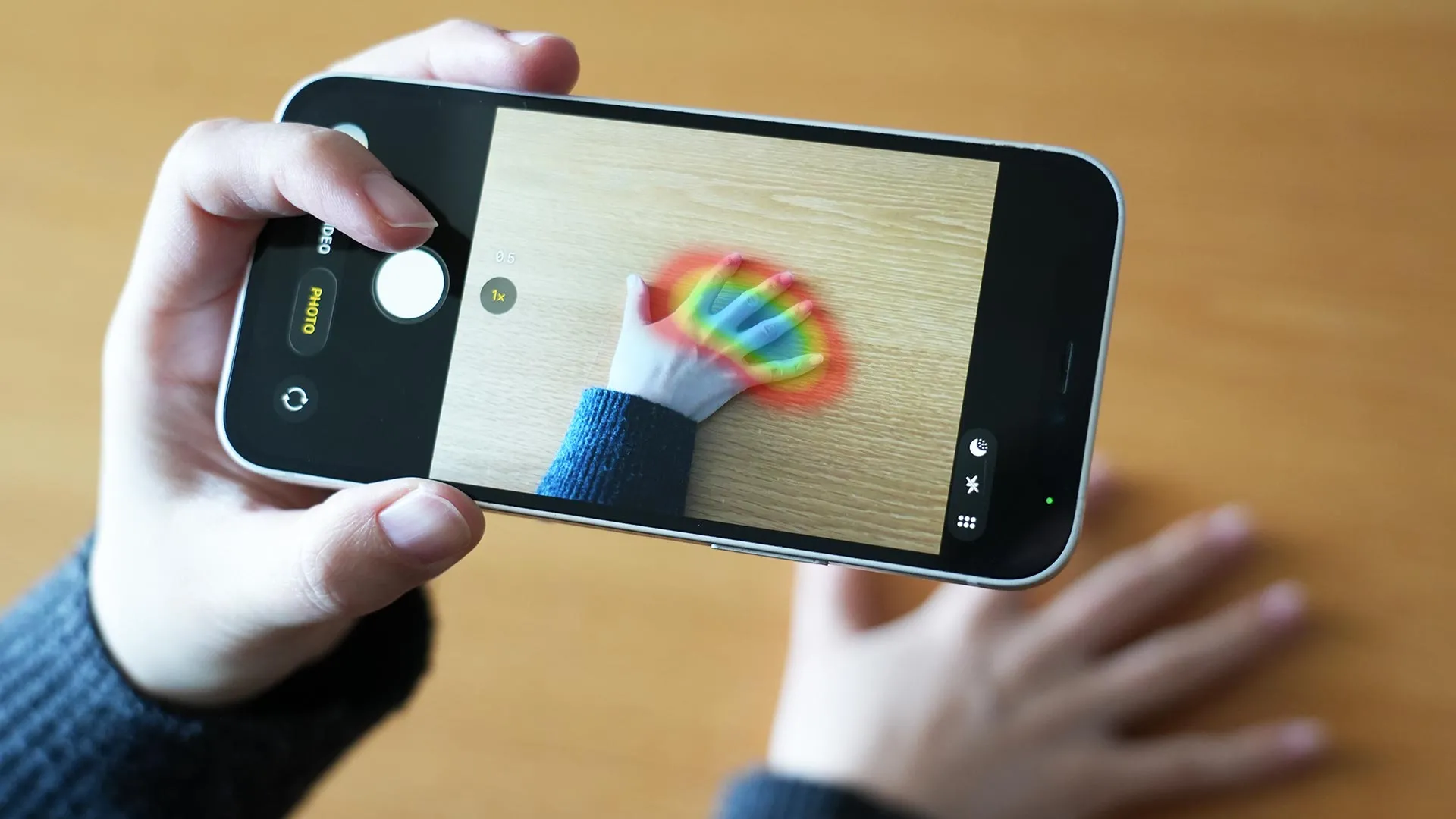
Groundbreaking AI System Identifies Rare Endocrine Disorder from Hand Photographs, Promising Enhanced Patient Privacy and Accessibility
Kobe, Japan – In a significant advancement for medical diagnostics, researchers at Kobe University have unveiled an artificial intelligence (AI) system capable of identifying acromegaly, a rare and often debilitating endocrine disease, through the analysis of simple photographs of a patient’s hand and clenched fist. This innovative approach bypasses the need for facial imagery, a common practice in AI-driven medical diagnoses, thereby substantially safeguarding patient privacy. The technology, detailed in a recent publication in the Journal of Clinical Endocrinology & Metabolism, demonstrates remarkable diagnostic accuracy, even surpassing that of experienced human specialists in preliminary comparisons. Experts anticipate this development could revolutionize early detection, streamline patient referrals to specialists, and dramatically improve access to care, particularly in remote or underserved regions.
Acromegaly, typically diagnosed in middle age, stems from an overproduction of growth hormone by the pituitary gland. This hormonal imbalance triggers a cascade of physical changes, including the characteristic enlargement of hands and feet, alterations in facial features, and abnormal growth of bones and internal organs. The insidious nature of the disease, characterized by its gradual onset over many years, often leads to a protracted diagnostic journey, frequently spanning a decade or more. This delay in diagnosis can result in severe, irreversible health complications and a significant reduction in life expectancy, estimated to be around 10 years for untreated individuals.
Dr. Hidenori Fukuoka, an endocrinologist at Kobe University and a lead researcher on the project, underscored the critical challenge posed by acromegaly’s slow progression. "Because the condition progresses so slowly, and because it is a rare disease, it is not uncommon to take up to a decade for it to be diagnosed," Dr. Fukuoka stated. "While the advent of AI tools has spurred attempts to leverage photographs for early detection, widespread clinical adoption has remained elusive, largely due to practical and ethical considerations."
A Novel Approach: Prioritizing Privacy Through Hand Imaging
The Kobe University research team’s divergence from conventional AI diagnostic methods stems from a deliberate effort to address the growing concerns surrounding patient data privacy. A review of existing AI research revealed a prevalent reliance on facial photographs for disease identification. However, the use of facial imagery raises significant privacy anxieties for patients, potentially hindering participation in AI-driven screening programs.
"Trying to address this concern, we decided to focus on the hands, a body part we routinely examine alongside the face in clinical practice for diagnostic purposes, particularly because acromegaly often manifests changes in the hands," explained Yuka Ohmachi, a graduate student at Kobe University and a key member of the research team. The hands, while offering crucial diagnostic clues for acromegaly, are perceived as less sensitive from a privacy standpoint compared to facial images.
To further fortify privacy protections, the researchers meticulously limited their image dataset to only the dorsal (back) aspect of the hand and a clenched fist. This strategic decision was informed by the desire to avoid capturing palm lines, which are highly individualistic and could potentially be used to identify a person. This privacy-conscious design proved instrumental in facilitating broader participant recruitment. The study garnered contributions from an impressive cohort of 725 patients across 15 medical institutions throughout Japan. Collectively, these participants provided over 11,000 images, which were subsequently utilized to train and rigorously test the AI model. The collaboration spanned a diverse range of institutions, including Fukuoka University, Hyogo Medical University, Nagoya University, Hiroshima University, Toranomon Hospital, Nippon Medical School, Kagoshima University, Tottori University, Yamagata University, Okayama University, Hyogo Prefectural Kakogawa Medical Center, Hokkaido University, International University of Health and Welfare, Moriyama Memorial Hospital, and Konan Women’s University, underscoring a significant national effort.
AI Achieves Superior Diagnostic Performance
The findings, published in the esteemed Journal of Clinical Endocrinology & Metabolism, reveal that the developed AI model exhibits exceptional levels of sensitivity and specificity in identifying acromegaly solely from hand images. Sensitivity refers to the AI’s ability to correctly identify individuals with the disease, while specificity measures its capacity to correctly identify those without the disease. In a direct comparative analysis, the AI system demonstrated superior performance when evaluated against a panel of experienced endocrinologists tasked with assessing the same set of photographs.
Ohmachi expressed her astonishment at the AI’s capabilities. "Frankly, I was surprised that the diagnostic accuracy reached such a high level using only photographs of the back of the hand and the clenched fist," she commented. "What struck me as particularly significant was achieving this level of performance without facial features, which makes this approach a great deal more practical for disease screening." This outcome suggests that the subtle morphological changes indicative of acromegaly are sufficiently discernible in hand imagery for AI to detect them with high precision.
Expanding the Horizon of Medical AI
The success of this privacy-preserving AI for acromegaly detection has ignited optimism among the researchers regarding its potential to address other medical conditions. The team now aims to adapt and refine their system to identify a broader spectrum of diseases that manifest visible changes in the hands. Potential future applications include the early detection of conditions such as rheumatoid arthritis, a chronic inflammatory disorder affecting joints; anemia, characterized by a deficiency in red blood cells; and finger clubbing, a deformity of the fingers and fingernails associated with various underlying health issues.
"This result could be the entry point for expanding the potential of medical AI," Ohmachi remarked, highlighting the foundational nature of their breakthrough. The ability of AI to accurately diagnose diseases from readily available, non-intrusive visual data could pave the way for a new era of accessible and efficient medical screening.
Aiding Clinicians and Bridging Healthcare Gaps
While the AI system demonstrates remarkable diagnostic prowess, the Kobe University researchers emphasize its role as a supportive tool for physicians rather than a replacement for their expertise. In real-world clinical practice, a diagnosis is typically informed by a comprehensive evaluation, encompassing medical history, laboratory tests, and thorough physical examinations. The AI, therefore, is envisioned as a valuable adjunct, designed to complement clinical judgment, mitigate the risk of diagnostic oversight, and facilitate more timely interventions.
Dr. Fukuoka elaborated on the potential impact within healthcare systems. "We believe that, by further developing this technology, it could lead to creating a medical infrastructure during comprehensive health check-ups to connect suspected cases of hand-related disorders to specialists," he stated. "Furthermore, it could support non-specialist physicians in regional healthcare settings, thus contributing to a reduction of healthcare disparities there."
The implications for underserved areas are particularly profound. In regions with limited access to specialist care, this AI technology could serve as an initial screening mechanism, identifying individuals who require further evaluation and referral. This could significantly shorten the diagnostic odyssey for patients in remote locations, ensuring they receive timely treatment and potentially averting the long-term consequences of delayed diagnosis. The ability to deploy such a system through widely available mobile devices or basic imaging equipment could democratize access to early disease detection.
Background and Timeline of Development
The genesis of this research can be traced back to a growing recognition of the limitations in current acromegaly diagnostic pathways, particularly the prolonged time to diagnosis. The slow, often subtle presentation of symptoms in the early stages makes it challenging for both patients and general practitioners to identify the condition promptly. This diagnostic delay is a critical factor contributing to the significant morbidity and mortality associated with acromegaly.
The Kobe University team’s initiative to develop an AI solution likely began with extensive data collection and preliminary algorithm development. This phase would have involved:
- Initial Conceptualization and Data Gathering (Estimated 2-3 years prior): The researchers identified acromegaly as a prime candidate for AI-driven diagnosis due to its characteristic physical manifestations, particularly in the hands, and the inherent challenges in early recognition. The critical decision to focus on hands for privacy reasons would have been made during this stage.
- Image Acquisition and Annotation (Ongoing): The extensive process of collecting over 11,000 images from 725 patients across 15 institutions would have been a significant undertaking, requiring ethical approvals, patient consent, and standardized imaging protocols. This phase likely spanned several years.
- AI Model Development and Training (1-2 years): Using the curated dataset, the researchers would have employed various machine learning techniques to train the AI model. This iterative process involves feeding the data into the algorithm, allowing it to learn patterns associated with acromegaly, and then refining the model based on its performance.
- Validation and Comparative Studies (6-12 months): Once a promising model was developed, rigorous validation was essential. This involved testing the AI on a separate set of images it had not previously encountered to assess its generalization capabilities. The comparison with human specialists would have been a crucial step to benchmark the AI’s performance against established diagnostic standards.
- Publication and Dissemination (Current): The culmination of this research effort is the publication of the findings in a peer-reviewed journal, making the results accessible to the scientific and medical communities.
Broader Impact and Future Implications
The implications of this research extend far beyond the early detection of acromegaly. It represents a paradigm shift in how AI can be ethically and effectively integrated into healthcare. By demonstrating the viability of privacy-preserving AI using non-facial imagery, the Kobe University team has opened doors for similar innovations in other diagnostic areas.
The potential for this technology to reduce healthcare disparities is a particularly compelling aspect. In many rural or low-resource settings, access to endocrinologists or specialized diagnostic equipment is limited. An AI system that can be deployed via a smartphone app or a simple camera could empower local healthcare providers to screen for acromegaly and other visually diagnosable conditions, enabling earlier referrals and interventions. This could lead to a significant improvement in health outcomes for populations historically underserved by the healthcare system.
Furthermore, the success of this project highlights the importance of interdisciplinary collaboration in driving medical innovation. The involvement of numerous universities and hospitals underscores the collaborative spirit required to tackle complex health challenges. Funding from the Hyogo Foundation for Science Technology played a vital role in enabling this ambitious research.
The path forward will likely involve further clinical trials to validate the AI’s performance in diverse real-world settings and across different ethnic populations. Regulatory approval will also be a necessary step before widespread clinical adoption. However, the foundational work by the Kobe University researchers offers a powerful glimpse into a future where AI enhances diagnostic capabilities, prioritizes patient privacy, and ultimately contributes to more equitable and accessible healthcare for all. This innovation stands as a testament to the power of thoughtful AI development in addressing critical unmet needs in medicine.
