
 By Hendra Lukman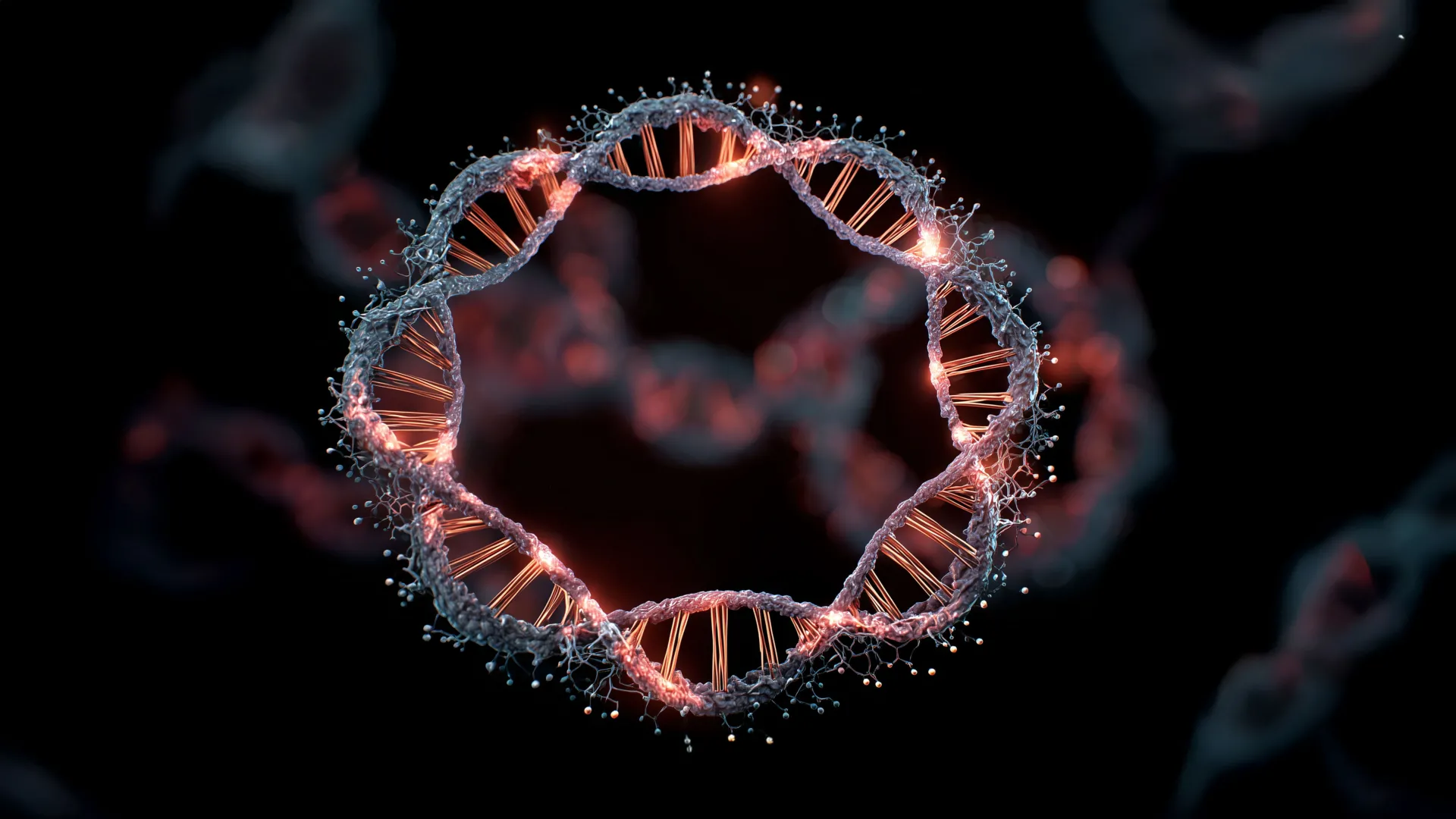
An international consortium of leading scientists has unveiled a groundbreaking discovery that could fundamentally alter our understanding and treatment of glioblastoma, the most common and deadliest adult brain cancer. Their research, published in the esteemed journal Cancer Discovery on September 8, reveals that extrachromosomal DNA (ecDNA) – circular fragments of DNA found outside the main chromosomes – play a pivotal role in driving the growth and aggression of a significant proportion of these formidable tumors. This revelation opens a critical new avenue for developing earlier diagnostic tools, more precise methods for tracking disease progression, and ultimately, more effective therapeutic strategies against a cancer that has long resisted conventional approaches.
The findings represent a significant leap forward, providing the first compelling evidence that ecDNA rings harboring cancer-promoting genes are not merely a late-stage phenomenon but often appear in the nascent stages of glioblastoma development. In some instances, these rogue DNA elements have been detected even before a fully formed tumor is detectable, suggesting they are instrumental in initiating the cascade of events that lead to rapid tumor growth, remarkable adaptability, and profound resistance to existing treatments.
This landmark study was spearheaded by Dr. Benjamin Werner, a group leader at the Barts Cancer Institute, Queen Mary University of London, and Professor Paul Mischel, a renowned pathologist at Stanford University. Both are integral members of Cancer Grand Challenges’ ambitious eDyNAmiC team, a global initiative dedicated to tackling the most intractable problems in cancer research. Professor Charlie Swanton of The Francis Crick Institute also played a crucial leadership role in this collaborative effort.
The Unyielding Challenge of Glioblastoma
Glioblastoma has long stood as one of medicine’s most formidable adversaries. Despite decades of intensive research and clinical trials, the median survival rate for patients remains a grim 14 months, with minimal improvements observed in treatment efficacy. The aggressive nature of this cancer, its infiltrative growth pattern, and its ability to rapidly evolve and evade therapeutic intervention necessitate urgent innovation in diagnostic and treatment paradigms. The lack of significant progress underscores the critical need for novel approaches that can circumvent the inherent complexities of this disease.
Extrachromosomal DNA has been increasingly recognized as a potentially significant factor in a wide spectrum of both adult and pediatric cancers, with glioblastoma being a prime example. However, the precise role and mechanisms of ecDNA have remained largely enigmatic and complex. Cancer Grand Challenges, a pioneering initiative jointly founded by Cancer Research UK and the U.S. National Cancer Institute, identified understanding ecDNA as one of the paramount challenges confronting the global cancer research community. In response, in 2022, they marshaled a substantial $25 million investment to fund the eDyNAmiC team. This interdisciplinary consortium unites world-leading experts from diverse fields, including oncology, clinical research, evolutionary biology, computer science, and mathematics, with the singular mission of deciphering ecDNA’s intricate role and identifying viable targets for therapeutic intervention. The current study marks a monumental advance within the eDyNAmiC team’s overarching mission.
Deciphering the Evolutionary History of Tumors
To unravel the mysteries of ecDNA in glioblastoma, the eDyNAmiC team and their collaborators employed a sophisticated, multi-pronged approach. They meticulously integrated genomic data from glioblastoma patients with advanced imaging techniques. This data was then fed into cutting-edge computational models designed to simulate and reconstruct the evolutionary trajectory of ecDNA within the tumor microenvironment, considering both spatial distribution and temporal progression.
Dr. Benjamin Werner described the methodology with an apt analogy: "We studied the tumors much like an archaeologist would. Rather than taking a single sample, we excavated multiple sites around the tumor, allowing us to build computational models describing how they evolved. We simulated millions of different scenarios to reconstruct how the earliest ecDNAs emerged, spread, and drove tumor aggressiveness, giving us a clearer picture of the tumor’s origins and progression." This detailed excavation process provided an unprecedented level of insight into the dynamic life cycle of ecDNA within the developing cancer.
The comprehensive analysis revealed a striking pattern: the vast majority of the identified ecDNA rings contained the EGFR gene. EGFR (Epidermal Growth Factor Receptor) is a well-established oncogene, meaning it is a gene that has the potential to cause cancer. Its amplification or mutation is frequently observed in various cancers, including glioblastoma, where it promotes uncontrolled cell proliferation and survival. Crucially, the study found that EGFR ecDNA appeared remarkably early in the cancer’s evolutionary timeline – in some cases, predating the formation of a clinically detectable tumor. Furthermore, these ecDNA elements frequently acquired additional genetic alterations, such as the EGFRvIII variant, a specific mutation that renders the cancer more aggressive and significantly enhances its resistance to various therapeutic agents.
A Critical Window of Opportunity for Intervention
The early and widespread presence of EGFR ecDNA, particularly before the full manifestation of aggressive tumor characteristics, suggests a critical window of opportunity for early detection and intervention. Dr. Magnus Haughey, a postdoctoral researcher in Dr. Werner’s group and a lead author on the Cancer Discovery paper, elaborated on this pivotal insight: "These subtle mechanisms show that there may be a window of opportunity to detect and treat the disease between the first appearance of EGFR ecDNA and the emergence of these more aggressive variants."
The implications of this statement are profound. If scientists can develop reliable and accessible methods, such as a blood test, to detect the presence of early EGFR ecDNA, it could revolutionize the diagnostic landscape for glioblastoma. Such a test could enable clinicians to identify individuals at high risk or in the very earliest stages of the disease, allowing for intervention before the cancer becomes intractable and significantly harder to treat. This proactive approach stands in stark contrast to current diagnostic methods, which often rely on the detection of symptomatic tumors, by which point the disease is already advanced.
The study also confirmed a complex feature of ecDNA: its capacity to carry multiple cancer-driving genes simultaneously. Each of these genes, acting in concert or independently, can uniquely influence how a tumor evolves and responds to therapeutic interventions. This finding underscores the potential for personalized medicine, where treatment strategies could be precisely tailored based on the specific ecDNA profile of an individual’s tumor. Understanding the genetic payload of ecDNA could lead to more targeted and effective therapies, moving away from a one-size-fits-all approach.
Despite these significant advancements, the researchers acknowledge that much remains to be discovered. Future research directions include investigating how different therapeutic agents impact the abundance and specific types of ecDNA present in glioblastoma. The eDyNAmiC team is committed to continuing its broad investigation into the role of ecDNAs across a diverse range of cancer types, aiming to uncover further opportunities for earlier diagnosis, more precise disease monitoring, and the design of smarter, more effective cancer treatments.
Expert Perspectives on the Discovery
The significance of these findings has been echoed by prominent figures in the cancer research field. Charlie Swanton, Deputy Clinical Director and head of the Cancer Evolution and Genome Instability Laboratory at The Francis Crick Institute and chief clinician at Cancer Research UK, expressed his optimism: "These findings suggest that ecDNA is not just a passenger in glioblastoma, but an early and powerful driver of the disease. By tracing when and how ecDNA arises, we open up the possibility of detecting glioblastoma much earlier and intervening before it becomes so aggressive and resistant to therapy. I hope this might help to drive a new era in how we diagnose, track and treat this devastating cancer." His statement highlights the paradigm shift this research represents, moving ecDNA from a potential curiosity to a central player in glioblastoma pathogenesis.
Professor Paul Mischel, MD, the Fortinet Founders Professor and professor and vice chair of research in the pathology department at Stanford Medicine, further emphasized the novelty and clinical relevance of the study: "These findings reveal an important new insight into the role of ecDNA in tumour development and progression. Previous work from our collaborative team and other researchers, has shown that ecDNA can arise early in tumor development, including at the stage of high-grade dysplasia, and it can also arise later to drive tumor progression and treatment resistance. The findings here show that in glioblastoma, there is an early event driven by ecDNA that could potentially be more actionable, raising the possibility that glioblastoma is another cancer for which earlier detection and intervention based upon ecDNA may be possible." His remarks contextualize the current discovery within a broader body of research, underscoring its unique contribution to identifying an actionable early event.
Dr. David Scott, Director of Cancer Grand Challenges, praised the initiative’s commitment to supporting bold, transformative science: "This study exemplifies the bold, boundary-pushing science Cancer Grand Challenges was created to support. By unravelling the evolutionary history of ecDNA in glioblastoma, team eDyNAmiC is not only deepening our understanding of one of the most devastating cancers but also illuminating new paths for earlier detection and treatment. It’s a powerful reminder that when we bring together diverse disciplines and global talent, we can begin to solve the toughest problems facing cancer research." His endorsement underscores the value of interdisciplinary collaboration and the potential of tackling grand challenges in science.
Broader Implications and Future Directions
The implications of this research extend far beyond glioblastoma. The principles of ecDNA evolution and its role as an early driver of cancer could be applicable to a wide range of other malignancies. The development of ecDNA-based diagnostic tools, such as liquid biopsies capable of detecting these circulating DNA fragments, could revolutionize early cancer detection across multiple cancer types. This would enable earlier intervention, potentially improving patient outcomes and survival rates significantly.
Furthermore, understanding the genetic landscape of ecDNA could pave the way for the development of highly targeted therapies. Instead of broadly attacking cancer cells, future treatments might be designed to specifically disrupt the function of key genes carried on ecDNA, or to prevent the formation and propagation of these rogue DNA elements. This precision medicine approach holds the promise of reducing side effects and increasing the efficacy of cancer treatments.
The eDyNAmiC team’s ongoing work, supported by Cancer Grand Challenges, represents a concerted effort to translate these fundamental discoveries into tangible clinical benefits. By deciphering the complex role of ecDNA, scientists are not only gaining a deeper understanding of cancer’s inner workings but are also charting a course toward a future where devastating diseases like glioblastoma can be diagnosed earlier, managed more effectively, and ultimately, overcome. The journey ahead involves further rigorous research, clinical validation, and the development of robust diagnostic and therapeutic platforms, but the recent revelations offer a beacon of hope in the ongoing fight against cancer.
