
 By Suherman Candra Maholtra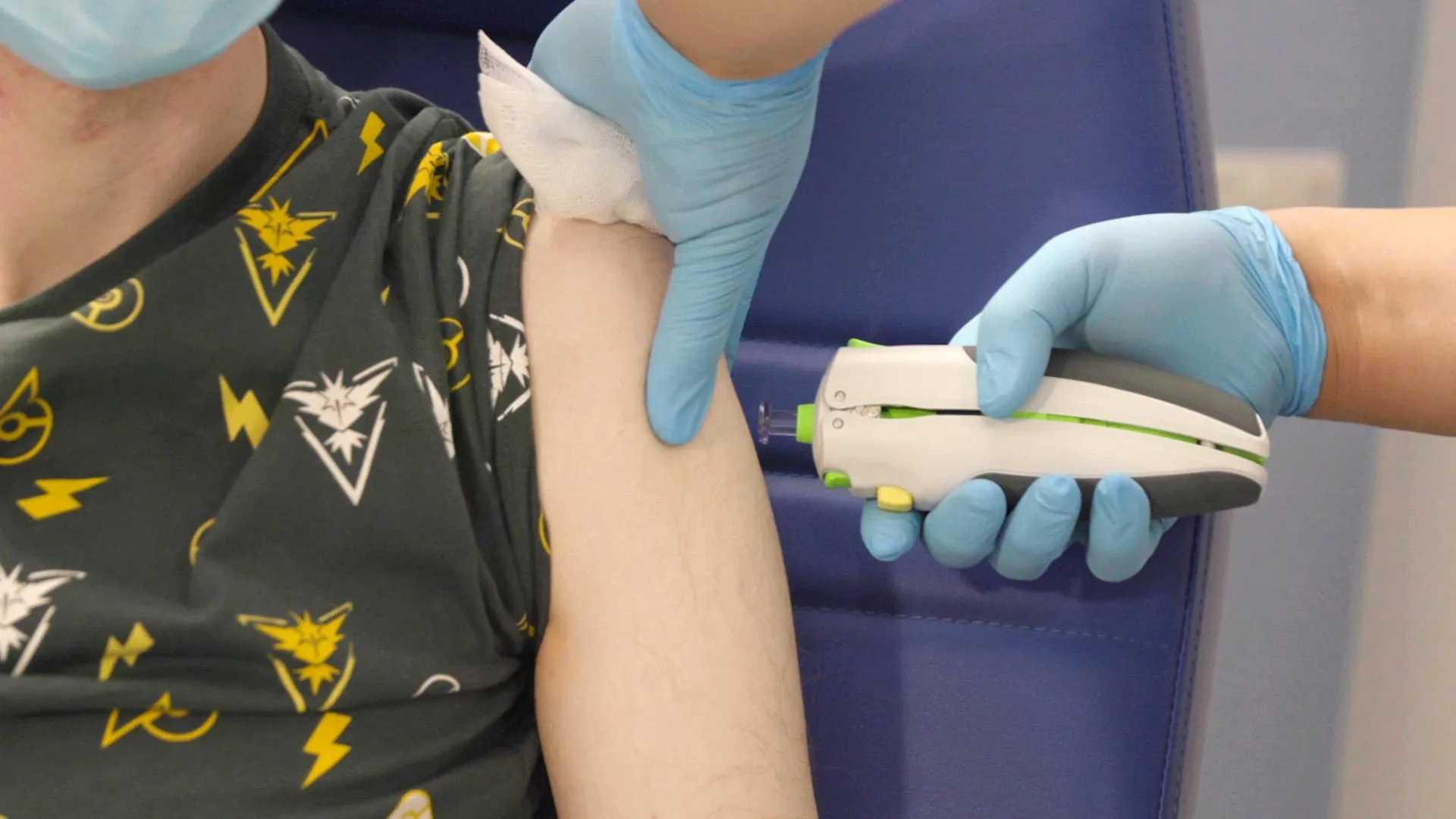
The landscape of global vaccinology has reached a significant turning point following the successful completion of the first human clinical trial for a universal coronavirus vaccine designed using artificial intelligence. Developed through a collaboration between researchers at the University of Cambridge and the university spinout company DIOSynVax (DVX) Ltd, the experimental vaccine has demonstrated a robust safety profile and the ability to trigger broad immune responses across multiple virus strains. The results, recently published in the Journal of Infection, signal a departure from the "reactive" model of vaccine development, which has historically struggled to keep pace with the rapid mutation of viral pathogens.
In a controlled study involving 39 healthy adult volunteers, the vaccine—which utilizes a novel "super-antigen" created entirely through computer simulations—was found to be well-tolerated, with no significant adverse side effects reported. Beyond safety, the trial confirmed that the vaccine successfully stimulated the immune system to recognize and respond to a wide array of Sarbeco coronaviruses. This specific family of viruses includes not only SARS-CoV-2, the pathogen responsible for the COVID-19 pandemic, but also the original SARS-CoV-1 and several high-risk bat-borne coronaviruses that scientists fear could eventually cross the species barrier to infect humans.
A Paradigm Shift in Vaccine Design: The Role of Artificial Intelligence
Traditional vaccine development has long relied on targeting specific, high-visibility components of a virus, such as the spike protein of a particular strain. While effective in the short term, this method is inherently limited by the virus’s ability to mutate. As the virus evolves, the targeted "epitopes"—the specific parts of the virus recognized by the immune system—can change, rendering existing vaccines less effective. This phenomenon has been clearly observed throughout the COVID-19 pandemic, as the emergence of the Delta and Omicron variants necessitated repeated updates to booster formulations.
The DIOSynVax approach, however, leverages machine learning and advanced AI algorithms to identify "conserved" regions of the virus. These are parts of the viral structure that remain consistent across an entire family of viruses, regardless of mutation, because they are essential to the virus’s survival or replication. By analyzing vast amounts of genetic data from Sarbeco coronaviruses collected through global surveillance programs, the AI system identified these shared features and synthesized them into a single "super-antigen."
This marks the first time in medical history that a vaccine containing an active ingredient designed entirely by AI has been tested and validated in a human clinical trial. The technology essentially "future-proofs" the immune response, training the body to recognize the fundamental blueprint of a coronavirus family rather than a specific, ephemeral variant.
Chronology of Development and the Path to Clinical Trials
The journey toward a universal coronavirus vaccine began long before the onset of the COVID-19 pandemic. DIOSynVax was founded in 2017 as a spinout from the University of Cambridge, supported by Cambridge Enterprise, the university’s commercialization arm. Led by Professor Jonathan Heeney, the Lab of Viral Zoonotics had been investigating the potential for cross-species viral transmission for years, focusing on pathogens with pandemic potential such as influenza and hemorrhagic fevers.
When the COVID-19 pandemic struck in early 2020, the team accelerated their efforts, applying their proprietary DIOS (Digitally Immune Optimised Synthetic) technology to the Sarbecovirus family. Initial research was funded primarily by Innovate UK, reflecting a strategic national interest in developing sovereign vaccine capabilities that could respond to emerging threats.
Following successful pre-clinical animal studies, which demonstrated that the vaccine could generate high levels of neutralizing antibodies against diverse coronaviruses, the project moved into human trials. The Phase 1 trial was conducted at National Institute for Health and Care Research (NIHR) Clinical Research Facilities in Southampton and Cambridge. Volunteers aged 18 to 50 were recruited to test the safety and immunogenicity of the candidate. The study was officially sponsored by the University Hospital Southampton NHS Foundation Trust (UHSFT), highlighting the critical role of the UK’s National Health Service (NHS) in fostering medical innovation.
Technical Innovation: Needle-Free Delivery and DNA Platforms
One of the most distinctive features of the trial was the method of administration. Rather than a traditional needle and syringe, the vaccine was delivered as a DNA vaccine using a microfluidic jet system. This technology uses a high-pressure stream of fluid to deliver the vaccine through the skin in less than a tenth of a second.
The transition to needle-free delivery carries several strategic advantages. First, it addresses the issue of needle phobia, which remains a significant barrier to vaccine uptake in many populations. Second, the microfluidic jet system can be more easily administered in large-scale vaccination campaigns, potentially reducing the need for highly trained medical personnel to perform injections. Finally, DNA vaccines are often more stable at higher temperatures than mRNA vaccines, which require ultra-low-cold-chain storage. This stability makes the universal vaccine a viable candidate for distribution in low-resource settings and regions with limited infrastructure.
Expert Perspectives and Scientific Analysis
The scientific community has reacted with cautious optimism to the trial results, noting that while the sample size was small, the implications are vast. Professor Jonathan Heeney, the lead researcher and CEO of DIOSynVax, emphasized that this technology represents an escape from the "constant cycle" of vaccine updates.
"We’ve converted vaccine development from being reactive to being future-proof," Professor Heeney stated. "Our vaccines will continue to provide protection against viruses even as they mutate into new strains. We’ve overcome the problem of traditional vaccines, which have limited protection. It means we can escape the constant cycle of chasing the virus variants circulating in humans and updating the vaccines to try to catch up, like a dog chasing its tail."
Professor Saul Faust, the trial’s chief investigator from the University of Southampton, highlighted the broader public health necessity of this approach. He noted that the current "reactive" system struggles to keep pace with evolving threats like influenza and Ebola. "If we can develop and clinically advance this new class of vaccines before a virus outbreak begins, millions of lives could be saved, lockdowns avoided, and the economy preserved," Faust added.
Professor Marian Knight, Scientific Director for NIHR Infrastructure, underscored the importance of the partnership between academia, the private sector, and the NHS. She described the trial as a "pivotal leap forward" made possible by the world-class clinical research environment provided by the NIHR facilities.
Broader Implications for Global Health Security
The success of this trial extends far beyond the Sarbeco coronavirus family. The AI-driven "super-antigen" strategy is a platform technology, meaning it can be adapted to target other high-risk viral families. DIOSynVax has already indicated that its development pipeline includes vaccine candidates for seasonal and pandemic influenza, as well as hemorrhagic fever viruses like Ebola.
The ability to create a "universal" vaccine for influenza, for example, would eliminate the need for the annual reformulation of flu shots, which are currently based on predictions of which strains will circulate each year. If the predictions are slightly off, the efficacy of the seasonal flu vaccine can drop significantly. A universal flu vaccine would target the conserved regions of the influenza virus, providing multi-year protection against a broad spectrum of strains.
Furthermore, the economic implications are profound. The COVID-19 pandemic cost the global economy trillions of dollars and caused unprecedented disruption to education and social structures. By investing in universal vaccines that provide "proactive" defense, governments can shift their strategy from disaster response to disaster prevention.
Future Outlook: The Road to Phase 2 and Beyond
While the Phase 1 results are a landmark achievement, the vaccine must undergo further rigorous testing before it can be authorized for general public use. The research team is currently planning a larger Phase 2 study. This next stage will involve a more diverse group of participants, including older adults and individuals with underlying health conditions, to ensure the vaccine’s efficacy and safety across different demographics.
The Phase 2 trial will also focus on the longevity of the immune response. One of the primary goals of a universal vaccine is to provide lasting protection that does not wane as quickly as current formulations. Researchers will monitor antibody levels and T-cell responses over an extended period to determine the optimal dosing schedule.
As the world continues to monitor the emergence of new viral variants and the potential for zoonotic spillover from animal reservoirs, the need for a "pan-coronavirus" or "universal" vaccine has never been more urgent. The Cambridge-led study provides the first human evidence that such a feat is not only scientifically possible but technically feasible through the integration of artificial intelligence and innovative delivery systems.
In conclusion, the successful Phase 1 trial of the DIOSynVax vaccine represents a major milestone in the history of medicine. By moving away from strain-specific vaccines and toward broad-spectrum, AI-designed protection, scientists are laying the groundwork for a new era of pandemic preparedness. If successful in subsequent trials, this technology could fundamentally change the way humanity defends itself against the ever-present threat of viral evolution.
