
 By Gabriel Paijo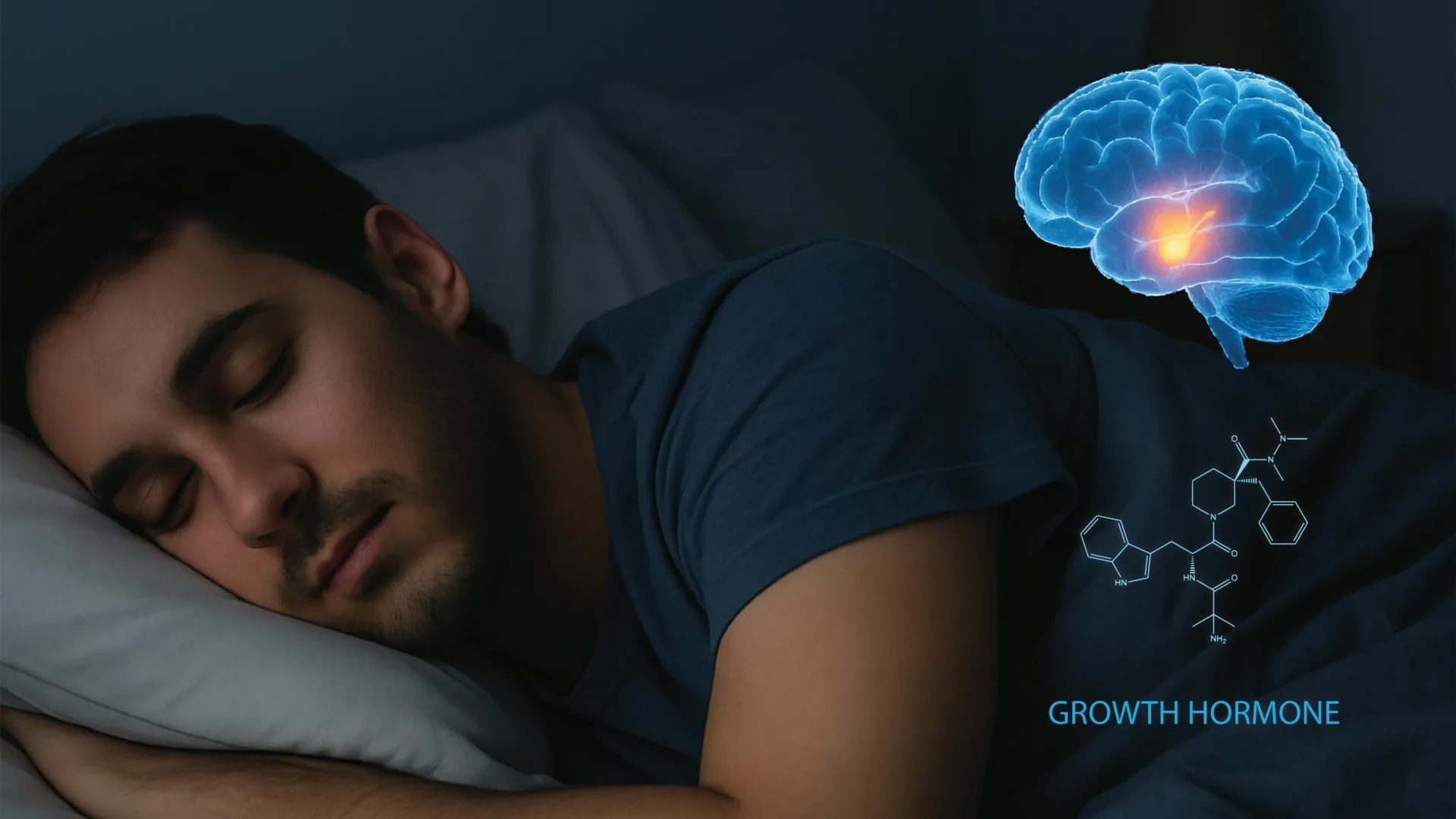
The intricate relationship between the human brain, the restorative power of sleep, and the endocrine system has long been a subject of intense scientific inquiry. While it has been common knowledge for decades that a significant portion of growth hormone (GH) secretion occurs during the deepest stages of sleep, the precise neurological "master switch" responsible for this synchronization remained elusive. In a landmark study published in the journal Cell, researchers at the University of California, Berkeley, have finally mapped the specific brain circuitry that governs the release of growth hormone during sleep. This discovery not only clarifies a fundamental biological process but also reveals a sophisticated feedback loop that links metabolic health, physical growth, and the regulation of wakefulness.
The study, led by the laboratory of Yang Dan, a professor of neuroscience and molecular and cell biology, identifies a complex interplay between the hypothalamus and the brainstem. By utilizing advanced neuro-recording and manipulation techniques in animal models, the team has provided a blueprint for how the brain coordinates the surges of growth hormone that are vital for muscle repair, bone density, and the regulation of body fat. Beyond its implications for developmental biology, the research offers a potential paradigm shift in how clinicians approach sleep-related metabolic disorders and neurodegenerative conditions such as Alzheimer’s and Parkinson’s disease.
The Biological Significance of Growth Hormone
Growth hormone is a peptide hormone secreted by the pituitary gland, serving as a primary driver of physical development in children and adolescents. However, its role does not diminish once an individual reaches their full height. In adults, GH is essential for maintaining lean muscle mass, facilitating the repair of tissues damaged during daily activity, and regulating the metabolism of glucose and lipids. Without adequate levels of GH, individuals often experience increased adiposity (fat accumulation), reduced bone mineral density, and impaired cardiovascular health.
The timing of GH release is highly rhythmic. In humans, the largest pulse of growth hormone typically occurs about an hour after the onset of sleep, coinciding with the first period of slow-wave sleep (non-REM Stage 3). This "nocturnal surge" is so significant that nearly 70% of the daily GH output in young males occurs during these deep sleep phases. For years, the medical community has recognized that sleep deprivation leads to a precipitous drop in GH levels, which in turn contributes to the high rates of obesity and metabolic syndrome observed in chronic insomniacs and shift workers.
Mapping the Hypothalamic Circuitry
The UC Berkeley team focused their investigation on the hypothalamus, a region at the base of the brain that acts as the primary link between the nervous system and the endocrine system. Within the hypothalamus, the researchers identified three specific types of neurons that work in concert to manage GH levels: growth hormone-releasing hormone (GHRH) neurons and two distinct populations of somatostatin-producing neurons.
Under normal physiological conditions, GHRH acts as the "accelerator," signaling the pituitary gland to release growth hormone into the bloodstream. Conversely, somatostatin acts as the "brake," inhibiting the release of the hormone. Using optogenetics—a technique that involves using light to control neurons that have been genetically sensitized to light—the researchers were able to stimulate these specific cell populations in mice and observe the immediate hormonal and behavioral effects.
The researchers discovered that the behavior of these neurons changes radically depending on the stage of sleep. During REM (Rapid Eye Movement) sleep, the stage associated with dreaming, both GHRH and somatostatin activity increases, which paradoxically leads to a distinct pattern of GH release. During non-REM sleep, the "deep" sleep phase, somatostatin levels drop while GHRH rises moderately, allowing for the sustained, high-volume release of growth hormone that characterizes restorative rest. This suggests that the brain does not simply turn GH "on" during sleep; rather, it performs a delicate balancing act, modulating the "accelerator" and "brake" to ensure the body receives the precise amount of hormone needed for tissue repair.
The Discovery of a New Feedback Loop
Perhaps the most significant finding of the study is the identification of a previously unknown feedback system involving the locus coeruleus (LC). The locus coeruleus is a small nucleus located in the brainstem that serves as the primary source of norepinephrine, the chemical responsible for alertness, attention, and the "fight or flight" response.
The UC Berkeley team found that as growth hormone levels build up in the body during sleep, the hormone actually travels back to the brain and activates neurons in the locus coeruleus. This activation initially encourages the brain to transition toward wakefulness. However, the study revealed a surprising twist: if the activity in the locus coeruleus becomes excessively high, it triggers a compensatory mechanism that promotes sleepiness instead.
"This suggests that sleep and growth hormone form a tightly balanced system," explained Daniel Silverman, a UC Berkeley postdoctoral fellow and study co-author. "Too little sleep reduces growth hormone release, and too much growth hormone can in turn push the brain toward wakefulness. This balance is essential for growth, repair, and metabolic health."
This feedback loop represents a homeostatic mechanism that prevents the body from being overwhelmed by its own repair signals. It ensures that while the body is busy building muscle and burning fat, the brain remains in a state that allows it to eventually wake up and function with high levels of cognitive alertness.
Implications for Metabolic and Neurodegenerative Disease
The implications of this research extend far beyond the laboratory. By identifying the specific neurons and feedback loops involved, the Berkeley team has opened the door to new therapeutic targets for a variety of conditions.
1. Metabolic Disorders and Obesity
Consistent sleep deprivation is a known risk factor for Type 2 diabetes and obesity. When the GH-sleep circuit is disrupted, the body loses its ability to efficiently metabolize fat and regulate blood sugar. "Because growth hormone also helps regulate glucose and fat metabolism, consistently poor sleep may increase the risk of obesity, diabetes, and cardiovascular disease," noted first author Xinlu Ding. New treatments could potentially target hypothalamic GHRH neurons to restore hormonal balance in patients with metabolic syndrome.
2. Neurodegenerative Diseases
The locus coeruleus is one of the first brain regions to show signs of degeneration in patients with Alzheimer’s and Parkinson’s disease. Since the UC Berkeley study links GH levels directly to LC activity, it is possible that the decline in sleep quality and growth hormone production seen in aging populations actually accelerates the progression of these diseases. Restoring the GH-LC circuit could potentially preserve cognitive function and delay the onset of neurodegeneration.
3. Growth Disorders in Children
For pediatricians, this research underscores the vital importance of sleep hygiene for children and teenagers. Because the GHRH circuit is most active during deep sleep, chronic sleep interruptions—whether from screen time, sleep apnea, or environmental factors—can physically stunt growth and development by preventing the necessary hormonal surges.
Chronology and Methodology of the Study
The research was conducted over several years in the laboratory of Yang Dan at UC Berkeley, with collaboration from researchers at Stanford University. The team utilized mice as their primary model due to the high degree of conservation in hypothalamic structures between rodents and humans.
A unique challenge in studying GH is that it is released in pulses. To capture these pulses accurately, the researchers used electrodes to record neural activity in real-time while simultaneously drawing blood samples to measure GH concentrations. Because mice sleep in polyphasic bursts throughout the day and night, the researchers were able to observe hundreds of sleep-wake transitions, providing a robust dataset that would be difficult to obtain in human subjects who typically have only one long sleep cycle per 24 hours.
The team also employed advanced circuit tracing, using viral vectors to map the physical connections between the hypothalamus and the locus coeruleus. This allowed them to confirm that the feedback was not just chemical, but structural, involving direct neural pathways that communicate the body’s hormonal status back to the brain’s arousal centers.
Future Research and Clinical Applications
While the current study provides a foundational understanding of the GH-sleep circuit, many questions remain. The researchers are now looking toward human trials to see if the same mechanisms can be manipulated through non-invasive means, such as targeted transcranial magnetic stimulation or specific pharmacological interventions.
"We are providing a basic circuit to work on in the future to develop different treatments," said Xinlu Ding. One such treatment could involve experimental gene therapies. Daniel Silverman noted that targeting specific cell types within this circuit could allow doctors to "dial back the excitability" of the locus coeruleus in patients with chronic insomnia or anxiety-related sleep disorders, thereby allowing for the deep sleep necessary for GH production.
Furthermore, the discovery suggests that growth hormone may have cognitive benefits that have been largely overlooked. By modulating the locus coeruleus, GH may play a role in "sharpening" the brain for the day ahead. "Growth hormone not only helps you build your muscle and bones and reduce your fat tissue, but may also have cognitive benefits, promoting your overall arousal level when you wake up," Ding added.
The research was supported by the Howard Hughes Medical Institute (HHMI) and the Pivotal Life Sciences Chancellor’s Chair fund. As the scientific community continues to unravel the mysteries of the sleeping brain, this study stands as a critical reminder that the quality of our rest is inextricably linked to the vitality of our bodies. The UC Berkeley findings provide a roadmap for a future where sleep is not just seen as a period of inactivity, but as a highly regulated, active state of hormonal and metabolic restoration.
