
 By admin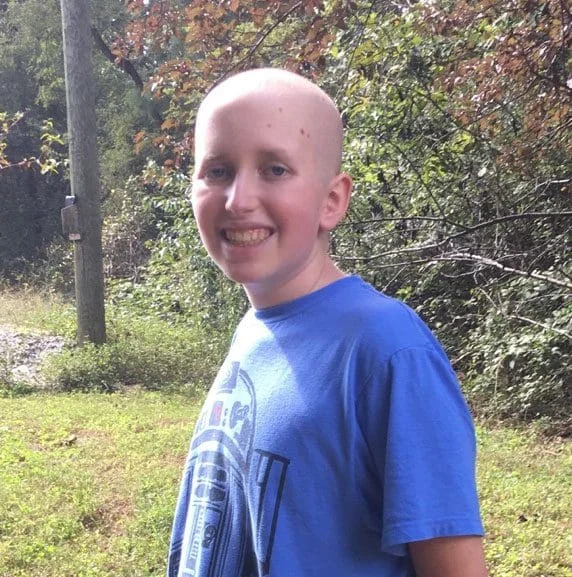
The narrative of childhood cancer is often sanitized in public awareness campaigns, characterized by ribbons and stories of survival, yet for families like that of Luke Getchell, the reality is a harrowing ordeal of medical toxicity, rapid physiological decline, and the systemic failure of traditional treatments. In July 2018, the Getchell family’s life was irrevocably altered when 13-year-old Luke was diagnosed with Acute Myeloid Leukemia (AML). The diagnosis was compounded by the presence of a specific genetic alteration known as FLT3-ITD (Fms-like tyrosine kinase 3 with internal tandem duplication). This particular mutation is recognized by oncologists as a "poor prognosis" marker, signifying a highly aggressive form of leukemia that is notoriously resistant to standard chemotherapy and prone to early relapse.
The Biological Profile of Pediatric AML and FLT3-ITD
To understand the gravity of Luke Getchell’s diagnosis, one must examine the underlying pathology of Acute Myeloid Leukemia. While leukemia is the most common form of pediatric cancer, AML represents only about 20% of childhood leukemia cases, yet it accounts for a disproportionately high percentage of leukemia-related deaths. The disease is characterized by the rapid overproduction of abnormal myeloblasts—immature white blood cells—which crowd out healthy blood cells in the bone marrow, leading to anemia, susceptibility to infection, and easy bleeding.
The FLT3-ITD mutation, which Luke carried, acts as a "constitutive switch" that remains permanently in the "on" position. This mutation triggers the continuous signaling for cell growth and survival, making the cancer cells exceptionally resilient. Historically, children with FLT3-ITD mutations have faced lower survival rates compared to those with other subtypes of AML. The treatment for this condition typically requires high-dose intensive chemotherapy and, frequently, a hematopoietic stem cell transplant (HSCT), both of which carry extreme risks of short-term and long-term toxicity.
A Chronology of Resilience: The Fourteen-Month Battle
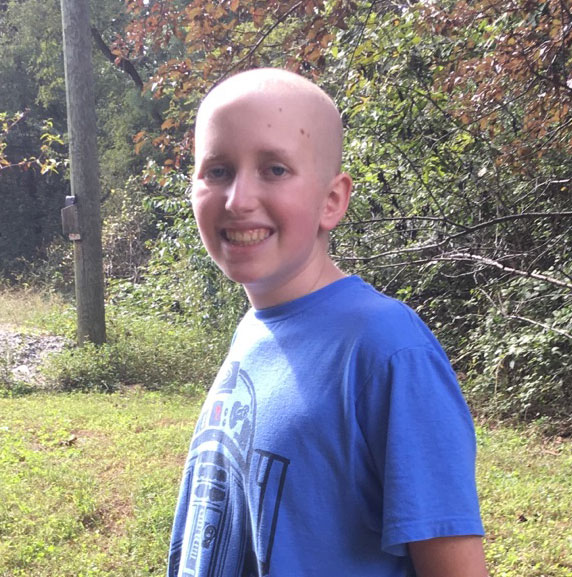
Luke Getchell was described by those who knew him as a kind, easygoing, and deeply empathetic teenager. He was a boy of diverse interests, ranging from a fascination with penguins to a sophisticated appreciation for the culinary arts. In his family kitchen, he was known to host "Chopped" style competitions, showcasing a creative spirit that remained vibrant even as his health began to fail. His most enduring passion, however, was for LEGOs—intricate models that served as both a creative outlet and a distraction from the rigors of clinical life.
Following his diagnosis in July 2018, Luke entered a grueling cycle of treatment at VCU Health in Richmond, Virginia. For over a year, his life was defined by the walls of the hospital. The medical intervention required to combat his AML was inherently paradoxical: the medications designed to save his life were simultaneously destroying his healthy tissues.
The chronology of his treatment is a testament to the "collateral damage" of modern oncology:
- Late 2018: Luke underwent rigorous rounds of high-dose chemotherapy. During this period, he suffered from a series of secondary health crises, including a severe colon infection and sepsis—a life-threatening systemic response to infection that is a leading cause of death in immunocompromised pediatric patients.
- Early 2019: The cumulative toxicity of the drugs resulted in significant heart damage, a common long-term side effect of anthracycline-based chemotherapy.
- February 2019: After six months of intensive therapy, clinical tests indicated no detectable signs of leukemia. For the Getchell family, this was a moment of profound relief.
- The "One Week" Window: The reprieve lasted exactly seven days. Just one week after being told he was in remission, Luke’s blood counts began to fluctuate. Subsequent testing confirmed the nightmare: the cancer had returned with increased aggression.
The Downward Spiral of Treatment Toxicity
The relapse of FLT3-ITD AML is often more difficult to treat than the initial presentation, as the surviving cancer cells have frequently developed resistance to frontline agents. Following his relapse, Luke’s medical team attempted further interventions, but his body was already ravaged by the previous year’s treatments.
The subsequent months were marked by a harrowing array of complications. Luke developed graft-versus-host disease (GVHD), a condition where the donor’s immune cells (if a transplant was attempted or prepared for) or the body’s own dysregulated immune system begins to attack healthy organs. He also developed secondary diabetes, a direct consequence of the prolonged use of high-dose prednisone, a steroid used to manage inflammation and immune responses.
The physical manifestations of his decline were devastating. Luke suffered from internal bleeding, severe skin desquamation, ingrown nails, and thrush (a fungal infection of the mouth and throat). By September 2019, just 14 months after his initial diagnosis, the limits of medical intervention had been reached. His oncology team recommended hospice care, a transition that signifies the shift from curative intent to comfort-based management. In his final weeks, Luke lost his ability to walk and eventually his sight. On October 20, 2019, at the age of 14, Luke Getchell passed away.
Luke’s Lego-cy: A Memorial to Childhood Courage
In the wake of his passing, Luke’s family and the Richmond community have sought to preserve his memory through "Luke’s Lego-cy." A permanent display of his LEGO models is now featured at the Children’s Wonder Tower at VCU Health. This display serves as more than just a memorial; it is a stark reminder to visitors, medical professionals, and lawmakers of the human cost of pediatric cancer.
For the Getchell family, the memory of Luke is intertwined with the traumatic imagery of his treatment—the sight of a teenager bleeding from his eyes due to the effects of chemotherapy and the desperate ritual of administering pills that represented a vanishingly small hope for survival. Their story highlights a critical gap in pediatric medicine: the lack of age-appropriate, targeted therapies that can kill cancer cells without destroying the child’s developing body.
The State of Pediatric Research and the Need for Funding
Luke’s story is not an isolated incident but a reflection of a broader systemic issue in oncology research. Despite being the leading cause of death by disease in children in the United States, pediatric cancer research is historically underfunded. A significant portion of federal cancer research funding is directed toward adult cancers, which have larger patient populations and greater commercial viability for pharmaceutical companies.
In response to this disparity, organizations like CureSearch for Children’s Cancer have stepped in to bridge the funding gap. During Childhood Cancer Awareness Month, a concerted effort is being made to raise $25,000 to support high-impact research, specifically targeting the work of "Young Investigators" who are pursuing innovative solutions to leukemia.
One such researcher is Dr. Elvin Wagenblast at Mount Sinai. Dr. Wagenblast’s team is focusing on the "pre-leukemic" stages of the disease. By utilizing CRISPR gene-editing technology and advanced cellular modeling, his team aims to understand the "how" and "why" of the earliest steps in leukemia development. The goal is to identify specific vulnerabilities in the cancer’s genetic architecture that can be targeted with precision medicine. This approach represents the future of oncology: moving away from "sledgehammer" chemotherapy and toward "smart" drugs that offer higher efficacy with significantly lower toxicity.
Analysis: The Implications of Precision Medicine
The tragedy of Luke Getchell’s case underscores why Dr. Wagenblast’s research is so vital. In the case of FLT3-ITD mutations, the standard of care has evolved to include FLT3 inhibitors, but these are often not enough to prevent relapse when used in isolation or with traditional chemo.
The implications of successful research in this field are three-fold:
- Reduction of Secondary Complications: By developing treatments that do not cause sepsis, heart damage, or secondary diabetes, the "cure" will no longer be as damaging as the disease itself.
- Early Intervention: Understanding the earliest steps of leukemia could lead to better screening for at-risk populations and earlier detection before the cancer becomes widespread.
- Improved Survival Rates for High-Risk Subtypes: Precision medicine offers the only realistic hope for improving the dismal survival statistics associated with mutations like FLT3-ITD.
A Call to Action in Memory of Luke
The Getchell family’s ordeal serves as a call to action for the public and the scientific community alike. The $25,000 fundraising goal is a modest but essential step in fueling the laboratory work that leads to clinical trials. For families currently navigating an AML diagnosis, these research initiatives are not merely academic—they are the difference between life and death.
The horrors endured by Luke—the loss of mobility, the loss of sight, and the systemic organ failure—are a direct result of a medical landscape that lacks sufficient tools to fight aggressive pediatric blood cancers safely. By supporting research in Luke’s memory, advocates hope to ensure that future 13-year-olds diagnosed with AML are met with a prognosis defined by hope and a treatment plan defined by precision, rather than a harrowing battle against the very medicine meant to save them.
Every child with cancer deserves access to safe and effective treatment. As Childhood Cancer Awareness Month continues, the legacy of Luke Getchell remains a powerful motivator for change, urging a shift in priorities toward the most vulnerable patients in the healthcare system. The "Lego-cy" he left behind is a reminder that behind every statistic is a child who loved penguins, who cooked in his family’s kitchen, and who deserved a lifetime of more than just fourteen years.
