
 By admin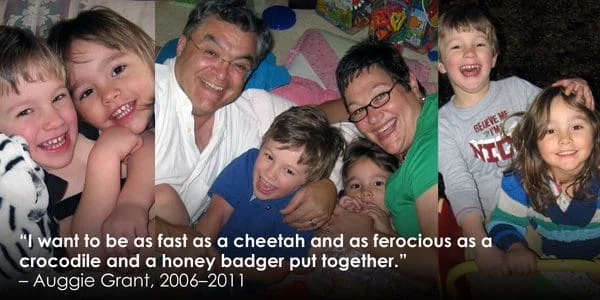
The life of Augusto “Auggie” Grant, a vibrant five-year-old with aspirations of becoming an astronaut, a superhero, and a “ninja warrior” named Sherman, came to an abrupt and tragic end in December 2011, yet his story has since become a cornerstone for national advocacy in the fight against pediatric cancer. What began as a sudden medical crisis—a diagnosis of acute monoblastic leukemia followed by his passing just five days later—has evolved into a multi-year philanthropic movement led by his parents, Jon and Cheryl Grant. Through their partnership with CureSearch for Children’s Cancer and the creation of the “Auggie’s Honey Badgers” hiking team, the Grant family has shifted the narrative of their personal grief toward a broader mission: addressing the systemic lack of funding and specialized treatments for the leading cause of death by disease among children in the United States.
The Rapid Progression of Acute Monoblastic Leukemia
In late 2011, Auggie Grant appeared to be the picture of health, characterized by his parents as a child who lived with “jubilant ferocity.” His mother, Cheryl Grant, recalls him being constantly active, often donning "uniforms"—costumes ranging from firefighter gear to astronaut suits—and displaying an energy level that gave no hint of the underlying malignancy. However, the biological reality of acute monoblastic leukemia (AML-M5) is often one of rapid, aggressive onset.
AML is a type of cancer that starts in the blood-forming cells of the bone marrow. In the monoblastic subtype, the cancer involves the "monocytes," a type of white blood cell. Because these cells multiply at an exponential rate, they quickly crowd out healthy blood cells, leading to sudden organ failure or severe infection. For Auggie, the diagnostic process revealed that the cancer had been spreading through his blood undetected while he was still physically active. A standard five-minute blood test eventually confirmed the severity of his condition, but by that stage, the disease had progressed beyond the reach of existing medical interventions. On December 5, 2011, less than a week after the initial diagnosis, Auggie passed away.
A Strategic Pivot in Philanthropy
Following Auggie’s death, the Grant family sought a way to honor his memory that would yield tangible results for other families facing similar diagnoses. When drafting Auggie’s obituary, Cheryl Grant consulted with the family’s pediatric oncologists to identify organizations that prioritize high-impact research. This search led them to CureSearch for Children’s Cancer, a national non-profit foundation that differs from many cancer charities by focusing specifically on the acceleration of clinical trials.
The decision to direct memorial donations toward CureSearch was based on the organization’s "bench-to-bedside" philosophy. Unlike broader cancer organizations that may distribute funds across a wide array of support services or general adult cancer research, CureSearch targets pediatric-specific projects that are fast-tracked for clinical application. This approach addresses a critical gap in the medical industry: because pediatric cancers are biologically distinct from adult cancers, adult treatments are often either ineffective or excessively toxic for children’s developing bodies.
The response to the obituary request was significant, marking the beginning of "Auggie’s Legacy." The funds raised in his name were funneled into research initiatives aimed at finding safer, more effective treatments for childhood leukemia and other pediatric malignancies.
The Ultimate Hike and Auggie’s Honey Badgers
To sustain this momentum, Jon and Cheryl Grant joined the "Ultimate Hike" program, CureSearch’s signature endurance fundraising event. The program challenges participants to complete a 28.3-mile trek in a single day, symbolizing the grueling journey children undergo during cancer treatment. The Grants formed "Auggie’s Honey Badgers," a team named after one of Auggie’s favorite animals, known for its fearlessness and resilience.
Jon Grant has described the experience as "transformative," noting that the hike provided a communal space for grieving parents and advocates to channel their physical and emotional pain into a collective effort. The "Honey Badgers" have since become a recurring fixture in the Ultimate Hike circuit, raising tens of thousands of dollars annually. This grassroots fundraising is vital because it provides "seed money" for innovative research that might otherwise be considered too high-risk for federal grants.
Supporting Data: The Landscape of Pediatric Cancer Research
The urgency of Auggie’s story is underscored by the current statistics surrounding childhood cancer in the United States. According to data from the National Cancer Institute (NCI) and the American Cancer Society:
- Mortality Rates: Childhood cancer remains the leading cause of death by disease for children under the age of 15. While survival rates for some forms of leukemia have improved, others, like certain subtypes of AML, remain difficult to treat.
- The Funding Gap: Historically, only about 4% of the federal budget for cancer research is allocated specifically to pediatric cancers. The vast majority of oncology funding is directed toward adult cancers, such as lung, breast, and prostate cancer, which have larger patient populations.
- Long-term Morbidity: For the children who do survive, the cost of current treatments is high. Over 60% of childhood cancer survivors suffer from at least one chronic health condition as a result of the toxic chemotherapy and radiation used to save their lives, including secondary cancers, heart disease, and cognitive impairments.
- Drug Development Hurdles: In the last 20 years, only a small fraction of new drugs approved by the FDA were developed specifically for children. Most pediatric treatments are "off-label" uses of adult medications.
CureSearch aims to mitigate these issues by funding "Catapult Awards," which provide millions of dollars to researchers who are on the cusp of moving a new discovery into a Phase I or Phase II clinical trial. By focusing on this specific stage of development, the organization helps bridge the "valley of death"—the period where promising research often stalls due to a lack of funding.
Chronology of Auggie Grant’s Legacy
- 2006: Augusto “Auggie” Grant is born, eventually becoming known for his vibrant imagination and love for music and "uniforms."
- Late November 2011: Auggie continues to be physically active, showing few outward signs of illness.
- Early December 2011: Sudden onset of symptoms leads to a blood test and a diagnosis of acute monoblastic leukemia.
- December 5, 2011: Auggie passes away at age five, five days after diagnosis.
- December 2011: Cheryl and Jon Grant establish a memorial fund through CureSearch, requesting donations in lieu of flowers.
- 2012–Present: The formation and annual participation of "Auggie’s Honey Badgers" in the Ultimate Hike.
- September (Annual): Auggie’s story is highlighted as part of Childhood Cancer Awareness Month to drive recurring donations and legislative advocacy.
Broader Impact and Implications
The legacy of Auggie Grant serves as a microcosm of a larger national movement. Each September, during Childhood Cancer Awareness Month, organizations like CureSearch utilize stories of children like Auggie to lobby for legislative changes, such as the Research to Accelerate Cure and Equity (RACE) for Children Act. This act, which was fully implemented in 2020, requires drug companies to test new adult cancer drugs in children if the molecular targets are relevant to pediatric cancer.
Furthermore, the involvement of families like the Grants has shifted the focus of pediatric oncology toward "precision medicine." By funding research that looks at the genetic drivers of a child’s specific tumor or leukemia, researchers are working toward treatments that are more effective and less damaging than traditional "broad-spectrum" chemotherapy.
Cheryl Grant’s observation that "it only takes five minutes to set up a recurring donation" highlights a shift in modern philanthropy toward sustainable, long-term support. In the context of medical research, recurring funding is often more valuable than one-time windfalls, as it allows laboratories to maintain staff and equipment over the multi-year cycles required for clinical trials.
Conclusion
The transformation of Auggie Grant’s "jubilant ferocity" into a structured, well-funded advocacy machine illustrates the power of personal narrative in driving scientific progress. While the medical community was unable to save Auggie in 2011, the research funded in his name is currently being applied to the next generation of pediatric patients. His parents’ decision to "share him" through CureSearch ensures that his memory is not merely a static tribute, but a functional force in the ongoing effort to ensure that a five-minute blood test eventually leads to a lifetime of survival rather than a terminal diagnosis. As Childhood Cancer Awareness Month continues to bring these issues to the forefront, the story of Auggie’s Honey Badgers remains a testament to the impact of turning profound loss into a pursuit of systemic change.
