
 By Nana O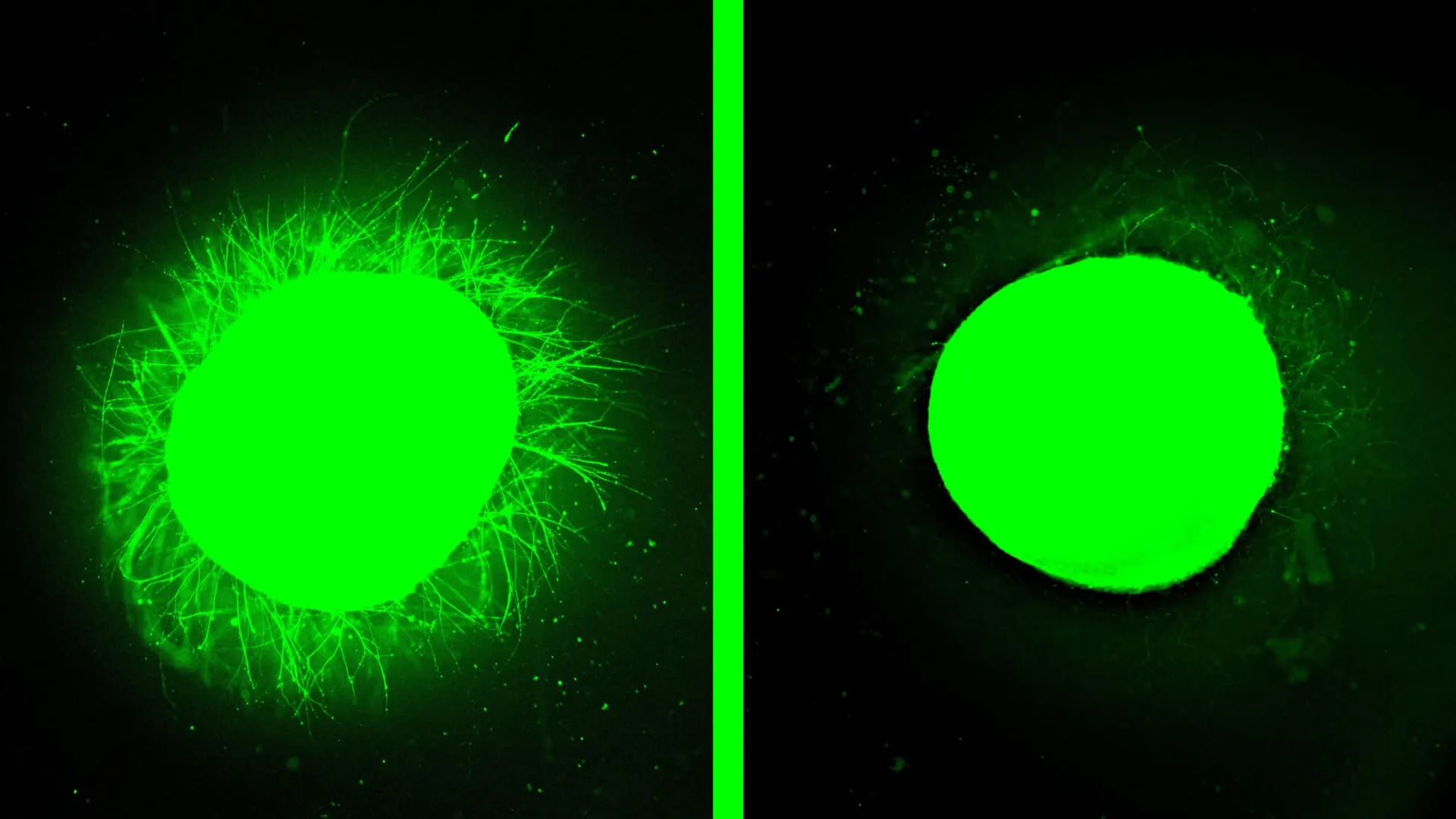
Northwestern University scientists have achieved a significant breakthrough in the quest to understand and treat human spinal cord injuries, unveiling the most sophisticated laboratory-grown model to date. This innovative research, published on February 11 in the prestigious journal Nature Biomedical Engineering, utilizes human spinal cord organoids to meticulously recreate the complex biological aftermath of traumatic injury and to rigorously test a novel regenerative treatment. The findings offer a beacon of hope, demonstrating a potential pathway toward restoring function for individuals living with debilitating spinal cord damage.
A New Era in Spinal Cord Injury Research: The Human Organoid Model
For the first time, researchers have successfully demonstrated that these human spinal cord organoids, miniature organs meticulously developed from stem cells, can accurately replicate the multifaceted biological consequences of spinal cord injury. This groundbreaking model exhibits key pathological features observed in human patients, including widespread cell death, a robust inflammatory response, and the formation of glial scars. Glial scarring, a dense accumulation of scar tissue, poses a formidable barrier, both physically and chemically, to the regeneration of damaged nerve fibers – a critical hurdle in achieving functional recovery.
The Northwestern team’s meticulously crafted organoids, measuring several millimeters in diameter, have reached a level of maturity that allows them to sustain and accurately model traumatic damage. This advancement moves beyond previous attempts to create spinal cord organoids, which were often limited in their ability to replicate the full spectrum of injury-related biological processes. The researchers took an additional crucial step by incorporating microglia, the resident immune cells of the central nervous system, into their organoid design. This integration allows the model to faithfully reproduce the inflammatory cascade that immediately follows a spinal cord injury, a critical component that was absent in earlier models.
"It’s a pseudo-organ," explained Samuel I. Stupp, the study’s senior author and a distinguished professor at Northwestern University, highlighting the model’s remarkable fidelity to human physiology. "We were the first to introduce microglia into a human spinal cord organoid, so that was a huge accomplishment. It means that our organoid has all the chemicals that the resident immune system produces in response to an injury. That makes it a more realistic, accurate model of spinal cord injury."
"Dancing Molecules" Show Dramatic Regenerative Potential
The true promise of this research lies in the dramatic results observed when the damaged organoids were treated with a novel therapy dubbed "dancing molecules." This innovative treatment, previously shown to restore movement and repair tissue in animal studies, exhibited remarkable efficacy in the human organoid model. Following treatment, the injured organoids displayed substantial neurite outgrowth, a crucial indicator of nerve repair as the long extensions that enable neuronal communication began to regenerate. Furthermore, the study observed a significant reduction in glial scar tissue, diminishing the barrier to nerve regeneration.
These findings provide compelling evidence supporting the potential of "dancing molecules" to improve recovery outcomes for individuals with spinal cord injuries. The therapy has already garnered significant attention, recently receiving Orphan Drug Designation from the U.S. Food and Drug Administration (FDA), a designation that can expedite the development and review of drugs intended to treat rare diseases.
The Science Behind the Breakthrough: Organoids and Supramolecular Therapies
Organoids, derived from induced pluripotent stem cells, represent a powerful paradigm shift in biomedical research. While simplified versions of their full-sized counterparts, they closely mimic the intricate structure, cellular diversity, and functional characteristics of actual human organs. This makes them invaluable tools for studying disease mechanisms, testing therapeutic interventions, and unraveling complex developmental processes. Organoids offer a more cost-effective and faster alternative to traditional animal experiments and human clinical trials, allowing researchers to accelerate the pace of discovery.
The development of these advanced spinal cord organoids was a multi-stage process. Over several months, the Northwestern team meticulously guided stem cells to differentiate and self-organize into complex spinal cord tissue, replete with neurons and astrocytes. The incorporation of microglia, as previously mentioned, marked a significant step in enhancing the model’s realism.
The "dancing molecules" therapy itself is a testament to Stupp’s pioneering work in regenerative materials science. Belonging to a broader class of supramolecular therapeutic peptides (STPs), this therapy leverages the dynamic motion of large molecular assemblies—comprising over 100,000 molecules—to interact with cellular receptors and activate the body’s innate repair mechanisms. The concept of supramolecular therapies, where molecular motion plays a critical role in biological function, has antecedents in existing medical treatments; for instance, Stupp’s lab investigated similar principles nearly 15 years ago in the context of GLP-1 drugs used for weight loss and diabetes management.
Delivered as a liquid injection, the "dancing molecules" therapy rapidly self-assembles into a nanofiber scaffold that closely resembles the natural extracellular matrix of the spinal cord. The dynamism of these molecules within this scaffold is key to their therapeutic effect. By precisely controlling the speed and agility of molecular movement, researchers can optimize their interaction with the constantly shifting cellular receptors involved in the repair process.
"Given that cells themselves and their receptors are in constant motion, you can imagine that molecules moving more rapidly would encounter these receptors more often," Stupp explained in a previous statement regarding the therapy’s mechanism. "If the molecules are sluggish and not as ‘social,’ they may never come into contact with the cells."
Simulating and Treating Spinal Cord Trauma in the Lab
To rigorously evaluate the efficacy of the "dancing molecules" therapy, the researchers deliberately induced two common forms of spinal cord injury within the organoids. The first involved a precise scalpel cut, simulating a laceration akin to surgical trauma. The second model replicated a compressive contusion injury, mirroring the devastating impact of accidents such as car crashes or falls.
As anticipated, both injury models resulted in significant cell death and the characteristic formation of glial scars, mirroring the pathological hallmarks of spinal cord injury in human patients. The research team was able to precisely differentiate between the astrocytes that formed the normal tissue architecture and the larger, more densely packed astrocytes constituting the glial scar. They also identified the production of chondroitin sulfate proteoglycans, key molecules in the nervous system that signal injury and disease.
Following the application of the "dancing molecules" therapy, the treated organoids exhibited a remarkable transformation. The nanofiber scaffold effectively reduced inflammation, significantly shrunk the glial scarring, and robustly stimulated neurite extension. Crucially, the neurons began to grow in organized patterns, suggesting a restoration of functional connectivity. Neurites include axons, the vital nerve fibers that are frequently severed in spinal cord injuries, disrupting communication between neurons and leading to paralysis and sensory loss. Promoting the regrowth of these axons is therefore paramount for restoring function.
The Critical Role of Molecular Motion in Healing
Stupp attributes the therapy’s success to the principle of supramolecular motion, emphasizing the rapid movement of molecules, including their ability to briefly detach from the nanofiber network. This dynamic behavior appears to be essential for effective interaction with cellular receptors. To further validate this hypothesis, experiments were conducted on healthy organoids.
"Before we even developed the injury model, we tested the therapy on a healthy organoid," Stupp stated. "The dancing molecules spun out all these long neurites on the surface of the organoid but, when we used molecules that had less or no motion, we saw nothing. This difference was very vivid." This observation strongly suggests that the inherent motility of the therapeutic molecules is a key driver of their regenerative capabilities.
Future Directions and Broader Implications
The success of this study opens exciting avenues for future research and development. The Northwestern team plans to engineer even more advanced organoid models to further refine their understanding of spinal cord injury and its treatment. A key future objective is to develop organoids capable of replicating chronic, long-standing injuries, which are characterized by thicker and more persistent scar tissue.
Beyond modeling, Stupp envisions a future where these miniature spinal cords could play a pivotal role in personalized medicine. By generating implantable tissue derived from a patient’s own stem cells, the risk of immune rejection could be significantly mitigated, paving the way for highly tailored regenerative therapies.
The study, titled "Injury and therapy in a human spinal cord organoid," received crucial support from the Center for Regenerative Nanomedicine at Northwestern University and a generous gift from the John Potocsnak Family, dedicated to advancing spinal cord injury research. This collaborative effort underscores the scientific community’s commitment to tackling one of the most challenging medical conditions, bringing us closer to a future where spinal cord injuries are no longer a life sentence of permanent disability. The development of this advanced human organoid model, coupled with the demonstrated efficacy of the "dancing molecules" therapy, represents a significant leap forward, offering tangible hope for millions affected by spinal cord damage worldwide.
