
 By Gabriel Paijo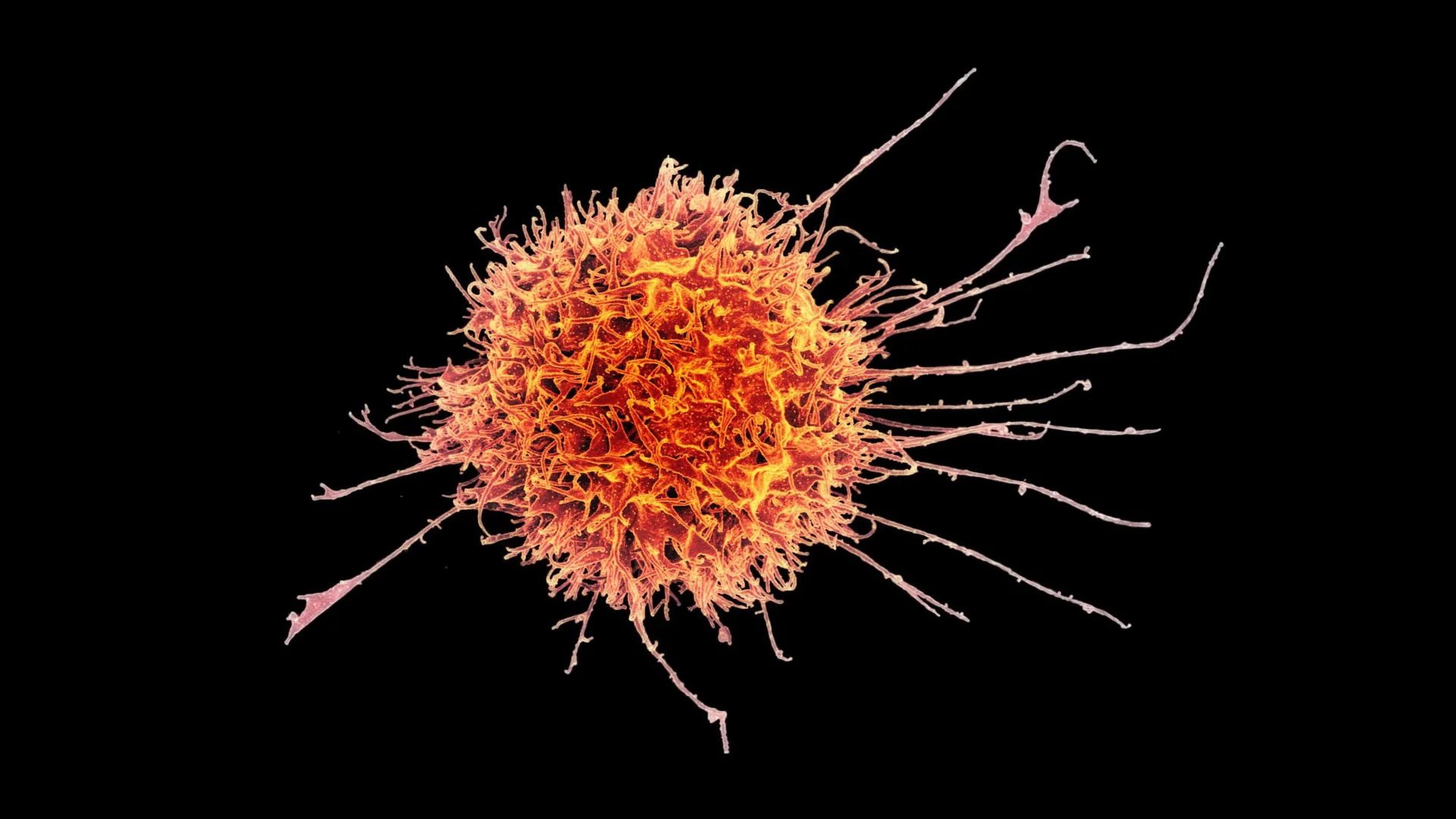
The landscape of modern oncology has been fundamentally reshaped by the advent of cell therapies, yet a significant divide remains between the treatment of liquid and solid malignancies. While chimeric antigen receptor (CAR) T-cell therapies have achieved remarkable success in treating blood-borne cancers such as leukemia and lymphoma, solid tumors—which account for approximately 90% of adult cancer cases—have proven far more resilient. This resilience is largely attributed to the hostile tumor microenvironment (TME), which acts as both a physical barrier and a biochemical shield against immune infiltration. Addressing this clinical bottleneck, researchers at Stanford Medicine, in collaboration with several leading institutions, have pioneered a new strategy that re-engineers natural killer (NK) cells into specialized "tissue-resident" forms. These modified cells demonstrate an unprecedented ability to penetrate solid tumor masses and maintain their cytotoxic potency despite the suppressive signals typically found within the TME.
The Challenge of the Solid Tumor Microenvironment
To understand the significance of the Stanford study, published in Science Translational Medicine, one must first examine why conventional immunotherapies often fail against solid tumors. Unlike blood cancers, where malignant cells circulate freely and are easily accessible to intravenous immune treatments, solid tumors such as melanoma, lung cancer, and carcinomas of the head and neck create complex, fortress-like structures. These tumors are characterized by a dense extracellular matrix and a lack of proper vasculature, which hinders the physical movement of immune cells.
Furthermore, solid tumors actively secrete immunosuppressive cytokines, most notably transforming growth factor-beta (TGF-β), which can "exhaust" or deactivate T-cells and natural killer cells that manage to enter the area. Historically, immunotherapy has focused on circulating immune cells found in the blood. However, as John Sunwoo, MD, the Edward C. and Amy H. Sewall Professor in the School of Medicine and senior author of the study, noted, the most critical interactions between the immune system and disease occur within the tissues themselves. The transition from studying circulating immunity to tissue-resident immunity represents a pivotal shift in oncological research.
Natural Killer Cells: The Innate Immune System’s First Responders
Natural killer cells, first characterized in the 1970s, serve as the innate immune system’s frontline defense. Unlike T-cells, which require a complex process of antigen recognition and "priming" to identify specific threats, NK cells are biologically programmed to recognize and destroy abnormal cells—including those infected by viruses or undergoing malignant transformation—on contact. This rapid response mechanism makes them an attractive candidate for cancer therapy.
A major advantage of NK cells over T-cells is their safety profile in allogeneic (donor-to-patient) transfers. T-cells often carry the risk of graft-versus-host disease (GVHD), where the donor cells attack the recipient’s healthy tissues, necessitating the expensive and time-consuming process of creating "autologous" therapies derived from the patient’s own blood. NK cells, however, do not typically trigger such reactions. This characteristic opens the door for "off-the-shelf" therapies that can be manufactured in large batches, cryopreserved, and administered to patients immediately upon diagnosis, bypassing the weeks-long manufacturing delays associated with current CAR-T treatments.
The "Goldilocks" Discovery: Engineering Tissue Residency
The Stanford research team, led by co-lead authors Nina Horowitz, PhD, Imran Mohammad, PhD, and June Ho Shin, PhD, focused on the specific biological cues required to transform circulating NK cells into tissue-resident NK (trNK) cells. Tissue-resident cells are those that have migrated out of the bloodstream to settle permanently in organs like the liver, lungs, or skin, adapting their function to the local environment.
The researchers discovered that the signaling protein TGF-β is the primary driver of this transformation, but its effect is highly dependent on dosage and duration—a phenomenon Sunwoo described as a "Goldilocks" scenario.
- Too little signal: The NK cells remain in their circulating form and fail to infiltrate the dense tissue of a solid tumor.
- Too much signal: The NK cells become tissue-resident but enter a state of dysfunction or "exhaustion," losing their ability to kill cancer cells.
- Just the right signal: A brief, controlled exposure to TGF-β, delivered via direct physical contact with epithelial tumor cells, programs the NK cells to become aggressive, tissue-seeking killers.
This "recipe" involved exposing human blood-derived NK cells to short-lived epithelial tumor cells that provided a temporary burst of active TGF-β. This specific interaction was found to be more effective than simply adding the protein to a culture medium, suggesting that secondary membrane-bound signals are also necessary for optimal activation.
Identifying the Molecular Signature of Potent Killers
Through detailed bioinformatics and molecular analysis, the team identified the specific characteristics that distinguish these high-potency trNK cells from their less effective counterparts. Both types of tissue-resident cells expressed the surface proteins CD49a and CD103, which are standard markers for tissue residency. However, the aggressive cancer-killing cells uniquely expressed CD39.
Internally, these high-potency cells were found to be "heavily armed" with cytolytic machinery. This includes high concentrations of perforin—a protein that acts like a molecular drill to create holes in the membranes of target cells—and granzyme A, a toxic enzyme that enters through those holes to trigger programmed cell death (apoptosis) from within the tumor cell. This molecular profiling allows researchers to verify the quality and potency of the cells during the manufacturing process.
Experimental Results and Synergistic Effects
The efficacy of these modified trNK cells was tested in various preclinical models, including mouse subjects with human-derived melanoma and head and neck squamous cell carcinoma. The results demonstrated that the modified cells successfully infiltrated the tumors and significantly slowed their growth.
A critical finding of the study was the synergy observed when the trNK cells were combined with cetuximab, a monoclonal antibody currently used to treat metastatic colorectal cancer and head and neck cancers. Cetuximab works by binding to the epidermal growth factor receptor (EGFR) on cancer cells, effectively "flagging" them for the immune system. While cetuximab often shows limited efficacy as a monotherapy, its combination with the engineered trNK cells produced a dramatic therapeutic response. In the study, a single dose of this combination therapy suppressed tumor growth for over a month, while mice in the control groups (receiving only one of the treatments or no treatment) saw rapid tumor progression.
Importantly, the researchers reported no apparent adverse effects in the animal models. Even at the 30-day mark, when untreated mice had succumbed to the disease, the mice treated with the combination therapy remained healthy and active, providing a strong proof-of-concept for the safety of the approach.
Chronology and the Path to Clinical Application
The development of this therapy follows a rigorous timeline of discovery and validation:
- Initial Discovery (Pre-2020): Identification of distinct populations of tissue-resident NK cells in human tissues and the realization that their functions varied from immune-suppressive to highly aggressive.
- Laboratory Optimization (2020-2023): Sunwoo’s team refined the "Goldilocks" method for inducing the cytotoxic phenotype using TGF-β and tumor cell contact.
- Peer Review and Publication (April 2024): The findings were published in Science Translational Medicine, detailing the molecular markers and mouse model successes.
- Scaling and Patenting: Sunwoo has applied for patents on the method for expanding these cells. The current process allows for the production of approximately 20 treatment doses from a single donor’s blood within a two-week window.
- Clinical Trials (Late 2024/Early 2025): The team is currently finalizing protocols for a Phase I clinical trial. Pending FDA approval, this trial will evaluate the combination of trNK cells and cetuximab in patients with advanced squamous cell carcinoma who have exhausted other treatment options.
Broader Implications for the Future of Immunotherapy
The implications of this research extend far beyond the specific cancers tested in the study. If the Phase I trials prove successful, the "off-the-shelf" nature of this therapy could democratize access to advanced cell treatments. Currently, autologous CAR-T therapies can cost upwards of $400,000 per patient, excluding hospital stays and management of side effects. A mass-produced NK cell therapy could significantly lower these costs and eliminate the logistical hurdles of transporting and processing individual patient samples.
Furthermore, the ability to program immune cells for tissue residency may provide a blueprint for treating other "cold" tumors—those that typically do not respond to immunotherapy, such as pancreatic or ovarian cancers. By equipping the immune system with the "keys" to enter these tissues and the "weapons" to survive the local defenses, the Stanford team has opened a new front in the war on cancer.
While the transition from mouse models to human patients is always fraught with challenges, the reproducibility and clarity of the results reported by the Sunwoo lab offer a promising outlook. As the medical community moves toward the end of 2024, the upcoming clinical trials will be closely watched by oncologists and biotech innovators alike, marking what could be the next major evolution in the treatment of solid malignancies.
