
 By George Ongkojoyo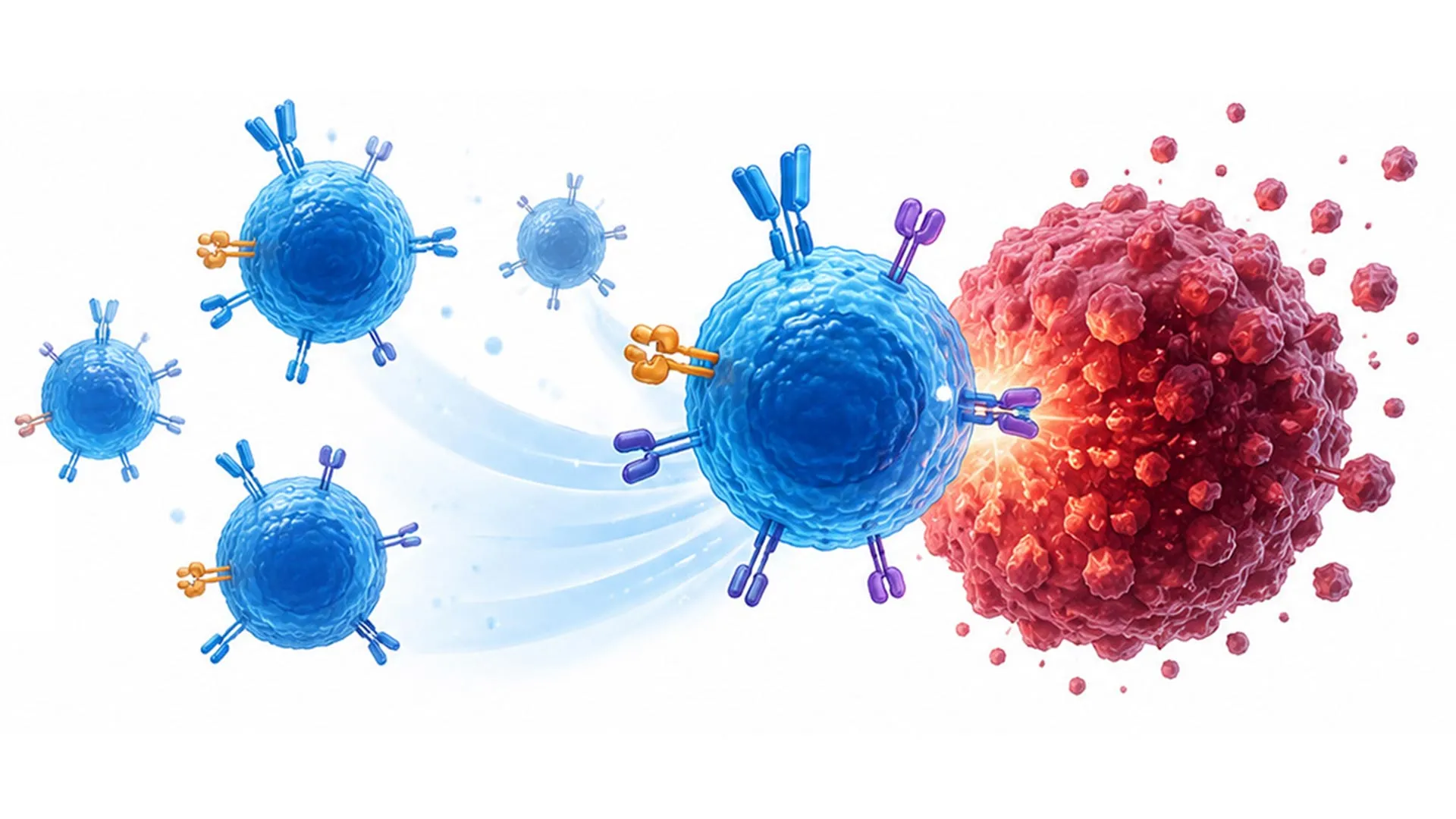
In a significant leap forward for cancer immunotherapy, a team of researchers at the University of California, Los Angeles (UCLA) has unveiled a novel strategy to produce "off-the-shelf" immune cells capable of targeting a wide array of solid tumors. This new approach, detailed in the journal Cell Reports Medicine, leverages blood stem cells derived from donated umbilical cord blood to create a standardized, scalable, and highly potent form of T cell receptor (TCR) therapy. By addressing the dual challenges of high manufacturing costs and the risk of immune rejection, the research marks a potential turning point in how advanced malignancies—including ovarian cancer, melanoma, and prostate cancer—are treated in the clinical setting.
The Evolution of Cellular Immunotherapy: From CAR-T to TCR
To appreciate the significance of the UCLA breakthrough, it is necessary to understand the current landscape of cellular therapy. For the past decade, Chimeric Antigen Receptor (CAR) T-cell therapy has dominated the field, particularly in treating blood cancers like leukemia and lymphoma. CAR-T therapy involves extracting a patient’s T cells and genetically engineering them to recognize specific proteins found on the surface of cancer cells.
However, CAR-T therapy has faced substantial hurdles when applied to solid tumors, which account for approximately 90% of adult cancer cases. Most proteins unique to solid tumors are located inside the cell, rather than on the exterior membrane, making them invisible to standard CAR-T cells. TCR therapy offers a solution to this "visibility" problem. Unlike CAR-T, TCR therapy can detect small fragments of internal proteins—known as peptides—that are shuttled to the cell surface by the Major Histocompatibility Complex (MHC). These peptides act as molecular "tags," signaling to the immune system that the internal machinery of the cell has become cancerous.
Despite this advantage, TCR therapy has remained hindered by the same logistical nightmare as CAR-T: the requirement for autologous (patient-specific) manufacturing. Currently, a patient must wait weeks for their own cells to be harvested, shipped to a lab, engineered, expanded, and returned. This process is not only time-consuming—a critical factor for patients with rapidly progressing late-stage cancer—but also prohibitively expensive, often costing between $300,000 and $500,000 per dose.
Overcoming the "Donor Dilemma" Through Stem Cell Engineering
Scientists have long sought to create "allogeneic" or "off-the-shelf" therapies using cells from healthy donors. This would allow for batches of treatment to be manufactured in advance, frozen, and shipped to hospitals for immediate use. However, using mature T cells from a donor carries a high risk of graft-versus-host disease (GvHD). In GvHD, the donor’s T cells perceive the patient’s healthy tissues as "foreign" and launch a systemic attack, which can be fatal.
The UCLA team, led by Dr. Lili Yang, a professor of microbiology, immunology, and molecular genetics, devised a way to bypass this risk by starting at an earlier stage of cellular development. Instead of using mature T cells, they utilized hematopoietic (blood) stem cells from donated cord blood.
"Stem cells are undifferentiated—they’re not yet mature T cells with a fixed receptor already in place," explained Yichen (John) Zhu, a graduate student and co-first author of the study. By inserting the gene for a cancer-specific TCR into these immature stem cells before they differentiate, the researchers ensured that the resulting T cells would all carry the same engineered receptor. Because these cells mature in a controlled laboratory environment under the researchers’ guidance, they do not develop the diverse, random array of natural receptors that typically cause GvHD. This creates a uniform "army" of T cells with a singular focus: the tumor.
AlloESO-T: A Dual-Action Defense Against Antigen Escape
The specific therapy developed by the UCLA team is known as AlloESO-T. These cells are engineered to recognize NY-ESO-1, a well-documented cancer-germline antigen that is expressed in a variety of aggressive solid tumors but is largely absent from healthy adult tissues.
One of the primary reasons cancer therapies fail is a phenomenon known as "antigen escape." Tumors are heterogeneous; they are composed of various cell types with different genetic profiles. If a therapy targets only one marker, such as NY-ESO-1, the tumor may eventually stop producing that marker, allowing the cancer to "hide" from the immune system and continue growing.
To combat this, the UCLA researchers equipped the AlloESO-T cells with a secondary detection system. In addition to the engineered TCR, the cells carry natural killer (NK) cell receptors. These receptors are designed to detect "stress signals" that are common to almost all malignant cells, regardless of whether they display the NY-ESO-1 protein.
In laboratory experiments using human melanoma, ovarian, and prostate cancer cells, this dual-action mechanism proved highly effective. When tumor cells attempted to escape by downregulating NY-ESO-1, the NK receptors on the AlloESO-T cells took over, allowing the therapy to continue destroying the cancer. This "fail-safe" could be the key to achieving long-term remission in patients with complex, evolving tumors.
Preclinical Success: Mouse Models and Proliferation Data
The efficacy of AlloESO-T was tested in vivo using mouse models of melanoma and ovarian cancer. The results, according to the researchers, were "dramatic." A single infusion of the engineered cells provided lasting tumor control and significantly extended the survival of the animals.
Perhaps more importantly, the study highlighted a stark difference in safety and behavior between AlloESO-T cells and conventional donor-derived T cells. While the AlloESO-T cells expanded by approximately 100-fold following infusion and successfully migrated to the tumor sites, they did not accumulate in healthy organs like the liver or lungs. In contrast, the mice treated with mature donor T cells experienced only temporary tumor suppression and quickly developed signs of GvHD-related toxicity.
"This platform brings us closer to a future where the product is already made, frozen and ready to go as soon as the patient needs," said Dr. Lili Yang. The ability of these cells to proliferate so aggressively once inside the body suggests that even a single, relatively small dose could be sufficient to mount a robust anti-tumor response.
Economic Implications: Trillions of Cells at a Fraction of the Cost
Beyond the biological innovations, the UCLA study addresses the economic sustainability of cancer care. The current model of "one-patient, one-batch" manufacturing is a major bottleneck for healthcare systems worldwide. By utilizing cord blood stem cells, which have a high capacity for self-renewal and differentiation, the researchers believe they can achieve economies of scale.
Yanruide (Charlie) Li, a postdoctoral scholar and co-senior author, estimated that a single unit of donated cord blood could potentially yield enough stem cells to produce trillions of therapeutic T cells. This translates to thousands of doses from a single source.
"At an estimated $5,000 per dose, this approach would be far more accessible than today’s therapies," Li noted. Reducing the cost of cellular therapy by 98% would not only ease the burden on insurance providers and national health services but also make these life-saving treatments available in middle- and low-income countries where personalized CAR-T therapy is currently non-existent.
Chronology and the Path to Human Trials
The development of AlloESO-T is the result of years of iterative research at the UCLA Broad Stem Cell Research Center. The team previously developed a similar "off-the-shelf" platform using Natural Killer T (NKT) cells, which is already moving through the manufacturing pipeline for clinical-grade production.
The timeline for AlloESO-T’s transition to the clinic is expected to be accelerated by this existing infrastructure. The researchers have partnered with the UCLA Health Center for Advanced Biotherapies, which specializes in the manufacturing of clinical-grade cellular products.
However, despite the promising results in mice, the researchers emphasized that human trials remain the essential next step. Preclinical models cannot perfectly replicate the human immune system’s complexity or the immunosuppressive environment of a human solid tumor. Future clinical trials will need to assess the "persistence" of these cells in the human body—how long they remain active before being cleared—and whether the $5,000 price point holds up under the rigors of commercial-scale pharmaceutical manufacturing.
Broader Impact on the Oncology Field
The implications of this research extend far beyond NY-ESO-1 and the specific cancers tested in this study. The UCLA team describes their work not just as a single therapy, but as a modular "platform."
In theory, the same cord blood stem cell backbone could be used to host any validated T cell receptor. If a new receptor is discovered for pancreatic cancer, breast cancer, or glioblastoma, it could be "plugged into" the AlloESO-T system to create a new off-the-shelf treatment. This modularity could spark a new era of "precision oncology at scale," where a library of pre-manufactured T cell products is available to treat various cancer types and genetic profiles.
As the oncology community shifts its focus from "if" we can cure cancer to "how" we can make those cures accessible to the masses, the UCLA study provides a compelling roadmap. By combining the precision of TCR therapy with the scalability of stem cell biology, researchers may have finally found a way to bridge the gap between cutting-edge science and everyday clinical practice.
The research was a collaborative effort involving nearly 20 scientists and was supported by the California Institute for Regenerative Medicine (CIRM), the UCLA Molecular Biology Institute, and the UCLA Goodman-Luskin Microbiome Center. While the road to FDA approval is long, the AlloESO-T platform stands as a testament to the power of bioengineering in the fight against the world’s most resilient diseases.
