
 By admin
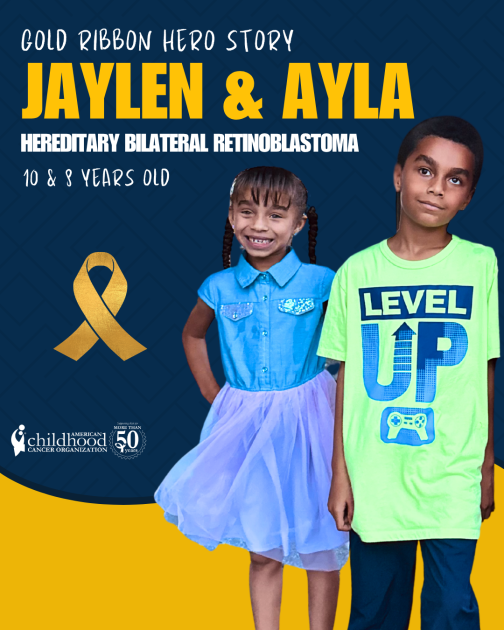
The narrative of childhood cancer is frequently defined by clinical statistics and grueling treatment protocols, yet for the family of Jaylen and Ayla, it is equally defined by a fierce battle against systemic medical barriers and a commitment to joyful survivorship. Jaylen, now 10, and his sister Ayla, 8, are both survivors of hereditary bilateral retinoblastoma, a rare and aggressive form of eye cancer that originates in the retina. Their journey highlights not only the complexities of managing a genetic predisposition to malignancy but also the critical importance of health equity, particularly for parents navigating the healthcare system with disabilities.
Retinoblastoma is the most common primary intraocular tumor of childhood, accounting for approximately 3% of all pediatric cancers. While the overall survival rate in developed nations exceeds 95%, the path to a cure often involves significant physiological and psychological tolls. For Jaylen and Ayla, the diagnosis was compounded by their mother Denice’s experience as a deaf parent, whose initial attempts to seek care for her son were met with institutional resistance.
Understanding Hereditary Bilateral Retinoblastoma
To understand the medical journey of Jaylen and Ayla, one must first examine the pathology of retinoblastoma. The disease occurs due to a mutation in the RB1 gene, a tumor suppressor gene located on chromosome 13. In hereditary cases, which represent approximately 40% of all diagnoses, the child inherits one mutated copy of the gene from a parent or develops a germline mutation early in embryonic development. Because this mutation is present in every cell of the body, these children are predisposed to developing tumors in both eyes—a condition known as bilateral retinoblastoma.
Jaylen’s case was the first indication of this genetic trait within the family. When he was just two months old, Denice noticed a subtle misalignment in his left eye, a condition known as strabismus. Furthermore, early family photographs revealed a distinct "glow" or white reflection in his pupil, a clinical sign known as leukocoria. In healthy eyes, a camera flash typically produces a "red-eye" effect caused by the blood vessels in the retina; however, a white reflection often indicates a mass blocking that reflection, which is a hallmark symptom of retinoblastoma.
The Initial Diagnosis: Challenges in Early Detection and Communication
Despite the presence of these early warning signs, the family’s path to a definitive diagnosis was hindered by a lack of medical urgency and a significant breakdown in communication accessibility. When Jaylen reached his four-month check-up, the primary care physician’s office refused to see the family because they had failed to provide an American Sign Language (ASL) interpreter for Denice. This refusal represents a significant breach of the Americans with Disabilities Act (ADA), which mandates that healthcare providers provide "effective communication" to patients and their companions through auxiliary aids and services.
Faced with a medical system that had momentarily turned its back, Denice was forced to act as her own advocate and navigator. She conducted independent research and contacted multiple facilities until she secured an appointment with a specialist who could accommodate her needs and evaluate her son. This delay, though eventually overcome, underscores the vulnerabilities faced by marginalized populations within the oncology sector. Upon examination, Jaylen was diagnosed with bilateral retinoblastoma, meaning tumors were present in both eyes, necessitating an immediate and aggressive intervention strategy.
Ayla’s Diagnosis: The Critical Role of Proactive Genetic Monitoring
Because Jaylen’s retinoblastoma was identified as hereditary and bilateral, the medical team knew that any future siblings would be at a significantly higher risk for the disease. When Ayla was born two years later, she was placed under strict ophthalmic surveillance from birth. This proactive approach proved life-saving. At just four weeks old, clinical screenings confirmed that Ayla also had bilateral retinoblastoma.
The contrast between the two siblings’ diagnostic timelines is a testament to the evolution of genetic counseling and pediatric screening. While Jaylen’s diagnosis was reactive—following the observation of physical symptoms—Ayla’s was proactive. Early detection is the single most important factor in "eye-sparing" treatments, allowing oncologists to utilize localized therapies before the tumors reach a size that necessitates the removal of the eye.
Clinical Interventions and the Path to Remission
The treatment of retinoblastoma is multidisciplinary, involving pediatric oncologists, ophthalmologists, and radiation therapists. For Jaylen and Ayla, the years that followed their diagnoses were marked by a revolving door of medical procedures. Their treatment plans included systemic chemotherapy to shrink the primary tumors, a process known as chemoreduction.
In addition to chemotherapy, the siblings underwent focal therapies designed to destroy remaining cancerous cells. These included:
- Cryotherapy: The use of extreme cold to freeze and eliminate small tumors on the periphery of the retina.
- Laser Therapy (Photocoagulation/Thermotherapy): The delivery of heat or light energy directly to the tumor to cut off its blood supply.
- Strabismus Surgery: Specific to Jaylen, this procedure was required to correct the misalignment of the eyes caused by the presence of the tumors.
- Enucleation: Despite exhaustive efforts to save her natural sight, Ayla eventually required an enucleation—the surgical removal of the eye—to prevent the cancer from spreading to the optic nerve and brain.
Today, both children live with prosthetic eyes. The transition to ocular prosthetics is a significant milestone in a survivor’s journey, requiring both physical adjustment and emotional resilience. Ayla, in particular, has embraced this aspect of her survivorship with a unique sense of agency. She has curated a collection of custom-colored irises, allowing her to treat her prosthetic as a fashion statement and an expression of her personality rather than a mark of illness.
The Psychological and Social Landscape of Survivorship
The impact of childhood cancer extends far beyond the clinical setting, affecting the family’s social dynamics and the children’s psychological development. Denice has been vocal about the challenges of parenting in the wake of a life-threatening diagnosis. She noted that her choice to "beautifully spoil" her children—prioritizing their happiness and living in the present moment—has occasionally drawn criticism from observers online. However, she maintains that after the trauma of fighting for her children’s lives and navigating a discriminatory healthcare system, the family has earned the right to define their own version of "normal."
Ayla’s journey also includes a reclamation of her mother’s culture and language. During her immediate post-operative recovery from enucleation, Ayla began learning ASL. This not only strengthened the bond between mother and daughter but also ensured that Ayla possesses the tools to navigate a world that is not always designed for accessibility—a lesson her mother learned through hardship.
Broader Implications for Pediatric Oncology and Disability Rights
The case of Jaylen and Ayla serves as a critical case study for several broader issues in modern medicine:
- Health Equity and the ADA: The initial refusal of care for a deaf mother highlights the ongoing need for rigorous enforcement of disability rights in clinical settings. When providers fail to offer interpreters, they do more than inconvenience a parent; they potentially delay life-saving cancer treatments for the child.
- The "Glow" Awareness: Public health campaigns focusing on leukocoria (the "glow") remain essential. Many parents, like Denice, initially dismiss this sign as a photographic anomaly. Increased public awareness can lead to earlier self-referrals and better clinical outcomes.
- Genetic Counseling: The siblings’ story illustrates the power of genetic tracking. Because the hereditary nature of the RB1 mutation was identified early in Jaylen, Ayla was able to begin treatment at one month old, likely saving her from more extensive systemic complications.
- Survivorship Quality of Life: The shift from "survival" to "thriving" is the new frontier in pediatric oncology. Ayla’s use of custom prosthetics and the family’s focus on joy over clinical rigidity represent a holistic approach to healing that addresses the spirit as well as the body.
Conclusion: A Legacy of Advocacy and Joy
Jaylen and Ayla are now thriving, standing as a testament to the success of modern pediatric oncology and the power of maternal advocacy. Their story is not just one of medical triumph but of a family’s refusal to be silenced by a system that was initially unequipped to communicate with them. By sharing their experience, they continue to raise awareness for the American Childhood Cancer Organization (ACCO) and other advocacy groups, proving that a diagnosis of hereditary bilateral retinoblastoma does not preclude a life of independence, style, and boundless joy.
As they move forward, the siblings remain under regular surveillance, as survivors of hereditary retinoblastoma carry an increased risk for secondary cancers later in life. However, with the same "fearless" advocacy that Denice employed during their infancy, the family remains vigilant, choosing to celebrate every milestone as a "legendary triumph" over the shadows of their early years. Through their smiles and their resilience, Jaylen and Ayla are redefining what it means to be a survivor in the 21st century.
