
 By admin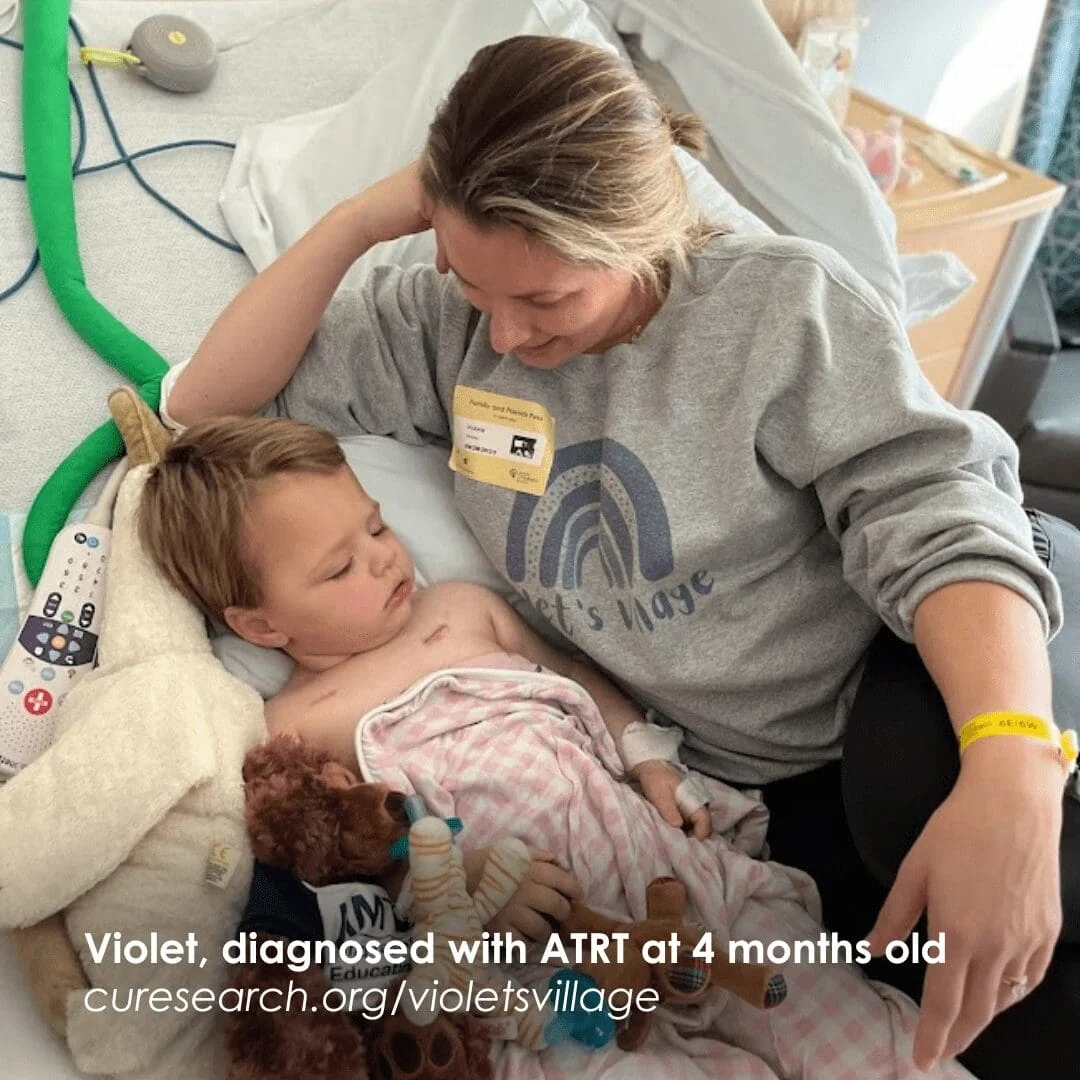
The national non-profit organization CureSearch for Children’s Cancer has officially named Dr. John Prensner of the University of Michigan as the recipient of the 2025 Young Investigator Award, a prestigious grant designed to propel high-impact research in the field of pediatric oncology. Dr. Prensner’s work focuses on Atypical Teratoid Rhabdoid Tumor (ATRT), a particularly aggressive and rare form of brain cancer that predominantly affects infants and children under the age of three. This award, co-funded by the Jeff Gordon Children’s Foundation (JGCF) and Violet’s Village: The Violet Kenney Legacy Fund, represents a significant investment in the exploration of the "dark matter" of the human genome to identify new therapeutic targets for a disease that currently lacks effective precision treatments.
The Clinical Challenge of Atypical Teratoid Rhabdoid Tumor
Atypical Teratoid Rhabdoid Tumor is a fast-growing, Grade IV tumor that typically originates in the central nervous system. For many families, the diagnosis comes during the most formative years of a child’s life, often before they have reached their fourth birthday. These tumors are most frequently found in the cerebellum—the region of the brain responsible for motor control and balance—or the brainstem, which governs vital life functions such as breathing and heart rate.
Statistically, ATRT accounts for approximately 1% to 2% of all pediatric brain tumors, but its impact is disproportionately severe. Because it occurs in such young children, the standard of care—which often involves a combination of surgical resection, high-dose chemotherapy, and occasionally radiation—carries significant risks of long-term developmental and neurological impairment. Furthermore, the five-year survival rate for ATRT remains lower than that of many other pediatric cancers, particularly for infants who cannot safely undergo radiation therapy.
The fundamental hurdle in treating ATRT lies in its genetic simplicity. Unlike adult cancers, which may possess hundreds of genetic mutations that scientists can target with specific drugs, ATRT is characterized by a "quiet" genome. In the vast majority of cases, the only identifiable genetic driver is the loss of the SMARCB1 gene. While this loss is the catalyst for tumor growth, it has proven difficult to "target" with traditional pharmacology, leaving researchers in a decades-long search for secondary vulnerabilities within the tumor cells.
Dr. John Prensner and the Frontier of Microproteins
Dr. John Prensner, an assistant professor of pediatrics and hematology-oncology at the University of Michigan, is approaching this problem from an entirely new angle. His research moves beyond the well-mapped regions of the human genome and into the realm of small open reading frames (sORFs). For years, these segments of DNA were dismissed by the scientific community as "junk DNA" or non-coding regions that did not produce functional proteins.
However, recent advancements in genomic sequencing and proteomics have revealed that these sORFs actually produce "microproteins." These tiny proteins are often overlooked because they are too small to be detected by standard laboratory filters, yet they may hold the key to how ATRT cells survive and proliferate. Dr. Prensner’s project aims to map these microproteins and determine which ones are essential for the tumor’s survival. By identifying these hidden drivers, the research could pave the way for a new generation of targeted therapies that "turn off" the growth signals in ATRT cells without harming healthy brain tissue.
“Children with ATRT don’t have the same opportunities to benefit from cutting-edge, targeted treatments that are available for other cancers,” noted Dr. Paisley Myers, Director of Research and Programs at CureSearch. “We urgently need to change that narrative. Dr. Prensner’s work is at the absolute forefront of what is possible in pediatric molecular biology.”
A Strategic Funding Model: CureSearch and its Partners
The 2025 Young Investigator Award is part of a broader strategic initiative by CureSearch to address the "valley of death" in drug development—the gap between initial laboratory discovery and clinical trials. By supporting early-career scientists like Dr. Prensner, the organization ensures that promising talent remains in the pediatric cancer field, which often receives significantly less federal funding compared to adult cancer research.
This specific grant is a collaborative effort, highlighting a growing trend in the non-profit sector where multiple foundations pool resources to maximize impact. The Jeff Gordon Children’s Foundation, established by the four-time NASCAR Cup Series champion, has long been a champion of pediatric cancer research. Susan Robinson, Executive Director of the JGCF, emphasized the urgency of the mission. “Brain tumors are the deadliest form of childhood cancer,” Robinson stated. “We are eager to advance scientific knowledge and develop better therapeutics to improve outcomes for kids facing such a devastating diagnosis.”
Joining the effort is Violet’s Village: The Violet Kenney Legacy Fund. Named in memory of a young girl who battled ATRT, the fund was created by her family to ensure that future patients have better options than those currently available. This partnership underscores the personal and communal drive to transform a terminal diagnosis into a manageable or curable condition.
Chronology of Progress in ATRT Research
To understand the importance of Dr. Prensner’s 2025 project, it is necessary to look at the timeline of ATRT research:
- 1987: ATRT is first recognized as a distinct clinical entity, having previously been misdiagnosed as medulloblastoma or other primitive neuroectodermal tumors.
- 1998: Researchers identify the loss of the SMARCB1 (also known as INI1) gene on chromosome 22 as the primary genetic hallmark of rhabdoid tumors.
- 2010s: Genomic sequencing confirms that ATRT has one of the lowest mutation rates of any human cancer, making it a "cold" target for traditional mutation-based therapies.
- 2020-2024: Advances in ribosome profiling and mass spectrometry allow scientists to begin identifying microproteins, leading to Dr. Prensner’s current investigation into sORFs.
- 2025: The CureSearch Young Investigator Award begins, providing the three-year funding cycle necessary to translate these genomic findings into potential drug leads.
Statistical Context: The Funding Gap in Pediatric Oncology
The necessity of the Young Investigator Award is highlighted by the stark disparities in cancer research funding. According to data from the National Cancer Institute (NCI), pediatric cancers as a whole receive only about 4% of the total federal budget for cancer research. Within that 4%, rare tumors like ATRT receive a fraction of the funding compared to more common pediatric cancers like leukemia.
Furthermore, the pharmaceutical industry often lacks the financial incentive to develop drugs for rare pediatric conditions due to the small patient populations. This makes the role of non-profits like CureSearch vital. By funding the "discovery" phase of research, they provide the proof-of-concept data that can eventually attract larger investments for clinical trials.
Implications for Future Treatment Paradigms
The implications of Dr. Prensner’s research extend beyond ATRT. If microproteins are found to be significant drivers of tumor growth in ATRT, it is highly likely they play similar roles in other "genetically quiet" pediatric cancers, such as clear cell sarcoma of the kidney or certain types of ependymoma.
From a clinical perspective, the goal is to shift away from "carpet-bombing" the developing brain with cytotoxic chemotherapy. Instead, the future of ATRT treatment may involve "precision micro-inhibitors" designed to interfere with the specific microproteins identified in Dr. Prensner’s lab. Such a shift would not only improve survival rates but also significantly enhance the quality of life for survivors, reducing the incidence of secondary cancers and cognitive delays.
Dr. Prensner expressed his gratitude for the support, stating, “My hope is that this work will lead to the discovery of new genes that inform the next phase of drug development for ATRT. This CureSearch award will be important for us to continue to develop a new understanding of the childhood cancer genome.”
Conclusion: A Collaborative Path Forward
As Dr. Prensner begins his work at the University of Michigan, the pediatric oncology community remains cautiously optimistic. The transition from identifying "junk DNA" to developing a life-saving drug is a long and arduous process, but the infrastructure provided by CureSearch, the Jeff Gordon Children’s Foundation, and Violet’s Village provides the necessary foundation.
By focusing on the youngest patients and the most difficult-to-treat tumors, these organizations are tackling the frontier of modern medicine. For the families of children diagnosed with ATRT, this research represents more than just scientific inquiry; it represents a tangible hope that the milestones of childhood—the first steps, the first words, and the exploration of the world—will no longer be cut short by a devastating diagnosis. Through the lens of Dr. Prensner’s research, the "shadows" in which ATRT operates are finally beginning to recede, replaced by the light of genomic discovery.
