
 By Suherman Candra Maholtra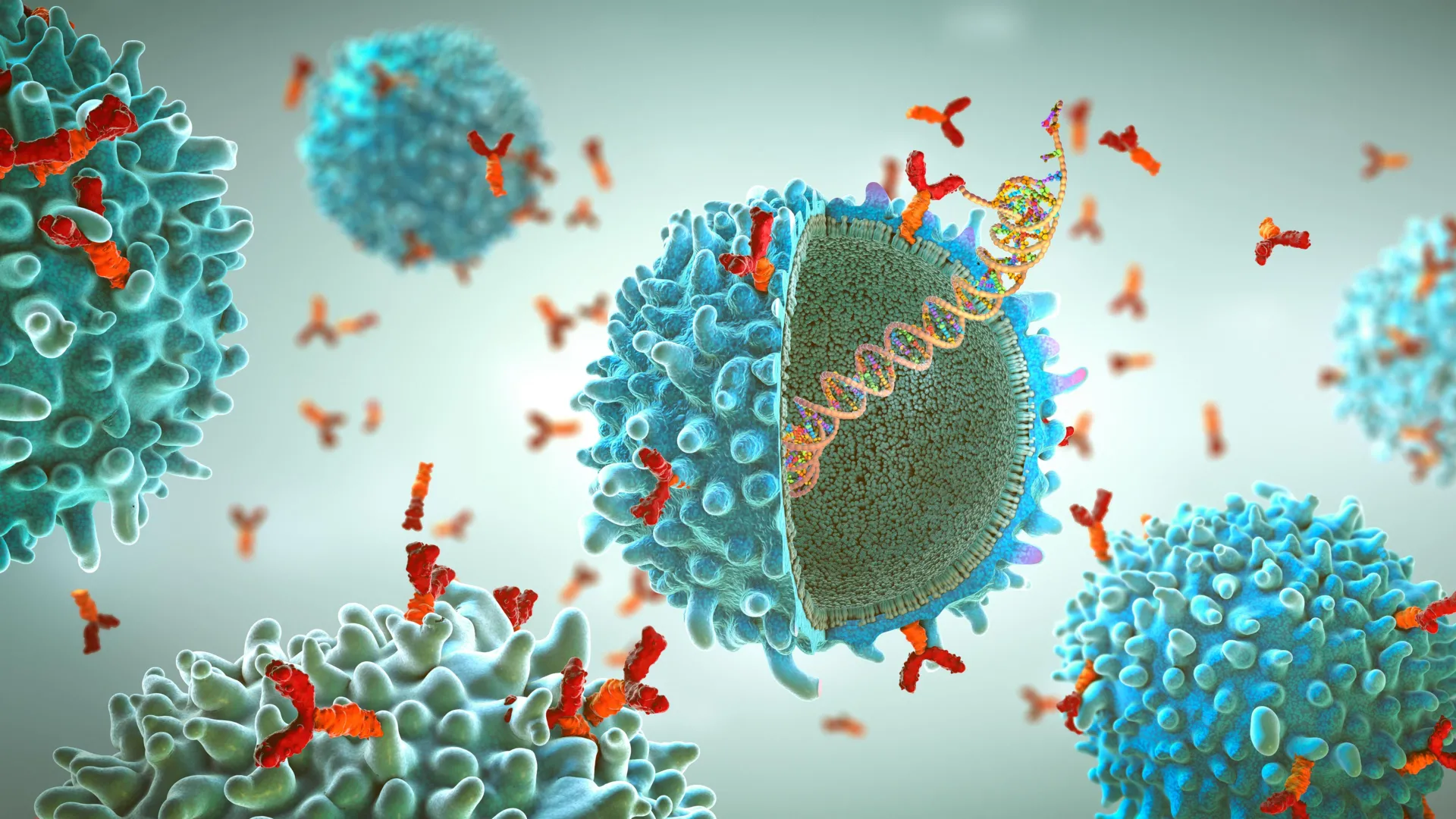
In the complex field of vaccinology, the primary challenge has long been the accurate recreation of viral surface proteins. These proteins, known as glycoproteins, are the primary machinery viruses use to latch onto and enter human cells. Because they are the most exposed parts of a virus, they are also the primary targets for the immune system’s antibodies. However, recreating these proteins in a laboratory setting has historically required scientists to strip away the viral membrane, often resulting in "truncated" or simplified versions of the proteins that lack critical structural elements. A multi-institutional team led by Scripps Research and IAVI has bridged this gap by developing a lipid-based nanodisc platform that preserves the natural state of these proteins, potentially accelerating the development of vaccines for HIV, Ebola, and other high-priority viruses.
The Structural Challenge of Membrane-Bound Proteins
For decades, structural biologists have struggled with the inherent instability of membrane proteins. In a living virus, surface glycoproteins are anchored into a fatty outer layer called the lipid bilayer. This membrane is not merely a container; it provides structural support and influences the shape (conformation) of the protein. When researchers attempt to produce these proteins for study or for use in vaccines, they often remove the "transmembrane" and "cytoplasmic" domains—the parts that sit inside or behind the membrane—to make the proteins soluble and easier to handle in liquid solutions.
While these soluble versions have been instrumental in developing many existing vaccines, they are often incomplete. By removing the membrane-anchoring portion, scientists inadvertently hide the "base" of the protein. In viruses like HIV-1, this base area, known as the membrane-proximal external region (MPER), is a site of extreme vulnerability. Some of the most powerful antibodies ever discovered, known as broadly neutralizing antibodies (bNAbs), target exactly this region. Without the lipid membrane present in lab models, these antibodies cannot bind correctly, leaving a blind spot in vaccine research.
The new platform, detailed in the journal Nature Communications, utilizes nanodisc technology to solve this problem. Nanodiscs are microscopic, disc-shaped particles composed of a lipid bilayer encircled by a "belt" of membrane scaffold proteins. By embedding viral glycoproteins into these nanodiscs, researchers can study them in an environment that almost perfectly mimics the surface of a real virus.
Chronology of Development and Technical Integration
The development of the nanodisc platform was a multi-year effort that required the integration of several disparate scientific disciplines, including protein engineering, lipid chemistry, and advanced imaging. The research team, led by co-senior author William Schief, a professor at Scripps Research and executive director of vaccine design at IAVI’s Neutralizing Antibody Center, sought to create a "one-stop shop" for vaccine analytics.
The process began with the optimization of the lipid environment. Different viruses have different membrane compositions; for instance, the lipid envelope of HIV is enriched with cholesterol and sphingolipids. The team had to ensure the nanodiscs could be customized to reflect these specific environments. Following the lipid optimization, the team integrated the platform with high-resolution imaging techniques, specifically cryo-electron microscopy (cryo-EM). Cryo-EM allows scientists to freeze samples mid-motion and take thousands of 2D images, which are then reconstructed into a 3D model at near-atomic resolution.
A critical milestone in the timeline was the successful application of the platform to HIV-1 Env, the trimeric protein responsible for HIV infection. Historically, imaging the interaction between HIV-1 Env and antibodies at the membrane interface was nearly impossible. The nanodisc platform allowed the team to achieve this in a fraction of the time previously required. According to first author Kimmo Rantalainen, a senior scientist in Schief’s lab, the team managed to condense a workflow that typically took over a month into just seven days. This increase in efficiency is vital for high-throughput vaccine testing, where hundreds of variations of a vaccine candidate must be screened quickly.
Supporting Data: Insights from HIV and Ebola Models
The study’s effectiveness was demonstrated through rigorous testing on two of the most difficult targets in infectious disease: HIV and Ebola.
In the HIV experiments, the researchers focused on the 10E8 antibody, one of the most potent broadly neutralizing antibodies known. The 10E8 antibody is unique because it targets the MPER region of the HIV surface protein. Previous studies using soluble proteins failed to show exactly how 10E8 navigates the lipid environment to find its target. Using the nanodisc platform, the Scripps team produced high-resolution structures showing the antibody interacting not just with the protein, but also with the lipid heads of the membrane itself. This data confirmed that the lipid environment is an active participant in antibody binding, a fact that must be accounted for in the design of any MPER-targeting vaccine.
The team then applied the platform to the Ebola virus glycoprotein (GP). Ebola presents a different set of challenges; its surface proteins are heavily coated in sugars (glycans) that act as a shield against the immune system. The nanodisc platform allowed the researchers to observe how antibodies penetrate this glycan shield while the protein is anchored in a membrane. The results showed that the platform is versatile and can be adapted to various viral geometries and membrane types.
Furthermore, the study provided quantitative data on "binding kinetics." By using a technique called Bio-Layer Interferometry (BLI) in conjunction with the nanodiscs, the researchers could measure exactly how fast antibodies latch onto the proteins and how long they stay attached. This revealed that some antibodies bind significantly more strongly when the protein is in a membrane-like environment compared to when it is free-floating in a solution.
Official Responses and Scientific Significance
The release of the study has drawn significant attention from the global health community. William Schief emphasized that the primary goal of the research was to provide a more accurate lens through which to view the immune response. "For many years, we’ve had to rely on versions of viral proteins that are missing important pieces," Schief stated. "Our platform lets us study these proteins in a setting that better reflects their natural environment, which is critical if we want to understand how protective antibodies recognize a virus."
The collaborative nature of the project was also highlighted. The research involved contributions from IAVI, a global non-profit focused on developing vaccines for HIV and tuberculosis, as well as scientists from Moderna Inc. and various academic departments at Scripps Research. This interdisciplinary approach was essential for ensuring the platform was not just a theoretical success but a practical tool for the pharmaceutical industry.
Kimmo Rantalainen noted that the platform’s scalability is its most promising feature. "The individual pieces already existed, but making them work together in a way that’s reproducible and scalable opens up new possibilities for how vaccines are analyzed and designed," Rantalainen said. The ability to use these nanodiscs as "molecular bait" to isolate rare B-cells from human blood samples is expected to be a game-changer for identifying new therapeutic antibodies.
Broader Impact and Implications for Global Health
The implications of the nanodisc platform extend far beyond HIV and Ebola. The researchers noted that the technology is "pathogen-agnostic," meaning it can be applied to any virus that uses membrane-bound glycoproteins. This includes seasonal threats like influenza and emerging threats like SARS-CoV-2 (the virus behind COVID-19).
In the context of the COVID-19 pandemic, the world saw the rapid development of mRNA vaccines. However, as the virus continues to mutate, there is a growing need for "next-generation" vaccines that target more stable, conserved regions of the spike protein. Many of these stable regions are located near the base of the spike, similar to the MPER in HIV. The nanodisc platform provides a way to map these regions with precision, potentially leading to a "universal" coronavirus vaccine or more effective flu shots that do not need to be updated every year.
Moreover, the platform’s speed provides a significant advantage in the event of a "Disease X" scenario—a future pandemic caused by an unknown pathogen. In such a crisis, the ability to rapidly characterize a new virus’s surface proteins in their natural state could shave weeks or months off the timeline for vaccine development.
The research was supported by the National Institute of Allergy and Infectious Diseases (NIAID) and the Bill & Melinda Gates Foundation, reflecting the high level of priority placed on innovative vaccine technologies. As the platform moves from the development phase into wider use across the scientific community, it stands to become a cornerstone of modern immunovirology, providing the structural clarity needed to defeat some of the most complex biological threats of the 21st century.
