
 By Gabriel Paijo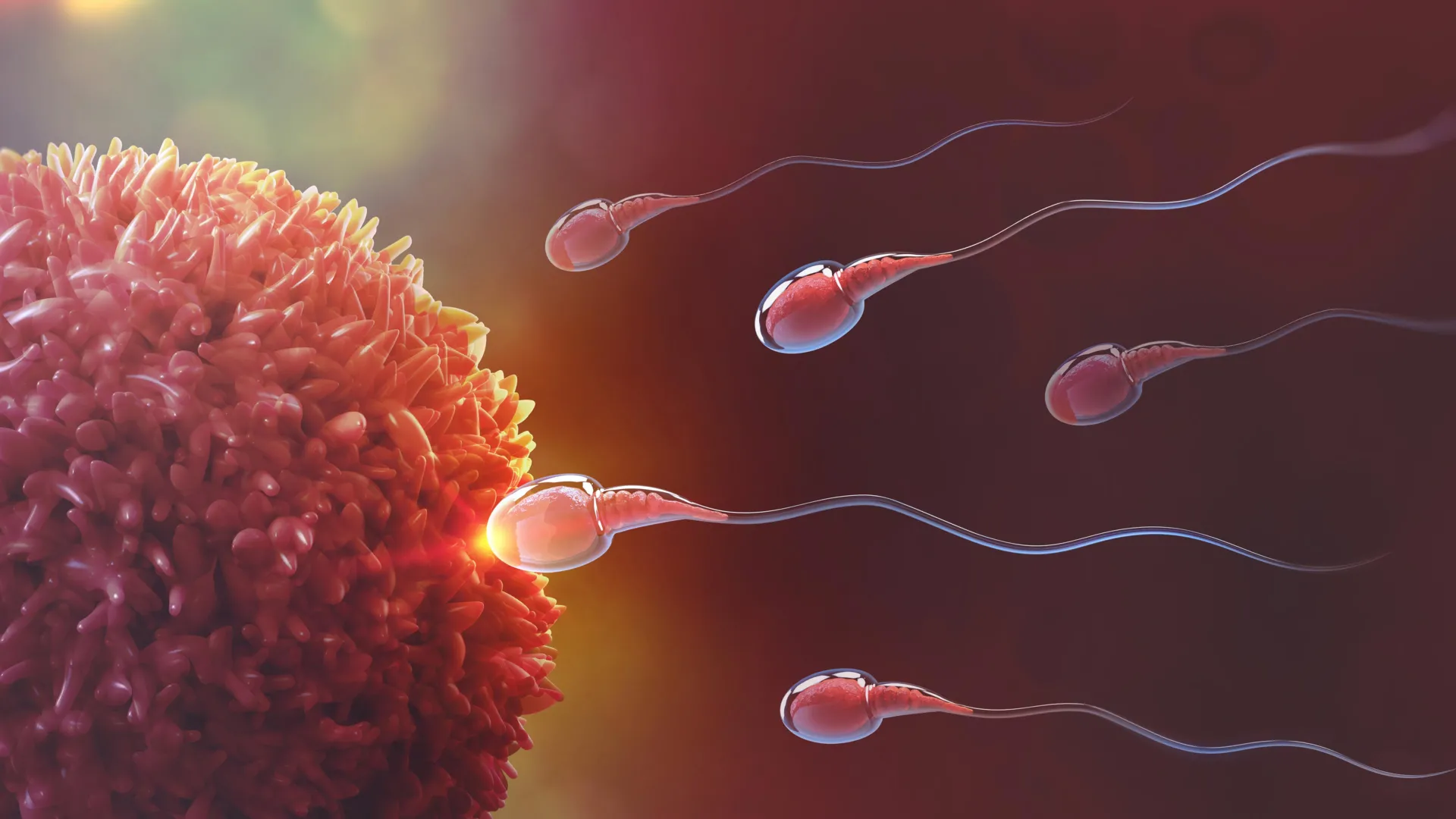
Researchers at Michigan State University (MSU) have successfully identified a critical molecular "switch" that triggers a massive surge in sperm energy immediately before the fertilization process begins. This breakthrough, published in the Proceedings of the National Academy of Sciences (PNAS), offers a new perspective on mammalian reproductive biology and provides a foundational framework for two significant medical advancements: the refinement of infertility treatments and the development of safe, non-hormonal male contraceptives. Led by Melanie Balbach, an assistant professor in the Department of Biochemistry and Molecular Biology at MSU, the study elucidates how sperm transition from a dormant state to a high-energy "hyperactivated" state, a process essential for penetrating the protective layers of an egg.
The discovery centers on the metabolic reprogramming that sperm undergo once they enter the female reproductive tract. Unlike most cells in the human body, which maintain a relatively steady baseline of energy production to support ongoing physiological functions, sperm are specialized units with a singular, terminal objective. Their metabolic profile is uniquely streamlined to remain quiet during storage and then explode into activity when the conditions for fertilization are met. This shift is not merely a matter of swimming faster; it involves a fundamental restructuring of how the cell processes fuel and interacts with its environment.
The Mechanics of Sperm Metabolism and Hyperactivation
In the moments preceding ejaculation, mammalian sperm are maintained in a low-energy, quiescent state within the male reproductive system. This preservation phase ensures that the sperm do not exhaust their limited energy reserves before they reach their destination. However, upon introduction to the female reproductive tract, a dramatic transformation known as capacitation begins. During this phase, sperm undergo a series of biochemical and physiological changes: they begin to swim with significantly more force—a state called hyperactivation—and their outer membranes are modified to facilitate the eventual fusion with the egg.
These physical changes require an immediate and substantial increase in adenosine triphosphate (ATP), the primary energy currency of the cell. "Sperm metabolism is special since it’s only focused on generating more energy to achieve a single goal: fertilization," explained Dr. Balbach, the senior author of the study. While scientists have long observed this energy surge, the precise regulatory mechanisms that govern this "metabolic switch" remained one of the more elusive mysteries in reproductive science until this latest MSU-led research.
The study identifies the enzyme aldolase as a central regulator in this process. Aldolase is a key component of glycolysis, the metabolic pathway that breaks down glucose to produce energy. The researchers found that in activated sperm, aldolase acts as a gatekeeper, accelerating the conversion of glucose into usable fuel at a rate far exceeding that of inactive sperm.
Innovative Methodology: Tracking the "Pink Car" through Traffic
To uncover these metabolic secrets, Balbach’s team, in collaboration with experts from the Memorial Sloan Kettering Cancer Center and the Van Andel Institute, developed a sophisticated method for tracking glucose metabolism. They utilized advanced mass spectrometry and metabolomics tools provided by MSU’s specialized core facilities to map the chemical trajectory of glucose as it was absorbed and processed by the sperm.
Balbach utilized a vivid analogy to describe the complexity of this tracking process. "You can think of this approach like painting the roof of a car bright pink and then following that car through traffic using a drone," she stated. By "painting" the glucose molecules with isotopic labels, the team could observe how the sugar moved through various metabolic intersections within the cell.
The data revealed that in activated sperm, the "pink car" moved significantly faster and followed a different route than in inactive cells. The researchers could identify exactly where the metabolic process was most efficient and where it encountered potential bottlenecks. This high-resolution mapping showed that sperm do not only rely on the glucose they absorb from their immediate surroundings; they also tap into internal energy reserves they carry from the start of their journey. This dual-fuel strategy ensures that the sperm have enough power to complete the final, most strenuous leg of their mission.
A Chronology of Discovery: From Weill Cornell to Michigan State
The recent findings are the culmination of years of research into the nuances of male fertility. Prior to joining Michigan State University in 2023, Dr. Balbach conducted pioneering work at Weill Cornell Medicine. During that period, her research contributed to the discovery that blocking a specific sperm enzyme could induce temporary, reversible infertility in mice. That earlier breakthrough provided the first "proof of concept" that targeting sperm function directly—rather than the hormonal systems that produce them—could be a viable path for male contraception.
Upon arriving at MSU, Balbach expanded this line of inquiry to look deeper into the metabolic requirements of sperm. The move allowed her to leverage MSU’s robust infrastructure in metabolomics and biochemistry. The current study builds upon her previous work by identifying the specific metabolic pathways that could be targeted to either enhance fertility or safely inhibit it. The transition from identifying a target enzyme to mapping the entire metabolic "traffic flow" represents a significant leap forward in the field of reproductive biology.
Addressing the Global Infertility Crisis
The implications of this research for infertility are profound. According to the World Health Organization (WHO), approximately one in six people globally experience infertility at some point in their lives. In many cases, male factor infertility is the primary cause, often stemming from issues with sperm motility or the inability of sperm to undergo the necessary metabolic shifts required for fertilization.
By understanding the exact "switch" that boosts sperm energy, clinicians may eventually be able to develop better diagnostic tools. Current semen analysis often focuses on sperm count and basic morphology, but it frequently fails to account for metabolic health. "Better understanding the metabolism of glucose during sperm activation was an important first step," Balbach noted. Future diagnostic tests could potentially measure the efficiency of a patient’s aldolase activity or glucose uptake, providing a more nuanced view of reproductive potential.
Furthermore, these findings could lead to improvements in assisted reproductive technologies (ART), such as in vitro fertilization (IVF). If scientists can optimize the metabolic environment for sperm during the fertilization process in a lab setting, it may increase the success rates of these expensive and emotionally taxing procedures.
The Search for Non-Hormonal Male Contraceptives
Perhaps the most culturally significant application of this research lies in the development of a male birth control pill. For decades, the burden of hormonal contraception has fallen almost exclusively on women. Existing male options are largely limited to condoms, which have a notable "typical use" failure rate, or vasectomies, which are intended to be permanent.
Previous attempts to create a male pill have mostly focused on suppressing the production of sperm through hormonal manipulation (interfering with testosterone). However, these methods often come with significant side effects, including mood swings, weight gain, and changes in libido. Moreover, hormonal methods take weeks or months to become effective and similarly long to reverse.
The "inhibitor-based" approach suggested by Balbach’s research offers a radical alternative. By targeting the specific metabolic switch (like the aldolase enzyme) that allows sperm to function, it may be possible to create a non-hormonal drug that provides on-demand infertility. Because this would target the sperm’s ability to "turn on" rather than the body’s ability to produce them, the effects would be rapid and likely highly reversible.
"Right now, about 50% of all pregnancies are unplanned, and this would give men additional options and agency in their fertility," Balbach said. She added that such an option would also provide "freedom for those using female birth control, which is hormone-based and highly prone to side effects."
Broader Impact and Future Scientific Directions
The study’s success opens several new avenues for investigation. Balbach and her team are now focused on determining how these findings translate from murine models to human physiology. While the fundamental mechanisms of glycolysis are conserved across many species, human sperm may have unique nuances in how they utilize different fuel sources, such as fructose, which is prevalent in the seminal fluid.
The research also suggests a broader biological principle: metabolic reprogramming is a hallmark of many rapid cellular transitions, including the activation of immune cells and the growth of cancer cells. By studying sperm as a "model system" for these shifts, the MSU team is contributing to a wider understanding of how cells rapidly pivot their internal chemistry to meet new demands.
The study received support from the National Institute of Child Health and Human Development, a branch of the National Institutes of Health (NIH), underscoring the federal interest in expanding reproductive choices and improving fertility outcomes. As the research moves toward potential clinical applications, the focus will remain on safety and specificity—ensuring that any metabolic inhibitor targeted at sperm does not interfere with the glucose metabolism of other vital organs.
In the landscape of modern medicine, the identification of the aldolase-driven switch represents a pivotal moment. It bridges the gap between basic biochemical research and transformative healthcare solutions. Whether the end result is a new treatment for a couple struggling to conceive or a revolutionary contraceptive that rebalances the responsibility of family planning, the work being done at Michigan State University is poised to change the future of reproductive health. Dr. Balbach remains optimistic about the road ahead: "I’m excited to see what else we can find and how we can apply these discoveries."
