
 By Suherman Candra Maholtra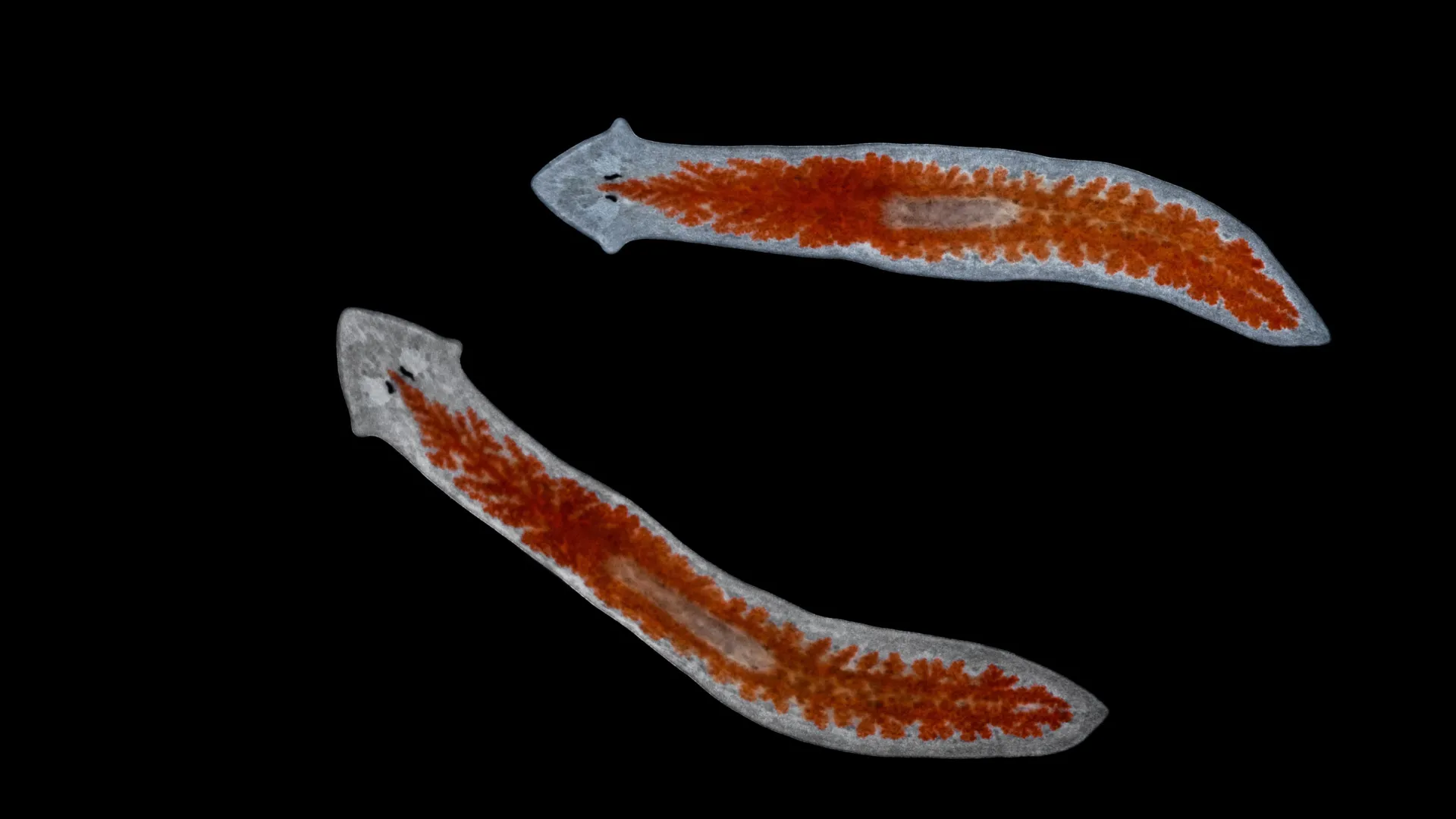
In a discovery that fundamentally alters the scientific understanding of how complex organisms maintain and repair their bodies, researchers at the Stowers Institute for Medical Research have demonstrated that planarian stem cells do not operate within the rigid, localized environments typical of most animal species. The study, published in the journal Cell Reports on October 15, 2025, reveals that these flatworms utilize a decentralized system of cellular instruction, where stem cells ignore their immediate neighbors in favor of signals transmitted from distant organs, specifically the intestine. This departure from the "stem cell niche" model—a cornerstone of modern regenerative biology—offers a new framework for understanding how organisms can achieve total body regeneration and provides a potential roadmap for advancing human regenerative medicine and cancer therapies.
The Paradigm of the Stem Cell Niche
For decades, the prevailing theory in developmental biology has been that stem cells are governed by a "niche." A niche is a specific anatomical location where a stem cell resides, surrounded by specialized "neighbor" cells that provide the necessary chemical and physical cues to dictate the stem cell’s behavior. These cues tell the stem cell when to remain dormant, when to divide to create more stem cells (self-renewal), and when to differentiate into a specific tissue type, such as muscle, nerve, or skin.
In humans, the most well-documented example of this is found in the bone marrow. Hematopoietic stem cells, which are responsible for producing all the blood cells in the body, live in highly regulated niches within the bone. If these cells are removed from their niche or if the neighboring cells stop providing the correct signals, the stem cells may fail to function or, conversely, begin to divide uncontrollably.
"For instance, human blood-forming stem cells reside in niches within bone marrow where they divide to self-renew and make new blood cells," explained Frederick "Biff" Mann, Ph.D., a Postdoctoral Research Associate at the Stowers Institute and the lead author of the study. The niche acts as a "micromanager," ensuring that stem cells only perform specific tasks at specific times. This tight regulation is essential for complex, long-lived organisms because it prevents "rogue" cell growth, which is the primary driver of oncogenesis, or the development of cancer.
Flatworms Rewrite the Rules of Regeneration
Planarians, or freshwater flatworms, have long been the "superstars" of regenerative research. They possess an uncanny ability to regrow any part of their body; if a planarian is cut into dozens of pieces, each piece can grow back into a complete, perfectly proportioned miniature worm within a matter of weeks. This feat is powered by a population of adult stem cells called neoblasts, which make up about 20% to 30% of the animal’s total cell count.
Unlike human adult stem cells, which are usually "multipotent" (limited to becoming a few related cell types), planarian neoblasts are "pluripotent," meaning they can become any cell type in the body. The Stowers Institute team, led by President and Chief Scientific Officer Alejandro Sánchez Alvarado, Ph.D., sought to understand how these powerful cells are regulated without causing the animal to develop tumors.
The research team discovered that instead of being tethered to a fixed niche, planarian stem cells operate with a high degree of independence. They do not rely on the cells immediately adjacent to them for instructions. Instead, the study found that the stem cells take their cues from "global" signals and distant tissues. This independence allows the stem cells to be mobile and responsive, moving to wherever they are needed most during a traumatic injury.
The Discovery of the Hecatonoblast
To map the relationship between stem cells and their environment, the researchers utilized a cutting-edge technology known as spatial transcriptomics. This method allows scientists to see not only which genes are active within individual cells but also exactly where those cells are located in relation to one another.
During this mapping process, the team identified a previously unknown cell type. This cell is remarkably large and characterized by numerous long, fingerlike projections that extend across the tissue. The researchers named this new cell the "hecatonoblast," drawing inspiration from the Hecatoncheires—hundred-handed giants from Greek mythology who were said to help overthrow the Titans.
Given their proximity to the neoblasts and their complex structure, the researchers initially hypothesized that hecatonoblasts were the elusive "niche" cells for planarian stem cells. However, the data proved otherwise. "Because they were located so close to stem cells, we were surprised to find that hecatonoblasts were not controlling their fate nor function, which is counterintuitive to a typical stem cell-niche connection," said Mann.
Instead of the hecatonoblasts acting as managers, the spatial transcriptomics data revealed that the most significant influence on stem cell behavior came from the planarian’s intestinal cells. Despite being located further away in the body’s architecture, the gut appeared to be the primary source of the signals that dictate where stem cells go and what they become.
Local vs. Global Communication Networks
The distinction between local and global signaling is a critical finding of the study. In most animals, local communication (the niche) is the dominant force. In planarians, the hierarchy is flipped.
"I tend to think about this as local versus global communication networks," said co-corresponding author Blair Benham-Pyle, Ph.D., an Assistant Professor at the Baylor College of Medicine and a former Stowers Postdoctoral Research Associate. "While interactions between stem cells and their neighboring cells influence how a stem cell reacts immediately, distant interactions may control how that same stem cell responds to big changes in an organism."
This global signaling network allows the planarian to coordinate a massive regenerative response across its entire body simultaneously. When a planarian is injured, the "global" instructions ensure that the stem cells at the wound site know exactly what parts are missing—whether it is a head, a tail, or an internal organ—and how to rebuild the missing architecture in the correct proportions.
Historical Context and Scientific Chronology
The study of planarian regeneration dates back over a century. In 1898, the pioneering geneticist Thomas Hunt Morgan conducted experiments on planarians, famously noting that a fragment as small as 1/279th of the worm’s body could regenerate into a whole organism. However, for most of the 20th century, the molecular mechanisms behind this ability remained a mystery.
In the early 2000s, the laboratory of Alejandro Sánchez Alvarado began applying modern genomic tools to Schmidtea mediterranea, a specific species of planarian. Over the last two decades, researchers have identified thousands of genes involved in regeneration. The 2025 study represents a culmination of this work, moving beyond identifying the "parts list" of regeneration to understanding the "operating system" that manages those parts.
The shift from a "fixed niche" to a "dynamic environment" model marks a significant milestone in this timeline. It suggests that the evolution of complex, specialized niches in higher vertebrates (like humans) may have been a trade-off: by gaining more precise control over stem cells to prevent cancer, we lost the broad, global signaling capacity required for total body regeneration.
Broader Implications for Human Medicine and Cancer Research
The implications of this research extend far beyond the biology of flatworms. One of the greatest challenges in regenerative medicine is the "differentiation problem"—the difficulty of getting human stem cells to turn into the specific tissues needed to repair a damaged heart, spinal cord, or liver without those cells turning into tumors.
By studying how planarian stem cells remain independent yet "disciplined," scientists may uncover new ways to guide human cells. "Our hope is to uncover the basic rules that guide stem cells to become specific tissues as opposed to going rogue, as most tumors in humans begin when stem cells stop following these rules," said Sánchez Alvarado.
Furthermore, the discovery that the intestine plays a role in stem cell signaling adds to a growing body of evidence regarding the importance of the "gut-organ axis" in human health. If distant organs can influence stem cell behavior, it opens up the possibility of systemic treatments for localized injuries. Instead of injecting stem cells directly into a wound, future therapies might involve "tuning" the body’s global signaling environment to encourage natural repair.
A New Definition of Cellular Environment
The Stowers Institute study suggests that the "environment" of a cell is not just a physical space, but a social one. In planarians, the environment is dynamic; stem cells are influenced by the "friends" they and their offspring encounter as they move through the body and begin the process of becoming new tissue.
"The most surprising finding is that, at least in planarians, the environment in which the stem cells reside is not fixed," Sánchez Alvarado noted. "The more we understand how nearby cells and overall signals in the body work together to boost the ability and power of our stem cells, the better we’ll be at creating ways to improve the body’s natural healing."
The research was supported by the National Institute of General Medical Sciences of the National Institutes of Health (NIH) and institutional support from the Stowers Institute. As the scientific community digests these findings, the focus will likely shift toward identifying the specific molecules the planarian intestine uses to communicate with neoblasts. Unlocking this chemical "language" could be the key to one day triggering similar regenerative capabilities in human tissues.
