
 By Hendra Lukman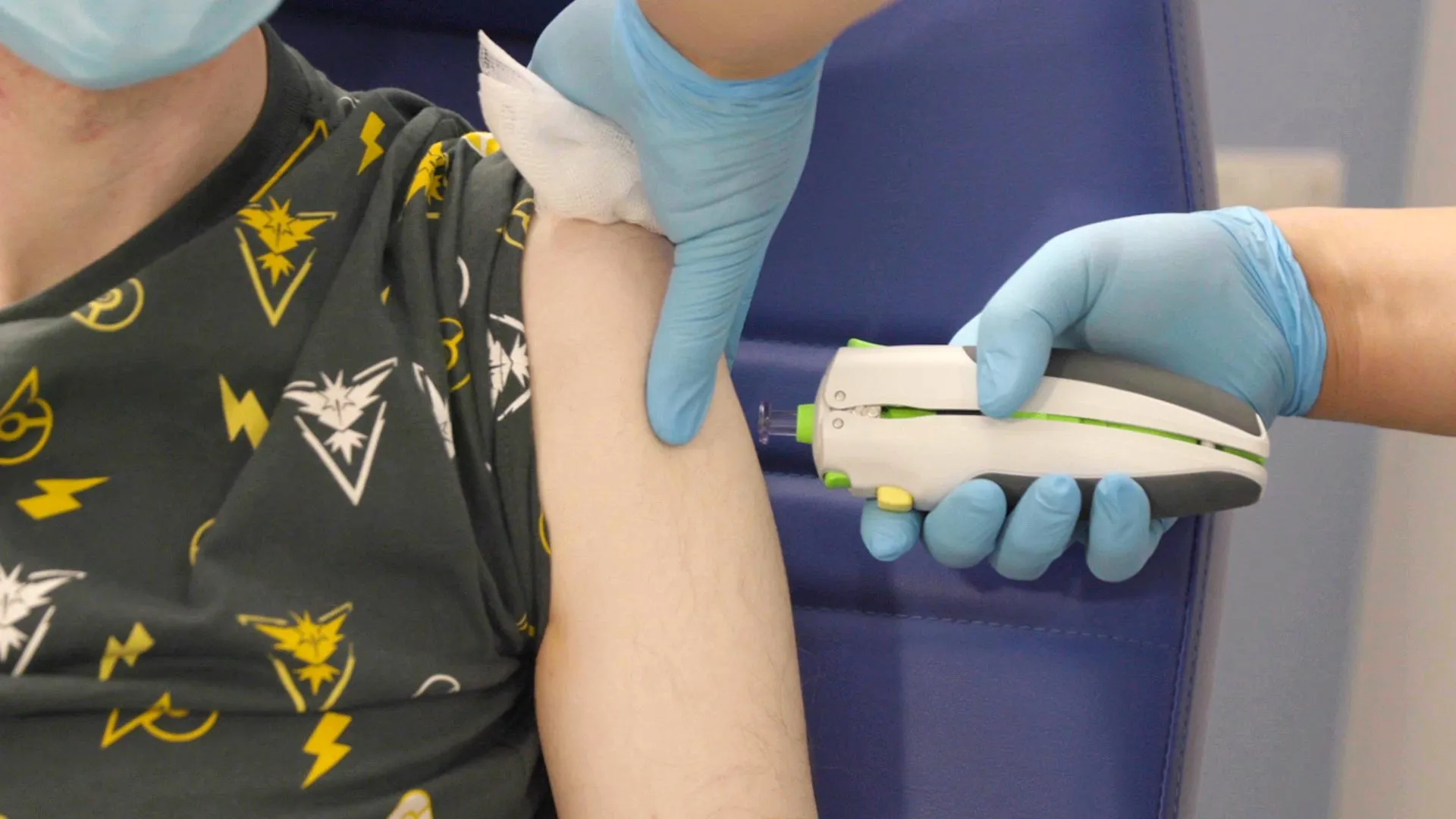
A groundbreaking universal coronavirus vaccine, conceived and developed using advanced artificial intelligence, has successfully cleared its initial human clinical trial. This pivotal achievement signifies a monumental stride towards establishing a more robust and proactive global defense system against the persistent threat of emerging viral pathogens and future pandemics. The experimental vaccine, a product of collaborative efforts between the prestigious University of Cambridge and its spinout company, DIOSynVax (DVX) Ltd, demonstrated a strong safety profile and elicited no significant adverse effects in a cohort of 39 healthy adult volunteers, aged between 18 and 50.
This innovative vaccine represents a paradigm shift from conventional immunization strategies, which typically focus on targeting specific strains of a virus. Instead, the DIOSynVax candidate is engineered to confer broad protection against multiple members of the Sarbeco coronavirus family. This strategically inclusive approach encompasses not only SARS-CoV-2, the causative agent of the devastating COVID-19 pandemic, but also its close relatives like SARS and a spectrum of bat coronaviruses that pose a latent risk of zoonotic spillover into human populations. The initial trial results are particularly encouraging, as they indicate the vaccine successfully stimulated immune responses not only against well-established threats like SARS-CoV-2 and SARS but also against related bat viruses that have yet to establish a foothold in human communities. The comprehensive findings from this foundational study were recently published in the esteemed Journal of Infection, providing scientific validation for this novel approach.
The Dawn of AI-Driven Vaccine Design
The success of this first-in-human trial is notable not only for its potential public health implications but also for marking a significant technological milestone: it is the first instance where a vaccine whose active component was entirely conceived and refined through sophisticated computer simulations has been administered to human participants. This pioneering methodology underscores the transformative power of artificial intelligence and machine learning in modern biomedical research.
At the heart of this innovation lies the concept of a "super-antigen," a meticulously designed molecular entity that serves as the critical component of a vaccine, tasked with training the human immune system to recognize and effectively combat viral infections. Instead of fixating on the unique characteristics of a single virus strain, the AI system employed by the DIOSynVax researchers embarked on a comprehensive analysis of genetic data sourced from Sarbeco coronaviruses. This extensive dataset, amassed through global surveillance programs, allowed the AI to identify conserved features shared across the entire Sarbeco virus group. These commonalities were then artfully synthesized and integrated into a single, potent vaccine antigen.
The overarching objective of this AI-driven design is to cultivate a proactive and enduring form of immunity that extends beyond known viruses. The ambition is to preemptively equip the immune system to neutralize future strains of coronaviruses that have not yet emerged or mutated into recognizable threats. Professor Jonathan Heeney, a leading figure in this research from the University of Cambridge’s Department of Veterinary Medicine, articulated the profound implications of this technological leap: "This trial proves the safety of an entirely new way of designing vaccines. The technology uses an AI-designed ‘super-antigen’ to provide lasting protection against a broad range of viruses — for example the Ebola group, or Sarbeco coronavirus group — even as they mutate." This vision extends beyond coronaviruses, with researchers expressing confidence that the same strategic framework could be adapted for other perilous virus families, including those responsible for Ebola and influenza.
Breaking Free from the Cycle of Reactive Vaccine Development
The persistent challenge posed by evolving viruses has necessitated a continuous cycle of vaccine updates for many prevalent diseases, most notably seasonal influenza and, more recently, COVID-19. Traditional vaccine development, often driven by the need to match circulating strains, means that by the time a vaccine is ready for widespread deployment, the virus may have already mutated, diminishing its efficacy. This reactive approach has been likened to a perpetual chase, where public health efforts are constantly playing catch-up with viral evolution.
The DIOSynVax vaccine, by contrast, offers a potential escape from this treadmill. By targeting conserved features common to an entire virus family, the researchers aim to create a vaccine that remains effective even as new variants emerge and existing ones mutate. Professor Heeney elaborated on this critical advantage: "We’ve converted vaccine development from being reactive to being future proof. Our vaccines will continue to provide protection against viruses even as they mutate into new strains." He further emphasized the limitations of traditional vaccines, stating, "We’ve overcome the problem of traditional vaccines, which have limited protection. It means we can escape the constant cycle of chasing the virus variants circulating in humans and updating the vaccines to try to catch up, like a dog chasing its tail." This forward-thinking strategy holds the promise of fundamentally altering how humanity confronts viral threats, shifting from a posture of perpetual defense to one of sustained, pre-emptive preparedness.
A Glimpse into the Human Clinical Trial
The initial human clinical trial, designated as a Phase 1 study, was conducted at the National Institute for Health and Care Research (NIHR) Clinical Research Facilities in Southampton and Cambridge. The study was meticulously sponsored by University Hospital Southampton NHS Foundation Trust (UHSFT), ensuring adherence to the highest standards of clinical research governance. The volunteers, all healthy adults aged 18 to 50, received the vaccine, which utilizes the AI-designed "super-antigen."
A key aspect of this trial was the delivery platform employed. The super-antigen was formulated as a DNA vaccine and administered using a novel micro fluid jet system. This needle-free approach offers several potential benefits, including enhanced patient comfort for those who experience anxiety or aversion to injections. Furthermore, researchers hypothesize that this method could significantly streamline and expedite large-scale vaccination campaigns, particularly in resource-limited settings or areas where traditional injection delivery poses logistical challenges. Prior to human testing, comprehensive animal studies had already demonstrated the vaccine’s capacity to elicit robust immune responses against a diverse range of coronaviruses, laying a solid foundation for the subsequent human trials.
While the initial results are highly promising, the vaccine is still several steps away from public availability. The next phase of research will involve a larger Phase 2 study, designed to evaluate immune responses in a broader and more diverse participant population. This crucial stage will also aim to definitively confirm the vaccine’s ability to generate strong, wide-ranging protection against the targeted viral family.
Fortifying Global Defenses Against Future Pandemic Threats
The urgency for developing vaccines with broader protective capabilities remains a pressing global health concern. Experts emphasize that a multitude of potentially dangerous viruses continue to circulate within animal populations worldwide, posing an ever-present risk of spillover events. Professor Saul Faust from the University of Southampton, who served as the chief investigator for the trial, highlighted this ongoing threat: "Viruses like Influenza, Coronaviruses and the Ebola group are evolving continuously and by the time vaccines are rolled out, they may be poorly matched — the current ‘reactive’ vaccine system struggles to keep pace."
He further underscored the transformative potential of this new generation of universal vaccines: "This new class of universal vaccines are future-proofed. They not only protect against many variants simultaneously, but potentially against related viruses that haven’t yet emerged and spilt over to humans." The strategic advantage of this approach is profound. Professor Faust posited, "If we can develop and clinically advance this new class of vaccines before a virus outbreak begins, millions of lives could be saved, lockdowns avoided and the economy preserved." This forward-looking perspective underscores the potential of such innovations to avert the catastrophic societal and economic disruptions witnessed during recent pandemics.
Professor Marian Knight, Scientific Director for NIHR Infrastructure, lauded the trial’s outcome as a "pivotal leap forward." She remarked, "The remarkable success of this AI-designed ‘super-antigen’ trial marks a pivotal leap forward in our ability to deliver broad, lasting viral protection." She attributed this significant achievement to synergistic partnerships: "This milestone was only made possible through partnerships between the life sciences sector and our world-class NIHR infrastructure in Cambridge and Southampton, whose Clinical Research Facilities provided the vital expertise and environment needed to safely fast-track this innovation, and bring it one big step closer to patients."
While the current focus is on coronaviruses, the underlying principle of AI-driven universal vaccine design holds immense promise for a wide array of viral threats. Scientists acknowledge that SARS-CoV-2 and other Sarbeco coronaviruses continue to be significant public health concerns. Simultaneously, the ongoing circulation of numerous other viruses in animal reservoirs means that the risk of novel zoonotic outbreaks remains a constant, albeit unpredictable, reality.
The development of this innovative vaccine was primarily facilitated by funding from Innovate UK. DIOSynVax, an acronym for Digitally Immune Optimised Synthetic Vaccines, was established in 2017 as a spinout from the University of Cambridge, with crucial support from Cambridge Enterprise, the university’s dedicated commercialization arm. The company’s research and development pipeline is comprehensive, encompassing vaccine candidates targeting not only seasonal and pandemic influenza threats but also hemorrhagic fever viruses and a range of coronaviruses, including SARS-CoV-2. Professor Jonathan Heeney, a key figure in this endeavor, holds a professorship in Comparative Pathology at the University of Cambridge and is a Fellow of Darwin College, bringing a wealth of academic expertise to this groundbreaking initiative.
