
 By George Ongkojoyo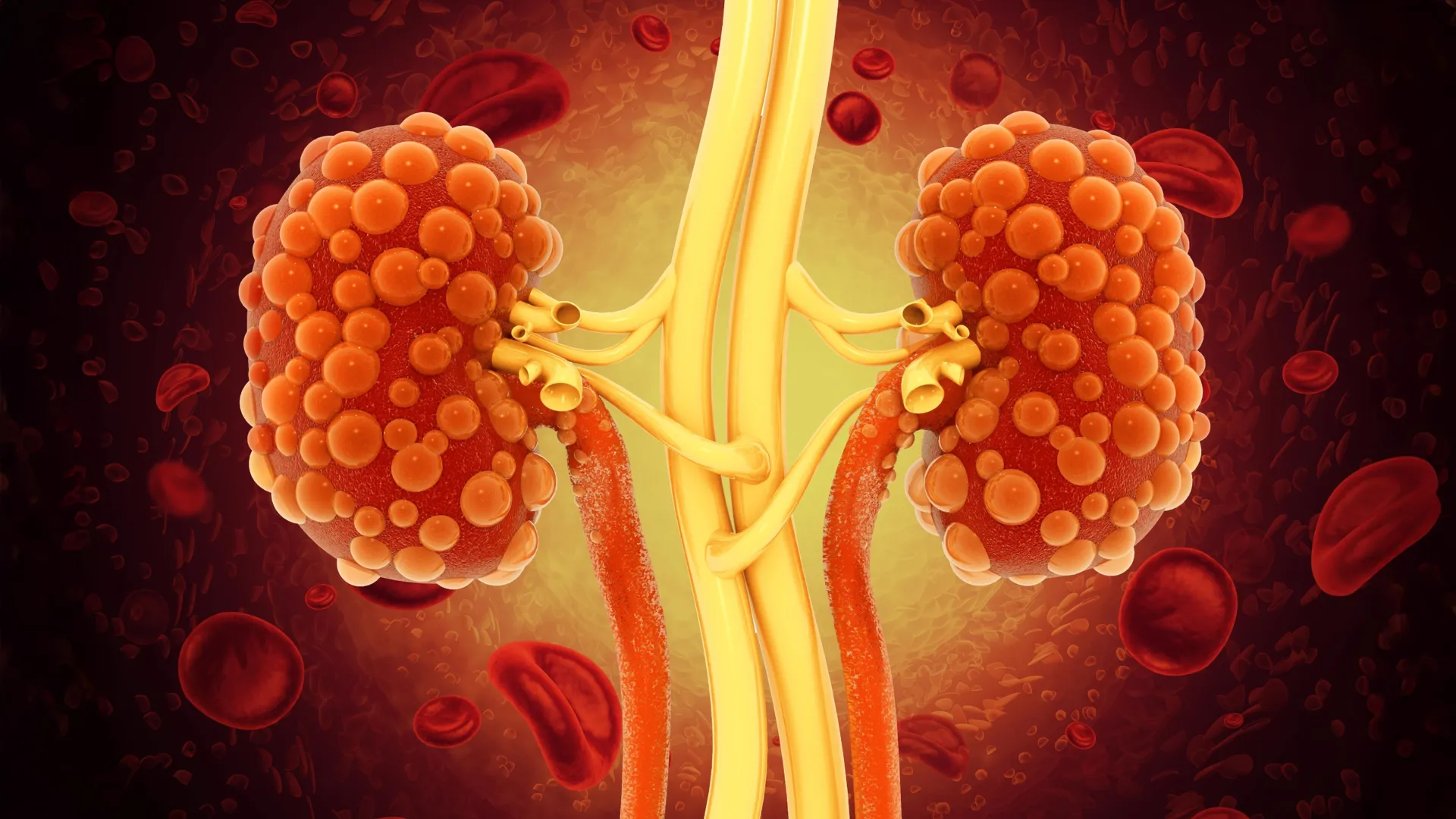
Researchers at the University of California, Santa Barbara (UCSB) have announced a significant advancement in the treatment of Polycystic Kidney Disease (PKD), an inherited condition that currently lacks a definitive cure. By engineering a specific type of monoclonal antibody capable of penetrating the internal environment of kidney cysts, the team has successfully demonstrated a method to halt the uncontrolled growth of these fluid-filled sacs in preclinical models. This development, published in the journal Cell Reports Medicine, offers a potential paradigm shift for millions of patients who currently face the prospect of lifelong dialysis or organ transplantation.
Polycystic Kidney Disease is characterized by the progressive development of thousands of cysts within the kidneys. As these cysts expand, they compress and eventually destroy healthy renal tissue, leading to a steady decline in kidney function. For many patients, this journey culminates in End-Stage Renal Disease (ESRD). The UCSB study, led by senior author and biologist Thomas Weimbs, identifies a biological "delivery vehicle" that can bypass the cellular barriers that have historically rendered most high-potency drugs ineffective against PKD.
The Clinical Challenge of Polycystic Kidney Disease
To appreciate the significance of the UCSB breakthrough, one must understand the biological and economic burden of PKD. Autosomal Dominant Polycystic Kidney Disease (ADPKD) is the most common inherited kidney disorder, affecting approximately 1 in 400 to 1 in 1,000 people worldwide. It is estimated that over 12 million individuals globally suffer from the condition. In the United States alone, PKD accounts for a substantial portion of the annual $50 billion spent on the treatment of kidney failure.
The primary difficulty in treating PKD lies in the unique structure of the cysts. Each cyst is essentially a sealed chamber lined with epithelial cells. These cells act as a barrier, preventing most large-molecule drugs from reaching the fluid inside. While small-molecule drugs can sometimes permeate these barriers, they often lack specificity. The only currently FDA-approved drug for PKD, Tolvaptan, works by blocking vasopressin receptors to slow cyst growth, but it is associated with significant side effects, including potential liver toxicity and extreme thirst, which limits its long-term tolerability for many patients.
"The cysts just keep growing endlessly," explained Thomas Weimbs. "And we want to stop them. So we need to get a drug into these cysts that will make them stop." The UCSB team recognized that while monoclonal antibodies—specifically Immunoglobulin G (IgG)—have revolutionized cancer treatment, they are too large to cross the epithelial layers of a kidney cyst. This "delivery gap" has remained a primary obstacle in nephrology for decades.
A Novel Delivery Mechanism: The Role of dIgA
The breakthrough centered on a shift in the type of antibody used. While most immunotherapies rely on IgG, the UCSB researchers turned their attention to dimeric Immunoglobulin A (dIgA). In the human body, dIgA is a critical component of the mucosal immune system, found in secretions such as tears, saliva, and mucus. Unlike IgG, dIgA has the unique biological ability to undergo "transcytosis."
Transcytosis is a process where a molecule binds to a specific receptor—the polymeric immunoglobulin receptor (pIgR)—on one side of an epithelial cell layer and is actively transported through the cell to the other side. In a 2015 foundational paper, Weimbs and his colleagues hypothesized that because kidney cysts express these pIgR receptors, dIgA could serve as a "Trojan horse," carrying therapeutic payloads directly into the interior of the cysts.
The current study confirms this hypothesis. By altering the DNA sequence of a standard IgG antibody to give it a dIgA "backbone," the team created a redesigned protein capable of recognizing the pIgR gatekeeper. This allowed the antibody to move in a one-way direction through the cyst wall, reaching the internal fluid where the disease-driving activity is most concentrated.
Targeting the cMET Growth Pathway
Once inside the cyst, the antibody was designed to target the mesenchymal-epithelial transition (cMET) receptor. In PKD, the cells lining the cysts frequently produce growth factors and secrete them into the cyst fluid. This creates a "self-stimulating" loop where the growth factors bind back to the receptors on the same cells, triggering continuous division and expansion.
The UCSB team’s dIgA antibody was engineered to bind to the cMET receptor, effectively "unplugging" the growth signal. The results in mouse models were profound. Not only did the antibody successfully enter and remain within the cysts, but it also significantly decreased the activity of the cMET receptor.
Most notably, the treatment triggered a "dramatic onset of apoptosis," or programmed cell death, specifically within the cyst-lining epithelial cells. Crucially, this effect was localized; the antibody did not cause cell death in healthy renal tissue. This level of selectivity—killing the diseased cells while sparing the healthy ones—is the "holy grail" of PKD research, as it suggests the potential not just to slow the disease, but to potentially reverse some of its progression.
Chronology of the Research and Funding
The path to this discovery has been a decade-long endeavor. The timeline of the research highlights the iterative nature of biotechnological breakthroughs:
- 2015: Thomas Weimbs and his team publish a theoretical framework proposing that the pIgR pathway could be exploited for drug delivery in cystic diseases.
- 2016–2020: Researchers begin engineering the molecular "backbone" swap, converting IgG antibodies into dIgA formats and testing their stability in laboratory environments.
- 2021–2023: Preclinical testing begins in mouse models of PKD. The team focuses on identifying the most effective growth factor receptors to target, eventually settling on cMET.
- 2024: The team publishes their comprehensive findings in Cell Reports Medicine, demonstrating successful cyst penetration and selective apoptosis.
This research was made possible through a combination of public and private support. The National Institutes of Health (NIH) provided foundational grants for the study of renal cell biology, while the U.S. Department of Defense (DoD) contributed funding through its Peer Reviewed Medical Research Program, which identifies PKD as a significant health concern for veterans and active-duty personnel.
Broader Implications and Future Directions
The implications of this study extend beyond the treatment of PKD. If dIgA can be used to deliver antibodies across epithelial barriers in the kidney, the same platform could theoretically be applied to other organs. Diseases of the liver, lungs, and gastrointestinal tract that involve epithelial barriers could potentially be treated using similar dIgA-based delivery systems.
However, the transition from preclinical mouse models to human clinical trials involves several hurdles. "In the literature, there are dozens of growth factors that have been shown to be active in these cyst fluids," Weimbs noted. "So it would be a good idea to compare blocking of several different growth factors and several receptors, maybe side-by-side to see which is the most effective."
The next steps for the UCSB team include:
- Variant Generation: Accessing advanced protein engineering technology to create multiple antibody variants that can target different growth pathways simultaneously.
- Combination Therapy: Investigating whether a "cocktail" of dIgA antibodies can provide a more robust defense against cyst growth than a single-target approach.
- Strategic Partnerships: Seeking pharmaceutical partners with the infrastructure to scale up production and navigate the rigorous FDA clinical trial process.
Scientific Analysis: A Shift Toward Precision Nephrology
The medical community has reacted to the UCSB study with cautious optimism. Independent analysts suggest that the use of dIgA represents a significant move toward "precision nephrology." For decades, kidney treatments have often been systemic and blunt, affecting the entire body to reach a single organ. The ability to use the body’s own mucosal transport system to deliver medication to the interior of a cyst is a sophisticated application of bioengineering.
Furthermore, the observation of selective apoptosis is vital. In many PKD treatments, the goal is merely "cystostasis"—stopping the growth. If the dIgA therapy can actually induce the death of cyst-lining cells without harming the rest of the kidney, it may lead to a reduction in total kidney volume (TKV), which is the primary metric used by the FDA to judge the effectiveness of PKD drugs.
While it will be several years before this therapy reaches the bedside, the UCSB study provides a roadmap for a new generation of biologics. By solving the delivery problem, Weimbs and his team have opened the door to a library of potential treatments that were previously thought to be impossible for Polycystic Kidney Disease.
The research was a collaborative effort involving several key members of the Weimbs Lab, including lead author Margaret F. Schimmel, as well as Bryan C. Bourgeois, Alison K. Spindt, Sage A. Patel, Tiffany Chin, Gavin E. Cornick, and Yuqi Lu. Their collective work marks a milestone in the effort to turn a progressive, terminal diagnosis into a manageable, and perhaps even reversible, condition.
