
 By admin
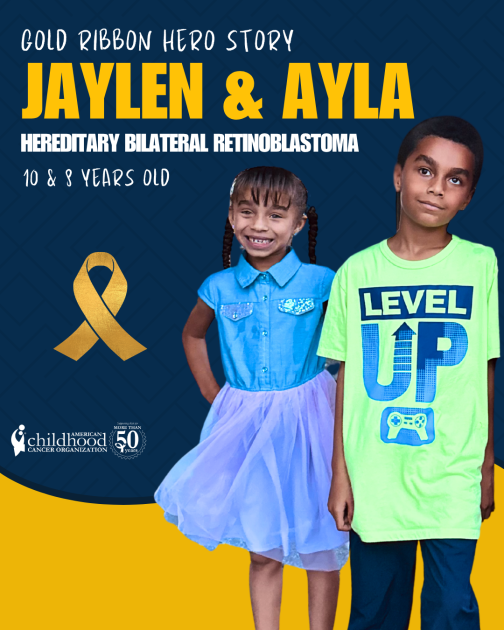
Jaylen and Ayla, siblings aged ten and eight, represent a growing cohort of pediatric cancer survivors who have navigated the complexities of hereditary bilateral retinoblastoma while simultaneously confronting significant systemic barriers within the healthcare industry. Their story, championed by their mother Denice, serves as a critical case study in early cancer detection, the genetic implications of the RB1 mutation, and the necessity for accessible medical care for the Deaf and hard-of-hearing community. Retinoblastoma, a rare form of eye cancer that primarily affects young children, remains one of the most treatable pediatric malignancies when caught early; however, the path to remission for Jaylen and Ayla was complicated by medical discrimination and the aggressive nature of bilateral involvement, which affects both eyes.
Understanding Retinoblastoma and the Genetic Catalyst
Retinoblastoma is a malignancy that originates in the retina, the sensitive nerve tissue at the back of the eye. While the disease can occur sporadically, approximately 40% of cases are hereditary, caused by a mutation in the RB1 gene. In these hereditary instances, the condition is frequently bilateral, meaning tumors develop in both eyes. For Jaylen and Ayla, the hereditary nature of the disease meant that their battle began almost at birth.
The first clinical signs appeared when Jaylen was only two months old. His mother, Denice, observed a physical misalignment known as strabismus, where his left eye began veering outward. Furthermore, early family photographs revealed a phenomenon known as leukocoria, or the "white glow." In healthy eyes, a camera flash typically produces a "red-eye" effect as light reflects off the blood vessels in the retina. In children with retinoblastoma, the light reflects off the white surface of a tumor, creating a distinct white or silver reflection in the pupil. At the time, the family initially attributed the glow to simple camera lighting, a common misconception that often delays the diagnosis of this life-threatening disease.
Systematic Barriers and the Fight for Equitable Care
The diagnostic timeline for Jaylen was severely hampered by a lack of accessibility within the medical system. When Denice attempted to seek a professional evaluation during Jaylen’s four-month check-up, she encountered a significant obstacle: the medical facility refused to provide an American Sign Language (ASL) interpreter. As a Deaf mother, Denice was effectively barred from participating in her son’s healthcare, a violation of the standards set forth by the Americans with Disabilities Act (ADA), which mandates that healthcare providers provide "effective communication" to patients and their families.
Faced with a medical system that failed to accommodate her needs, Denice was forced to act as her own advocate, independently tracking down specialized care. This period of delay is a point of significant frustration for the family, as time is a critical factor in preventing the spread of retinoblastoma cells to the optic nerve and, eventually, the brain. Once she secured a physician willing to provide equitable care, the diagnosis was confirmed: Jaylen had bilateral retinoblastoma. Due to the known hereditary link, his younger sister Ayla was monitored from birth. This proactive surveillance led to Ayla’s diagnosis at just four weeks old, allowing for an even earlier intervention than her brother had received.
A Chronology of Intensive Treatment and Intervention
The treatment of bilateral retinoblastoma is a multi-year process involving various modalities designed to save the patient’s life, their eyes, and their vision, in that order of priority. For Jaylen and Ayla, the medical intervention was exhaustive. Over several years, both children underwent systemic chemotherapy to shrink the tumors (chemoreduction), followed by localized treatments to eliminate remaining cancer cells.
These localized treatments included cryotherapy—a process of freezing the tumor cells—and laser therapy (photocoagulation), which uses heat to destroy the blood vessels supplying the tumors. Jaylen also required strabismus surgery to correct the alignment of his eyes. However, the aggressive nature of Ayla’s condition eventually required an enucleation, the surgical removal of the eye. This procedure is typically a last resort when a tumor is too large to be treated by other means or when there is a high risk of the cancer spreading.
Today, both Jaylen and Ayla live with prosthetic eyes. The transition to ocular prosthetics is both a physical and psychological journey. While the prosthetics do not restore vision, they maintain the structure of the eye socket and provide a cosmetic appearance that allows children to navigate social environments with increased confidence.
Survivorship, Advocacy, and the Psychological Impact
The transition from "patient" to "survivor" involves more than just medical clearance; it requires a reframing of life after trauma. Denice has been vocal about her parenting philosophy in the wake of her children’s diagnoses. Despite online criticism regarding her choice to "spoil" her children, she maintains that their survival justifies a life centered on joy and the present moment. This perspective is a common psychological response among parents of pediatric cancer survivors, often referred to as "post-traumatic growth."
Ayla, in particular, has turned her experience with enucleation into a form of self-expression. She has curated a collection of custom-colored irises for her prosthetic eye, allowing her to change her appearance based on her personal style. This level of autonomy is significant in pediatric oncology, as it shifts the narrative from a loss of physical integrity to a celebration of individuality. Furthermore, Ayla began learning ASL during her post-operative recovery, further bridging the communication gap within her family and asserting her independence.
Clinical Analysis: The Importance of the "Glow" Awareness
The case of Jaylen and Ayla underscores the vital importance of public health awareness regarding leukocoria. Medical professionals emphasize that "The Glow" is often the first and most visible sign of retinoblastoma. Educational campaigns, such as those led by the American Childhood Cancer Organization (ACCO) and "Know the Glow," aim to empower parents to trust their observations of their children’s eyes.
Statistics indicate that in developed nations, the survival rate for retinoblastoma is higher than 95%. However, for those with the hereditary form, the risk of developing secondary cancers later in life—such as osteosarcoma or melanoma—remains a lifelong concern. Therefore, the "triumph" described by the family is not merely the end of initial treatment, but the beginning of a lifelong commitment to health monitoring and advocacy.
Broader Implications for Pediatric Healthcare Policy
The challenges faced by Denice highlight a critical need for reform in how healthcare systems interact with disabled parents. The refusal of care based on a lack of an ASL interpreter is not an isolated incident but part of a broader trend of "medical gaslighting" and accessibility failures. This case demonstrates that the health of a child is inextricably linked to the ability of the parent to communicate with medical staff.
Furthermore, the siblings’ journey illustrates the effectiveness of genetic screening. Because Jaylen’s diagnosis was established, Ayla was able to be diagnosed at one month old. This contrast in diagnostic timing highlights how familial history must be integrated into neonatal care protocols to ensure that high-risk infants receive immediate screening.
Conclusion: A Legacy of Joy and Resilience
Jaylen and Ayla continue to thrive, proving that a diagnosis of childhood cancer does not preclude a life of vibrancy and achievement. Their story is one of dual victories: a medical victory over a life-threatening malignancy and a social victory over a healthcare system that initially failed to see their family’s needs. By sharing their experiences, the family contributes to a global dialogue on the necessity of early detection, the power of parental advocacy, and the importance of choosing joy in the face of adversity.
The legacy of their journey is found in Ayla’s changing irises and Jaylen’s steady gaze—a testament to the fact that while cancer may change a child’s life, it does not have to define it. Their continued health and happiness serve as a beacon for other families navigating the daunting world of pediatric oncology, reminding the medical community and the public alike that every child deserves a fierce advocate and an accessible path to healing.
