
 By Billy Candra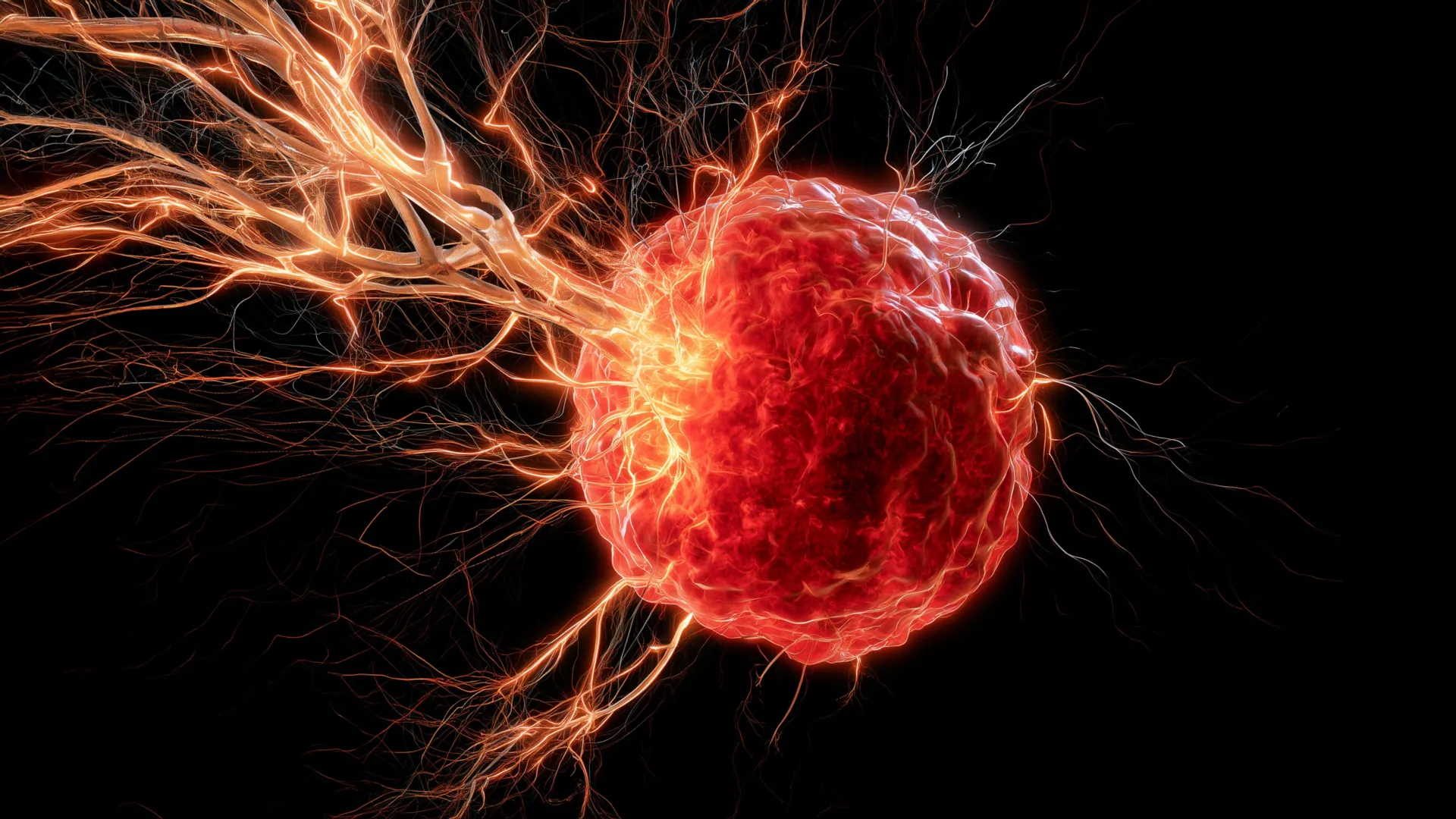
New research from the University of Oklahoma has revealed how an aggressive type of breast cancer can manipulate the immune system to draw nerves into tumors, creating conditions that may help the cancer grow. This groundbreaking discovery, published in the esteemed journal Cell Death & Differentiation, sheds critical light on a long-standing mystery in oncology: how solid tumors develop extensive nerve networks and what role these nerves play in disease progression. Focusing specifically on triple-negative breast cancer (TNBC), a particularly challenging and lethal form of the disease, the study not only provides a molecular explanation for this phenomenon but also proposes a promising new therapeutic strategy involving the repurposing of an existing drug to interrupt this insidious communication pathway.
The Enigma of Tumor Innervation: A Historical Perspective
For decades, scientists and clinicians have observed the presence of nerve fibers within the microenvironment of many solid tumors. This phenomenon, known as tumor innervation, has been noted across various cancer types, including prostate, pancreatic, gastric, and breast cancers. The initial understanding was largely descriptive, acknowledging the anatomical fact without fully grasping the functional implications or the precise mechanisms by which these nerves infiltrated cancerous tissues. Early theories speculated that nerves might simply be bystanders, passively engulfed by the expanding tumor mass. However, a growing body of evidence in recent years has suggested a far more active and sinister role for these nerve networks, positing that they are not merely present but are actively recruited and subsequently contribute to tumor growth, survival, and even metastasis.
Despite this evolving understanding, a significant gap remained in the scientific literature: the precise "how." How do these nerves, which are typically highly organized and slow-growing, manage to penetrate and integrate into the chaotic and rapidly evolving tumor landscape? The University of Oklahoma team’s work addresses this fundamental question, particularly in the context of triple-negative breast cancer, a disease notorious for its aggressive nature and limited therapeutic options.
Triple-Negative Breast Cancer: A Formidable Foe
Triple-negative breast cancer accounts for approximately 10-15% of all breast cancers, but its impact is disproportionately severe. Unlike other common forms of breast cancer, TNBC cells lack the receptors for estrogen (ER), progesterone (PR), and the HER2 protein. This absence means that the highly effective hormone therapies and HER2-targeted drugs, which have revolutionized the treatment of other breast cancer subtypes, are ineffective against TNBC. Consequently, patients with TNBC are typically treated with a combination of surgery, chemotherapy, and radiation therapy. While advances in chemotherapy and the recent introduction of immunotherapy have shown some promise, TNBC remains characterized by higher rates of recurrence, earlier metastasis, and a poorer prognosis compared to other breast cancer types. The aggressive biology of TNBC often leads to larger tumors at diagnosis and a higher likelihood of affecting younger women and women of African ancestry. The urgent need for novel therapeutic targets and strategies for TNBC patients underscores the profound importance of discoveries like those from the University of Oklahoma.
The Oklahoma Breakthrough: Unmasking the Immune System’s Double Agent
The core of the OU research lies in identifying a sophisticated mechanism by which TNBC tumors actively recruit nerves. The scientists discovered that tumors attract a specific type of immune cell called macrophages. Macrophages are vital components of the immune system, typically playing beneficial roles in fighting infections, clearing cellular debris, and facilitating tissue repair. However, within the complex and often dysregulated environment of a tumor, these cells can be "re-educated" or polarized by cancer cells to adopt pro-tumor functions, earning them the moniker "tumor-associated macrophages" (TAMs).
In this specific scenario of TNBC, the OU researchers, led by Dr. Maureen Cox, an assistant professor in the Department of Microbiology and Immunology at the OU College of Medicine and a research member of OU Health Stephenson Cancer Center, found that these recruited macrophages become critical accomplices in nerve infiltration. Once inside the tumor, these macrophages unleash a potent molecular signal: brain-derived neurotrophic factor (BDNF).
BDNF is a well-established neurotrophin, a protein crucial for the growth, survival, and differentiation of neurons in the brain and peripheral nervous system. It plays a fundamental role in processes like learning and memory. Dr. Cox’s team demonstrated that TNBC tumors exploit this very same biological signal. By secreting BDNF, the tumor-associated macrophages effectively create a chemical beacon, encouraging nearby nerves to grow toward and eventually integrate into the cancerous mass.
"Macrophages are the critical source for drawing nerves into the tumor," explained Dr. Cox. "Although macrophages typically play a positive role in the body, they are facilitating a negative function in this scenario of breast cancer." This hijacking of a normally beneficial immune response highlights the cunning adaptability of cancer cells and the intricate interplay within the tumor microenvironment.
Experimental Validation and Clinical Correlation: A Path Towards Intervention
To validate their hypothesis, Dr. Cox and her colleagues conducted preclinical studies using mouse models of triple-negative breast cancer. Their experimental design focused on interrupting the newly discovered macrophage-BDNF-nerve pathway. They administered a drug known to block BDNF signaling to the mice. The results were striking and highly promising: nerves ceased to grow into the tumors, and, critically, tumor growth itself was significantly reduced.
The fact that the drug used to block BDNF signaling is "already on the market" presents a substantial advantage. Drug repurposing, the strategy of finding new uses for existing, approved drugs, dramatically shortens the development timeline and reduces the cost associated with bringing new therapies to patients. This aspect of the discovery accelerates the potential for clinical translation.
Beyond simply halting nerve growth, the researchers hypothesize that these nerves play an immunosuppressive role within the tumor. "We believe that the nerves are immunosuppressive, so if we can stop the nerves from growing in the first place, maybe we can boost the immune response to help fight the cancer," Dr. Cox stated. This suggests a dual benefit: directly impeding a pro-tumor mechanism and indirectly enhancing the body’s natural anti-cancer defenses, potentially making existing immunotherapies more effective.
To further bridge their findings from preclinical models to human disease, the team examined data from patients with triple-negative breast cancer. Their analysis revealed a compelling correlation: tumors with higher levels of both macrophages and BDNF were statistically linked with poorer patient survival. This crucial piece of evidence strongly suggests that the mechanism observed in mice is highly relevant to human disease, providing a powerful impetus for further clinical investigation.
Implications for Future Cancer Treatment: A Paradigm Shift?
This discovery opens an entirely new frontier in cancer therapy. Traditionally, cancer treatments have primarily focused on directly destroying cancer cells through chemotherapy, radiation, or targeted molecular therapies. While these approaches are vital, the OU research suggests a different, complementary strategy: targeting the tumor’s supportive microenvironment. By interrupting the signaling between macrophages and nerves, future therapies might disrupt the conditions that enable cancer to thrive, grow, and potentially resist conventional treatments.
The potential to repurpose an existing BDNF-blocking drug offers a fast track to clinical trials. If successful, such a drug could be used alone or, more likely, in combination with current TNBC treatments like chemotherapy or immunotherapy. By creating a less hospitable environment for the tumor, these novel therapies could enhance the efficacy of established treatments, reduce recurrence rates, and ultimately improve patient outcomes. The concept of "neuromodulation" in cancer therapy is gaining traction, and this research provides a clear, actionable target within that burgeoning field.
Moreover, the findings extend beyond TNBC. Dr. Cox and her team are already planning to investigate the same intervention in high-grade ovarian cancer, another aggressive malignancy known for its poor prognosis and treatment challenges. The principles uncovered—immune cell manipulation leading to nerve infiltration via BDNF—could be a conserved mechanism in various aggressive solid tumors, offering a broader impact across oncology.
Unanswered Questions and Future Directions: The Road Ahead
While the OU study has illuminated a critical pathway, it also paves the way for deeper inquiry. Dr. Cox and her team are now focused on unraveling the exact mechanisms by which nerves contribute to tumor growth and progression. Several hypotheses are being explored:
- Angiogenesis: Nerves might stimulate the formation of new blood vessels, providing tumors with essential oxygen and nutrients for rapid growth. This process, known as angiogenesis, is a well-established hallmark of cancer.
- Metastasis: There is evidence that cancer cells might utilize nerves as conduits or "highways" to migrate away from the primary tumor and spread to distant sites, a process known as metastasis. Interrupting nerve growth could therefore also inhibit metastatic spread.
- Immune Evasion: Beyond direct immunosuppression, nerves might release neurotransmitters or other signaling molecules that actively suppress local immune responses, allowing cancer cells to evade detection and destruction by the body’s defenses.
Understanding these precise roles will be crucial for optimizing therapeutic strategies. The ultimate goal, as articulated by Dr. Cox, remains ambitious and patient-centric: "Ultimately, we want to turn the anti-tumor immunity back on in cancer patients so their own immune systems can reject the tumors." This vision encapsulates the hope that by disrupting the tumor’s clever manipulation of the body’s own systems, researchers can empower the immune system to do what it’s designed to do: protect health.
This transformative research was made possible through robust support from key funding agencies, including the National Institute of General Medical Sciences of the NIH (award numbers P20GM103447 and P20GM103639). Further crucial backing was provided by Oklahoma’s Tobacco Settlement Endowment Trust (TSET), a primary funder of the Stephenson Cancer Center and TSET Health Promotion Research Center at the University of Oklahoma, and by the Oklahoma Shared Clinical and Translational Resources through an Institutional Development Award from the National Institute of General Medical Sciences (grant no. U54GM104938). This collaborative funding environment underscores the significant investment in innovative cancer research that holds the potential to redefine treatment paradigms and improve lives for patients facing aggressive and challenging diseases like triple-negative breast cancer.
