
 By admin
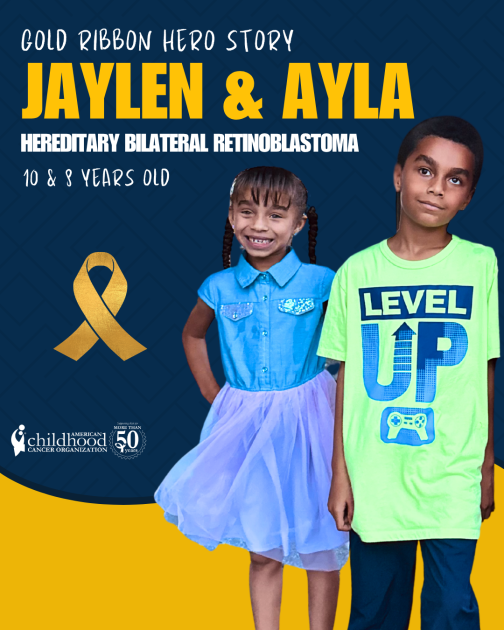
The narrative of childhood cancer is often defined by clinical milestones and survival statistics, but for the family of Jaylen and Ayla, it is also a story of systemic struggle, maternal advocacy, and the defiant pursuit of joy. Jaylen, now 10, and his sister Ayla, 8, are survivors of hereditary bilateral retinoblastoma, a rare and aggressive form of eye cancer. Their journey highlights not only the medical complexities of treating pediatric ocular tumors but also the critical importance of accessibility within the healthcare system for parents with disabilities. For Denice, their mother, the battle against cancer was inextricably linked to a battle for basic communication rights, as she navigated the complexities of a life-threatening diagnosis while facing discrimination as a deaf parent.
Retinoblastoma is a rare cancer of the retina that primarily affects young children. While it represents only about 2% to 3% of all childhood cancers, it is the most common primary intraocular malignancy in the pediatric population. In the United States, approximately 250 to 300 children are diagnosed annually. The disease occurs in two forms: sporadic and hereditary. In Jaylen and Ayla’s case, the condition is hereditary and bilateral, meaning it affected both eyes of both children. This form of the disease is typically caused by a germline mutation in the RB1 gene, which predisposes the individual to developing multiple tumors.
The Early Warning Signs and Systemic Barriers
The family’s encounter with retinoblastoma began when Jaylen was just two months old. Denice noticed a subtle but concerning physical symptom: his left eye appeared to veer outward, a condition known as strabismus. In hindsight, the family recalled seeing a peculiar "glow" in Jaylen’s eye in early photographs. This phenomenon, scientifically termed leukocoria, occurs when light reflects off the white surface of a tumor rather than the red vascular tissue of the retina. At the time, the family dismissed it as a common photographic artifact or a trick of the camera’s flash—a frequent occurrence that often delays the diagnosis of retinoblastoma in many households.
The path to a formal diagnosis was obstructed by more than just medical uncertainty. When Jaylen was four months old, Denice sought a routine check-up to address her concerns. However, the medical facility refused to provide care, citing the lack of an American Sign Language (ASL) interpreter. This refusal represented a significant breach of the Americans with Disabilities Act (ADA), which mandates that healthcare providers provide auxiliary aids and services to ensure effective communication with patients or their guardians.
Faced with a system that attempted to turn her away, Denice was forced to become her own navigator. She independently tracked down specialized care, eventually finding a physician who would provide the necessary diagnostic screenings. This initial delay underscores a broader issue in pediatric oncology: the intersection of disability and healthcare access. For parents who are deaf or hard of hearing, the absence of qualified interpreters in clinical settings can lead to miscommunication, delayed treatments, and increased psychological distress during an already volatile period.
A Parallel Diagnosis and the Genetic Link
Because Jaylen’s condition was identified as hereditary, the medical team knew that any future siblings would be at a significantly higher risk. When Ayla was born, she was placed under immediate and rigorous monitoring. This proactive approach led to the discovery of tumors in Ayla’s eyes when she was only four weeks old. While the news was devastating, the early detection—facilitated by the knowledge gained from Jaylen’s case—allowed for a more immediate intervention.
The diagnosis of bilateral retinoblastoma in both children placed an immense burden on the family. "It was incredibly heartbreaking and overwhelming to hear the word ‘cancer’ for both of my babies," Denice shared. She noted that her grief was compounded by the anger she felt toward a medical system that had initially failed to accommodate her needs. The realization that she would have to serve as the "ultimate advocate and manager" for her children’s health became a driving force in their survival.
Clinical Interventions and the Path to Remission
The treatment of bilateral retinoblastoma is a delicate balancing act between eradicating the cancer and preserving as much vision as possible. For Jaylen and Ayla, the therapeutic journey was long and multifaceted. Over several years, both children underwent a combination of systemic chemotherapy, cryotherapy (the use of extreme cold to freeze and destroy cancer cells), and laser photocoagulation (the use of lasers to seal off the blood vessels feeding the tumors).
Despite these efforts, the aggressive nature of the disease necessitated surgical intervention. Jaylen underwent strabismus surgery to correct the alignment of his eyes. For Ayla, the progression of the disease required an enucleation—the surgical removal of the eye—to prevent the cancer from spreading to the optic nerve and the brain.
Today, both Jaylen and Ayla live with prosthetic eyes. The transition to prosthetics is both a physical and psychological adjustment. Modern ocular prosthetics are highly sophisticated, custom-painted to match the patient’s natural eye color and designed to fit the orbital socket comfortably. For Ayla, this aspect of her recovery has become a source of empowerment. She has curated a collection of custom-colored irises, allowing her to express her personal style and reclaim agency over her appearance.
The Role of Advocacy and Awareness
The "glow" that Denice first saw in Jaylen’s photos is now a central pillar of the family’s advocacy efforts. Organizations like "Know the Glow" work globally to educate parents on how a simple flash photograph can serve as a life-saving screening tool. Leukocoria is a primary indicator not only of retinoblastoma but of at least 20 other intraocular conditions, including Coats’ disease and cataracts.
By sharing their story online, Denice aims to provide a roadmap for other families navigating similar diagnoses. However, visibility often comes with challenges. Denice noted that their presence on social media has occasionally drawn criticism regarding her parenting choices. In response, she maintains a philosophy of "choosing joy and presence." She describes her children as "beautifully spoiled," a term she uses to signify the celebration of life after facing the possibility of its loss.
"Our triumphs have been absolutely legendary," Denice stated. "Both kids completely beating cancer, staying endlessly joyful, and Ayla proudly building her collection of custom colored irises… We choose joy, presence, and celebrating life over anyone else’s opinions."
Broader Implications for Pediatric Healthcare
The case of Jaylen and Ayla serves as a critical case study for healthcare providers and policymakers. It highlights several key areas for improvement in the delivery of pediatric oncology services:
- Linguistic Accessibility: The initial refusal of care for Jaylen highlights the need for stricter enforcement of ADA regulations in medical settings. Hospitals must have robust protocols for securing ASL interpreters to ensure that parents can make informed decisions about their children’s life-saving treatments.
- Genetic Counseling: The early diagnosis of Ayla demonstrates the efficacy of genetic screening and monitoring for families with a history of RB1 mutations. Early detection in hereditary cases significantly improves the prognosis for vision preservation.
- Psychosocial Support: The "fearless advocacy" required of Denice points to the need for better integrated social services within oncology departments to support parents who may be facing systemic barriers.
- Public Awareness: The delay in recognizing the "glow" in Jaylen’s eye suggests that public health campaigns regarding leukocoria should be more widely integrated into neonatal and pediatric well-visit education.
Conclusion: A Triumphant Future
As Jaylen and Ayla grow, they continue to defy the limitations often associated with a cancer diagnosis. Ayla, following in her mother’s footsteps, began learning ASL during her post-operative recovery, further strengthening the family’s bond and communication. Both children are described as fiercely independent and active, proving that the loss of an eye or the presence of a prosthetic does not diminish a child’s capacity for a full and vibrant life.
Their story is a testament to the resilience of the human spirit and the power of maternal intuition. By transforming their private struggle into public advocacy, Jaylen, Ayla, and Denice are not only raising awareness about a rare childhood cancer but are also demanding a more inclusive and equitable healthcare system for all. Their journey from the initial "glow" of a tumor to the "legendary" triumphs of remission serves as a beacon of hope for families worldwide, reminding the medical community that behind every diagnosis is a family fighting for their right to be heard and a child fighting for their right to see the world.
