
 By admin
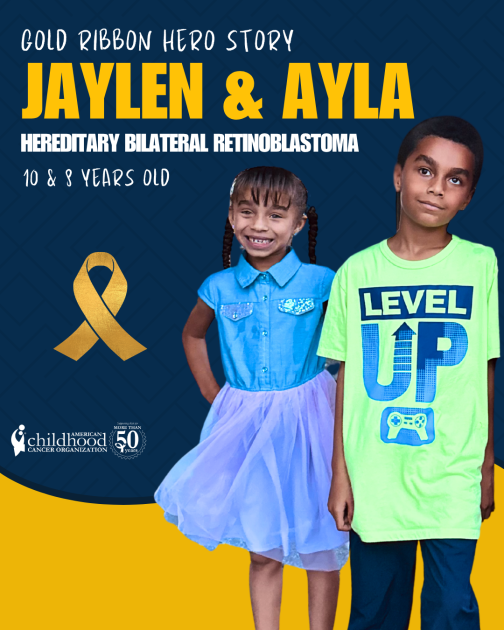
The narrative of Jaylen and Ayla, two siblings who have successfully navigated the complexities of hereditary bilateral retinoblastoma, serves as a profound case study in the intersection of pediatric oncology, genetic predisposition, and the critical importance of parental advocacy within the healthcare system. Jaylen, now 10, and his younger sister Ayla, 8, are survivors of a rare form of eye cancer that affects the light-sensitive tissue of the retina. Their journey highlights not only the medical challenges inherent in treating childhood cancer but also the systemic barriers faced by families, particularly when compounded by disabilities. For their mother, Denice, the battle for her children’s lives began not just with a diagnosis, but with a fight for equitable access to medical communication, a struggle that underscores the vital necessity of the Americans with Disabilities Act (ADA) in clinical settings.
Early Detection and the "Glow" Phenomenon
The clinical timeline for the family began when Jaylen was only two months old. His mother, Denice, observed a subtle but concerning misalignment in his left eye, a condition known as strabismus, where the eye veers outward. In hindsight, early family photographs revealed another classic clinical sign of retinoblastoma: leukocoria, or the "white glow." This phenomenon occurs when a tumor in the eye reflects light back through the pupil, appearing as a white or yellowish reflection rather than the typical "red-eye" seen in flash photography. At the time, the family misinterpreted this visual cue as a mere technical artifact of the camera light.
Retinoblastoma is the most common primary intraocular malignancy in children, occurring in approximately 1 in 15,000 to 20,000 live births worldwide. While the survival rate in developed nations exceeds 95%, early detection remains the most significant factor in preserving vision and preventing the spread of the disease to the brain or central nervous system. For Jaylen, the combination of strabismus and the "glow" was the first indicator of a bilateral condition, meaning tumors were present in both eyes.
Systemic Barriers and the Fight for Access
The path to diagnosis was severely hindered by a breakdown in medical accessibility. When Jaylen reached four months of age, Denice attempted to seek a professional evaluation during a routine check-up. However, as a deaf mother, she was met with a significant obstacle: the medical facility refused to provide an American Sign Language (ASL) interpreter, subsequently declining to see the infant. This refusal represents a critical failure in healthcare delivery and a potential violation of federal law, which mandates that healthcare providers ensure effective communication with patients and their family members who have hearing impairments.
Faced with this rejection, Denice was forced to navigate the medical system independently. Her persistence eventually led to a consultation with a provider capable of facilitating communication and conducting the necessary ophthalmic examinations. This period of delay is often a point of high stress for parents of oncology patients, as the window for effective intervention in aggressive pediatric cancers can be narrow. Denice’s experience highlights a recurring issue in healthcare where the burden of advocacy often falls entirely on the parent, regardless of the systemic hurdles placed in their way.
Genetic Implications and Ayla’s Diagnosis
Because Jaylen’s retinoblastoma was determined to be hereditary and bilateral, the risk profile for future siblings was significantly elevated. Hereditary retinoblastoma is typically caused by a germline mutation in the RB1 gene. Unlike sporadic cases, which usually affect only one eye, hereditary cases often present bilaterally and at a much earlier age. Children born into families with a known RB1 mutation require intensive monitoring from birth.
Consequently, when Ayla was born, she was placed under immediate medical surveillance. This proactive approach allowed doctors to identify tumors in her eyes when she was just four weeks old. While the news of a second child facing a cancer diagnosis was devastating for the family, the early detection—facilitated by the knowledge gained during Jaylen’s treatment—provided a distinct clinical advantage. Ayla’s diagnosis at one month old allowed for the immediate implementation of a treatment plan designed to control tumor growth before the malignancy could progress.
Therapeutic Interventions and Clinical Management
The treatment of bilateral retinoblastoma is a multi-year process that requires a multidisciplinary approach, involving pediatric oncologists, ophthalmologists, and ocularists. Both Jaylen and Ayla underwent an exhaustive regimen of therapies aimed at eradicating the cancer while attempting to preserve as much visual function as possible.
- Chemotherapy: Systematic chemotherapy is often used to shrink tumors (chemoreduction), making them more manageable for focal treatments.
- Cryotherapy: This involves the use of extreme cold to freeze and destroy cancer cells. It is typically used for small tumors located in the peripheral retina.
- Laser Therapy (Photocoagulation/Thermotherapy): High-energy lasers are used to heat and destroy the blood vessels feeding the tumors or the tumor tissue itself.
- Surgical Intervention: Jaylen required strabismus surgery to correct the alignment of his eyes. For Ayla, the severity of the disease in one eye necessitated an enucleation—the surgical removal of the eye—to prevent the cancer from spreading.
Both children eventually transitioned to the use of prosthetic eyes. The adaptation to ocular prosthetics is a significant milestone in the recovery process. Modern prosthetics are custom-made by ocularists to match the remaining natural eye in color and size, and they are designed to move in coordination with the eye muscles, providing a natural appearance.
Life After Treatment: Advocacy and Personal Agency
Today, Jaylen and Ayla are cancer-free, a status they have maintained through years of rigorous follow-up appointments and monitoring. Their mother, Denice, has been vocal about the emotional toll of the journey, noting that the fear of the diagnosis was compounded by the frustration of fighting for basic rights within the medical system. She has adopted a parenting philosophy focused on "presence and joy," choosing to prioritize her children’s happiness and self-expression over the criticisms of others.
Ayla, in particular, has embraced her prosthetic eye as an element of personal style. She has curated a collection of custom-colored irises, allowing her to change her appearance at will. This level of agency is often cited by pediatric psychologists as a healthy coping mechanism for children who have undergone life-altering surgeries. Furthermore, Ayla has begun learning ASL, bridging a communication gap and reclaiming a part of her family’s identity that was once used as a barrier to their care.
Broader Implications and Public Health Awareness
The story of the Jaylen and Ayla underscores several broader themes in public health and pediatric oncology:
- The Importance of "The Glow": Awareness campaigns like "Know the Glow" are essential. Because leukocoria can be captured in casual photography, parents are often the first to see the signs of retinoblastoma. Public education on this simple visual cue can lead to earlier diagnoses and better outcomes.
- Genetic Counseling: For families with a history of bilateral retinoblastoma, genetic testing and early screening are non-negotiable. The ability to monitor Ayla from birth likely saved her from more invasive complications.
- Healthcare Equity: The incident involving the lack of an ASL interpreter serves as a reminder that medical facilities must be held accountable for providing accessible care. Communication barriers can lead to diagnostic delays, which in oncology can have life-altering consequences.
- Long-term Survivorship: As more children survive pediatric cancer, the focus of the medical community is shifting toward "survivorship"—addressing the long-term physical and psychological effects of treatment. This includes the maintenance of prosthetics, the management of potential secondary cancers (which survivors of hereditary Rb are at higher risk for), and the social integration of survivors.
In conclusion, the triumphs of Jaylen and Ayla are not merely medical; they are triumphs of a family’s resolve against both biological and systemic adversity. By sharing their experience, they contribute to a larger dialogue regarding the necessity of early detection, the rights of disabled parents in clinical environments, and the possibility of a vibrant, joyful life following a childhood cancer diagnosis. Their journey remains a testament to the fact that while a diagnosis of retinoblastoma is life-changing, it does not define the limits of a child’s future.
