
 By Lina carolina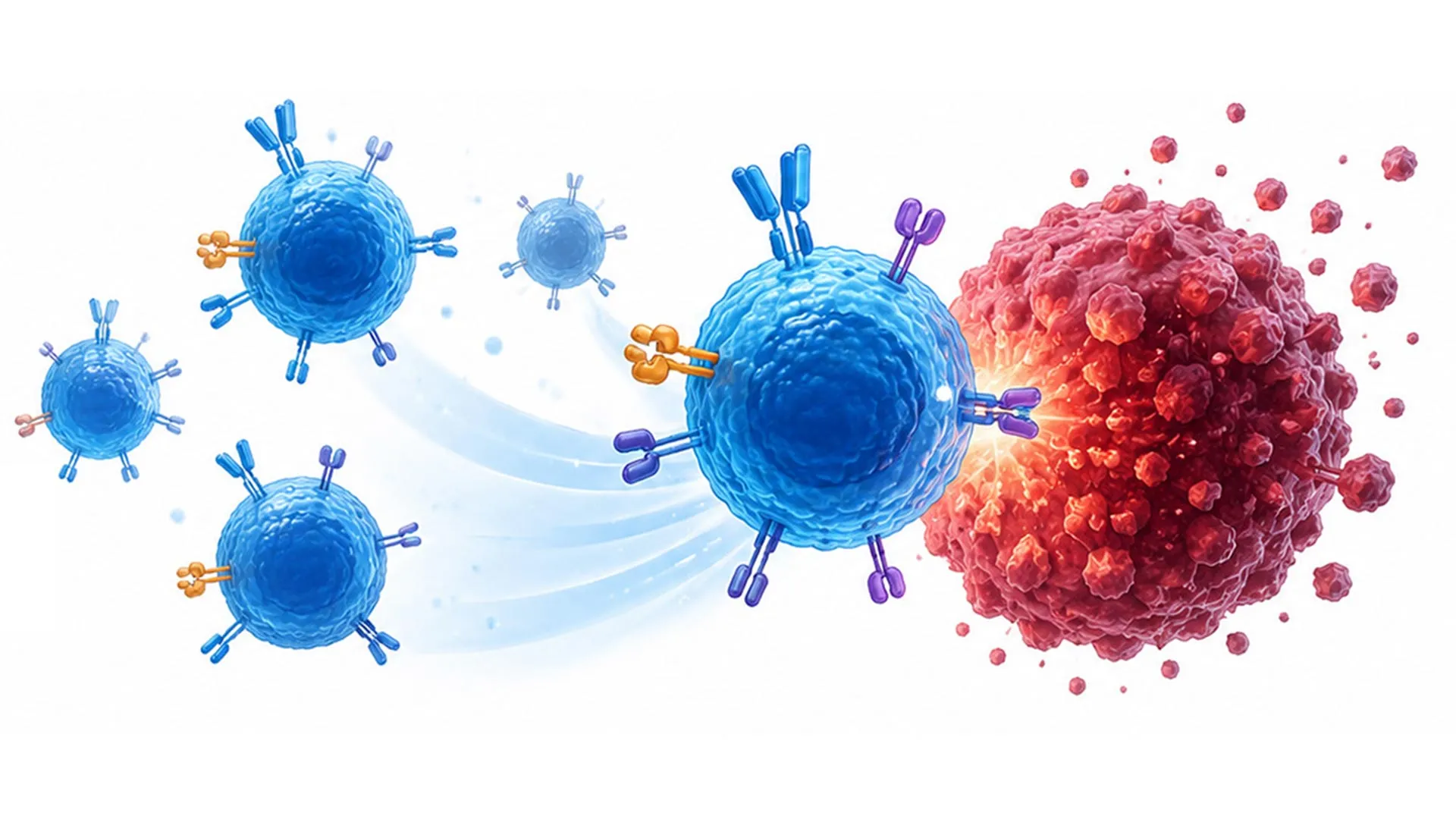
A groundbreaking advancement in cancer immunotherapy promises to make highly precise T cell receptor (TCR) therapy more accessible and effective, particularly for solid tumors. Researchers at the University of California, Los Angeles (UCLA) have developed a novel strategy to create off-the-shelf TCR-engineered T cells derived from cord blood stem cells. This innovative approach addresses critical bottlenecks in current TCR therapy, including the lengthy production times, prohibitive costs, and the risk of graft-versus-host disease associated with donor-derived cells.
TCR therapy, a sophisticated form of cancer treatment, involves genetically modifying a patient’s or donor’s T cells to express specific T cell receptors. These engineered receptors enable the T cells to recognize and target cancer cells with remarkable accuracy. While similar in concept to CAR T-cell therapy, which targets proteins on the exterior of cancer cells, TCR therapy possesses a crucial advantage: its ability to detect intracellular protein fragments presented on the cancer cell surface. These fragments, known as epitopes, act as unique identifying tags, offering a broader range of targets, especially for solid tumors where many critical cancer-driving mutations occur internally.
The potential of TCR therapy for solid tumors, which account for the vast majority of cancer diagnoses and deaths worldwide, has long been recognized. Unlike blood cancers that often express targetable antigens on their surface, solid tumors are notoriously challenging to treat with immunotherapies because their defining molecular alterations are frequently located within the cell. TCR therapy’s capacity to "see" these intracellular targets positions it as a potentially transformative treatment modality.
However, the widespread clinical application of TCR therapy has been significantly hampered by logistical and financial hurdles. Traditional TCR therapies are typically personalized, requiring the extraction of a patient’s own T cells, their genetic modification in a lab, and subsequent reinfusion. This process can take several weeks, during which time a patient’s condition may worsen. Furthermore, the cost of these bespoke treatments can easily exceed several hundred thousand dollars per patient, placing them out of reach for many.
To overcome these limitations, scientists have explored the use of T cells from healthy donors, which could be manufactured in advance, stored, and administered to multiple patients. This "off-the-shelf" approach offers the promise of readily available treatments. Yet, donor-derived T cells carry the inherent risk of graft-versus-host disease (GvHD), a serious and potentially life-threatening condition where the transplanted immune cells mistakenly attack the recipient’s healthy tissues.
The UCLA team’s breakthrough, detailed in a study published in Cell Reports Medicine, offers a potential solution to both issues simultaneously. Their scalable method utilizes blood stem cells harvested from donated cord blood. These immature stem cells are then genetically engineered to express a receptor targeting NY-ESO-1, a protein commonly found in a variety of solid tumors. Crucially, the engineered stem cells are then guided to mature into T cells in a laboratory setting.
A Novel Approach: Building from Stem Cells
The core innovation lies in the UCLA team’s decision to engineer T cells from an earlier developmental stage. Instead of starting with mature T cells, which already possess a diverse array of natural T cell receptors, they began with hematopoietic stem cells from cord blood. These multipotent cells have the remarkable ability to differentiate into all types of blood and immune cells.
By introducing the gene for the cancer-targeting receptor at this primitive stage, the researchers ensure that as these stem cells mature into T cells, they predominantly develop the engineered receptor while avoiding the expression of a random assortment of natural T cell receptors. This is a significant advantage over conventional donor T cell therapies, which often require additional gene editing steps to “silence” or remove pre-existing T cell receptors on mature donor cells that could potentially recognize and attack the patient’s healthy tissues.
"Stem cells are undifferentiated — they’re not yet mature T cells with a fixed receptor already in place," explained co-first author Yichen (John) Zhu, a graduate student in the UCLA Broad Stem Cell Research Center Training Program. "When we differentiate our engineered stem cells into T cells, essentially all of the resulting cells carry the same receptor and go after the same tumor target." This uniformity in receptor expression is key to minimizing off-target immune responses.
Dual-Action Targeting for Enhanced Efficacy
One of the persistent challenges in treating solid tumors is their inherent heterogeneity. Cancer cells within a single tumor can exhibit significant variations, and some may lose or downregulate the specific molecular markers that a targeted therapy is designed to recognize. This phenomenon, known as antigen escape, can allow residual cancer cells to survive and proliferate, leading to treatment failure.
To counteract this, the UCLA researchers endowed their engineered T cells, termed AlloESO-T cells, with a built-in "backup" mechanism. In addition to the engineered TCR that recognizes NY-ESO-1, these cells are equipped with natural killer (NK) cell receptors. These NK receptors can identify stress signals commonly displayed by many tumor cells, irrespective of the presence of NY-ESO-1.
This dual-targeting strategy means that even if a tumor cell ceases to express NY-ESO-1, the AlloESO-T cells may still be able to recognize and eliminate it through their NK receptors. Laboratory experiments involving human melanoma, ovarian, and prostate cancer cells demonstrated this enhanced capability. The NK receptors enabled the engineered T cells to effectively destroy cancer cells that were otherwise resistant to NY-ESO-1 targeting alone. This could significantly enhance the durability of treatment responses and circumvent common resistance mechanisms.
"Solid tumors are very diverse," Zhu elaborated. "Some tumor cells lose or hide the antigen a therapy is designed to find — what we call antigen escape. When that happens, a therapy built around a single target loses its grip. Our stem cell-derived cells still have a second mechanism to kill those tumor cells."
Preclinical Efficacy and Safety
The effectiveness and safety of the AlloESO-T cells were rigorously evaluated in preclinical models. In mouse models of ovarian cancer, a single dose of these engineered cells demonstrated significant and lasting tumor control, leading to extended survival for the treated animals. In stark contrast, mice that received conventionally engineered T cells derived from mature donor cells experienced only partial tumor control and, crucially, developed symptoms of graft-versus-host disease.
Similar promising results were observed in a melanoma mouse model. The AlloESO-T cells effectively slowed tumor growth and delayed cancer recurrence. Again, the conventionally engineered donor T cells provided only temporary benefits.
Further analysis revealed significant differences in the behavior and distribution of the two cell types post-treatment. Following a single infusion, the AlloESO-T cells proliferated robustly, increasing in number by approximately 100-fold. They effectively migrated to tumor sites, expanded where needed, and remained active for weeks, largely sparing healthy organs. Conversely, the conventionally engineered donor T cells showed a tendency to accumulate in organs like the liver and lungs, a pattern associated with the toxicities that the UCLA strategy aims to prevent.
Scalability and Cost-Effectiveness
Beyond their therapeutic potential, the manufacturing advantages of the AlloESO-T platform are profound. The current reliance on personalized treatments necessitates a separate, complex manufacturing process for each patient, driving up costs and extending timelines. By starting with cord blood stem cells, which can be banked and cryopreserved, researchers can establish a centralized manufacturing process to produce therapeutic cells on a vastly larger scale.
Cord blood stem cells possess an immense proliferative capacity, meaning a relatively small starting quantity can yield trillions of immune cells. The UCLA team estimates that from a small number of cord blood stem cells, they can generate trillions of therapeutic cells – sufficient for thousands of doses – within approximately six weeks.
"From a small number of cord blood stem cells, we can generate trillions of therapeutic cells — enough for thousands of doses — within about six weeks," stated co-senior author Yanruide (Charlie) Li, a postdoctoral scholar in the Yang lab. "At an estimated $5,000 per dose, this approach would be far more accessible than today’s therapies." This projected cost is a dramatic reduction compared to the hundreds of thousands of dollars typically associated with current personalized cell therapies, potentially democratizing access to advanced cancer treatments.
A Platform for Broader Application
The UCLA team envisions the AlloESO-T system not merely as a single-target therapy but as a versatile platform capable of targeting a wide spectrum of solid tumors. The ability of TCRs to recognize intracellular protein fragments is particularly valuable for cancers that have historically been refractory to cell therapies due to the lack of suitable surface antigens.
"We’re not just presenting one therapy for one target. We want to share the platform itself," Li emphasized. "As long as a receptor for a given cancer antigen has been validated, we can build it into this system and generate T cells specific to that target." This adaptability means the platform can be readily engineered to target numerous other cancer antigens, expanding its clinical utility exponentially.
Furthermore, the AlloESO-T system leverages existing manufacturing expertise developed by Dr. Yang’s laboratory for their CAR-NKT platform, another off-the-shelf immunotherapy strategy. This existing infrastructure and established partnerships with the UCLA Health Center for Advanced Biotherapies are expected to accelerate the scale-up and potential transition of AlloESO-T into clinical testing.
The Road Ahead: Clinical Trials and Regulatory Approval
While the preclinical results are highly encouraging, it is imperative to note that the AlloESO-T cells have thus far only been evaluated in laboratory and animal models. They have not yet undergone human clinical trials and have not received approval from the U.S. Food and Drug Administration (FDA) for safety or efficacy in human use. The progression to human trials will be a critical next step in validating this promising technology and determining its real-world impact on cancer patients.
The research was supported by significant funding from the California Institute for Regenerative Medicine, the UCLA Molecular Biology Institute, the UCLA Office of the Chancellor, and the UCLA Goodman-Luskin Microbiome Center, underscoring the collaborative and well-supported nature of this scientific endeavor. The additional authors on the study include Jiaji Yu, Yu Jeong Kim, Yanxin Tian, Zhe Li, Yuning Chen, Zibai Lyu, Enbo Zhu, Annabel S. Zhao, Nathan Ma, Catherine Zhang, Adam Kramer, Matthew Wilson, Ryan Hon, Yu-Chen Wang, Siyu Lin, Xinyuan Shen, Zoe Hahn, Yuchong Zhang, and Aijun Wang.
