
 By Nana O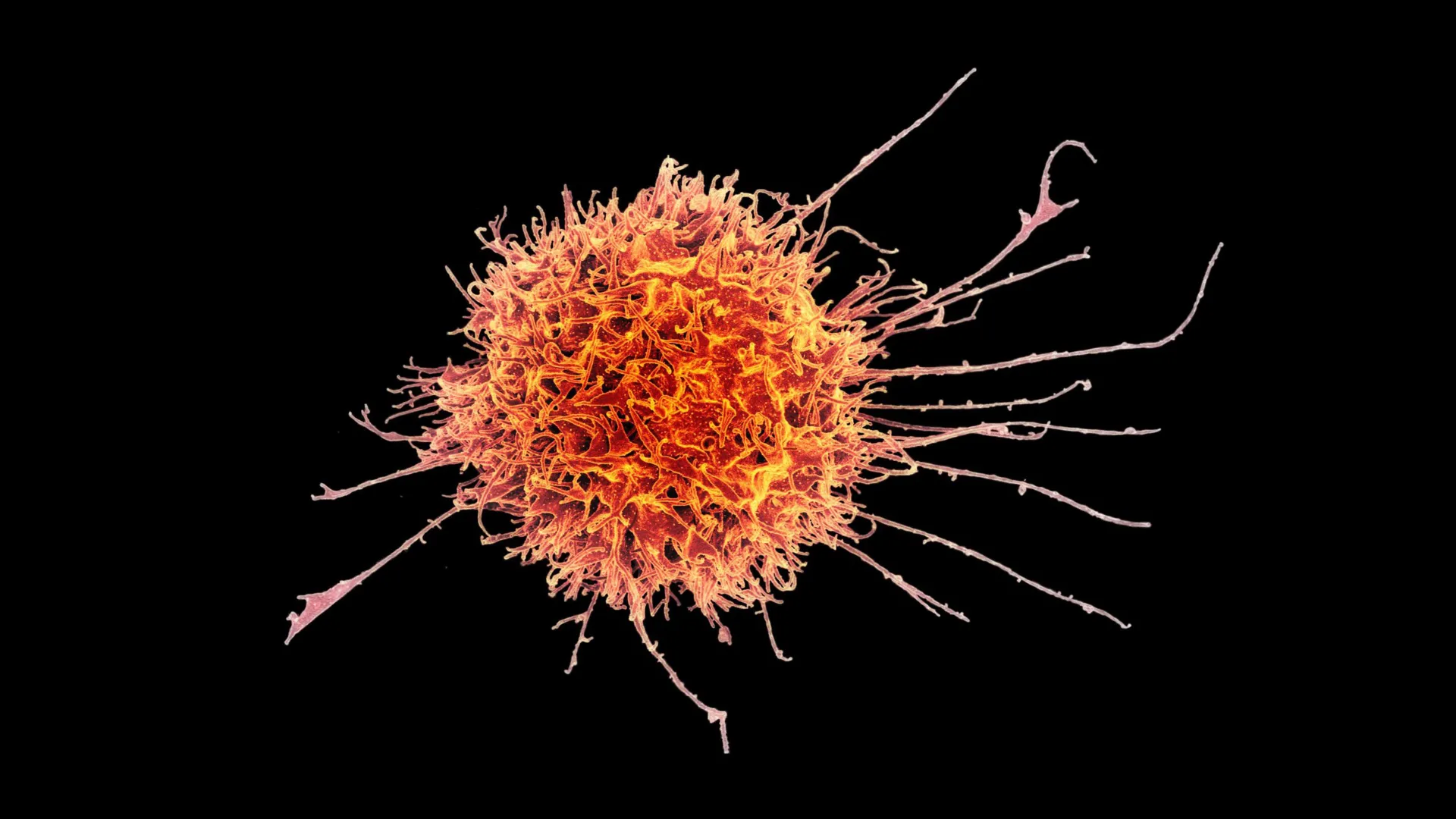
Researchers at Stanford Medicine, in collaboration with scientists from Ohio State University and Washington University School of Medicine, have unveiled a groundbreaking strategy that engineers natural killer (NK) cells into a specialized, tissue-resident form capable of infiltrating and destroying solid tumors. This innovative approach addresses a long-standing challenge in cancer immunotherapy, where solid tumors have proven significantly more resistant to immune-based treatments compared to blood and lymphatic cancers. The findings, published last month in Science Translational Medicine, mark a pivotal step towards developing a more accessible and effective "off-the-shelf" cell therapy for a wider range of cancer patients.
The core of this advancement lies in the transformation of NK cells, a critical component of the innate immune system known for its rapid response to abnormal cells, into a specialized subtype that can persist and function within the tumor microenvironment. Unlike conventional NK cells, which often struggle to penetrate the dense structure of solid tumors and can be suppressed by the tumor’s signaling, these engineered tissue-resident NK cells demonstrate a remarkable ability to infiltrate tumor masses and initiate their cytotoxic function.
"We’ve demonstrated that these tissue-resident natural killer cells can infiltrate solid tumors with significantly greater efficacy than conventional natural killer cells," stated Dr. John Sunwoo, the Edward C. and Amy H. Sewall Professor in the School of Medicine and senior author of the study. "The results were consistently reproducible, striking, and unequivocally clear, indicating a substantial leap forward in our ability to target these challenging malignancies."
The co-lead authors of the study, Dr. Nina Horowitz, formerly a doctoral student in otolaryngology, Dr. Imran Mohammad, a postdoctoral fellow in the Sunwoo lab, and Dr. June Ho Shin, a senior scientist in the Sunwoo lab, spearheaded the complex cellular engineering and experimental validation processes.
Harnessing Natural Killer Cells for Solid Tumor Combat
Pre-clinical trials conducted in mice have yielded promising results, with the modified NK cells demonstrating a significant ability to slow the growth of various solid tumors. This therapeutic effect was further amplified when the engineered NK cells were administered in conjunction with an antibody treatment. This combination strategy leverages the antibody’s capacity to act as a beacon, guiding the NK cells more precisely towards cancer cells within the tumor.
A key practical advantage of this NK cell-based therapy is its potential for broad accessibility. Natural killer cells, unlike other immune cells used in current therapies such as T cells, typically do not elicit a strong immune reaction when transplanted between individuals. This characteristic circumvents the need for personalized cell manufacturing for each patient, a process that is time-consuming, expensive, and often leads to significant delays in treatment initiation. Instead, these modified NK cells could be produced in large quantities, cryopreserved, and readily deployed as an "off-the-shelf" product.
"The prospect of an ‘off-the-shelf’ drug is incredibly exciting," Dr. Sunwoo commented. "It has the potential to dramatically democratize cell therapy, making it accessible to a much broader spectrum of patients who currently face significant barriers to receiving these life-saving treatments."
The Significance of Tissue-Resident Immune Cells
Natural killer cells, first identified in the 1970s, are a vital component of the immune system’s first line of defense. Their name reflects their innate ability to recognize and swiftly eliminate abnormal cells, including cancerous growths and virus-infected cells, without prior sensitization, a key distinction from adaptive immune cells like T cells.
Historically, immunological research predominantly focused on immune cells circulating within the bloodstream. However, advancements in cellular biology and bioinformatics have increasingly highlighted the critical role of immune cells that reside within specific tissues. These tissue-resident immune cells, including a specialized subset of NK cells, are adapted to their local environments and play crucial roles in maintaining tissue homeostasis and responding to local threats.
"For many years, the study of immunity and disease in humans was largely concentrated on circulating immune cells," Dr. Sunwoo explained. "With the evolution of sophisticated tools and data analysis techniques, we are now shifting our focus to understand the dynamic processes occurring within tissues. For the majority of immune cells, the tissue is where the primary immunological battleground exists."
Tissue-resident NK cells are found in various anatomical locations, including the skin, mucous membranes, lungs, and liver. Their precise functions have been a subject of ongoing scientific inquiry, with previous studies presenting conflicting findings. Some research suggested these cells possessed limited cytotoxic capabilities and could even exert immunosuppressive effects, while other investigations pointed to their potent tumor-killing abilities. This variability likely stems from their adaptability to the specific microenvironment in which they reside.
"It appears these cells can adopt distinct functions based on cues from their local microenvironment, differentiating into specialized subpopulations," Dr. Sunwoo elaborated. "This plasticity allows them to serve diverse roles, from supporting pregnancy by preventing immune rejection of fetal cells to actively combating pathogens."
For cancer treatment, the focus is on cultivating the more aggressive, tumor-icidal variants of these tissue-resident NK cells.
Engineering the Optimal Cellular Recipe
The research team’s investigation into the development and functional divergence of tissue-resident NK cells was motivated by evidence suggesting the existence of at least two distinct subtypes. Their work aimed to elucidate the mechanisms governing their differentiation and the factors influencing their contrasting behaviors.
The Stanford team isolated circulating NK cells from human blood donors and subjected them to various signaling molecules to mimic the cellular environment. A crucial factor identified was transforming growth factor beta (TGF-β), a signaling protein produced by numerous cell types, including tumor cells, and known to influence cell development. The researchers discovered that the precise amount and duration of TGF-β signaling were paramount.
"It’s akin to a ‘Goldilocks’ principle," Dr. Sunwoo explained. "A precisely calibrated dose of TGF-β signal induces NK cells to become tissue-resident with potent cytotoxic activity against malignant cells. Excessive TGF-β, however, results in tissue-resident cells that are inhibited and dysfunctional, losing their killing capacity. The signal must be delivered in the exact right quantity and manner."
While TGF-β was essential for initiating the transition to a tissue-resident state, prolonged exposure led to NK cells with diminished killing potential. A more effective approach involved a transient exposure to TGF-β. The researchers found that briefly co-culturing NK cells with human epithelial tumor cells, which transiently secrete active TGF-β, yielded tissue-resident NK cells with robust tumor-killing capabilities.
Crucially, direct physical contact between the NK cells and the epithelial tumor cells was also identified as an essential requirement. Mere proximity was insufficient, suggesting that additional activating signals are transmitted through cell-to-cell interactions.
"These two populations of tissue-resident NK cells appear morphologically similar and share some developmental requirements, yet their functional outcomes are diametrically opposed," Dr. Sunwoo noted.
Distinguishing the Potent Cancer Killers
Detailed comparative analysis revealed key molecular differences between the two observed subtypes of tissue-resident NK cells. Both types expressed surface proteins CD49a and CD103. However, only the highly effective cancer-killing variants exhibited expression of CD39.
Furthermore, the more potent NK cells possessed a greater abundance of the molecular machinery required for target cell destruction. This included higher levels of perforin, a protein that forms pores in target cell membranes, and granzyme A, a cytotoxic enzyme delivered through these pores to induce cell death.
Slowing Tumor Growth in Pre-Clinical Models
With a reliable method established for generating the more aggressive NK cells, the researchers proceeded to evaluate their ability to penetrate solid tumors. In laboratory settings, these engineered cells successfully infiltrated tumor organoids cultured in vitro. Subsequently, when administered to mice, they significantly slowed the growth of various solid tumors, including those derived from human melanoma and head and neck squamous cell carcinoma, over periods of weeks.
The most impactful results were observed when the modified NK cells were combined with cetuximab, a monoclonal antibody that targets specific cancer cell surface markers, thereby flagging them for immune system attack. Cetuximab is an approved treatment for metastatic colorectal cancer and advanced head and neck squamous cell carcinoma, but its efficacy as a standalone therapy for solid tumors is often limited.
A single administration of the combination therapy demonstrated a substantially greater suppression of tumor growth in mice over a 30-day period compared to either treatment administered alone. Importantly, no apparent adverse effects were observed in the treated animals.
"Even at day 30, when mice receiving other treatments were exhibiting signs of illness, those treated with the combination therapy appeared remarkably healthy," Dr. Sunwoo reported. He cautioned, however, that these findings represent a "proof of concept" and that extrapolating directly from mouse models to human patients requires further investigation.
Paving the Way for Off-the-Shelf Cell Therapy
Dr. Sunwoo and his team are actively preparing to initiate a Phase I clinical trial to assess the safety and efficacy of this combination therapy in human patients diagnosed with advanced squamous cell carcinoma. This trial is anticipated to commence by the end of the year, contingent upon regulatory approval from the Food and Drug Administration.
In parallel, Dr. Sunwoo has developed and filed a patent for a method to produce and expand large quantities of these specialized cytotoxic tissue-resident NK cells. This scalable manufacturing process is central to realizing the vision of an accessible, off-the-shelf cell therapy.
According to the research team’s projections, NK cells harvested from a single donor could yield approximately 20 treatment doses within a two-week production cycle.
"These cells will be cryopreserved, allowing us to produce a substantial inventory of doses that can be distributed to different patients without delay," Dr. Sunwoo emphasized. "This logistical advantage is critical for ensuring timely access to potentially life-saving treatments."
The collaborative effort involved researchers from Ohio State University and Washington University School of Medicine, underscoring the inter-institutional nature of this significant scientific advancement. Funding for this groundbreaking research was provided by the National Institutes of Health (grants R35DE030054, K22CA282364, and R25DC020174), the Tai Tsun Wu Research Fund for Natural Killer Cell Immunotherapy, and the Stanford Bio-X Fellowship. The implications of this work extend beyond immediate therapeutic potential, offering new avenues for understanding and manipulating the complex interplay between the immune system and solid tumors.
