
 By admin
The medical journey of Jaylen, 10, and Ayla, 8, provides a profound case study in the intersection of hereditary pediatric oncology, the critical importance of early diagnostic markers, and the systemic challenges faced by disabled caregivers within the healthcare infrastructure. Both siblings are survivors of hereditary bilateral retinoblastoma, a rare and aggressive form of eye cancer that originates in the retina. Their story highlights not only the clinical complexities of managing a genetic predisposition to cancer but also the socio-legal necessity of accessibility in medical settings, as their mother, Denice, navigated the diagnostic process while contending with significant barriers as a member of the Deaf community.
Clinical Overview and Early Manifestations
Retinoblastoma is the most common primary intraocular malignancy of childhood, typically diagnosed before the age of five. In the case of Jaylen, the first clinical signs appeared when he was just two months old. His mother observed his left eye veering outward, a condition known medically as strabismus. Strabismus is one of the secondary symptoms of retinoblastoma, occurring when the tumor interferes with the eye’s ability to focus, causing the brain to favor one eye over the other.
Prior to the physical misalignment, the family had noticed an unusual phenomenon in photographs of Jaylen: a white reflection in his pupil, often referred to in clinical literature as leukocoria or the "white glow." At the time, the family attributed this to the camera’s flash or ambient lighting—a common occurrence in many retinoblastoma cases where parents are unfamiliar with the warning signs. Leukocoria occurs when the tumor, located at the back of the eye, reflects light instead of the normal red reflex produced by the vascular retina.
The progression of the disease in Jaylen’s case was complicated by a significant failure in the healthcare delivery system. When Denice attempted to seek medical evaluation during Jaylen’s four-month check-up, the attending physician’s office reportedly refused the appointment, citing the absence of an American Sign Language (ASL) interpreter. This incident underscores a critical lapse in compliance with the Americans with Disabilities Act (ADA), which mandates that healthcare providers provide effective communication aids, such as qualified interpreters, to ensure equal access to care.
The Struggle for Diagnostic Access and Genetic Implications
Following the refusal of care, Denice was forced to act as her own advocate, independently tracking down a medical facility capable of accommodating her communication needs while addressing her son’s urgent symptoms. This delay in the diagnostic pipeline is a known risk factor in pediatric oncology, where the window for vision-saving or life-saving intervention can be narrow.
Upon securing a proper evaluation, Jaylen was diagnosed with bilateral retinoblastoma, meaning tumors were present in both eyes. This diagnosis immediately shifted the family’s medical profile into the category of hereditary retinoblastoma. Approximately 40% of retinoblastoma cases are hereditary, caused by a germline mutation in the RB1 gene. Children with the hereditary form of the disease are significantly more likely to develop bilateral tumors and face a higher risk of secondary cancers later in life.
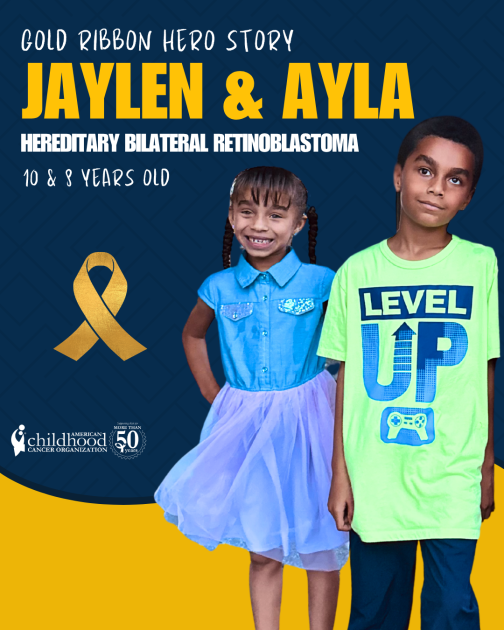
Because the condition was identified as hereditary, the family’s subsequent child, Ayla, was placed under rigorous ophthalmic surveillance from birth. This proactive monitoring allowed for an exceptionally early diagnosis; Ayla was confirmed to have retinoblastoma at just four weeks old. The disparity between Jaylen’s diagnosis at four months (following a period of symptoms) and Ayla’s diagnosis at four weeks (via screening) illustrates the impact of genetic awareness on early detection.
Comprehensive Treatment Modalities and Surgical Interventions
The management of bilateral retinoblastoma is a multi-year process involving various aggressive therapies designed to eradicate the tumor while preserving as much vision and ocular structure as possible. For Jaylen and Ayla, the treatment protocols were extensive and varied.
- Chemotherapy: Systemic or intra-arterial chemotherapy is often used to "chemoreduce" or shrink tumors, making them more manageable for focal therapies.
- Cryotherapy: This involves the use of extreme cold to freeze and destroy cancer cells in the retina. It is typically used for smaller tumors located in the periphery of the eye.
- Laser Therapy (Photocoagulation): This method uses heat from a laser to destroy the blood vessels feeding the tumor, effectively starving the malignancy.
- Strabismus Surgery: For Jaylen, the physical misalignment caused by the initial tumor growth required surgical correction to realign the eye muscles.
- Enucleation: In cases where the tumor is too large to be treated by other means, or where there is a high risk of the cancer spreading via the optic nerve to the brain, the eye must be surgically removed. Ayla underwent an enucleation, a life-saving procedure that results in permanent monocularity.
Both children eventually transitioned to the use of prosthetic eyes. Modern ocular prosthetics are custom-made to match the remaining eye, but for Ayla, the prosthetic has become a medium for self-expression. She maintains a collection of custom-colored irises, allowing her to exercise agency over her appearance—a psychological coping mechanism that healthcare professionals note can be vital for children navigating the trauma of disfigurement and chronic illness.
Data and Statistics: The Landscape of Retinoblastoma
To understand the scope of the siblings’ journey, it is necessary to examine the broader statistical context of the disease. Retinoblastoma affects approximately 1 in 15,000 to 18,000 live births worldwide. In the United States, about 200 to 300 children are diagnosed annually.
While the survival rate for retinoblastoma in developed nations exceeds 95%, the "bilateral" designation carries unique challenges. Patients with bilateral disease typically require more frequent examinations under anesthesia (EUAs) to monitor for new tumor growth, which can occur until the age of five or six. Furthermore, the genetic nature of the disease means that these survivors must undergo lifelong monitoring for secondary malignancies, such as osteosarcomas or soft tissue sarcomas, which occur at a higher frequency in carriers of the RB1 mutation.
The role of the "glow" in diagnosis remains a primary focus for public health advocates. Organizations such as "Know the Glow" emphasize that leukocoria can be the first sign of up to 20 different ocular conditions, with retinoblastoma being the most life-threatening. Early detection via a simple photograph can mean the difference between localized treatment and the need for enucleation or systemic chemotherapy.
Analysis of Healthcare Advocacy and Systemic Barriers
The experience of Denice, the children’s mother, provides a critical data point regarding the "double burden" faced by disabled parents of children with medical complexities. The initial refusal of the doctor’s office to provide an ASL interpreter is a documented barrier in the American healthcare system. According to studies on Deaf healthcare access, patients who use ASL often experience lower health literacy and poorer health outcomes due to communication breakdowns in clinical settings.
Denice’s stated need to "lock in" and become the "ultimate advocate and manager" for her children’s health is a reflection of a necessary pivot toward fierce parental advocacy. In the context of pediatric cancer, the parent often functions as a secondary case manager, coordinating between oncologists, ophthalmologists, surgeons, and prosthetic specialists. When the parent also belongs to a marginalized or disabled group, the administrative and emotional labor required to navigate these systems increases exponentially.
The family’s decision to share their story online has also brought them into contact with the complexities of public perception. Denice noted that she has faced criticism regarding her parenting choices—specifically her philosophy of "beautifully spoiling" her children. From a psychological perspective, this approach is often a response to the "loss of childhood" that occurs during intensive medical treatments. Choosing "joy and presence" over conventional disciplinary or lifestyle expectations is a recognized coping strategy for families who have faced life-threatening diagnoses.
Broader Implications and Future Outlook
The long-term outlook for Jaylen and Ayla is focused on survivorship and the maintenance of their prosthetic health. As they age, they will continue to require specialized care to ensure their prosthetic sockets remain healthy and that their remaining vision (in Jaylen’s case) or their single eye (in Ayla’s case) is protected.
The case also highlights the importance of ASL acquisition in pediatric settings. Ayla began learning ASL during her post-operative recovery, ensuring that she has multiple modes of communication. This is particularly relevant for retinoblastoma survivors who may face vision impairment; having a foundation in a visual-gestural or tactile-gestural language provides a robust communication safety net.
Furthermore, the siblings’ story serves as a vital tool for public awareness. By publicizing the "retinoblastoma glow," they contribute to a global effort to reduce the age of diagnosis for this cancer. In many developing nations, where the "glow" is not recognized and medical access is limited, the mortality rate for retinoblastoma remains as high as 70%. The visibility of survivors like Jaylen and Ayla helps normalize the use of prosthetics and provides a roadmap for other families facing the terrifying "cancer" diagnosis.
In conclusion, the journey of the Jaylen and Ayla is a testament to the efficacy of modern pediatric oncology and the power of informed parental advocacy. It exposes the ongoing need for healthcare providers to adhere to accessibility laws and underscores the reality that surviving childhood cancer is not merely a medical achievement, but a social and psychological one. Their transition from patients to "fiercely independent" survivors demonstrates that with early intervention, genetic monitoring, and a commitment to accessibility, children with bilateral retinoblastoma can lead lives defined by joy rather than their diagnosis.
