
 By Billy Candra
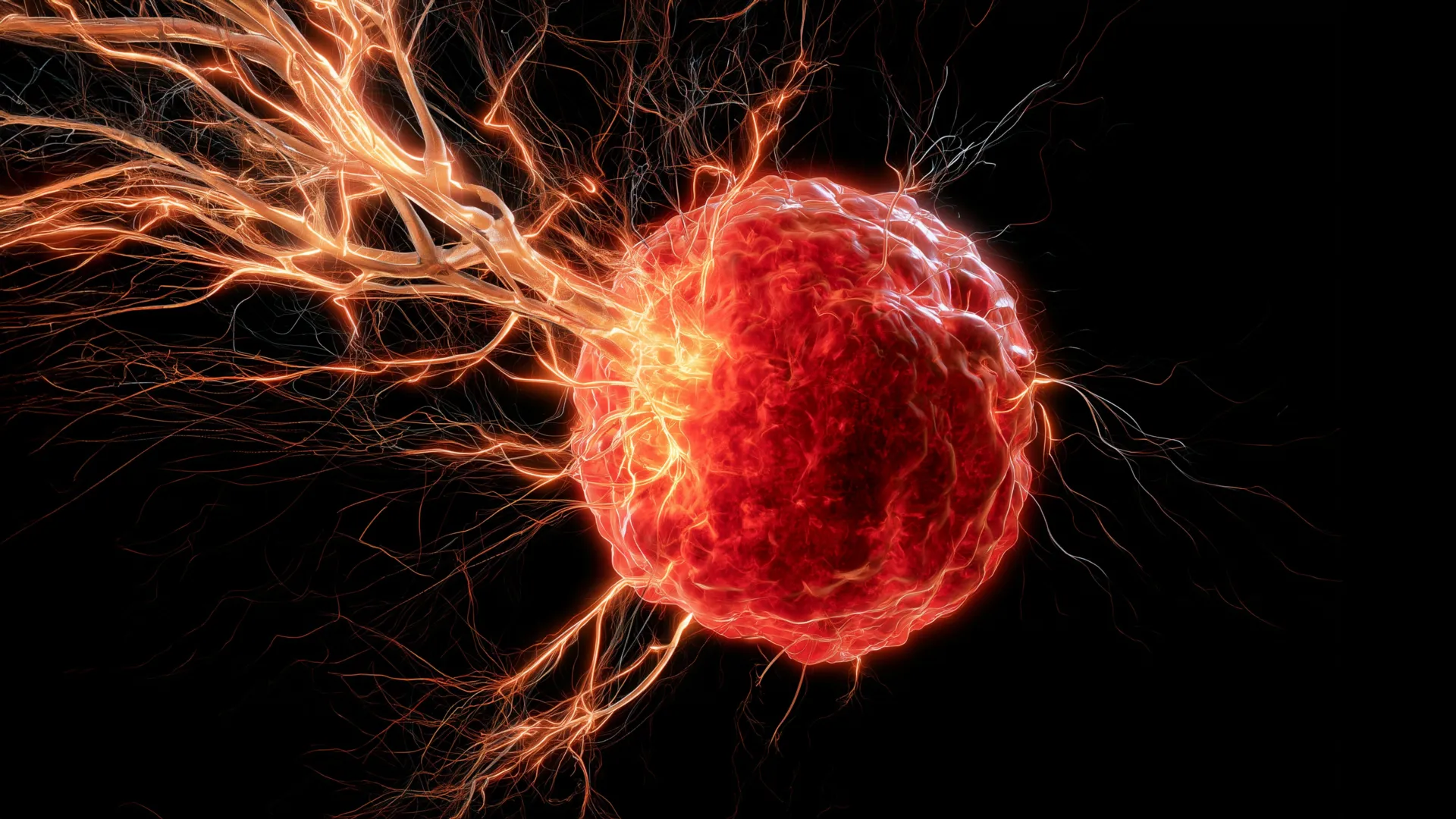
The groundbreaking study, published in the esteemed journal Cell Death & Differentiation, sheds critical light on a previously enigmatic aspect of tumor biology: how extensive nerve networks, commonly observed within many solid tumors, initially infiltrate these cancerous masses. This discovery specifically addresses this complex process within triple-negative breast cancer (TNBC), a particularly challenging and aggressive form of the disease for which effective treatment options remain limited. The findings not only provide a mechanistic explanation for tumor innervation but also propose a novel therapeutic strategy that could significantly alter the landscape of cancer treatment.
The Long-Standing Enigma of Tumor Innervation
For decades, oncologists and researchers have acknowledged the pervasive presence of nerves within the microenvironment of various solid tumors. From prostate cancer to pancreatic cancer, the intricate web of neural fibers intertwined with cancerous cells has been a consistent observation. However, the precise mechanisms governing this infiltration have largely remained a mystery. It was unclear whether nerves were simply bystanders, passively enveloped by growing tumors, or if they played an active, perhaps even conspiratorial, role in tumor development and progression. The new research from the University of Oklahoma provides compelling evidence for the latter, demonstrating an active, orchestrated recruitment of nerves by aggressive breast cancer cells, mediated by hijacked immune cells.
This phenomenon is part of a broader understanding of the tumor microenvironment (TME), a complex ecosystem surrounding the cancer cells themselves. The TME comprises a diverse array of non-cancerous cells, including immune cells, fibroblasts, blood vessels, and the extracellular matrix. Increasingly, scientists recognize that the TME is not merely a passive support structure but an active participant that profoundly influences tumor growth, metastasis, and resistance to therapy. The integration of nerves into this intricate network adds another layer of complexity and a new dimension to potential therapeutic targets.
Triple-Negative Breast Cancer: A Formidable Challenge
The focus of this research on triple-negative breast cancer (TNBC) underscores its profound clinical significance. TNBC accounts for approximately 10-15% of all breast cancers and is characterized by the absence of estrogen receptors (ER), progesterone receptors (PR), and human epidermal growth factor receptor 2 (HER2) overexpression. This lack of key receptors means that TNBC patients do not benefit from targeted therapies like hormone therapy (e.g., tamoxifen) or HER2-targeted drugs (e.g., trastuzumab), which have revolutionized the treatment of other breast cancer subtypes. Consequently, treatment for TNBC largely relies on conventional chemotherapy, which, despite its efficacy in some cases, often leads to higher rates of recurrence, distant metastasis, and poorer survival outcomes compared to other breast cancer types.
Statistics paint a stark picture: TNBC is more prevalent in younger women, premenopausal women, and women of African American or Hispanic descent. It tends to be more aggressive, grow faster, and is more likely to spread to other parts of the body. The five-year survival rate for localized TNBC is around 90%, but this drops significantly to 12% if the cancer has metastasized. The urgent need for novel therapeutic strategies that specifically address the unique biology of TNBC cannot be overstated, making the findings from the University of Oklahoma particularly impactful.
Immune Cells Hijacked: The Macrophage-BDNF Axis
The core of the OU research uncovers a cunning mechanism employed by TNBC: the manipulation of the immune system. The researchers discovered that these aggressive tumors actively attract macrophages, a type of immune cell that typically plays a crucial role in the body’s defense mechanisms. Macrophages are versatile cells, known for their ability to engulf pathogens, clear cellular debris, and orchestrate tissue repair. They exist in different states, broadly categorized as M1 (pro-inflammatory, anti-tumor) and M2 (anti-inflammatory, pro-tumor). In the context of cancer, tumors often reprogram these macrophages, particularly into the M2-like phenotype, transforming them from protective agents into complicit allies that promote tumor growth and immune evasion.
The study elucidated that once within the tumor microenvironment, these recruited macrophages begin to secrete brain-derived neurotrophic factor (BDNF). BDNF is a protein widely recognized for its vital role in the central and peripheral nervous systems, where it supports the growth, survival, and differentiation of neurons. It is critical for brain development, synaptic plasticity, and memory formation. In a startling subversion of its normal function, the researchers found that TNBC tumors exploit this very biological signal. By prompting macrophages to release BDNF, the tumors effectively create a chemical gradient that encourages nearby nerves to grow toward and ultimately infiltrate the cancerous mass.
Dr. Maureen Cox, Ph.D., an assistant professor in the Department of Microbiology and Immunology at the OU College of Medicine and a research member of OU Health Stephenson Cancer Center, emphasized this paradoxical role: "Macrophages are the critical source for drawing nerves into the tumor. Although macrophages typically play a positive role in the body, they are facilitating a negative function in this scenario of breast cancer." This hijacking of fundamental biological pathways by cancer cells highlights the sophistication of tumor adaptation and underscores the need for therapies that can disrupt these intricate cellular dialogues.
Consequences of Nerve Infiltration: A Multi-faceted Threat
The infiltration of nerves into tumors is not a benign process; mounting evidence suggests it actively contributes to cancer progression and resistance to treatment. While the exact mechanisms are still under investigation, Dr. Cox and her team are pursuing several hypotheses.
One significant implication is the potential for nerves to create an immunosuppressive environment within the tumor. As Dr. Cox noted, "We believe that the nerves are immunosuppressive, so if we can stop the nerves from growing in the first place, maybe we can boost the immune response to help fight the cancer." This suggests that the presence of nerves might actively hinder the body’s natural anti-tumor immune response, effectively shielding cancer cells from detection and destruction by immune cells like T-lymphocytes. If this hypothesis holds true, targeting nerve infiltration could unlock the potential of existing immunotherapies, making otherwise resistant tumors more susceptible to treatment.
Furthermore, other research suggests that nerves may play additional roles in tumor progression:
- Angiogenesis: Nerves can stimulate the formation of new blood vessels, a process known as angiogenesis. Tumors require a robust blood supply to deliver oxygen and nutrients necessary for their rapid growth. By promoting angiogenesis, nerves could inadvertently fuel tumor expansion.
- Metastasis: Nerves might serve as "highways" or conduits for cancer cells, facilitating their migration away from the primary tumor site and promoting metastasis to distant organs. This ability to spread is the primary cause of cancer-related mortality.
- Direct Trophic Support: Nerves could provide direct growth factors or signaling molecules that nourish cancer cells, directly supporting their proliferation and survival.
- Pain Perception: While not directly linked to tumor growth, nerve innervation also contributes to cancer-associated pain, a significant quality-of-life issue for patients.
Blocking the Signal: A Promising Therapeutic Avenue
The discovery of the macrophage-BDNF-nerve axis immediately opens the door to novel therapeutic strategies. Instead of solely focusing on destroying cancer cells, future therapies might target the signaling pathways that enable tumor growth and progression within the microenvironment.
Cox and her colleagues rigorously tested this hypothesis in preclinical mouse models of TNBC. They administered a drug designed to block BDNF signaling. The results were remarkably promising: nerves no longer grew into the tumors, and, crucially, tumor growth was significantly reduced. This in vivo validation provides strong evidence for the therapeutic potential of targeting the BDNF pathway.
A significant advantage highlighted by Dr. Cox is that the drug used in their experiments is "already on the market." This is a critical detail in drug development, as repurposing existing drugs can dramatically accelerate their journey from laboratory discovery to clinical application. Drugs that have already undergone extensive safety testing for other conditions can bypass many years and billions of dollars typically associated with bringing a new compound to market, potentially offering a faster path to new treatments for TNBC patients.
Translational Evidence from Human Patients
To bridge the gap between preclinical findings and human relevance, the researchers also examined clinical data from patients diagnosed with triple-negative breast cancer. Their analysis revealed a compelling correlation: tumors containing higher levels of both macrophages and BDNF were linked with poorer survival rates among patients. This direct evidence from human pathology reinforces the mechanistic findings observed in mice, suggesting that the macrophage-BDNF-nerve axis is not just a laboratory phenomenon but a clinically relevant pathway influencing patient outcomes in TNBC. This translational aspect strengthens the argument for pursuing this pathway as a therapeutic target.
Broader Impact and Future Directions
The University of Oklahoma’s research represents a significant step forward in understanding the complex interplay between cancer cells, immune cells, and the nervous system. It challenges the conventional view of tumor development and offers a new paradigm for therapeutic intervention.
The implications extend beyond TNBC. Dr. Cox and her team are already planning to test the same intervention in high-grade ovarian cancer, another aggressive malignancy that presents substantial treatment challenges. This expansion suggests that the mechanism of nerve recruitment via the macrophage-BDNF axis might be a common strategy employed by various aggressive cancers, offering a broad-spectrum therapeutic potential.
Ultimately, the goal is to harness the body’s own defense mechanisms. As Dr. Cox articulated, "Ultimately, we want to turn the anti-tumor immunity back on in cancer patients so their own immune systems can reject the tumors." By disrupting the nerve-mediated immunosuppression, therapies targeting BDNF signaling could potentially synergize with existing immunotherapies, creating a more robust and effective anti-cancer response. This approach aligns with the growing trend in oncology to not only attack cancer cells directly but also to reprogram the tumor microenvironment to be less hospitable to cancer growth and more conducive to immune clearance.
This groundbreaking research was made possible through substantial support from various funding bodies, underscoring the collaborative and financially intensive nature of cutting-edge scientific discovery. Key support came from the National Institute of General Medical Sciences of the NIH (award numbers P20GM103447 and P20GM103639), Oklahoma’s Tobacco Settlement Endowment Trust (TSET), which is a primary funder of the Stephenson Cancer Center and TSET Health Promotion Research Center at the University of Oklahoma, and the Oklahoma Shared Clinical and Translational Resources through an Institutional Development Award from the National Institute of General Medical Sciences (grant no. U54GM104938). Such sustained investment in research is crucial for translating fundamental scientific insights into tangible benefits for patients facing aggressive and difficult-to-treat cancers.
The University of Oklahoma’s discovery offers a beacon of hope for patients with triple-negative breast cancer and potentially other aggressive malignancies. By unveiling a sophisticated mechanism of tumor growth and identifying a druggable target, this research paves the way for innovative therapies that could disarm cancer’s cunning strategies and empower the body’s own immune system to reclaim victory.
