
 By Gabriel Paijo
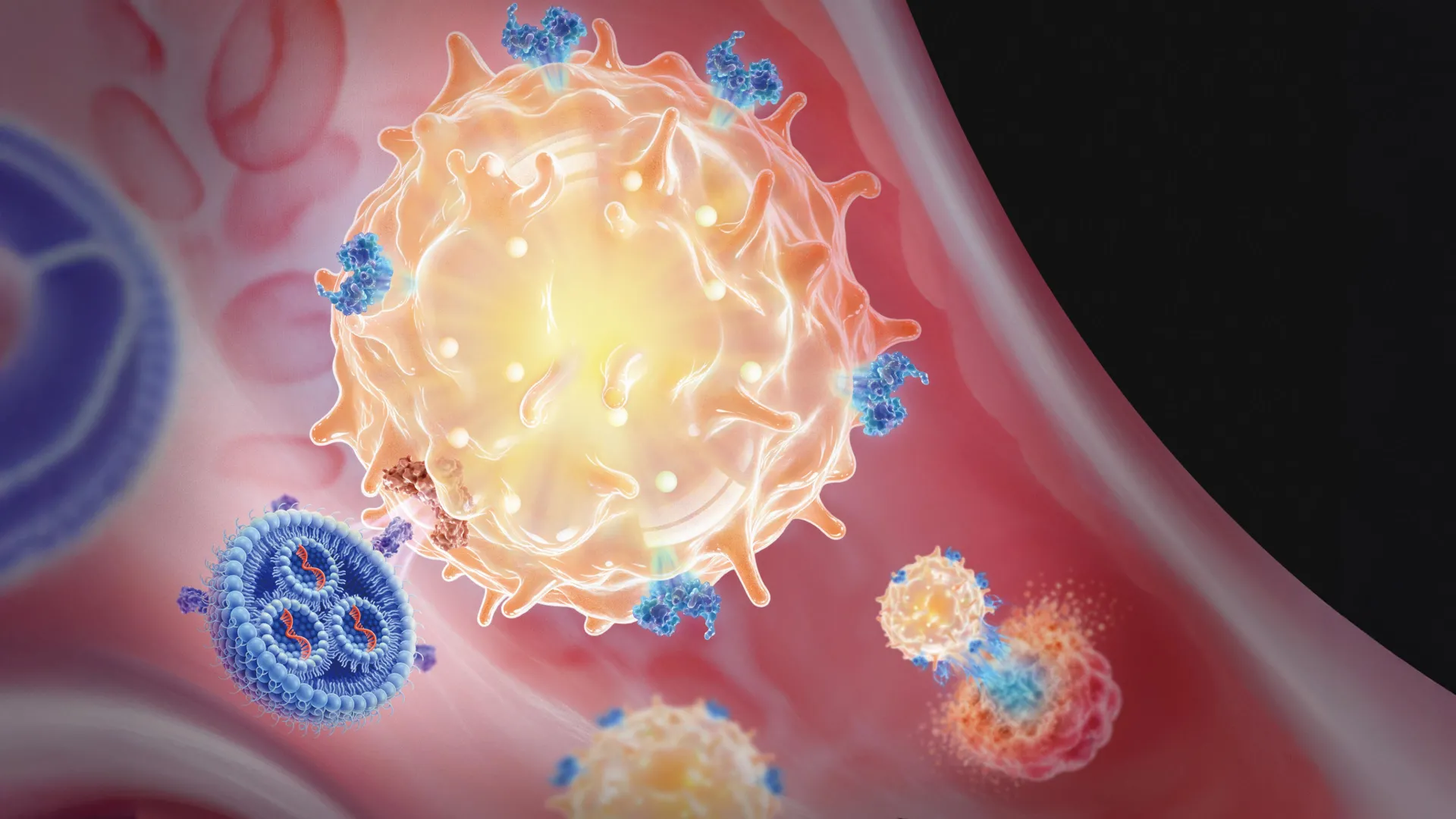
In a significant leap for the field of precision medicine, researchers at the Massachusetts Institute of Technology (MIT) have unveiled a breakthrough technique that enables the genetic reprogramming of immune cells directly within a patient’s body. This "in vivo" approach utilizes specialized lipid nanoparticles (LNPs) to deliver messenger RNA (mRNA) to natural killer (NK) cells, effectively transforming them into potent hunters of cancer and autoimmune-triggering cells. The study, published in the journal Nature Biotechnology, suggests a future where complex immunotherapies, which currently cost hundreds of thousands of dollars and require weeks of laboratory preparation, could be administered via a simple injection.
The research team, led by Professor Daniel Anderson and the legendary bioengineer Robert Langer, focused on natural killer cells—a subset of white blood cells known for their innate ability to detect and destroy infected or cancerous cells. By equipping these cells with chimeric antigen receptors (CARs) through mRNA delivery, the researchers have created a more versatile and accessible alternative to existing CAR-T cell therapies. This development addresses one of the most significant bottlenecks in modern oncology: the logistical and financial burden of personalized cell manufacturing.
The Evolution and Limitations of CAR-T Cell Therapy
To understand the magnitude of the MIT breakthrough, one must look at the current state of immunotherapy. Since the first FDA approval of a CAR-T therapy in 2017, the landscape of blood cancer treatment has been revolutionized. Currently, seven CAR-T therapies are approved for conditions such as B-cell acute lymphoblastic leukemia, various lymphomas, and multiple myeloma. These treatments involve extracting a patient’s T cells through a process called leukapheresis, shipping them to a specialized laboratory, genetically modifying them using viral vectors to express specific receptors, expanding the cell population, and then shipping them back for re-infusion.
While highly effective, this "ex vivo" (outside the body) process is fraught with challenges. The manufacturing cycle typically takes three to four weeks, a period during which some patients with aggressive cancers may see their condition deteriorate. Furthermore, the cost of these therapies often exceeds $400,000 per dose, excluding the costs of hospitalization and managing side effects like cytokine release syndrome. The MIT team’s new method bypasses this entire infrastructure, aiming to turn the human body itself into a bioreactor for therapeutic cell production.
Why Natural Killer Cells Represent a Strategic Shift
While T cells have been the primary focus of immunotherapy for a decade, they possess inherent limitations, particularly when targeting diseases that involve the T cells themselves. If a researcher attempts to use CAR-T cells to treat a T-cell malignancy, the engineered cells often end up attacking one another—a phenomenon known as "fratricide." Because the targets and the hunters share the same surface markers, the therapy essentially consumes itself before it can eliminate the disease.
Natural killer cells offer a biological solution to this problem. As a distinct lineage of the immune system, NK cells do not share the same surface markers as T cells. This allows them to be programmed to target malignant T cells without the risk of self-destruction. Professor Daniel Anderson noted that this makes NK cells uniquely suited for treating T-cell lymphomas and autoimmune disorders where specific T-cell subsets are the primary drivers of tissue damage.
"NK cells can treat these T-cell malignancies—not only T-cell cancer but also T-cell autoimmune diseases," explained Yuang Chen, an MIT postdoctoral researcher and co-lead author of the study. This versatility opens doors to treating conditions that were previously considered difficult to target with traditional CAR-T approaches.
The Mechanism: Precision Delivery via mRNA Nanoparticles
The technical heart of the MIT innovation lies in the design of the lipid nanoparticles used to carry the genetic instructions. LNPs, which gained global prominence as the delivery vehicle for COVID-19 mRNA vaccines, are essentially tiny spheres of fat that protect mRNA from degradation in the bloodstream. However, standard LNPs are typically cleared by the liver or taken up indiscriminately by various cells.
To achieve precision, the MIT team decorated the surface of their nanoparticles with antibody fragments. These fragments act as "homing beacons," specifically binding to receptors found on the surface of natural killer cells. This targeting ensures that the mRNA payload—which contains the blueprints for the Chimeric Antigen Receptor—is delivered specifically to the NK cells rather than being wasted on other cell types.
Once the LNP is internalized by the NK cell, the mRNA is released into the cytoplasm, where the cell’s own machinery begins producing the CAR proteins. These proteins then migrate to the cell surface, transforming the NK cell into a CAR-NK cell capable of recognizing specific antigens, such as CD19 (found on B cells) or CD3 (found on T cells).
Experimental Results: From Remission to Tissue Healing
The researchers conducted a series of rigorous tests in animal models to validate the efficacy of the in vivo reprogramming. In the first phase of the study, the team injected the nanoparticles into mice and found that they successfully modified approximately 80 percent of the targeted NK cell population. This high efficiency rate is a critical metric, as it demonstrates that a therapeutic concentration of engineered cells can be achieved without the need for external cell expansion.
The therapeutic potential was further tested against aggressive melanoma. In mice with advanced tumors, three out of five animals treated with the targeted LNPs achieved complete remission. The remaining two animals showed significant reductions in tumor volume compared to the control group.
In another arm of the study, the team utilized "humanized" mice—animals that have been engineered to possess a human-like immune system—to test the therapy against human T-cell lymphoma. After a series of five nanoparticle injections, the human tumors were completely eliminated. Most notably, the results were statistically comparable to the "gold standard" of ex vivo CAR-NK therapy, proving that the in vivo method does not sacrifice potency for convenience.
Beyond oncology, the researchers explored the implications for autoimmune disease. They focused on autoimmune hepatitis, a condition where autoreactive T cells attack the liver, leading to scarring and eventual organ failure. By programming NK cells to eliminate these specific T cells, the researchers observed a dramatic reversal of the disease. A single injection was sufficient to stop the immune attack, allowing the damaged liver tissue to heal.
Implications for the Future of Healthcare and Industry
The ability to generate CAR-NK cells in vivo could fundamentally democratize access to advanced immunotherapies. By shifting the manufacturing from a centralized laboratory to the patient’s bedside, the "vein-to-vein" time could be reduced from weeks to minutes.
Industry analysts suggest that if this technology successfully transitions to human trials, it could lead to "off-the-shelf" nanoparticle treatments. Hospitals would no longer need to maintain complex cell-processing labs; instead, they could stock vials of targeted LNPs that are ready for immediate administration. This would be particularly transformative for rural or under-resourced medical centers that currently lack the infrastructure to offer CAR-T therapies.
Furthermore, the use of mRNA provides a safety advantage. Unlike viral vectors used in traditional CAR-T therapy, which integrate genetic material into the cell’s DNA permanently, mRNA is transient. The CAR expression eventually fades as the mRNA degrades. While this might require multiple doses for some chronic conditions, it allows clinicians to have greater control over the duration of the treatment, potentially reducing the risk of long-term side effects or "off-target" toxicity.
Scientific and Regulatory Roadblocks
Despite the promising results in mouse models, the path to clinical application in humans remains complex. One primary concern is the potential for an immune response against the nanoparticles themselves or the antibody fragments used for targeting. Human immune systems are significantly more complex than those of mice, and researchers must ensure that repeated dosing does not trigger neutralization of the therapy.
Additionally, the regulatory pathway for in vivo gene modification is still being defined. The FDA will require extensive data on the biodistribution of the nanoparticles to ensure they do not unintentionally modify other tissues, such as the heart or reproductive organs.
Professor Robert Langer emphasized the broader potential of the platform, stating, "This study is an excellent example of the power of nano delivery systems and their ability to potentially treat cancer and other diseases." The team is now looking toward expanding the technology to target other debilitating autoimmune conditions, including multiple sclerosis and rheumatoid arthritis, where dysfunctional T cells play a central role.
Conclusion
The MIT study represents a pivotal moment in the convergence of nanotechnology and immunology. By proving that immune cells can be precisely re-engineered within the living body, the researchers have laid the groundwork for a more agile, affordable, and scalable generation of "living drugs." As the pharmaceutical industry continues to grapple with the high costs and logistical hurdles of personalized medicine, the move toward in vivo mRNA reprogramming offers a compelling vision for the next era of global healthcare. If human trials mirror the success seen in the laboratory, the transition from specialized cell therapy to a standard injection could be one of the most significant medical shifts of the 21st century.
