
 By admin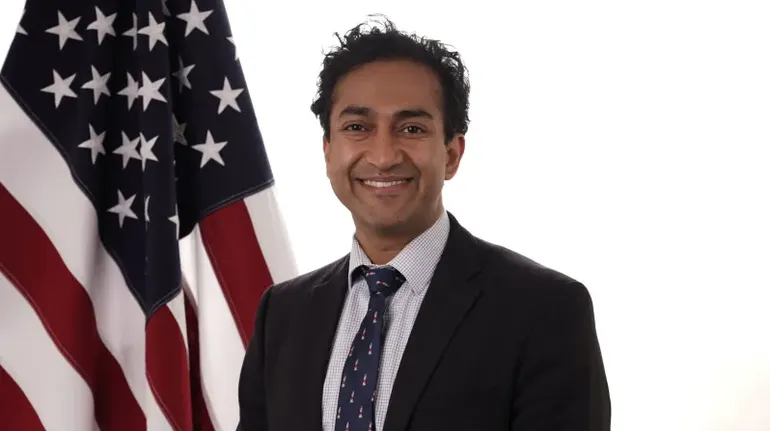
Vinay Prasad, the polarizing figure who has led the Food and Drug Administration’s critical office overseeing vaccines and gene therapies, will once again depart the agency in April, a spokesperson for the Department of Health and Human Services confirmed Friday. His planned exit marks the end of a highly contentious tenure characterized by significant policy shifts, public clashes with pharmaceutical companies, and a palpable sense of unpredictability within the biotech sector regarding regulatory standards.
Prasad’s departure, initially reported by the Wall Street Journal, follows a period of intense scrutiny and comes just days after an extraordinary public dispute between the FDA and UniQure, a Dutch gene therapy developer. This incident, which saw a high-ranking agency official anonymously criticize UniQure’s Huntington’s disease treatment and accuse the company of misrepresenting discussions, is widely believed to have precipitated the announcement. The controversy has underscored deeper tensions within the FDA and its relationship with an innovative, yet often sensitive, industry.
A Tumultuous Tenure Defined by Rigor and Controversy
Appointed as the head of the FDA’s Center for Biologics Evaluation and Research (CBER) last May, Prasad’s arrival was heralded by Commissioner Martin Makary as a "significant step forward," bringing "scientific rigor, independence, and transparency" to the office. Makary later expanded Prasad’s portfolio, naming him the FDA’s chief medical and scientific officer. However, Prasad, a prolific academic and long-standing critic of U.S. drug policies, quickly set about implementing reforms that diverged sharply from the more flexible regulatory philosophy of his predecessor, Peter Marks. Marks, who ran CBER for nearly a decade, oversaw the rapid review and approval of COVID-19 vaccines and dozens of cell and gene therapies, often championing regulatory adaptability to accelerate access to groundbreaking treatments. Prasad, conversely, had publicly condemned many of Marks’ decisions, and his appointment immediately sparked concerns among biotech companies and investors about a potential shift towards more stringent FDA standards.
His tenure saw a re-evaluation of various regulatory pathways and guidelines. Prasad helped instill what Commissioner Makary described as "long-lasting reforms," including a new pathway for bespoke therapies, shortened pivotal trial requirements, and a "national priority" drug review program. These initiatives aimed to streamline certain aspects of drug development and approval, particularly for rare and ultra-rare conditions. However, the practical application of these principles, and Prasad’s personal involvement in specific cases, frequently led to friction.
Key Policy Shifts and High-Profile Disputes
One of Prasad’s most significant early actions was establishing stricter approval guidelines for COVID-19 vaccines. This move was a direct response to what he perceived as overly lenient standards during the pandemic’s emergency phase. He notably intervened multiple times to overrule other agency reviewers, issuing narrower-than-requested clearances for COVID vaccines. In one instance, he authored a memo that warned an investigation into COVID shots could necessitate substantive changes to vaccine regulation, signaling a more conservative approach. This stance, while lauded by some for prioritizing exhaustive safety and efficacy data, drew criticism from others who feared it could impede public health responses in future crises.
Another high-profile incident involved Moderna’s flu shot. The FDA initially refused to review Moderna’s application, a decision that caused considerable public backlash and industry alarm. The agency quickly reversed course, agreeing to review the application, but the episode highlighted a perceived lack of consistency and created uncertainty about CBER’s decision-making processes under Prasad’s leadership.
Despite these instances of increased stringency, Prasad and Makary attempted to reassure the industry that the FDA would not become an insurmountable hurdle for gene therapies targeting rare conditions. At a roundtable meeting hosted by the FDA last year, Prasad emphasized that progress "is not always made in a single leap" and that the agency would "consider incremental steps forward." He also played a role in outlining the "plausible mechanism" pathway, a novel regulatory tool designed to accelerate the development of treatments for ultra-rare conditions, acknowledging the unique challenges of developing drugs for small patient populations.
However, these assurances were often overshadowed by a series of "messy disputes" that arose between CBER and drug developers. Last July, Prasad briefly left the agency following a public spat concerning the safety data of Sarepta Therapeutics’ Duchenne muscular dystrophy gene therapy, Elevidys. The controversy cast a shadow over the agency’s regulatory process for accelerated approvals, highlighting internal disagreements and external pressures.
Following his return, the FDA faced accusations from multiple drugmakers of "flip-flopping" on previous guidance. Companies reported delays or outright rejections for rare disease therapies, leading to significant frustration within the biotech community and fostering a sense of unpredictability around agency decision-making. Reports also surfaced of Prasad directly intervening in multiple cases, reportedly expressing skepticism about company data, which further fueled industry anxieties.
The UniQure Controversy: The Final Catalyst?
The crescendo of these tensions arrived in the week leading up to Prasad’s resignation announcement, culminating in the highly unusual public dispute with UniQure. The Dutch gene therapy maker, developing a treatment for Huntington’s disease, claimed that the FDA had abruptly demanded a new study before it could seek approval, representing a stark U-turn from prior discussions.
In an unprecedented move, the FDA then convened a call with journalists, during which a high-ranking agency official, speaking on condition of anonymity, publicly criticized UniQure’s therapy and accused the company of mischaracterizing its discussions with the agency. UniQure vehemently disputed this account, asserting that the FDA’s actions were inconsistent with previous guidance. The revelation of this anonymous call quickly led to widespread speculation that the official was Prasad himself. Representative Jake Auchincloss (D-MA) publicly stated on Friday that such an action, if true, would constitute a violation of agency rules and federal law by discussing a specific case in this manner. Hours after this Congressional admonishment, Prasad’s departure was announced, framed by Commissioner Makary on social media as the end of a "one-year sabbatical."
Industry Reaction and Broader Implications
The news of Prasad’s impending exit was largely met with a positive, albeit cautious, reaction from the biotech industry and financial markets. RBC Capital Markets analyst Brian Abrahams noted in a client memo that the departure was "likely to be received positively." Indeed, shares of several rare disease developers, including UniQure, saw an uptick in after-hours trading, reflecting a potential sigh of relief from investors who had been grappling with increased regulatory uncertainty. The previous months had seen a discernible cooling in investment for certain gene therapy ventures, partly attributed to concerns over the FDA’s shifting stance.
However, Abrahams also cautioned that Prasad’s departure "perpetuates the regulatory leadership volatility that has kept companies uncertain about their developmental direction and many investors on the sidelines." This sentiment highlights a deeper concern within the industry: the need for consistent and predictable regulatory pathways. While the immediate catalyst for Prasad’s exit appears to be the UniQure spat and the subsequent Congressional reaction, the underlying issue of regulatory philosophy remains pertinent. Abrahams warned that "Prasad’s replacement — even if a bit more lenient — would likely still mirror" the broader views currently held by Commissioner Makary and the agency leadership. This suggests that while a specific individual may be departing, the philosophical underpinnings of CBER’s regulatory approach might endure, continuing to shape the landscape for vaccine and gene therapy development.
The Future of CBER and Biotech Innovation
The Center for Biologics Evaluation and Research plays an indispensable role in safeguarding public health by ensuring the safety and efficacy of biological products. Its decisions have far-reaching implications, influencing everything from the pace of scientific innovation to patient access to life-saving treatments. The increasing complexity of biologics, particularly advanced cell and gene therapies, demands a regulatory framework that is both rigorous and adaptable. The challenges faced by rare disease drug developers are unique, often involving small patient populations, limited natural history data, and the imperative to accelerate therapies for conditions with no existing treatments.
The events surrounding Prasad’s tenure and departure underscore the delicate balance the FDA must strike between upholding robust scientific standards and fostering innovation. The biotech industry, particularly the gene therapy sector, relies heavily on clear and consistent guidance from the agency to plan costly and time-consuming clinical trials. Unpredictability, perceived "flip-flopping," or public disputes can deter investment, delay research, and ultimately impact patients awaiting groundbreaking therapies.
As the FDA embarks on the search for Prasad’s successor, the agency faces the critical task of restoring confidence and providing clarity to a vital sector of the pharmaceutical industry. The next leader of CBER will inherit an office at a pivotal moment, tasked with navigating rapid scientific advancements, addressing public health challenges, and refining regulatory pathways to ensure both patient safety and timely access to innovative medicines. The emphasis will likely be on establishing a regulatory environment that is transparent, consistent, and fosters open dialogue with developers, mitigating the kind of tensions that characterized the recent past. The broader implications for patients with rare diseases, the trajectory of gene therapy development, and the FDA’s reputation as a global regulatory leader will hinge on this crucial appointment and the agency’s subsequent policy direction. Commissioner Makary has stated that a successor will be named before Prasad’s April departure, signaling an intent to ensure a smooth transition, yet the underlying questions about regulatory philosophy and consistency will undoubtedly persist.
