
 By Lina carolina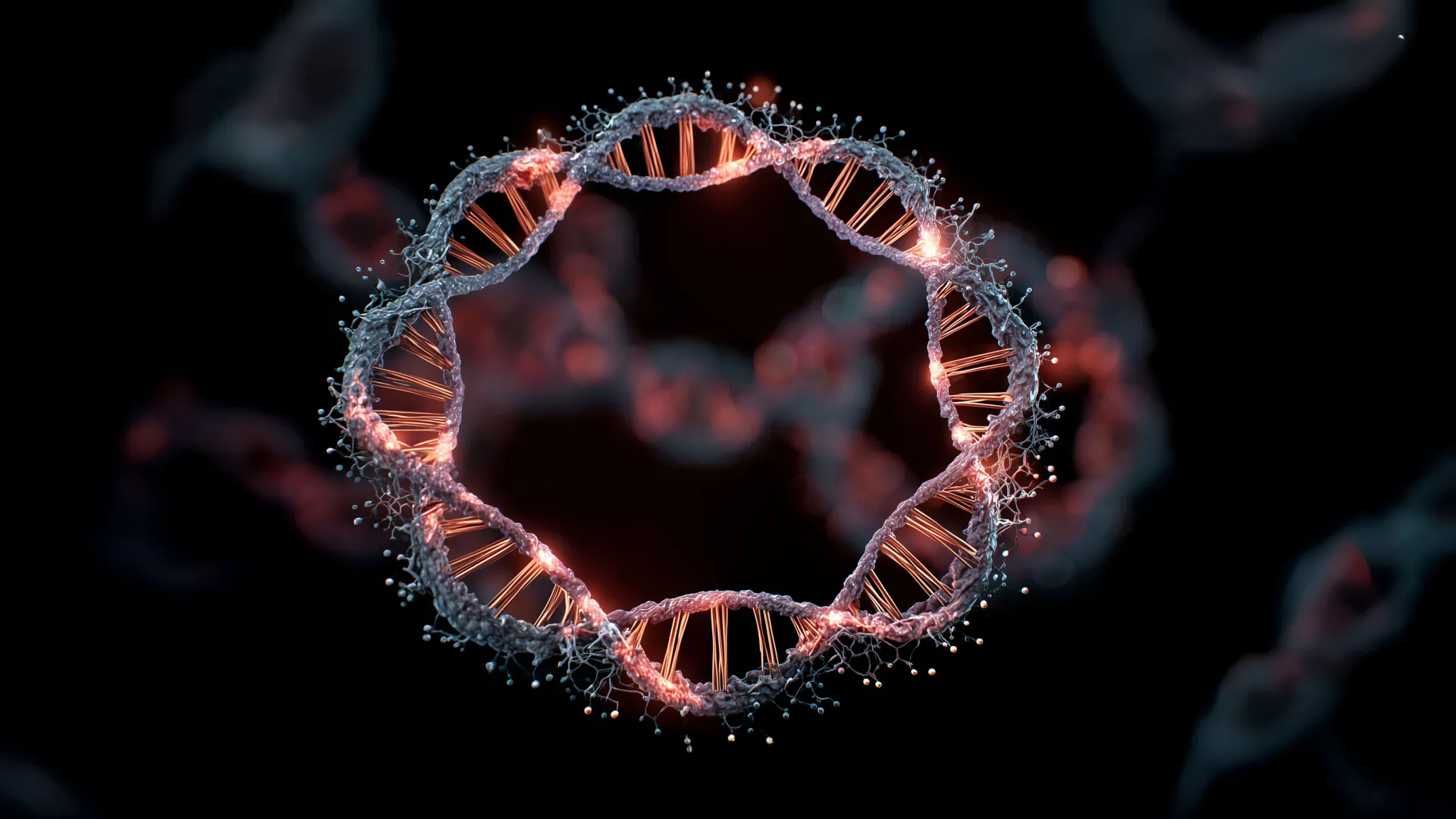
An international team of scientists has revealed how rogue rings of DNA that float outside of our chromosomes – known as extrachromosomal DNA, or ecDNA – can drive the growth of a large proportion of glioblastomas, the most common and aggressive adult brain cancer. The discovery, published on September 8 in the prestigious journal Cancer Discovery, could open the door to much-needed new approaches to diagnose glioblastoma early, track its progress, and treat it more effectively.
For decades, glioblastoma has remained one of the most formidable foes in oncology. With a median survival rate of approximately 14 months, progress in improving patient outcomes has been painstakingly slow. The aggressive nature of this brain cancer, coupled with its remarkable adaptability and resistance to current therapeutic strategies, underscores the urgent need for groundbreaking research. This latest revelation from team eDyNAmiC, a global consortium funded by Cancer Grand Challenges, offers a significant leap forward by pinpointing a key, albeit previously elusive, player in glioblastoma’s pathogenesis: ecDNA.
Unveiling the Early Architects of Glioblastoma
The findings from the eDyNAmiC team are particularly significant as they provide the first concrete evidence suggesting that ecDNA rings, often carrying potent cancer-driving genes, can manifest in the earliest stages of glioblastoma development. In some instances, these rogue DNA fragments appear even before a fully formed tumor is detectable. This precognitive presence of ecDNA may lay the groundwork for the cancer’s rapid proliferation, its uncanny ability to adapt to changing conditions, and its notorious resistance to therapeutic interventions.
The groundbreaking study was spearheaded by Dr. Benjamin Werner, a group leader at the Barts Cancer Institute, Queen Mary University of London, and Professor Paul Mischel, a distinguished figure at Stanford University. Both are integral members of Cancer Grand Challenges’ team eDyNAmiC, a $25 million international, cross-disciplinary consortium. The team also benefits from the leadership of Professor Charlie Swanton from The Francis Crick Institute, a renowned expert in cancer evolution and genome instability.
The Mystery of Extrachromosomal DNA
Extrachromosomal DNA has emerged as a crucial, yet profoundly complex and mysterious, element in a wide spectrum of adult and pediatric cancers, including glioblastoma. Its presence and role have been a subject of intense scientific inquiry, with its exact contribution to cancer initiation and progression remaining largely enigmatic. Recognizing the immense challenge this presented, Cancer Grand Challenges – a joint initiative by Cancer Research UK and the U.S. National Cancer Institute – identified understanding ecDNA as a top priority. In 2022, this led to the establishment of team eDyNAmiC, bringing together leading experts in oncology, clinical research, evolutionary biology, computer science, and mathematics. Their mission: to unravel the intricate role of ecDNA and to identify novel strategies for targeting it. The current study represents a pivotal advancement in their ambitious undertaking.
An Archaeological Approach to Tumor Evolution
To decipher the genesis and progression of glioblastoma, team eDyNAmiC and their collaborators employed a sophisticated methodology, integrating comprehensive genomic and advanced imaging data from glioblastoma patients. This was coupled with cutting-edge computational modeling to simulate the evolution of ecDNAs across both space and time within the tumor microenvironment.
"We studied the tumors much like an archaeologist would," explained Dr. Benjamin Werner, the study’s senior author. "Rather than taking a single sample, we excavated multiple sites around the tumor, allowing us to build computational models describing how they evolved. We simulated millions of different scenarios to reconstruct how the earliest ecDNAs emerged, spread, and drove tumor aggressiveness, giving us a clearer picture of the tumor’s origins and progression."
This meticulous "excavation" revealed a striking pattern: the majority of the identified ecDNA rings harbored the EGFR gene, a well-known oncogene that plays a critical role in cell growth and proliferation. Crucially, EGFR ecDNA was found to be an early actor in the cancer’s evolutionary trajectory, appearing even before the overt formation of a tumor in some individuals. Furthermore, these ecDNA rings frequently accumulated additional genetic alterations, such as the EGFRvIII variant, which are known to confer enhanced aggressiveness and resistance to conventional therapies.
A Critical Window for Intervention
The implications of these findings are profound, particularly for the early detection and treatment of glioblastoma. Dr. Magnus Haughey, a postdoctoral researcher in Dr. Werner’s group and one of the paper’s lead authors, highlighted the potential for a critical window of opportunity. "These subtle mechanisms show that there may be a window of opportunity to detect and treat the disease between the first appearance of EGFR ecDNA and the emergence of these more aggressive variants," he stated. "If scientists can develop a reliable test to detect early EGFR ecDNA – for example, through a blood test – it could enable them to intervene before the disease becomes harder to treat."
The research also confirmed that ecDNA possesses the capacity to carry multiple cancer-driving genes simultaneously. This polygenic nature means that each ecDNA profile could uniquely influence how a tumor evolves and responds to different therapeutic regimens. This observation strongly suggests the future potential for highly personalized treatment strategies, tailored to the specific ecDNA composition of an individual’s tumor.
Despite these significant advances, the researchers acknowledge that many questions remain. Future investigations are planned to explore how various treatment modalities impact the quantity and diversity of ecDNA in glioblastoma. Team eDyNAmiC is committed to continuing its work across a broader spectrum of cancer types, aiming to uncover further opportunities for earlier diagnosis, more precise disease monitoring, and the design of more effective and intelligent therapeutic interventions.
Expert Perspectives on a Paradigm Shift
The implications of this research have resonated widely within the scientific and clinical communities. Charlie Swanton, Deputy Clinical Director and head of the Cancer Evolution and Genome Instability Laboratory at The Francis Crick Institute and chief clinician at Cancer Research UK, expressed optimism about the potential impact. "These findings suggest that ecDNA is not just a passenger in glioblastoma, but an early and powerful driver of the disease," he commented. "By tracing when and how ecDNA arises, we open up the possibility of detecting glioblastoma much earlier and intervening before it becomes so aggressive and resistant to therapy. I hope this might help to drive a new era in how we diagnose, track, and treat this devastating cancer."
Professor Paul Mischel, MD, the Fortinet Founders Professor and professor and vice chair of research in the pathology department at Stanford Medicine, further elaborated on the significance of the findings. "These findings reveal an important new insight into the role of ecDNA in tumor development and progression," he stated. "Previous work from our collaborative team and other researchers has shown that ecDNA can arise early in tumor development, including at the stage of high-grade dysplasia, and it can also arise later to drive tumor progression and treatment resistance. The findings here show that in glioblastoma, there is an early event driven by ecDNA that could potentially be more actionable, raising the possibility that glioblastoma is another cancer for which earlier detection and intervention based upon ecDNA may be possible."
Dr. David Scott, Director of Cancer Grand Challenges, underscored the alignment of this research with the initiative’s core mission. "This study exemplifies the bold, boundary-pushing science Cancer Grand Challenges was created to support," he remarked. "By unravelling the evolutionary history of ecDNA in glioblastoma, team eDyNAmiC is not only deepening our understanding of one of the most devastating cancers but also illuminating new paths for earlier detection and treatment. It’s a powerful reminder that when we bring together diverse disciplines and global talent, we can begin to solve the toughest problems facing cancer research."
Broader Implications and Future Directions
The discovery that ecDNA can act as an early driver of glioblastoma has significant implications beyond immediate therapeutic strategies. It suggests a fundamental rethinking of how brain tumors initiate and progress. The ability of ecDNA to facilitate rapid genetic diversification and adaptation could explain the notorious heterogeneity observed within glioblastoma tumors, a factor that has historically contributed to treatment failure.
From a diagnostic standpoint, the prospect of detecting ecDNA through non-invasive methods, such as liquid biopsies, could revolutionize early detection. Currently, glioblastoma is often diagnosed at a late stage, when treatment options are limited and prognosis is poor. A blood test capable of identifying the presence of EGFR ecDNA or other key ecDNA markers could provide clinicians with crucial advance warning, allowing for earlier intervention and potentially improving patient survival rates.
Furthermore, understanding the specific ecDNA profiles of individual tumors could pave the way for precision medicine approaches. By analyzing the genes and mutations carried on ecDNA, oncologists might be able to predict a patient’s response to specific therapies, such as targeted agents or immunotherapies, and tailor treatment plans accordingly. This personalized approach could minimize exposure to ineffective treatments and maximize the chances of successful outcomes.
The research also opens new avenues for drug development. Therapeutics specifically designed to target ecDNA – perhaps by inhibiting its replication, its uptake by cells, or its ability to confer survival advantages – could offer novel treatment strategies for glioblastoma and potentially other cancers driven by ecDNA. The challenge will be to develop agents that are both effective against ecDNA and well-tolerated by patients, particularly given the sensitive nature of the brain.
The collaborative nature of team eDyNAmiC, bringing together diverse expertise from evolutionary biology to computer science, is a testament to the power of interdisciplinary research in tackling complex scientific challenges. Their continued exploration of ecDNA across various cancer types holds the promise of unlocking further insights into cancer’s fundamental mechanisms and accelerating the development of life-saving innovations. The journey to fully understand and harness the power of ecDNA is ongoing, but this latest discovery marks a significant and hopeful milestone in the fight against one of humanity’s most relentless diseases.
