
 By Nana O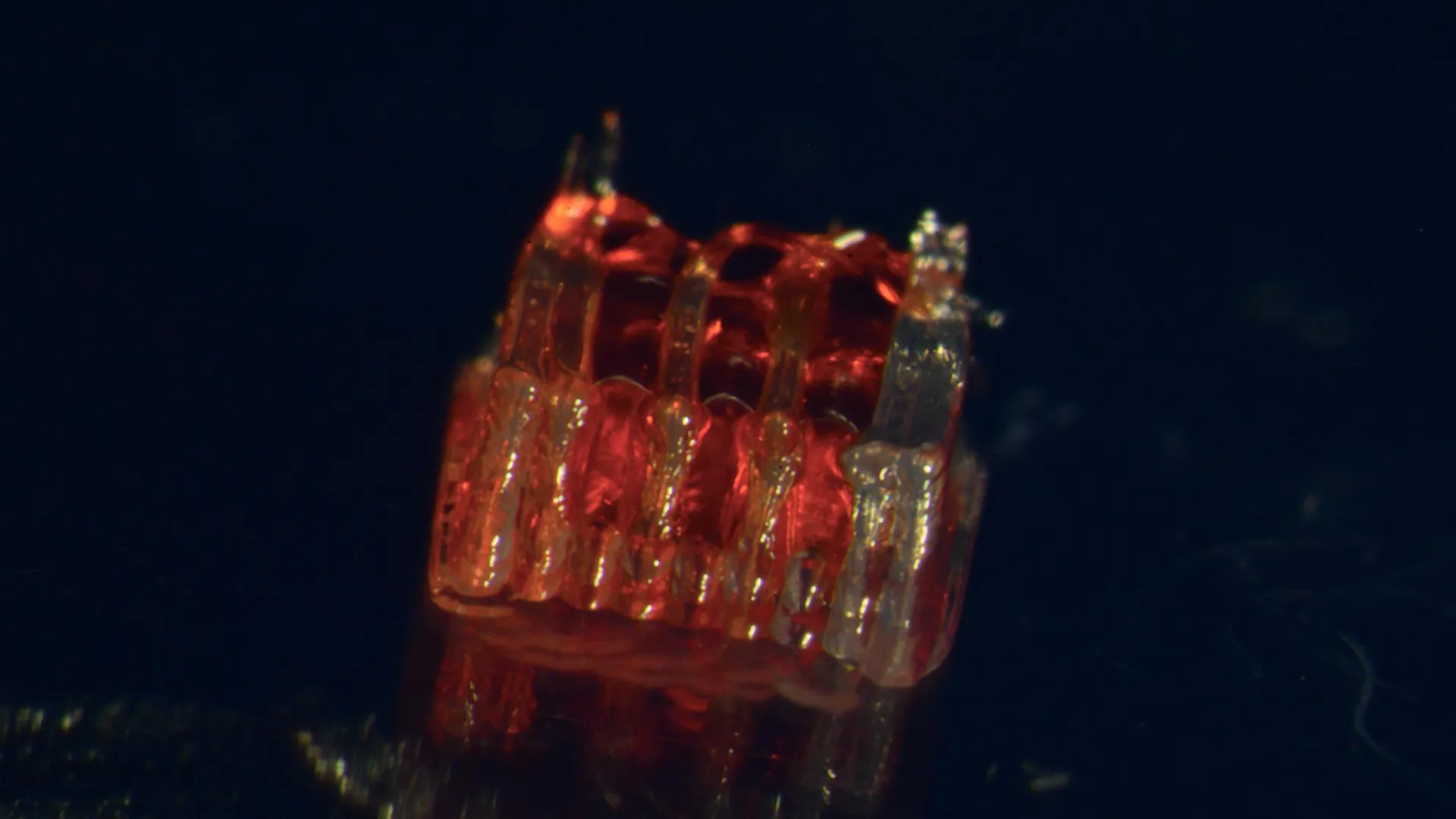
A pioneering advancement in regenerative medicine has emerged from the University of Minnesota Twin Cities, where a research team has successfully combined three cutting-edge technologies – 3D printing, stem cell biology, and lab-grown tissues – to forge a novel pathway toward spinal cord injury recovery. This groundbreaking process, detailed in the recent issue of the esteemed peer-reviewed journal Advanced Healthcare Materials, represents a significant leap forward in addressing the devastating consequences of spinal cord damage, offering a renewed beacon of hope for millions worldwide.
The Unmet Need: Addressing the Devastation of Spinal Cord Injury
Spinal cord injuries (SCIs) represent a profound public health challenge, leaving individuals with life-altering paralysis and sensory deficits. According to the National Spinal Cord Injury Statistical Center, the United States alone grapples with over 300,000 individuals living with SCIs. The stark reality is that current medical interventions offer no complete reversal of the damage, leaving a significant unmet need in treatment and recovery. A primary obstacle in SCI research is the irreversible death of nerve cells, or neurons, and the inherent inability of nerve fibers, known as axons, to regenerate across the site of injury. This failure to bridge the gap between severed neural pathways is the fundamental reason behind persistent paralysis and loss of function.
For decades, the scientific community has been in pursuit of methods to overcome this biological barrier. Early research focused on pharmacological interventions to reduce inflammation and promote survival of existing neurons. Later, strategies explored the transplantation of various cell types, including Schwann cells and neural stem cells, with varying degrees of success but often limited by poor integration and insufficient directional growth. The advent of biomaterials and tissue engineering offered new possibilities for creating supportive environments for neural regeneration, but achieving precise cellular organization and functional connectivity remained a formidable hurdle. This new research from the University of Minnesota directly confronts these challenges by providing a sophisticated, engineered solution.
A Novel Approach: The Organoid Scaffold and Directed Neural Growth
The cornerstone of this innovative treatment lies in the creation of a specialized 3D-printed framework, termed an "organoid scaffold." This intricate structure is meticulously designed with microscopic channels, acting as a precise architectural blueprint for the regrowth of neural tissue. The genius of this approach is its ability to not only provide a physical substrate but also to actively guide the regeneration process.
Once the scaffold is fabricated, it is then populated with regionally specific spinal neural progenitor cells (sNPCs). These sNPCs are a specialized type of cell derived from human adult stem cells. Crucially, these cells possess the remarkable plasticity to divide and differentiate into the specific types of mature cells that constitute the spinal cord, including neurons and supporting glial cells. This controlled differentiation is paramount for reconstructing the complex neural circuitry.
Dr. Guebum Han, a former postdoctoral researcher in mechanical engineering at the University of Minnesota and the first author of the published paper, who now contributes his expertise at Intel Corporation, explained the critical role of the 3D-printed channels. "We use the 3D printed channels of the scaffold to direct the growth of the stem cells, which ensures the new nerve fibers grow in the desired way," Dr. Han stated. "This method creates a relay system that when placed in the spinal cord bypasses the damaged area." This directed growth is a key differentiator from previous attempts, where transplanted cells often grew haphazardly, failing to establish meaningful connections. The channels act as microscopic highways, ensuring that newly forming axons extend in the correct direction to bridge the injury gap.
Pre-Clinical Success: Restoring Function in Animal Models
The efficacy of this novel approach was rigorously tested in pre-clinical trials. In their study, the research team transplanted these sophisticated organoid scaffolds into rats that had sustained completely severed spinal cords – a severe injury model that mimics the profound functional deficits seen in human SCIs.
The results were remarkably encouraging. The transplanted sNPCs within the scaffold not only survived but successfully differentiated into functional neurons. These newly formed neurons then extended their axons in both directions – rostral (towards the head) and caudal (towards the tail) – effectively bridging the severed gap in the spinal cord. Furthermore, these regenerating axons successfully formed new synaptic connections with the host’s existing, uninjured nerve circuits. This integration is vital, as it allows the newly formed neural pathways to communicate with the brain and other parts of the nervous system, thereby restoring some degree of motor and sensory function.
Over time, the study observed that the new nerve cells integrated seamlessly into the host spinal cord tissue. This gradual integration led to significant functional recovery in the experimental animals. While the precise metrics of functional recovery are detailed in the full publication, the implication is clear: the engineered scaffold and guided cell growth successfully re-established critical neural pathways, leading to a measurable improvement in motor control and coordination. This demonstrates the potential for the technology to not only repair but also to restore function lost due to severe spinal cord injury.
The Dawn of a New Era in Spinal Cord Injury Research
The implications of this research extend far beyond the laboratory setting. Ann Parr, a professor of neurosurgery at the University of Minnesota and a leading figure in the study, expressed optimism about the future potential of this work. "Regenerative medicine has brought about a new era in spinal cord injury research," Professor Parr commented. "Our laboratory is excited to explore the future potential of our ‘mini spinal cords’ for clinical translation." The term "mini spinal cords" poetically captures the essence of the engineered constructs – self-contained units designed to mimic and replace the function of damaged spinal cord segments.
This research represents a significant departure from traditional approaches that often focused on managing symptoms or providing limited support for existing neural tissue. By actively promoting regeneration and functional integration, this new method offers a paradigm shift towards true repair and recovery. The successful demonstration in a complete spinal cord transection model is particularly noteworthy, as it suggests the potential to address even the most severe forms of SCI.
Future Directions and Clinical Translation
While the findings are exceptionally promising, the research team acknowledges that this work is still in its nascent stages. The transition from successful pre-clinical studies in animal models to human clinical applications is a complex and lengthy process, involving extensive safety testing, optimization of protocols, and rigorous regulatory approvals.
However, the team is committed to advancing this technology. Their immediate goals include scaling up the production of these organoid scaffolds and continuing to refine the combination of 3D printing, stem cell biology, and tissue engineering. The ultimate aim is to develop a robust and reproducible therapeutic strategy that can be safely and effectively applied to human patients suffering from spinal cord injuries.
The potential impact of such a therapy on the lives of individuals with SCI is immeasurable. Beyond restoring motor function, successful regeneration could also lead to the recovery of sensory perception, autonomic functions (such as bladder and bowel control), and potentially alleviate chronic pain associated with nerve damage. This could dramatically improve quality of life, independence, and reduce the long-term healthcare burden associated with SCI.
A Collaborative Endeavor
This groundbreaking research was a testament to interdisciplinary collaboration, bringing together expertise from various departments and institutions. In addition to Dr. Guebum Han and Professor Ann Parr, the core research team included Hyunjun Kim and Michael McAlpine from the University of Minnesota Department of Mechanical Engineering; Nicolas S. Lavoie, Nandadevi Patil, and Olivia G. Korenfeld from the University of Minnesota Department of Neurosurgery; Manuel Esguerra from the University of Minnesota Department of Neuroscience; and Daeha Joung from the Department of Physics at Virginia Commonwealth University. This synergy of knowledge and skill was instrumental in achieving such a complex scientific breakthrough.
The financial support for this vital research was provided by significant grants, underscoring the recognized importance of this field. Funding was secured from the National Institutes of Health, the State of Minnesota Spinal Cord Injury and Traumatic Brain Injury Research Grant Program, and the Spinal Cord Society. These organizations play a crucial role in fostering innovation and accelerating scientific discovery in areas of critical unmet medical need.
A Path Forward
The full details of this transformative research can be found in the published paper, titled "3D-Printed Scaffolds Promote Enhanced Spinal Organoid Formation for Use in Spinal Cord Injury," available on the Advanced Healthcare Materials website. This publication marks a significant milestone, not just for the University of Minnesota, but for the entire field of regenerative medicine and for the countless individuals who dream of a future free from the constraints of spinal cord injury. As research continues, this innovative fusion of engineering and biology holds the promise of rewriting the narrative for spinal cord injury patients, moving from a prognosis of permanent disability towards one of potential restoration and recovery. The journey from laboratory bench to bedside is challenging, but the foundational work laid by this team offers a compelling and scientifically robust path forward.
