
 By Suherman Candra Maholtra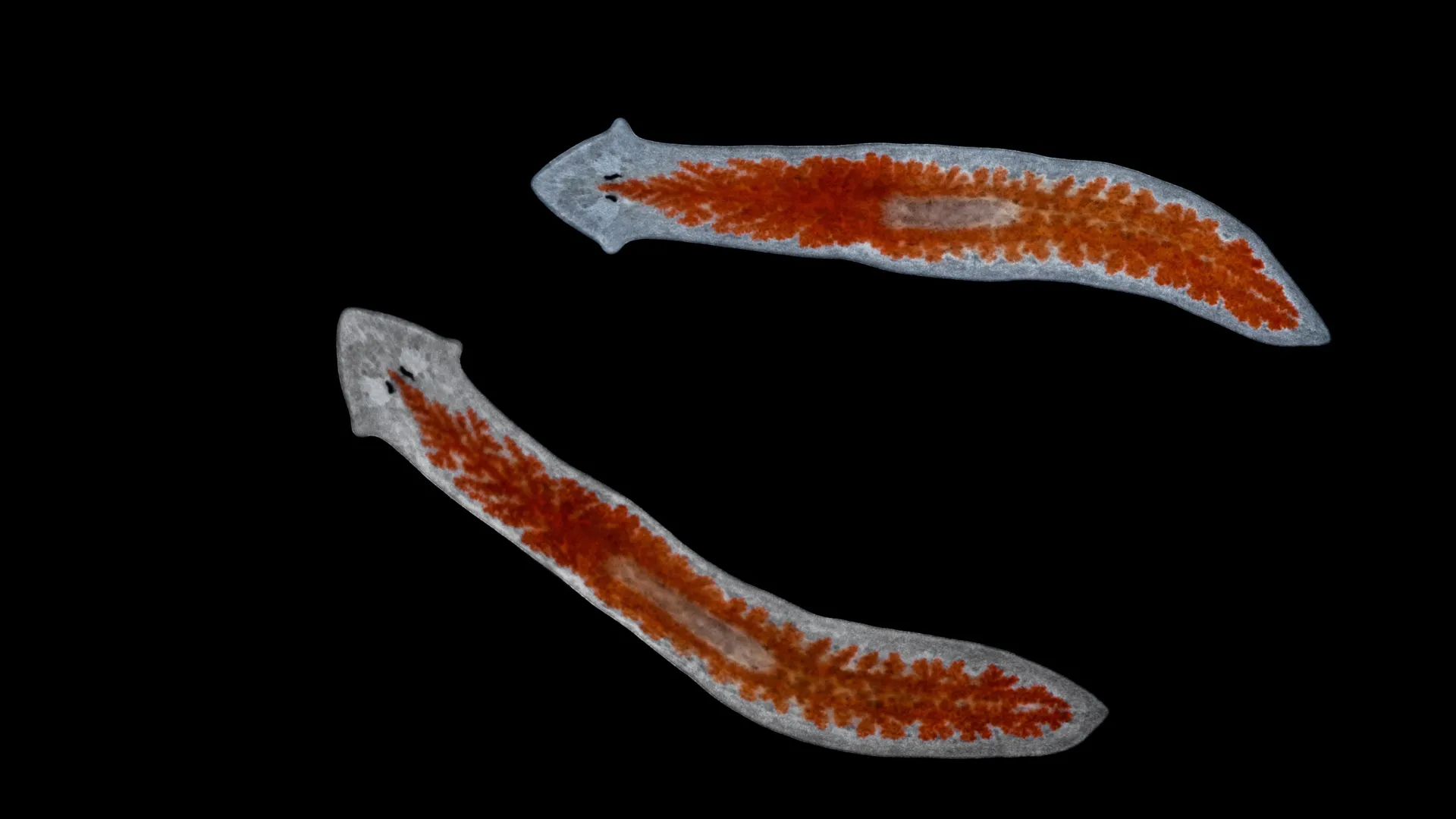
In a landmark discovery that challenges nearly half a century of established biological dogma, researchers at the Stowers Institute for Medical Research have revealed that stem cells in planarian flatworms operate with an unprecedented level of independence. Unlike the stem cells found in humans and most other complex organisms, which require a strictly controlled local environment known as a "niche" to function, flatworm stem cells appear to bypass local micromanagement. Instead, they receive their primary instructions from distant organs, specifically the intestine. This breakthrough, published in the journal Cell Reports on October 15, 2025, provides a new framework for understanding the extraordinary regenerative capabilities of planarians and offers potentially transformative insights for the future of human regenerative medicine and oncology.
The study, led by Postdoctoral Research Associate Frederick "Biff" Mann, Ph.D., in the laboratory of Stowers President and Chief Scientific Officer Alejandro Sánchez Alvarado, Ph.D., utilizes cutting-edge spatial transcriptomics to map the cellular landscape of these remarkable organisms. By identifying a previously unknown cell type and debunking the necessity of a fixed physical niche, the research team has opened a new door into how cellular fate is determined in the animal kingdom.
The Traditional Niche Model: A Biological Constraint
To appreciate the significance of this discovery, one must understand the prevailing "niche" theory that has dominated stem cell biology since it was first proposed by Ray Schofield in 1978. In humans and most vertebrates, stem cells are not autonomous. They reside in highly specialized microenvironments where neighboring cells act as "gatekeepers." These neighbors provide the physical scaffolding and chemical signaling necessary to tell a stem cell when to remain dormant, when to divide for self-renewal, and when to differentiate into a specific tissue type.
A classic example of this is the hematopoietic stem cell (HSC) found in human bone marrow. These cells are responsible for producing all the blood and immune cells in the body. However, they can only do so while nestled within their specific niche in the bone marrow. If removed from this environment or if the neighboring cells fail to provide the correct signals, the stem cells may lose their potency or, conversely, proliferate uncontrollably.
"The role of a traditional niche may be more in line with a micromanager—instructing cells, ‘You can be a stem cell, but only one particular type,’" explained Dr. Mann. In humans, this micromanagement serves a vital evolutionary purpose: it prevents "rogue" cellular behavior. When stem cells escape these local constraints and begin to divide without oversight, the result is often the formation of tumors and the progression of cancer.
Flatworms: Breaking the Evolutionary Mold
Planarian flatworms (Schmidtea mediterranea) have long been the "gold standard" for regeneration studies. These simple organisms possess an almost mythical ability to regrow any part of their body. If a planarian is cut into dozens of fragments, each piece can regenerate into a complete, fully functional worm within a matter of days. This feat is powered by a population of adult pluripotent stem cells called neoblasts, which make up about 20% to 30% of the animal’s total cell count.
The central mystery has always been how these neoblasts "know" what to become, especially when the surrounding tissue has been completely destroyed by injury. The Stowers Institute team sought to find the "niche" for these neoblasts, expecting to find a specific neighbor cell that directed their actions. What they found instead was a radical departure from the vertebrate model.
The researchers discovered that planarian stem cells do not have a fixed, contact-based niche. They are not tethered to a specific location or a specific neighbor. This independence allows them to be mobile and responsive to the needs of the entire organism, rather than just the immediate vicinity.
The Discovery of the Hecatonoblast
A pivotal moment in the research occurred during the application of spatial transcriptomics—a technology that allows scientists to see which genes are being expressed in individual cells while simultaneously preserving the information about where those cells are located in the tissue. This "map" of gene activity revealed a surprising new inhabitant of the planarian cellular world.
The team identified a large, previously undocumented cell type characterized by numerous finger-like projections extending from its surface. Because of its multi-armed appearance, the researchers named the cell the "hecatonoblast," after the Hecatoncheires, the hundred-armed giants of Greek mythology.
Initially, the proximity of hecatonoblasts to neoblasts led the team to believe they had finally found the elusive niche cell. "Because they were located so close to stem cells, we were surprised to find that hecatonoblasts were not controlling their fate nor function," said Mann. Through rigorous analysis, the researchers determined that while hecatonoblasts are neighbors, they do not dictate the stem cells’ behavior. This finding was counterintuitive; in any other animal model, such a distinct and closely situated cell would almost certainly be the primary regulator of the stem cell.
Global Signaling: The Role of the Intestine
If the immediate neighbors (like the hecatonoblasts) were not the ones in charge, where were the instructions coming from? The data pointed toward a "global" rather than "local" communication network. The strongest signals influencing the position and function of the stem cells were traced back to the planarian’s intestinal cells.
The intestine in a planarian is not just a digestive organ; it is a sprawling, branched structure that reaches nearly every part of the worm’s body. This allows it to act as a centralized command center, broadcasting signals to stem cells across the entire organism.
Co-corresponding author Blair Benham-Pyle, Ph.D., an Assistant Professor at the Baylor College of Medicine and former Stowers researcher, described this as a shift in perspective. "I tend to think about this as local versus global communication networks," Benham-Pyle noted. "While interactions between stem cells and their neighboring cells influence how a stem cell reacts immediately, distant interactions may control how that same stem cell responds to big changes in an organism."
This global signaling mechanism is likely what permits the planarian to coordinate such complex regeneration. When a head is removed, the signals from the remaining intestinal structure provide a systemic "blueprint" that tells the stem cells to begin the specific process of cranial regeneration, regardless of where those stem cells are currently located.
Implications for Human Medicine and Cancer Research
The discovery that stem cells can function—and indeed thrive—without a traditional niche has profound implications for the field of regenerative medicine. Currently, one of the greatest hurdles in tissue engineering is creating the complex "niche" environments required to keep human stem cells alive and productive in a laboratory setting. If scientists can decode the "global" signals used by planarians, they might be able to develop new ways to stimulate human stem cells to repair damaged organs without needing to replicate the intricate local microenvironments of the body.
Furthermore, the study provides a new lens through which to view cancer. Most human tumors are thought to begin when stem cells "go rogue" and stop following the rules of their niche. By studying how planarians allow their stem cells to be independent without becoming cancerous, researchers may uncover the fundamental "safety protocols" that prevent uncontrolled growth.
"Our hope is to uncover the basic rules that guide stem cells to become specific tissues as opposed to going rogue," said Sánchez Alvarado. "The more we understand how nearby cells and overall signals in the body work together to boost the ability and power of our stem cells, the better we’ll be at creating ways to improve the body’s natural healing."
Chronology and Research Support
The study represents years of interdisciplinary collaboration at the Stowers Institute. The timeline of the project involved several key phases:
- Initial Mapping: Using single-cell sequencing to identify the diverse types of neoblasts in the planarian.
- Technological Integration: Adopting spatial transcriptomics to move beyond "cell lists" to "cell maps."
- Discovery of the Hecatonoblast: The identification of the new cell type and the subsequent functional tests that ruled it out as a traditional niche cell.
- Systemic Analysis: Identifying the correlation between intestinal gene expression and stem cell differentiation patterns.
The research was supported by a significant team of contributors, including Carolyn Brewster, Ph.D., Dung Vuu, Riley Galton, Ph.D., and several other specialists in imaging and bioinformatics. Funding for the study was provided by the National Institute for General Medical Sciences of the National Institutes of Health (NIH) under award R37GM057260, alongside institutional support from the Stowers Institute.
Conclusion: A New Frontier in Biology
The findings published in Cell Reports suggest that the "niche" is not a universal requirement for life, but rather one specific evolutionary strategy. The planarian flatworm has opted for a more dynamic, decentralized system—one that prioritizes flexibility and massive regenerative potential over the strict compartmentalization seen in mammals.
As the scientific community digests these results, the focus will likely shift toward identifying the specific molecular "messages" sent from the planarian intestine to its stem cells. If these signals can be translated into a human context, the dream of true regenerative therapy—where the body is prompted to regrow lost or damaged limbs and organs—may move one step closer to reality. For now, the humble flatworm continues to prove that it has much to teach us about the fundamental rules of life, growth, and healing.
