
 By Suherman Candra Maholtra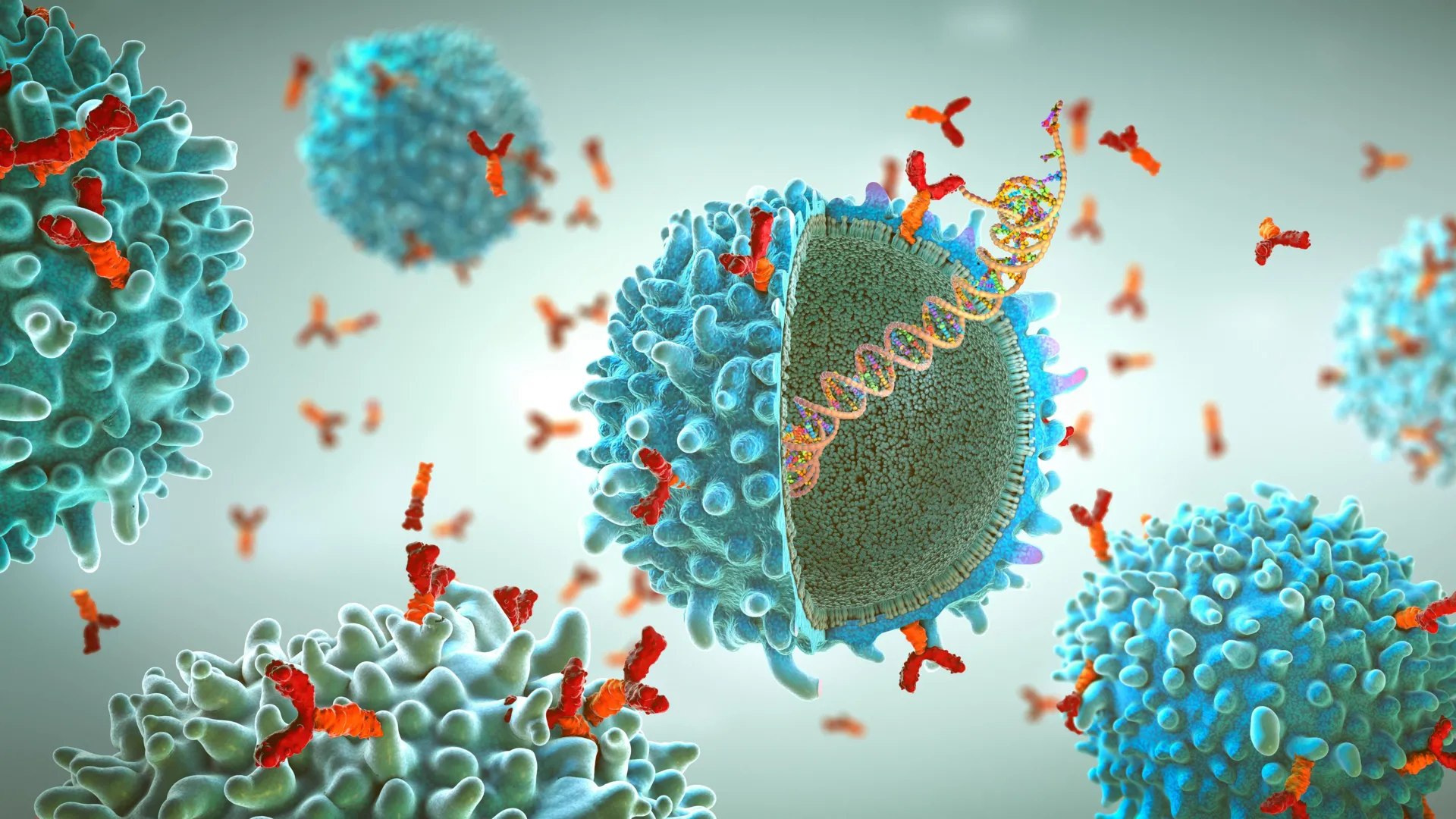
Scientists at Scripps Research, in collaboration with IAVI and several international research partners, have announced the development of a sophisticated new laboratory platform designed to revolutionize the way viral proteins are studied and targeted for vaccine development. The research, detailed in a recent publication in the journal Nature Communications, introduces a method utilizing nanodisc technology to stabilize viral surface proteins in a state that almost perfectly mimics their natural orientation on a live virus. This breakthrough addresses a long-standing limitation in structural biology and vaccinology: the inability to observe how the human immune system interacts with the sections of a virus that are normally embedded within its protective outer membrane. By providing a more accurate "biophysical snapshot" of these pathogens, the platform is expected to accelerate the design of next-generation vaccines against some of the world’s most elusive viruses, including HIV-1, Ebola, and potentially evolving strains of influenza and coronaviruses.
The Structural Challenge of Viral Glycoproteins
To understand the significance of this new platform, it is necessary to examine the fundamental architecture of a virus. Most enveloped viruses—a category that includes HIV, Ebola, SARS-CoV-2, and influenza—are covered in specialized proteins known as glycoproteins. These proteins act as the "keys" that allow the virus to unlock and enter human cells. Because they are the most exposed part of the virus, they are also the primary targets for antibodies produced by the immune system.
For decades, the standard procedure in vaccine research has involved creating synthetic, "soluble" versions of these glycoproteins in the laboratory. However, these lab-grown proteins are often truncated. To make them easier to produce and manipulate in a test tube, scientists typically remove the "transmembrane domain"—the hydrophobic tail of the protein that anchors it into the virus’s fatty lipid membrane. While this allows for easier purification, it comes at a significant cost to accuracy. Without the membrane anchor, the protein often loses its natural shape or hides critical "epitopes"—the specific parts of the protein that an antibody recognizes. This is particularly problematic for identifying antibodies that target the base of the viral spike, a region often conserved across different mutations of a virus.
The Scripps Research team, led by co-senior author William Schief, PhD, a professor at Scripps Research and executive director of vaccine design at IAVI’s Neutralizing Antibody Center, recognized that this missing structural context was a major bottleneck in vaccine efficacy. The new nanodisc platform serves as a bridge, reintroducing the membrane environment to the study of these proteins without the risks associated with handling live, infectious viruses.
Engineering the Nanodisc Platform
The core of this innovation lies in nanodisc technology. Nanodiscs are synthetic, disc-shaped models of a biological membrane. They consist of a small patch of lipid bilayer—the same fatty material that makes up human cell membranes and viral envelopes—stabilized by "membrane scaffold proteins" that wrap around the edges like a belt.
By embedding viral glycoproteins into these nanodiscs, the researchers created a "mimic" that preserves the protein’s native conformation. This setup allows the proteins to remain stable and functional in a liquid solution, making them compatible with a wide array of analytical tools. The platform is designed to be a "plug-and-play" system, where researchers can swap out the proteins of different viruses while maintaining a consistent experimental framework.
According to the study’s first author, Kimmo Rantalainen, a senior scientist in the Schief lab, the integration of existing technologies was the primary hurdle. While nanodiscs have been used in biochemistry for years, the Scripps team refined the process to ensure it was reproducible, scalable, and capable of supporting high-resolution imaging and immune cell sorting. This systematic approach ensures that the platform can move from a specialized research tool to a standard fixture in global vaccine pipelines.
Breakthroughs in HIV Research: Targeting the MPER
The researchers first applied the platform to HIV-1, a virus that has famously resisted vaccine efforts for over forty years due to its rapid mutation rate and complex structural defenses. One of the most promising targets for an HIV vaccine is a region known as the Membrane-Proximal External Region (MPER). The MPER is located at the very base of the HIV envelope protein, sitting right against the viral membrane.
Because the MPER is essential for the virus’s ability to fuse with human cells, it rarely changes, even as other parts of the virus mutate. This makes it a prime target for "broadly neutralizing antibodies" (bNAbs)—rare antibodies that can kill many different strains of HIV. However, because the MPER is so close to the membrane, it is almost impossible to study accurately using traditional soluble protein models.
Using the nanodisc platform, the Scripps team was able to capture high-resolution structural views of bNAbs binding to the MPER in its natural membrane environment. These images revealed subtle interactions between the antibodies and the lipid membrane itself, providing a level of detail that was previously invisible. This data is crucial for "structure-based vaccine design," where scientists attempt to engineer vaccine components that train the immune system to produce these specific, powerful antibodies.
Validation with Ebola and Other Pathogens
To demonstrate the versatility of the platform, the researchers also tested it with the Ebola virus glycoprotein. Ebola represents a different set of challenges; while it does not mutate as quickly as HIV, its outbreaks are sporadic and deadly, requiring a vaccine that provides robust and immediate protection. The study confirmed that the nanodisc platform could successfully present Ebola proteins in a way that allowed for the precise mapping of antibody binding sites.
The implications extend far beyond these two viruses. The researchers noted that the platform is ideally suited for any virus with membrane-bound proteins. This includes the spike protein of SARS-CoV-2 and the hemagglutinin protein of influenza. As new variants of these viruses emerge, the nanodisc platform could allow scientists to quickly assess whether existing antibodies—or those induced by current vaccines—can still recognize the membrane-proximal regions of the new strains.
Efficiency and the "Design-Test-Learn" Cycle
Beyond the structural insights, the nanodisc platform offers a significant logistical advantage: speed. Traditional methods for evaluating how immune cells respond to a new vaccine candidate can be incredibly time-consuming. In many cases, isolating specific B cells (the cells that produce antibodies) from a blood sample using viral proteins can take a month or more of intensive lab work.
The Scripps team demonstrated that their nanodisc system can be used as molecular "bait" to rapidly fish out these immune cells. By streamlining the process, they reduced the timeline for these experiments from several weeks to approximately seven days. This four-fold increase in speed allows researchers to test many more vaccine designs in parallel, accelerating the "Design-Test-Learn" cycle that is fundamental to scientific discovery.
"The ability to iterate quickly is what saves lives during a pandemic," noted one of the study’s contributors. "By the time you realize a vaccine candidate isn’t working, you want to have the next five versions already in the testing phase. This platform makes that possible."
Collaboration and Global Support
The development of the nanodisc platform was a massive collaborative effort, involving experts in structural biology, immunology, and computational design. In addition to the primary team at Scripps Research and IAVI, the study included contributors from Moderna Inc., a leader in mRNA vaccine technology. This collaboration highlights the growing trend of public-private partnerships in the field of biotechnology, where academic insights are paired with industrial manufacturing capabilities.
The research was supported by significant funding from the National Institute of Allergy and Infectious Diseases (NIAID), part of the National Institutes of Health (NIH), as well as the Bill & Melinda Gates Foundation. Such high-level backing underscores the global health community’s recognition that new tools are needed to overcome the limitations of traditional vaccinology.
Broader Implications for the Future of Medicine
While the nanodisc platform is currently being used as a research tool, its long-term impact on public health could be profound. By providing a more accurate way to analyze the immune response, the platform helps ensure that only the most promising vaccine candidates move forward into expensive and time-consuming clinical trials.
Furthermore, the platform offers a new way to study "immune escape." Many viruses evolve to hide their most vulnerable parts from the immune system. By studying these proteins in a membrane-like environment, scientists can better understand the "cloaking" mechanisms viruses use. This knowledge could lead to the development of "universal" vaccines that target the hidden, unchanging parts of viruses like the flu, potentially ending the need for annual shots.
As the world continues to recover from the COVID-19 pandemic and prepares for future biological threats, the "Virus glycoprotein nanodisc platform for vaccine analytics" stands as a testament to the power of structural biology. It moves the field one step closer to a future where vaccines are not just discovered by chance, but are precisely engineered to provide maximum protection against the world’s most dangerous pathogens.
The platform’s success also signals a shift toward more holistic biological modeling. By acknowledging that a protein cannot be fully understood in isolation from its environment, the Scripps team has set a new standard for vaccine research. As Dr. Schief emphasized, "If we want to understand how protective antibodies recognize a virus, we have to look at the virus as it truly exists." With this new tool in hand, the scientific community is now better equipped to do exactly that.
