
 By admin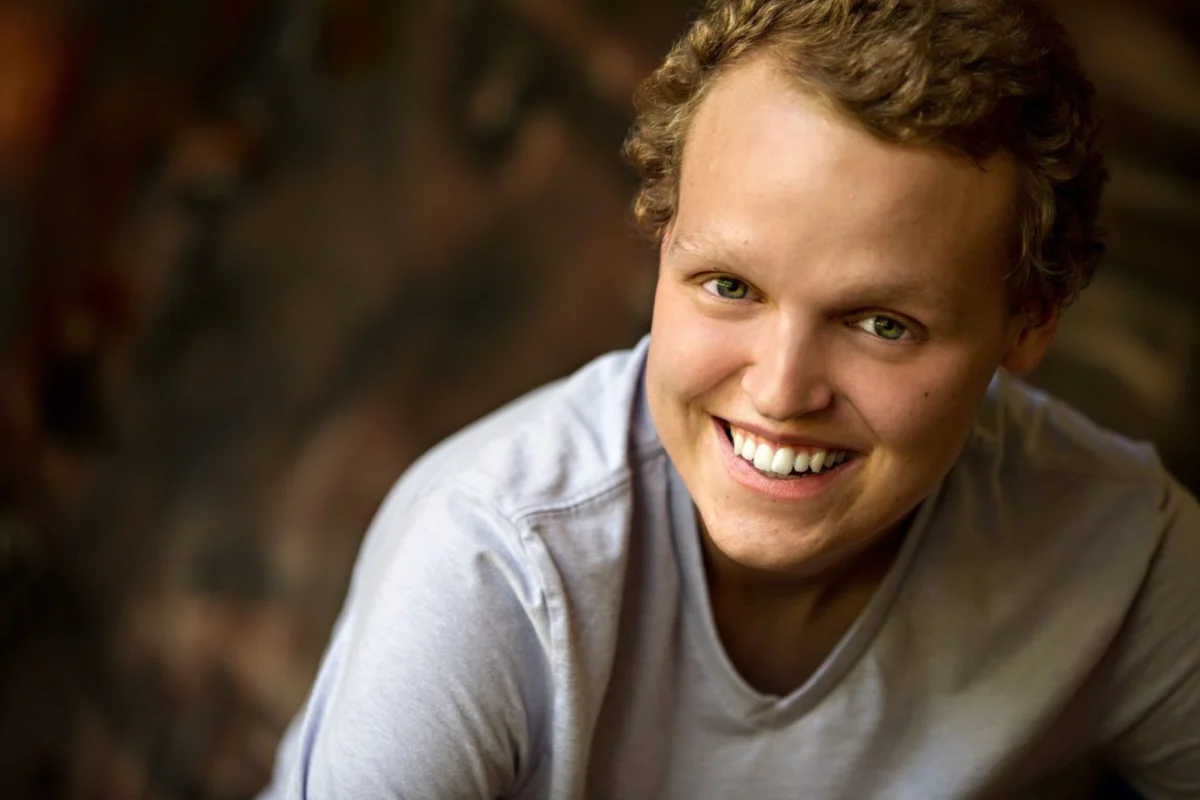
The legacy of Zach Sobiech, a Minnesota teenager who gained international recognition for his viral song "Clouds" before succumbing to osteosarcoma in 2013, has evolved from a poignant human-interest story into a cornerstone of global pediatric cancer research. Established in partnership with the Children’s Cancer Research Fund (CCRF) shortly before his death, the Zach Sobiech Osteosarcoma Fund has now surpassed $4.4 million in total contributions. This milestone comes as the fund enters its twelfth year, marking a period of scientific advancement that experts suggest has outpaced the progress made in the four decades prior to the fund’s inception.
Osteosarcoma is a rare but aggressive form of bone cancer that primarily affects children, adolescents, and young adults. For decades, the survival rate for patients with metastatic or relapsed osteosarcoma has remained stubbornly low, often cited at less than 20%. The standard of care—a combination of intensive chemotherapy and limb-sparing surgery or amputation—has seen little significant innovation since the late 1970s. However, the targeted funding provided by the Sobiech family’s initiative is beginning to shift this narrative, supporting nearly 20 research projects, clinical trials, and seed grants aimed at unraveling the complex biology of the disease.
The Genesis of a Mission: A Chronology of Impact
The Zach Sobiech Osteosarcoma Fund was born out of a specific observation made by Zach during his own treatment. While undergoing grueling chemotherapy sessions, he was struck by the sight of younger children enduring the same toxic treatments. His mother, Laura Sobiech, recalls that seeing children confined to hospital beds instead of school playgrounds fueled Zach’s desire to fund research that would lead to "safer and more effective" treatments.
The timeline of the fund’s impact reflects a strategic move from local awareness to global clinical influence:
- 2012-2013: "Clouds" becomes a global phenomenon; Zach and his family establish the fund with CCRF to ensure all proceeds from his music and related donations go directly to osteosarcoma research.
- 2013-2017: Initial grants focus on understanding the genetic drivers of osteosarcoma, particularly the mechanisms that allow it to spread from the bone to the lungs.
- 2018-2022: The fund shifts toward translational research, moving laboratory discoveries into early-phase clinical trials.
- 2023-Present: The fund joins "The Fight Osteosarcoma Together" initiative, a collaborative effort involving six funding partners to tackle treatment resistance on a multi-institutional scale.
As 2025 marks what would have been Zach’s 30th birthday year, the fund’s contributions have reached a critical mass, enabling a diverse portfolio of research that spans diagnostics, immunotherapy, and genomic mapping.
Deciphering the Biology of Metastasis and Resistance
One of the primary hurdles in treating osteosarcoma is its tendency to metastasize to the lungs. Once the cancer reaches the respiratory system, it often becomes resistant to conventional chemotherapy. Dr. David Largaespada at the University of Minnesota conducted a pivotal study between 2017 and 2019 to investigate this phenomenon. His research identified specific genes that alter tumor cell behavior as they migrate from bone tissue to the lungs. By understanding how these cells evade treatment in a new environment, Dr. Largaespada’s team has been able to test methods to increase the sensitivity of lung metastases to chemotherapy in pre-clinical models.
Simultaneously, research led by Dr. Beau Webber has focused on the "genomic chaos" inherent in osteosarcoma. Unlike some cancers that are driven by a single genetic mutation, osteosarcoma is characterized by extreme chromosomal instability. From 2022 to 2024, Dr. Webber utilized gene sequencing and computational analysis to create a first-of-its-kind model to track recurrent patterns within this instability. This work aims to find order within the chaos, identifying predictable patterns that can guide future diagnostic and treatment strategies.
Advances in Immunotherapy and Vaccine Technology
The Zach Sobiech Osteosarcoma Fund has been instrumental in exploring the potential of the body’s own immune system to fight bone cancer. Dr. Branden Moriarity of the University of Minnesota identified a genetic biomarker known as SEMA4D, which facilitates tumor growth. His laboratory’s pre-clinical testing of an antibody-based immunotherapy targeting SEMA4D led to a national clinical trial. Building on these results, a subsequent trial is planned to combine SEMA4D treatment with other pharmacological agents. Most recently, with renewed CCRF funding, Dr. Moriarity is launching a trial using engineered gamma-delta T-cell immunotherapy, a technique that attacks targets found in osteosarcoma and several other pediatric cancers.
In another innovative approach, Dr. Eugenie Kleinerman of the MD Anderson Cancer Center has demonstrated the efficacy of a dendritic cell vaccine. Using an "off-the-shelf" recombinant CD70 protein, Dr. Kleinerman’s research suggests that this vaccine is as effective as those custom-made from a patient’s own tumor samples. This discovery is significant because it offers a faster, less invasive, and more accessible treatment option for patients with relapsed or metastatic disease, who often lack the time required for the manufacturing of personalized vaccines.
Predictive Diagnostics and Comparative Oncology
The ability to predict how a tumor will behave at the time of diagnosis remains a "holy grail" of oncology. Dr. Jaime Modiano, also at the University of Minnesota, has made strides in this area by developing a blood-based test. This "liquid biopsy" can predict the likelihood of metastasis at the onset of the disease.
Interestingly, Dr. Modiano’s work leverages comparative oncology, testing the diagnostic in canines. Osteosarcoma occurs naturally in dogs and behaves very similarly to the human version of the disease. By successfully testing this blood-based diagnostic in canine patients, researchers are paving the way for a human version that could reduce the need for radiation-based imaging and help clinicians tailor the intensity of treatment—sparing some children from toxic over-treatment while identifying those who need aggressive experimental therapies immediately.
"Thinking" Therapies: The Future of CAR T-Cell Research
Traditional CAR T-cell therapies, which have revolutionized the treatment of certain blood cancers, have historically struggled to penetrate solid tumors like osteosarcoma. Dr. Alex Huang at Case Western Reserve University is currently working to overcome this barrier by designing "smarter" CAR T-cell therapies.
Dr. Huang’s research focuses on a "thinking" therapy that only activates when it detects the specific environment of a tumor. This precision prevents the immune cells from attacking healthy tissue, a common side effect of current immunotherapies. Additionally, Dr. Huang is testing an oral medication that targets the TGF-beta 1 receptor, a molecule that suppresses the immune system’s ability to fight osteosarcoma. His findings, which show the medication is non-toxic and effective in slowing tumor growth, have led to a multi-continent clinical trial aimed at preventing relapse in patients who have completed initial treatment.
Collaborative Initiatives and Broader Implications
The influence of the Zach Sobiech Osteosarcoma Fund is further amplified through its participation in "The Fight Osteosarcoma Together" initiative. This collaboration allows for the funding of high-risk, high-reward projects like those led by Dr. Mitch Cairo and Dr. Patrick Grohar. Dr. Cairo is engineering natural killer (NK) cells to improve their ability to seek and destroy osteosarcoma cells, while Dr. Grohar is targeting the MYC oncogene—a notorious driver of aggressive cancer growth—to block the pathways used by cancer to spread.
The implications of these research projects extend beyond osteosarcoma. The techniques being developed—such as "thinking" CAR T-cells, chromosomal instability mapping, and novel immunotherapy biomarkers—have the potential to be applied to other hard-to-treat solid tumors in both pediatric and adult populations.
Analysis of the Philanthropic Model
The success of the Zach Sobiech Osteosarcoma Fund highlights a growing trend in medical philanthropy: the "venture-philanthropy" model. By providing seed grants and funding early-phase trials that larger government entities like the National Institutes of Health (NIH) might consider too speculative, the fund acts as a catalyst. Once these projects demonstrate "proof of concept" through the fund’s support, they often become eligible for larger federal grants and private investment.
Furthermore, the fund’s commitment to directing 100% of every donated dollar to research ensures maximum efficiency. This transparency has been vital in maintaining donor trust and sustaining momentum over a decade.
The Path Forward
Despite the significant progress made over the last 12 years, the medical community remains clear that the work is far from complete. The survival rate for metastatic osteosarcoma has not yet seen the dramatic upward shift observed in other pediatric cancers, such as acute lymphoblastic leukemia. However, the depth of the current research pipeline suggests that a breakthrough may be imminent.
"Zach’s experience with childhood cancer, combined with our heartbreak from losing him, drives our dedication to continue his legacy," stated Laura Sobiech. "Each project supported by Zach’s Fund brings us miles closer to a reality that Zach dreamed of.”
As the Zach Sobiech Osteosarcoma Fund continues its work, it stands as a testament to the power of a single individual’s vision to mobilize global scientific resources. In the coming decade, the focus will remain on translating these laboratory breakthroughs into standardized clinical practices, with the ultimate goal of ensuring that no more children lose their childhoods to this devastating disease. Through the combination of genomic science, innovative immunotherapy, and international collaboration, the fund is not just honoring a memory—it is actively engineering a cure.
