
 By admin
The urgency of pediatric oncology often begins not in a specialized clinic, but in the mundane setting of a routine appointment. For nine-year-old Fritz and his parents, Erika and Joe, the transition from a suspected dental issue to a life-threatening oncological crisis occurred within a single afternoon. When Erika sent a text message to her husband stating, “Come here right now. Something big is happening,” she was standing in an emergency room where the typical protocols of waiting and triage had been bypassed. Fritz had been rushed into a CT scan, and a multidisciplinary team of physicians was already mobilizing. This rapid response signaled a gravity that most families never expect to encounter, marking the beginning of a multi-year battle against one of the rarest forms of childhood cancer.
The diagnostic journey began when Erika took Fritz to the dentist to address what appeared to be an impacted tooth. However, the clinical presentation was inconsistent with standard dental impaction. The dentist identified a suspicious mass and directed the family to the hospital immediately. Upon arrival, the medical team’s reaction confirmed the family’s fears. The subsequent biopsy revealed the aggressive nature of the growth; the tumor was so highly vascularized that Fritz suffered significant hemorrhaging during the procedure, losing nearly a liter of blood and requiring an emergency transfusion. The final pathology confirmed a diagnosis of Ewing sarcoma, a rare and aggressive primary bone cancer.
Clinical Profile of Ewing Sarcoma and the Rarity of Fritz’s Case
Ewing sarcoma is a high-grade malignant small round blue cell tumor. It is the second most common bone tumor in children and adolescents, yet it remains statistically rare, accounting for approximately 1% of all pediatric cancers. According to data from the National Cancer Institute (NCI), the incidence rate is roughly one case per one million people in the United States annually. However, Fritz’s specific presentation placed him in a category of extreme rarity.
While Ewing sarcoma typically manifests in the long bones of the legs or arms, or within the pelvis, Fritz’s tumor originated in his jaw. Primary Ewing sarcoma of the mandible or maxilla represents less than 1% of all Ewing cases. This “rare within the rare” status presented unique challenges for his surgical and oncological teams, requiring a highly customized treatment plan that balanced aggressive eradication of the cancer with the need to preserve vital facial structures and airway integrity.

The biological hallmark of Ewing sarcoma is a specific genetic translocation, most commonly involving the EWSR1 gene on chromosome 22 and the FLI1 gene on chromosome 11. This translocation creates a fusion protein that acts as an aberrant transcription factor, driving the uncontrolled growth of the tumor. Because of the aggressive nature of these cells, the standard of care involves a "heavy-hitting" combination of systemic chemotherapy, surgery, and sometimes radiation.
A Comprehensive Treatment Chronology
Fritz’s medical odyssey involved some of the most intensive interventions available in modern pediatric oncology. The primary objective was twofold: local control of the primary tumor site and systemic eradication of potential micrometastases.
Surgical Intervention: The Fibula Free Flap
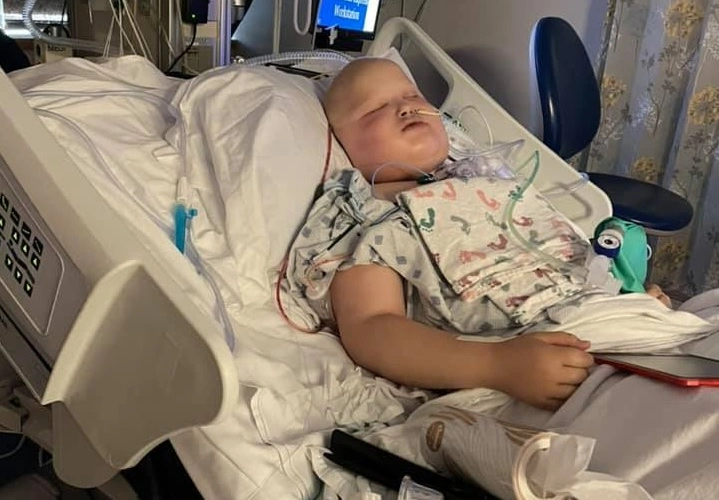
To achieve local control, surgeons had to perform a radical resection of the affected area. This involved removing more than two-thirds of Fritz’s jawbone. To reconstruct the mandible, the surgical team utilized a complex procedure known as a fibula free flap. In this surgery, a portion of the fibula (the smaller bone in the lower leg) is harvested along with its blood supply and reshaped to mimic the jawbone. This bone is then transplanted into the face, and the blood vessels are microsurgically reconnected to vessels in the neck. This procedure is arduous, often lasting ten to twelve hours, and requires a prolonged recovery period as the patient learns to swallow and speak with a reconstructed jaw.
Chemotherapy: The "Red Devil"
Following surgery, Fritz underwent months of intensive chemotherapy. Central to his regimen was Doxorubicin, a potent anthrocyclic antibiotic often referred to in clinical circles as the “Red Devil” due to its distinctive bright red color and its notorious toxicity. While Doxorubicin is highly effective at killing cancer cells by intercalating DNA and inhibiting topoisomerase II, it carries significant risks, including acute and long-term cardiotoxicity. For a growing child, the administration of such powerful agents requires constant monitoring of heart function and organ health.
Airway Reconstruction
The proximity of the tumor to the respiratory tract necessitated further intervention. Fritz underwent a complex airway reconstruction surgery to ensure that his breathing would not be compromised by the structural changes resulting from the tumor and subsequent jaw reconstruction. Throughout these procedures, Fritz’s family noted his resilience, maintaining a sense of humor and a penchant for pranks even while navigating the profound physical toll of the "Red Devil" and major reconstructive surgeries.
The Long-Term Reality of Survivorship
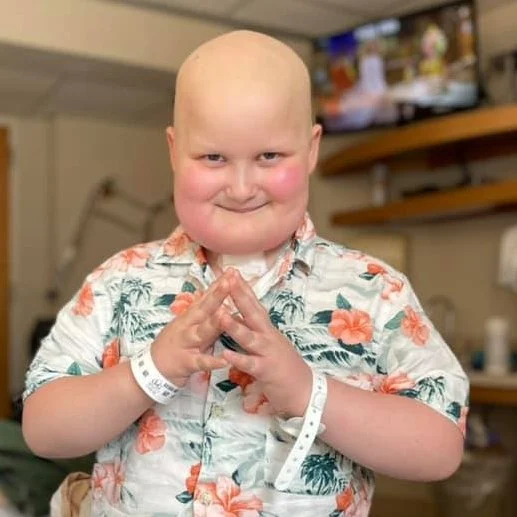
Today, Fritz’s diagnostic scans show No Evidence of Disease (NED), a milestone that represents a significant victory in the fight against Ewing sarcoma. However, the medical community is increasingly focusing on the "cost of the cure." For pediatric survivors, the end of active treatment is often the beginning of a lifelong journey of managing late effects.
Erika noted the stark transition in Fritz’s daily life: “He went from a kid who took a Flintstones vitamin to a kid who takes medications most people don’t encounter until much later in life.” Fritz’s current medical regimen involves a rotating schedule of specialists, including:
- Oncologists: To monitor for recurrence and long-term blood health.
- Endocrinologists: To manage hormonal imbalances often caused by intensive chemotherapy and radiation.
- Surgeons: To monitor the integrity of the jaw reconstruction and leg bone health.
- Sleep Medicine Specialists: To address disruptions in sleep patterns caused by physiological changes and medication side effects.
These "late effects" are a primary concern in pediatric oncology. Research indicates that by age 50, more than 99% of childhood cancer survivors will have a chronic health problem, and 80% will have a severe or life-threatening condition resulting from their childhood treatment. This reality underscores the urgent need for "targeted therapies"—treatments that can kill cancer cells without damaging the surrounding healthy tissue and developing organs of a child.
The Funding Gap and the Role of Private Philanthropy
One of the most critical challenges in the landscape of pediatric cancer is the disparity in research funding. The National Cancer Institute (NCI) allocates approximately 4% of its annual budget to pediatric cancer research, with the vast majority of federal funding directed toward adult cancers. Because pediatric cancers like Ewing sarcoma are rare, they are often not seen as profitable ventures for major pharmaceutical companies to develop new drugs.
This creates a "funding gap" that must be filled by private philanthropy and specialized organizations. The Children’s Cancer Research Fund (CCRF) is one such organization that focuses on high-risk, high-reward research that might otherwise go unfunded. Fritz has been named the 2026 Glamorama Ambassador, a role that helps bring public attention to the necessity of private support for childhood cancer research.
According to Joe, Fritz’s father, the community’s role is indispensable. “It takes a community of people who say, ‘our kids deserve better,’ and then help make it happen,” he stated. This sentiment is backed by recent progress; CCRF-funded research into Ewing sarcoma has recently contributed to the launch of a major clinical trial. This trial is exploring targeted treatments designed to attack the specific genetic drivers of Ewing sarcoma, potentially offering future patients a path to recovery that involves fewer debilitating side effects than the traditional "Red Devil" regimen.
Analysis of Implications for Future Care
The story of Fritz highlights a pivotal shift in the field of pediatric oncology. The first era of cancer treatment was defined by "survival at any cost," utilizing broad-spectrum poisons and radical surgeries to save lives. The current era is transitioning toward "precision medicine."
The implications of Fritz’s case and others like it are twofold:
- Diagnostic Vigilance: Fritz’s case emphasizes the importance of diagnostic awareness among non-oncological professionals, such as dentists. Early detection of unusual masses in children can be the difference between a treatable localized tumor and metastatic disease.
- The Necessity of Survivorship Clinics: As more children survive rare cancers, the healthcare system must evolve to provide comprehensive "survivorship clinics" that offer integrated care across multiple specialties to manage the lifelong side effects of treatment.
As Fritz enters his teenage years, he continues to face the physical and emotional challenges of his journey. His role as a Glamorama Ambassador serves as a reminder that while the "red carpet" of the emergency room is a sign of crisis, the red carpet of philanthropy and research is a sign of hope. The ongoing support for organizations like the Children’s Cancer Research Fund ensures that the next generation of children diagnosed with rare malignancies may have access to treatments that are as kind to their bodies as they are tough on their cancer.
