
 By Nana O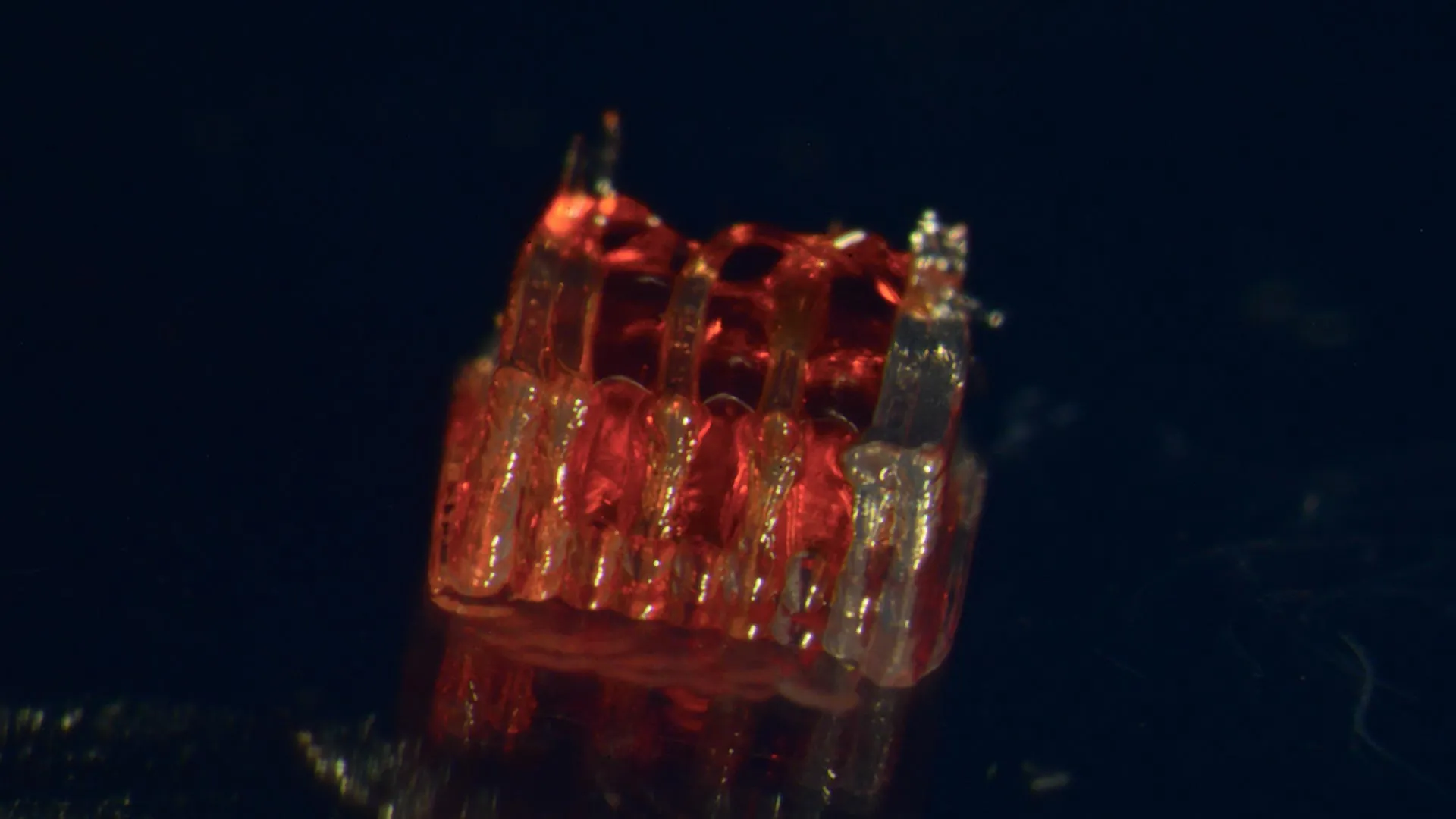
A groundbreaking advancement in regenerative medicine offers a new beacon of hope for individuals affected by spinal cord injuries. For the first time, a multidisciplinary research team at the University of Minnesota Twin Cities has successfully combined the innovative capabilities of 3D printing, the regenerative power of stem cell biology, and the intricate development of lab-grown tissues to create a novel approach for spinal cord injury recovery. This pioneering work, detailed in a recent publication in the esteemed peer-reviewed scientific journal Advanced Healthcare Materials, marks a significant stride towards addressing a devastating medical challenge with limited current treatment options.
The Unmet Need: Spinal Cord Injury and the Quest for Regeneration
Spinal cord injuries (SCIs) represent a profound and life-altering medical crisis. According to the National Spinal Cord Injury Statistical Center, over 300,000 individuals in the United States are living with the consequences of these injuries, which often result in paralysis and a significant loss of bodily function. The stark reality is that current medical interventions offer no definitive cure, leaving patients and their families with limited avenues for recovery. A primary obstacle in reversing the damage lies in the fundamental biological processes that occur after an SCI. Nerve cells, essential for transmitting signals between the brain and the rest of the body, are highly susceptible to damage and death following trauma. Furthermore, unlike some other tissues in the body, nerve fibers in the central nervous system possess a very limited capacity for self-regeneration across the site of injury, creating a physical and biological barrier to functional restoration. This new research directly confronts these critical challenges, aiming to bridge the gap created by nerve cell death and the failure of nerve fiber regrowth.
The Innovative Methodology: A Symbiotic Fusion of Technologies
The core of this revolutionary approach lies in the creation of a sophisticated, custom-designed framework. The researchers meticulously engineered an "organoid scaffold" using advanced 3D printing technology. This scaffold is not merely a passive support structure; it is intricately designed with microscopic channels, a crucial feature that dictates the precise architecture of the developing tissue. These precisely fabricated channels serve as a blueprint, guiding the subsequent biological processes with remarkable accuracy.
Once the scaffold is fabricated, it is then populated with regionally specific spinal neural progenitor cells (sNPCs). These sNPCs are derived from human adult stem cells, a versatile cell type possessing the remarkable ability to divide and differentiate into a wide array of specialized mature cells. By using sNPCs, the researchers harness the body’s innate regenerative potential, directing these adaptable cells towards becoming functional neurons.
"We leverage the 3D printed channels of the scaffold to meticulously direct the growth of the stem cells," explained Guebum Han, a former postdoctoral researcher in mechanical engineering at the University of Minnesota and the first author of the study, who is now with Intel Corporation. "This directed growth is paramount, as it ensures that the newly forming nerve fibers extend in the precise, desired pathways. The ultimate goal is to create a functional relay system. When this engineered construct is transplanted into the spinal cord, it effectively bypasses the damaged area, restoring neural connectivity." This statement underscores the engineered intelligence of the scaffold, moving beyond simple cell delivery to active guidance and integration.
Pre-Clinical Success: Demonstrating Efficacy in Animal Models
To rigorously test the efficacy of their innovative approach, the research team conducted critical pre-clinical trials. They transplanted these bioengineered scaffolds into rats that had sustained complete severing of their spinal cords, a severe injury model designed to mimic the challenges faced by human patients. The results of these experiments were highly encouraging and provided strong evidence of the potential of this technology.
Following transplantation, the sNPCs within the scaffolds demonstrated a remarkable capacity to differentiate into mature neurons. Crucially, these newly formed neurons extended their axons – the long, slender projections of nerve cells that transmit signals – in both directions: rostral (towards the head) and caudal (towards the tail). This bidirectional growth is essential for re-establishing communication across the severed spinal cord.
The study further revealed that these regenerating nerve fibers successfully formed new synaptic connections with the host’s existing neural circuitry. This seamless integration into the host spinal cord tissue over time was instrumental in the observed significant functional recovery in the experimental animals. The rats exhibited improvements in motor function and coordination, demonstrating the tangible impact of the restored neural pathways. This preclinical success, while early, provides a compelling proof of concept for the therapeutic potential of this novel bioengineering strategy.
A New Era in Regenerative Medicine: Expert Perspectives
The implications of this research extend beyond the immediate findings, signaling a paradigm shift in the field of spinal cord injury treatment. Ann Parr, a professor of neurosurgery at the University of Minnesota and a key figure in the research, expressed optimism about the future trajectory of this work. "Regenerative medicine has truly ushered in a new era in spinal cord injury research," Professor Parr stated. "Our laboratory is incredibly excited to explore the future potential of these ‘mini spinal cords’ as we move towards clinical translation. The ability to engineer functional neural tissue outside the body and then integrate it seamlessly into the damaged spinal cord represents a significant leap forward." The term "mini spinal cords" aptly captures the essence of the engineered constructs, highlighting their functional mimicry of native spinal cord tissue.
While acknowledging that the research is still in its nascent stages, the scientific community recognizes this development as a crucial step in the ongoing quest for effective SCI treatments. The team’s focus is now on scaling up production capabilities and further refining the combination of these advanced technologies, with the ultimate goal of translating this promising laboratory breakthrough into viable clinical applications for patients.
Broader Implications and Future Directions
The implications of this research are far-reaching. Beyond spinal cord injuries, the principles of using 3D-printed scaffolds to guide stem cell differentiation and tissue regeneration could be applicable to a wide range of neurological disorders and injuries, including stroke, traumatic brain injury, and neurodegenerative diseases. The ability to precisely control the architecture and cellular composition of engineered tissues opens up unprecedented possibilities for creating functional biological replacements for damaged or diseased organs.
The chronological development of this research project, though not explicitly detailed in the initial report, likely involved years of foundational work in stem cell biology, biomaterials science, and advanced manufacturing techniques. The convergence of these disciplines, facilitated by collaborative efforts within the University of Minnesota, has culminated in this significant milestone. Future research will undoubtedly focus on optimizing the scaffold materials for biocompatibility and biodegradability, fine-tuning the differentiation protocols for sNPCs to ensure the generation of diverse neuronal subtypes, and conducting more extensive long-term studies in larger animal models to further validate safety and efficacy. The journey from laboratory discovery to clinical application is often lengthy and complex, but the current findings provide a robust foundation for optimism.
A Collaborative Endeavor: The Research Team and Funding
This pioneering research is a testament to the power of interdisciplinary collaboration. The dedicated team behind this groundbreaking work includes:
- Guebum Han (Mechanical Engineering, University of Minnesota; currently Intel Corporation)
- Hyunjun Kim (Mechanical Engineering, University of Minnesota)
- Michael McAlpine (Mechanical Engineering, University of Minnesota)
- Nicolas S. Lavoie (Neurosurgery, University of Minnesota)
- Nandadevi Patil (Neurosurgery, University of Minnesota)
- Olivia G. Korenfeld (Neurosurgery, University of Minnesota)
- Manuel Esguerra (Neuroscience, University of Minnesota)
- Daeha Joung (Physics, Virginia Commonwealth University)
- Ann Parr (Neurosurgery, University of Minnesota)
The critical advancement of this research was made possible through substantial financial support from several key organizations, underscoring the national importance of addressing spinal cord injuries. Funding was provided by the National Institutes of Health (NIH), the State of Minnesota Spinal Cord Injury and Traumatic Brain Injury Research Grant Program, and the Spinal Cord Society. These investments highlight a collective commitment to fostering innovation in neuro-regeneration.
The Path Forward: From Lab Bench to Bedside
The full findings of this transformative study are published in the scientific journal Advanced Healthcare Materials, under the title "3D-Printed Scaffolds Promote Enhanced Spinal Organoid Formation for Use in Spinal Cord Injury." While the road to clinical application is still long and will require extensive further research, development, and rigorous testing, this breakthrough represents a pivotal moment. It offers a tangible and scientifically sound pathway towards a future where the devastating consequences of spinal cord injuries may no longer be irreversible, potentially restoring mobility and improving the quality of life for millions worldwide. The integration of 3D printing, stem cell technology, and advanced tissue engineering has opened a new chapter in the fight against paralysis, offering a compelling glimpse into the future of regenerative medicine.
