
 By Suherman Candra Maholtra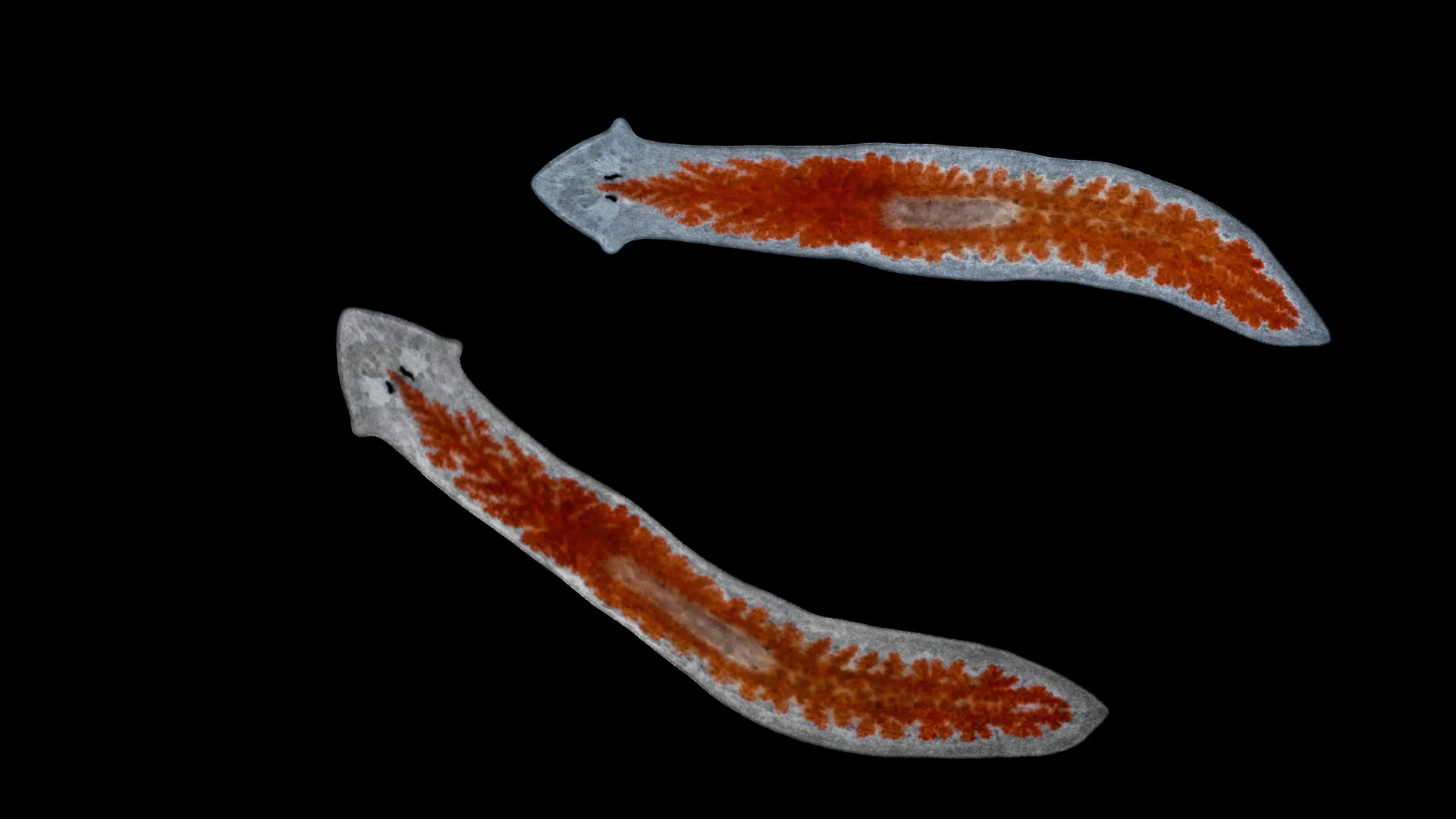
In a discovery that fundamentally alters the prevailing understanding of regenerative biology, researchers at the Stowers Institute for Medical Research have identified a unique mechanism by which planarian flatworms regulate their stem cells. Unlike the majority of multicellular organisms, where stem cells are governed by the immediate influence of neighboring cells within a specialized "niche," planarian stem cells appear to operate with a high degree of independence, drawing their instructions from distant tissues rather than their closest neighbors. This finding, published in the journal Cell Reports on October 15, 2025, challenges a cornerstone of developmental biology and offers a new perspective on how complex tissues might be repaired or replaced in humans.
The study, led by Postdoctoral Research Associate Frederick "Biff" Mann, Ph.D., in the laboratory of Stowers President and Chief Scientific Officer Alejandro Sánchez Alvarado, Ph.D., utilized advanced spatial transcriptomics to map the cellular landscape of the planarian. For decades, the biological consensus has held that stem cells exist in a fixed microenvironment, or niche, which acts as a "micromanager" to dictate cell division and differentiation. By demonstrating that planarian stem cells can function effectively without such localized constraints, the research team has opened a new frontier in the study of totipotency—the ability of a single cell to give rise to all the cell types in an organism.
Challenging the Traditional Stem Cell Niche Paradigm
In most complex organisms, including humans, stem cells are highly regulated to ensure they only produce the necessary number and type of cells. A classic example is the hematopoietic stem cell niche located within the bone marrow. Here, physical contact with surrounding stromal cells provides the chemical signals required for the stem cells to self-renew or differentiate into various blood components. Without this specific environment, human stem cells often fail to function correctly or can proliferate uncontrollably, potentially leading to the formation of tumors.
"Understanding how stem cells are regulated in living organisms is one of the great challenges in the fields of stem cell biology and regenerative medicine," said Sánchez Alvarado. "This finding challenges our concept of a stem cell ‘niche’ and may significantly advance our understanding of how to control stem cells’ abilities to restore damaged tissues."
The planarian flatworm, specifically the species Schmidtea mediterranea, has long been the gold standard for regeneration studies due to its near-mythical ability to regrow any part of its body. Whether decapitated or sliced into dozens of fragments, each piece can reorganize itself into a complete, functional worm within roughly two weeks. This feat is powered by a population of adult stem cells known as neoblasts, which comprise approximately 20% to 30% of the animal’s total cell count.
Spatial Transcriptomics and the Discovery of the Hecatonoblast
To investigate the relationship between these neoblasts and their environment, Mann and his team employed spatial transcriptomics—a cutting-edge technique that allows researchers to visualize gene activity within the physical context of the tissue. By analyzing the genetic signatures of thousands of individual cells while preserving their spatial coordinates, the team was able to identify which cells were communicating with one another.
During this mapping process, the researchers identified a previously unknown cell type characterized by its unique morphology. These large cells featured numerous fingerlike projections extending from their surfaces, reminiscent of the "Hundred-Handed Ones" from Greek mythology. Consequently, the team named these cells "hecatonoblasts."
"Because they were located so close to stem cells, we were surprised to find that hecatonoblasts were not controlling their fate nor function, which is counterintuitive to a typical stem cell-niche connection," Mann explained. The proximity of the hecatonoblasts to the neoblasts initially suggested a traditional niche relationship, but the transcriptomic data revealed a lack of the expected signaling pathways that usually define such interactions.
Distant Signaling: The Role of the Intestine
If the immediate neighbors were not providing the instructions, the researchers had to look further afield. The data pointed to a surprising source of regulation: the planarian’s intestinal cells. Despite being physically separated from many neoblasts, the intestine appeared to be the primary driver of stem cell positioning and functional identity.
This suggests that planarians utilize a "global" communication network rather than a "local" one. Co-corresponding author Blair Benham-Pyle, Ph.D., an Assistant Professor at the Baylor College of Medicine and former Stowers Postdoctoral Research Associate, noted the importance of this distinction. "I tend to think about this as local versus global communication networks," Benham-Pyle said. "While interactions between stem cells and their neighboring cells influence how a stem cell reacts immediately, distant interactions may control how that same stem cell responds to big changes in an organism."
This global signaling mechanism may be the key to the planarian’s regenerative prowess. In a traditional niche model, if the niche itself is destroyed by injury, the stem cells lose their "instruction manual" and cannot effectively rebuild the tissue. In the planarian model, because the instructions are broadcast from distant, surviving tissues like the intestine, the neoblasts can remain functional and mobile, migrating to wherever they are needed to begin the reconstruction process.
Implications for Oncology and Regenerative Medicine
The study’s findings have profound implications for the study of cancer. In humans, many tumors are thought to originate when stem cells "go rogue," ignoring the regulatory signals of their niche and dividing without restraint. By studying how planarian stem cells maintain their identity and function without a fixed niche, researchers hope to uncover the fundamental "rules" of cellular behavior that prevent uncontrolled growth.
"Our hope is to uncover the basic rules that guide stem cells to become specific tissues as opposed to going rogue, as most tumors in humans begin when stem cells stop following these rules," said Sánchez Alvarado. If scientists can understand how planarians maintain such a large, potent population of stem cells without them becoming cancerous, those same principles could potentially be applied to human therapies.
Furthermore, the discovery suggests that the "niche" may not be a requirement for stem cell potency but rather a specialized evolutionary adaptation found in more complex, less regenerative animals to limit stem cell activity. "The role of a traditional niche may be more in line with a micromanager—instructing cells, ‘You can be a stem cell, but only one particular type,’" Mann explained. "However, we’ve now shown having a normal niche may not be essential for stem cells to work."
A New Framework for Healing
The research at Stowers indicates that the planarian’s environment is not a static backdrop but a dynamic system. Sánchez Alvarado described the stem cell environment as being composed of "friends" that the stem cells and their progeny create as they move toward differentiation. This fluid, decentralized system allows for a level of flexibility that is largely absent in mammalian biology.
The timeline of this research reflects a decade-long effort to modernize the tools used to study planarians. The integration of high-resolution imaging, single-cell sequencing, and now spatial transcriptomics has allowed the Stowers Institute to move beyond observing what happens during regeneration to understanding how it is coordinated at the molecular level.
The broader scientific community has reacted with significant interest to the study. Independent observers suggest that if the signaling molecules produced by the planarian intestine can be identified and synthesized, they may provide a blueprint for "boosting" the regenerative capacity of human tissues. While humans possess some regenerative abilities—such as in the liver or the lining of the gut—these are limited compared to the whole-body regeneration seen in flatworms.
Future Directions and Research Support
The team plans to further investigate the specific molecular signals sent by the intestine and how the neoblasts interpret these "long-distance" calls. Identifying the receptors on the surface of stem cells that respond to these distant cues will be a critical next step in mapping the planarian’s global communication network.
The study was a collaborative effort involving a wide range of experts. Additional authors included Carolyn Brewster, Ph.D., Dung Vuu, Riley Galton, Ph.D., Enya Dewars, Mol Mir, Carlos Guerrero-Hernández, Jason Morrison, Mary McKinney, Ph.D., Lucinda Maddera, Kate Hall, Seth Malloy, Shiyuan Chen, Brian Slaughter, Ph.D., Sean McKinney, Ph.D., Stephanie Nowotarski, Ph.D., and Anoja Perera.
Funding for the research was provided by the National Institute of General Medical Sciences of the National Institutes of Health (NIH) under award number R37GM057260, alongside significant institutional support from the Stowers Institute for Medical Research. The researchers emphasized that the findings represent a fundamental shift in how we view the "social life" of cells, suggesting that the path to advanced regenerative medicine may lie in freeing stem cells from their local constraints and learning to manage them through systemic, organism-wide signaling.
