
 By Suherman Candra Maholtra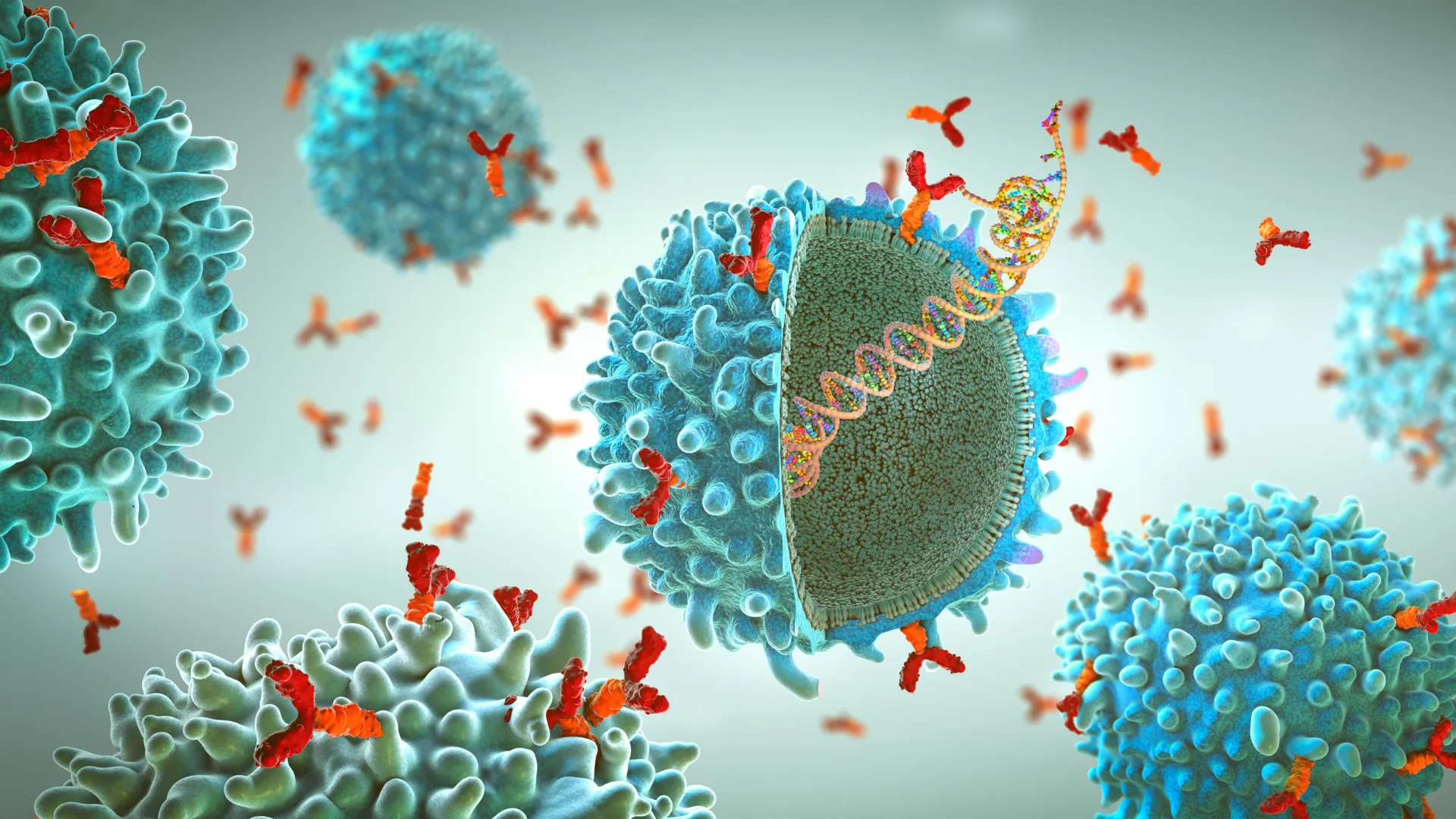
The battle against some of the world’s most resilient viruses, including HIV and Ebola, has taken a significant leap forward as researchers at Scripps Research and IAVI have unveiled a sophisticated new platform that replicates the natural environment of viral proteins. By utilizing advanced nanodisc technology, the scientific team has successfully created a method to study viral glycoproteins—the "keys" viruses use to enter human cells—in a state that closely mirrors their appearance during a real infection. This development, detailed in a recent publication in Nature Communications, addresses a long-standing limitation in structural biology and vaccine design: the inability to observe how antibodies interact with the sections of viral proteins that are normally embedded within a virus’s protective outer membrane.
The Structural Challenge in Vaccine Engineering
Viruses are essentially biological packages of genetic material encased in a lipid membrane. Protruding from this membrane are specialized proteins known as glycoproteins. These proteins are the primary targets for the human immune system; if an antibody can bind to these proteins and block them, the virus cannot enter the host cell, effectively neutralizing the threat. Consequently, the primary goal of most vaccine research is to train the immune system to recognize these glycoproteins.
However, studying these proteins in a laboratory setting has historically been fraught with technical difficulties. In their natural state, viral glycoproteins are anchored into a fatty lipid bilayer. To study them, scientists usually "truncate" the proteins, removing the hydrophobic (water-fearing) sections that sit inside the membrane so the proteins can be dissolved in water-based laboratory fluids. While this makes the proteins easier to handle and visualize, it often causes the protein to lose its native shape or hide critical regions located near the membrane. For viruses like HIV, which are notorious for their ability to mutate and evade the immune system, these missing details are often the difference between a successful vaccine candidate and a failed clinical trial.
The Nanodisc Solution: Mimicking the Viral Envelope
To bridge this gap, the research team, led by co-senior author William Schief, PhD, and first author Kimmo Rantalainen, PhD, turned to nanodiscs. These are microscopic, disc-shaped particles composed of a lipid bilayer held together by a "belt" of membrane scaffold proteins. By embedding full-length viral glycoproteins into these nanodiscs, the researchers created a "synthetic virus" surface that provides the necessary structural support for the protein.
This approach ensures that the glycoprotein maintains its "trimeric" shape—the three-part structure most common in viruses like HIV, Ebola, and influenza. Because the nanodisc provides a stable lipid environment, the researchers were able to observe the protein-membrane interface for the first time with high precision. This interface is often where the most "conserved" regions of a virus are located—parts of the virus that do not change even as it mutates, making them ideal targets for universal vaccines.
A Chronology of Progress in Vaccine Analytics
The development of this nanodisc platform is the culmination of over a decade of progress in structural biology. In the early 2000s, vaccine research largely relied on monomeric (single-unit) proteins, which were often too unstable to elicit a strong immune response. By the 2010s, the field moved toward "SOSIP trimers"—engineered versions of viral proteins that were stabilized to stay in their three-part form.
While SOSIP trimers were a major breakthrough, particularly for HIV research, they still lacked the membrane component. The 2024 introduction of the nanodisc platform represents the next stage in this evolution. This chronology reflects a broader shift in the field toward "structure-based vaccine design," where the atomic-level map of a virus dictates how a vaccine is built, rather than relying on the traditional method of using weakened or killed viruses.
Deep Dive into HIV: Targeting the MPER Region
The efficacy of the new platform was most notably demonstrated using HIV-1. For decades, the Membrane Proximal External Region (MPER) of the HIV envelope protein has been considered a "Holy Grail" for vaccine researchers. The MPER is a narrow stretch of amino acids located right at the base of the viral spike, sitting nearly flush against the membrane. Because it is essential for the virus to fuse with human cells, it rarely mutates.
Broadly neutralizing antibodies (bNAbs) that target the MPER have been discovered in a small percentage of people living with HIV, and these antibodies are capable of neutralizing a vast array of global HIV strains. However, inducing these antibodies through vaccination has been nearly impossible because the MPER is partially buried in the lipid membrane.
Using the nanodisc platform, the Scripps and IAVI team were able to use cryo-electron microscopy (cryo-EM) to capture high-resolution images of MPER-targeting antibodies binding to the protein while it was embedded in the lipid disc. This revealed that some of these antibodies do not just grab the protein; they actually interact with the lipids in the membrane to gain the leverage needed to neutralize the virus. This insight is transformative for vaccine design, as it suggests that future HIV vaccines may need to include lipid components to correctly "present" the MPER to the immune system.
Broad Applications: From Ebola to Respiratory Viruses
Beyond HIV, the study applied the platform to the Ebola virus. Ebola’s surface glycoproteins are notoriously difficult to stabilize outside of a cellular environment. The researchers successfully incorporated Ebola glycoproteins into the nanodiscs, proving that the system is modular and can be adapted to various pathogens.
The team also noted that the platform is ready for use with other "enveloped" viruses, including:
- Influenza: Specifically targeting the "stalk" of the flu virus, which, like the HIV MPER, is located near the membrane and is highly conserved across different strains.
- SARS-CoV-2: Helping to refine boosters that target the most stable parts of the spike protein to provide longer-lasting protection against new variants.
- Respiratory Syncytial Virus (RSV): Improving the stability of the "pre-fusion" state of the RSV protein, which is critical for vaccine efficacy.
Operational Efficiency and the "Bait" Mechanism
One of the most significant practical advantages of the nanodisc platform is its speed and versatility. Traditional methods for analyzing how an immune system responds to a vaccine candidate can take months of iterative testing. The Scripps team integrated the nanodiscs into a suite of "vaccine analytics" tools that allow for:
- B-Cell Sorting: Using the nanodiscs as "molecular bait" to fish out rare immune cells from blood samples that have the potential to produce powerful antibodies.
- High-Throughput Binding Assays: Rapidly testing how thousands of different antibodies interact with the membrane-bound protein.
- Accelerated Timelines: The researchers reported that the platform can reduce the time required for certain structural characterizations from four or five weeks down to a single week.
"The individual pieces already existed, but making them work together in a way that’s reproducible and scalable opens up new possibilities for how vaccines are analyzed and designed," said first author Kimmo Rantalainen. This efficiency is crucial in a pandemic context, where every week saved in the R&D phase can translate to thousands of lives saved.
Official Responses and Collaborative Impact
The study highlights a massive collaborative effort, involving experts from Scripps Research, IAVI’s Neutralizing Antibody Center, and even private sector partners like Moderna Inc. This level of cooperation underscores the importance of the findings.
"Our platform lets us study these proteins in a setting that better reflects their natural environment, which is critical if we want to understand how protective antibodies recognize a virus," stated William Schief. He emphasized that while the platform is not a vaccine itself, it is an essential "diagnostic tool" for the entire field of vaccinology.
The research was supported by heavyweights in the global health space, including the National Institute of Allergy and Infectious Diseases (NIAID) and the Bill and Melinda Gates Foundation. This funding reflects a strategic interest in developing "next-generation" vaccines that are more precise and harder for viruses to evade through mutation.
Future Implications: Toward a New Era of Precision Vaccinology
The implications of this research extend far into the future of public health. By providing a more accurate "map" of the virus-immune interface, the nanodisc platform allows for a higher degree of precision in vaccine engineering. Instead of the "shotgun" approach of the past—where a whole virus was used in hopes of a response—scientists can now use "sniper-like" precision to target specific, vulnerable atoms on a virus’s surface.
Furthermore, the ability to study the membrane interface opens the door to developing vaccines that utilize "lipid-protein conjugates." This could lead to a new class of vaccines that are more potent and require smaller doses. As the world prepares for future pandemic threats, often referred to by the WHO as "Disease X," having a rapid-response platform that can accurately model any new enveloped virus will be a cornerstone of global biosecurity.
The work of the Scripps Research and IAVI teams marks a shift from observing viruses in artificial, "naked" states to understanding them in their full, complex biological context. As this technology becomes more widely adopted in labs across the globe, the path toward a functional HIV vaccine and more robust defenses against emerging viral threats becomes significantly clearer.
