
 By admin
The medical journey of Jaylen and Ayla, two siblings diagnosed with hereditary bilateral retinoblastoma, serves as a significant case study in both the clinical management of pediatric ocular oncology and the critical importance of parental advocacy within the healthcare system. Now aged 10 and 8 respectively, the siblings have transitioned from intensive treatment regimens to a phase of long-term survivorship, having overcome significant systemic barriers to care. Their story highlights the intersection of genetic predisposition, the necessity of early diagnostic markers such as leukocoria, and the legal requirements for equitable communication in medical settings.
A Chronology of Diagnosis and Systemic Challenges
The family’s encounter with retinoblastoma began when Jaylen was an infant. At two months of age, his mother, Denice, observed a physical deviation in his left eye, a condition known as strabismus. Simultaneously, early family photographs revealed a distinct "glow" in the child’s eye when exposed to camera flashes. This phenomenon, clinically termed leukocoria, is a primary indicator of intraocular tumors, as the light reflects off the white mass of a tumor rather than the red vascular tissue of the retina.
The diagnostic process was severely hindered by communication barriers. At Jaylen’s four-month check-up, the attending medical facility refused to provide an American Sign Language (ASL) interpreter for Denice, who is deaf. This refusal constituted a significant breach of the Americans with Disabilities Act (ADA), which mandates that healthcare providers ensure effective communication with patients and their companions. Faced with a denial of service, Denice was forced to independently navigate the healthcare landscape to secure an appointment with a provider capable of accommodating her communication needs while addressing her son’s deteriorating ocular health.
Following Jaylen’s diagnosis of bilateral retinoblastoma—cancer affecting both eyes—the family was alerted to the hereditary nature of the disease. Retinoblastoma is often linked to a mutation in the RB1 gene; when this mutation is germline (hereditary), there is a high probability of bilateral involvement and a 50% chance of transmission to offspring. Consequently, when Denice became pregnant with Ayla, the medical team initiated proactive monitoring. Ayla was diagnosed with the same condition at just four weeks old, allowing for much earlier intervention than her brother had received.
Clinical Overview of Retinoblastoma and Treatment Modalities
Retinoblastoma is a rare form of cancer that rapidly develops from the immature cells of a retina. It is the most common primary intraocular malignancy in children, with an incidence rate of approximately one in 15,000 to 20,000 live births. While the survival rate in developed nations exceeds 95% due to advancements in early detection and localized treatment, the management of bilateral cases remains complex, as the primary goal is to preserve life while attempting to save vision in at least one eye.
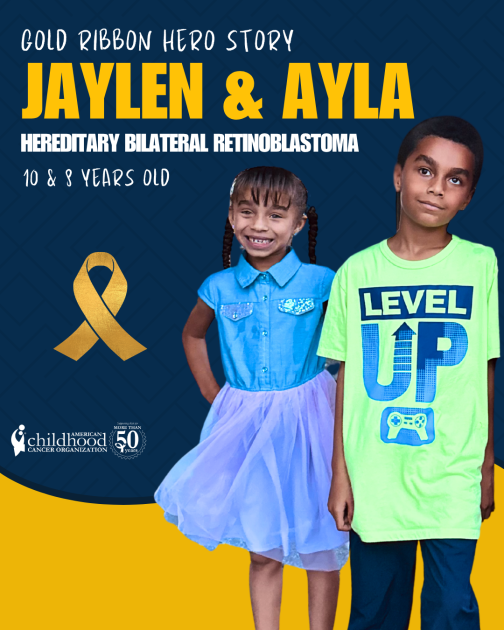
The treatment plans for Jaylen and Ayla were multifaceted and spanned several years. These interventions included:
- Chemotherapy: Systematic or localized (intra-arterial) administration of drugs to shrink the tumors.
- Cryotherapy: The use of extreme cold to freeze and destroy small tumors on the periphery of the retina.
- Laser Therapy (Photocoagulation): Utilizing heat from a laser to cut off the blood supply to the tumors.
- Strabismus Surgery: Performed specifically for Jaylen to correct the misalignment of the eyes caused by the presence of the tumors and subsequent treatments.
- Enucleation: The surgical removal of the eye. This is typically a last-resort measure when a tumor is too large to be treated by other means or when there is a high risk of the cancer spreading via the optic nerve to the brain.
Ayla underwent enucleation, leading to the use of an ocular prosthetic. Both children have since adapted to life with prosthetic eyes, a process that involves both physical adjustment and psychological resilience.
Navigating Medical Equity and the ADA
The refusal of the initial medical provider to offer an ASL interpreter to Denice underscores a broader issue within the American healthcare system regarding accessibility for the Deaf and Hard of Hearing (D/HH) community. Under Title III of the ADA, hospitals and medical offices are classified as "public accommodations" and are required to provide auxiliary aids and services to ensure effective communication.
Legal experts and disability advocates note that the failure to provide such services can lead to delayed diagnoses, as seen in Jaylen’s case. For Denice, the experience transformed her role from a concerned parent to a "manager of her children’s health," necessitating a fearless approach to advocacy. The emotional toll of a dual cancer diagnosis was compounded by the administrative burden of fighting for basic civil rights within a clinical environment.
The Psychological Impact and Parental Philosophy
In the years following their active treatment, Denice has been vocal about her parenting philosophy, which she describes as "beautifully spoiled." This approach is a direct response to the trauma of childhood cancer, prioritizing the present moment and the emotional well-being of the survivors. While this has occasionally drawn criticism in online spaces, Denice maintains that the children’s "legendary" triumphs—beating cancer and maintaining a joyful disposition—justify a lifestyle centered on celebration and autonomy.
Ayla, in particular, has embraced her prosthetic eye as a form of self-expression. She has curated a collection of custom-colored irises, allowing her to "rock her style" by swapping her prosthetic eyes to match her mood or outfit. This level of agency is considered a positive psychological coping mechanism, turning a medical necessity into an outlet for personal identity. Furthermore, Ayla began learning ASL during her post-operative recovery, bridging the communication gap within her family and asserting her independence.
Broader Implications for Public Health and Early Detection
The case of Jaylen and Ayla emphasizes the vital role of public awareness campaigns like "Know the Glow." Because leukocoria is often the first visible sign of retinoblastoma, educating parents and pediatricians to recognize the white reflection in photographs can lead to life-saving early intervention.
From a public health perspective, the siblings’ journey also highlights the necessity of genetic counseling for families with a history of RB1 mutations. Early screening for newborns in these families is essential, as tumors can develop in utero or shortly after birth.
Data from the American Childhood Cancer Organization (ACCO) suggests that the financial and emotional burden on families dealing with bilateral retinoblastoma is immense. Beyond the immediate costs of surgery and chemotherapy, there are long-term expenses related to prosthetic maintenance, frequent follow-up screenings for secondary cancers, and potential educational accommodations for vision impairment.
Current Status and Future Outlook
Today, Jaylen and Ayla are thriving. Their transition into survivorship is marked by active participation in advocacy and the promotion of childhood cancer awareness. By sharing their story, the family aims to demonstrate that a diagnosis of childhood cancer, while devastating, does not preclude a life of joy and achievement.
The medical community continues to monitor survivors of hereditary retinoblastoma closely. Individuals with the germline RB1 mutation have a significantly higher risk of developing secondary malignancies later in life, such as osteosarcoma or soft tissue sarcomas. Consequently, the "managerial" role Denice adopted during their infancy will remain a lifelong necessity, involving regular surveillance and a heightened awareness of health changes.
In conclusion, the narrative of Jaylen and Ayla is one of intersectional triumph. It is a story of medical success in the field of pediatric oncology, but equally, it is a story of a mother’s refusal to be sidelined by a system that was not built to accommodate her. Their case serves as a reminder to healthcare providers of the legal and moral obligation to provide equitable care to all parents, regardless of disability, and stands as a testament to the resilience of children in the face of life-threatening illness. Through continued advocacy and the celebration of their "legendary" milestones, the family continues to contribute to the broader dialogue on disability rights and childhood cancer survivorship.
