
 By admin
Long after the sun has set, casting the world into darkness, a solitary glow emanates from a research laboratory. The only lights piercing the gloom are those illuminating a benchtop and the unwavering luminescence of a computer screen. A precise timer sounds, a quiet chime in the otherwise still night. A scientist, a figure of focused resolve, rises, dons a fresh pair of gloves, and meticulously collects the next sample from an ongoing experiment. The timer is immediately reset, marking the passage of another critical interval. The scientist then returns to the intricate dance of analyzing data, patiently awaiting the next scheduled collection point.
This scene, far removed from the celebratory headlines of "new treatments" and "breakthroughs," encapsulates the authentic, day-to-day reality of cancer research. It is the unglamorous, often arduous, yet profoundly dedicated work that forms the bedrock of every medical advancement. This quiet perseverance, sustained over countless hours, days, and even years, is the true engine driving scientific progress. It manifests as late nights poring over data, experiments meticulously repeated dozens of times to ensure reproducibility, and data sets that demand months of rigorous interpretation. It is a world grappling with complex questions that, for now, remain without clear answers.
Recognizing the Unsung Heroes During National Cancer Research Month
During National Cancer Research Month, organizations like the Cancer Research Institute (CRI) take a crucial moment to shine a light on the incredible dedication of these scientists. These individuals work tirelessly, often behind the scenes, to engineer the next generation of therapies and unravel the mysteries of cancer. Their work, though rarely witnessed by the public, is absolutely essential. It is this fundamental, often invisible, effort that transforms nascent ideas into tangible progress. Crucially, this vital scientific endeavor relies heavily on consistent and robust funding – resources that are increasingly vulnerable to cuts and uncertainty.
Dr. Alicia Zhou, CEO of the Cancer Research Institute, articulates the immediate and alarming consequences of these financial pressures. "Funding cuts are disproportionately impacting young investigators and researchers," Dr. Zhou states, highlighting a critical threat to the future of scientific discovery. "These are folks who are just beginning in their careers, hoping to start a long career in scientific research." The erosion of support for emerging talent poses a significant risk of a "brain drain" from the research field, potentially delaying or even preventing future breakthroughs. Such cuts not only jeopardize individual careers but also the collective capacity of the scientific community to innovate and address pressing health challenges.
The Scientific Pursuit of Reproducibility: A Culinary Analogy
The experiment our lone scientist was running in the quiet lab represents merely the initial step in a much longer, more rigorous process. To validate any preliminary data, the experiment must be rerun multiple times. This painstaking repetition is not a sign of inefficiency but a cornerstone of scientific integrity: ensuring that observed trends are consistent and reproducible.
Consider a familiar analogy: cooking. Imagine you’ve perfected a complex dish, meticulously documenting the recipe. When you attempt to recreate it, following every step precisely, the outcome might still differ subtly in taste or texture. What could have changed? Perhaps a different brand of salt was used, or the pasta was from a new batch. The oven’s temperature might fluctuate more on a warmer day, or a slightly different pan was utilized. Any number of seemingly minor variables can subtly alter a recipe’s outcome, even when followed "exactly." To achieve consistent results, a chef would systematically test and tweak each variable – adjusting ingredients, verifying temperatures, isolating one element at a time – until the desired consistency is achieved.
Science operates on the same principle, but with far higher stakes. Even when experiments are replicated with apparent precision, results can sometimes vary. It is the scientist’s critical task to identify these subtle variables, isolate them, and make necessary adjustments until the results are not only consistent but also reproducible and, therefore, trustworthy. Only after this rigorous process of validation can the data be confidently analyzed and interpreted, allowing for broader conclusions and the crucial transition to the next stage of discovery. This meticulous pursuit of reproducibility underpins the credibility of all scientific findings, ensuring that future research can be built upon a solid, verifiable foundation.

The Slow Churn of Progress: Embracing "Failure" as Information
The journey of scientific discovery is characterized by a "slow churn," a process that is often anything but glamorous and can be profoundly frustrating. Experiments frequently fail, sometimes for immediately obvious reasons, but often for reasons that remain elusive, demanding extensive troubleshooting and re-evaluation. Weeks of dedicated work can culminate in inconclusive results, and months may pass without a clear, definitive answer to a critical question.
Yet, despite these setbacks, scientists consistently return to their labs the next day. They adjust their methodologies, rethink their hypotheses, and try again with renewed determination. This unwavering persistence stems from a fundamental understanding: each "failure" is not an endpoint, but a valuable piece of information. It is a clue, a data point that narrows the field of possibilities, bringing them one step closer to understanding something previously unknown.
Over time, these seemingly small, incremental steps begin to accumulate. A faint signal gradually becomes clearer. A subtle pattern starts to emerge from the noise. A nascent hypothesis begins to gain strength and coherence. Eventually, what once felt uncertain solidifies into something substantial enough to build upon. This is the pivotal moment when discovery truly begins to take shape – when an idea, rigorously tested and retested, evolves into a robust finding that other scientists can trust, expand upon, and propel forward.
The Long Road to Impact: Beyond the Bench
However, even at this critical juncture, the work is far from complete. A new finding must be shared with the broader scientific community, scrutinized through peer review, and independently validated by other research groups. It must demonstrate its robustness across different laboratories, under varying experimental conditions, and when applied to new, related questions. Only after enduring this gauntlet of scrutiny can a discovery begin its arduous journey beyond the laboratory bench and into the complex stages of preclinical studies, then into human clinical trials, and, ultimately, one day, into new treatments that reach patients.

Dr. Valsamo (Elsa) Anagnostou, a CRI CLIP Investigator, emphasizes this critical translational gap: "There is a huge need for support of translational research and support for taking scientific discoveries in the lab and translating those into interventions that make a difference in clinical outcomes." This transition from basic science to clinical application is a bottleneck, requiring specialized expertise, significant resources, and a different kind of rigorous testing.
This entire path, from an initial lab experiment to a widely available patient treatment, can span years, frequently extending into decades. The average time for a new drug to move from discovery to market approval is often cited as 10-15 years, with development costs easily exceeding a billion dollars. A staggering 90% of drugs that enter clinical trials ultimately fail to gain approval. Yet, every single success story, every life-saving therapy, and every improved outcome traces its origin back to these foundational moments: the quiet dedication in a lab, a single experiment run again, and again, and again. This is the rarely seen foundation upon which every subsequent breakthrough is built.
The Human Element: Resilience and Serendipity
The human stories behind these persistent efforts are often as compelling as the science itself. Dr. Kenneth Murphy, recipient of the 2026 AACR-CRI Lloyd J. Old Award in Cancer Immunology, shares an illuminating anecdote: "The truth of it is, we stumbled across that gene for the wrong reasons, and it was a disaster, and we finally figured out what was missing." This candid admission underscores the reality that scientific progress is rarely linear. It often involves unexpected detours, frustrating dead ends, and moments of serendipity born from persistent investigation. Dr. Murphy’s perseverance ultimately led to fundamental discoveries regarding dendritic cells, profoundly reshaping our understanding of immune responses and paving the way for advancements in immunotherapy.
This kind of foundational work, with its inherent unpredictability and long timelines, cannot thrive without substantial resources, dedicated time, and, crucially, consistent funding. Financial support provides scientists with the invaluable space to ask profoundly difficult questions and, perhaps even more importantly, the patience and resources required to meticulously pursue the answers, however long it may take. Support fuels this earliest stage of discovery – where ideas are born, where uncertainty is methodically explored, and where the very first, most critical steps toward a breakthrough are taken.
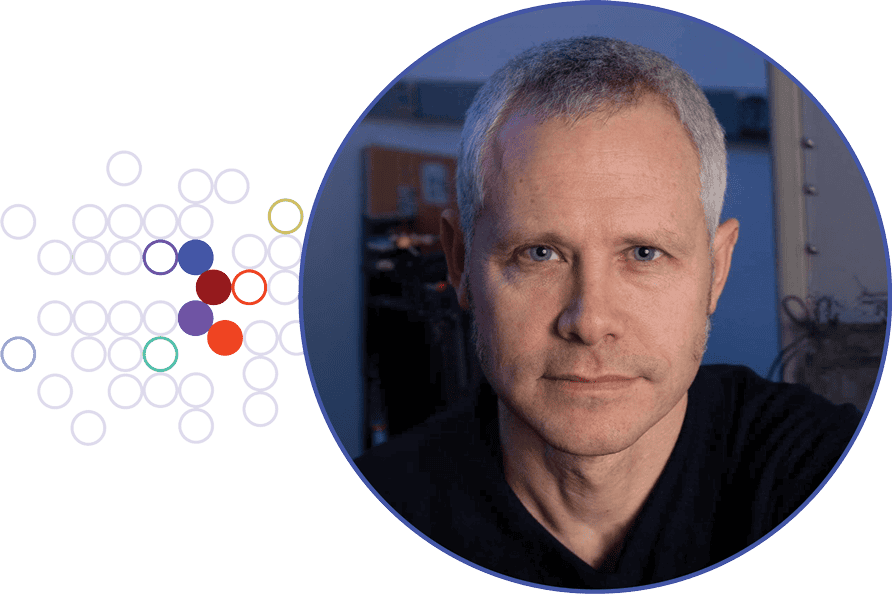
Dr. E. John Wherry, Associate Director of CRI’s Scientific Advisory Council, issues a stark warning: "If we don’t protect this next generation of researchers, we risk losing the very people who will drive the discoveries of tomorrow." This emphasizes that funding is not merely about supporting current projects; it is an investment in the intellectual capital and future potential of an entire field. The long-term societal benefits of cancer research are undeniable, ranging from increased life expectancy and improved quality of life for millions, to significant economic contributions through job creation and reduced healthcare burdens. Sustained investment ensures a continuous pipeline of talent and innovation, safeguarding future generations against the ravages of cancer.
The Enduring Impact: A Survivor’s Testament
Before the sensational headlines, before the rigorous clinical trials, and long before life-saving treatments reach patients, there is the lab. And within its walls are dedicated individuals, engaged in the careful, often repetitive, yet fiercely determined work that transforms mere possibility into tangible progress.
Sharon Belvin, a stage 4 melanoma survivor, provides powerful testament to the ultimate impact of this unseen labor. "My life, and the lives of so many others, are living proof that this work actually matters," she affirms. Her words resonate deeply, connecting the abstract world of scientific inquiry to the profoundly personal experiences of patients whose lives have been extended or saved.
Tonight, and for many nights to come, long after the rest of the world has quieted, a light will continue to burn in a lab somewhere. And within that illuminated space, another experiment will begin. It is this quiet, relentless pursuit of knowledge, driven by unwavering persistence and fueled by vital support, that forms the indispensable foundation of every breakthrough that follows. Every new therapy, every improved outcome, every life extended or saved – they all trace back to these moments: to the tenacity of scientists who kept pushing forward, even when the answers were elusive and the path ahead was unclear.

For those interested in the cutting-edge of this vital work, the Cancer Research Institute highlights the groundbreaking efforts of CRI-funded scientists, whose dedication continues to push the boundaries of what is possible in the fight against cancer.
