
 By Suherman Candra Maholtra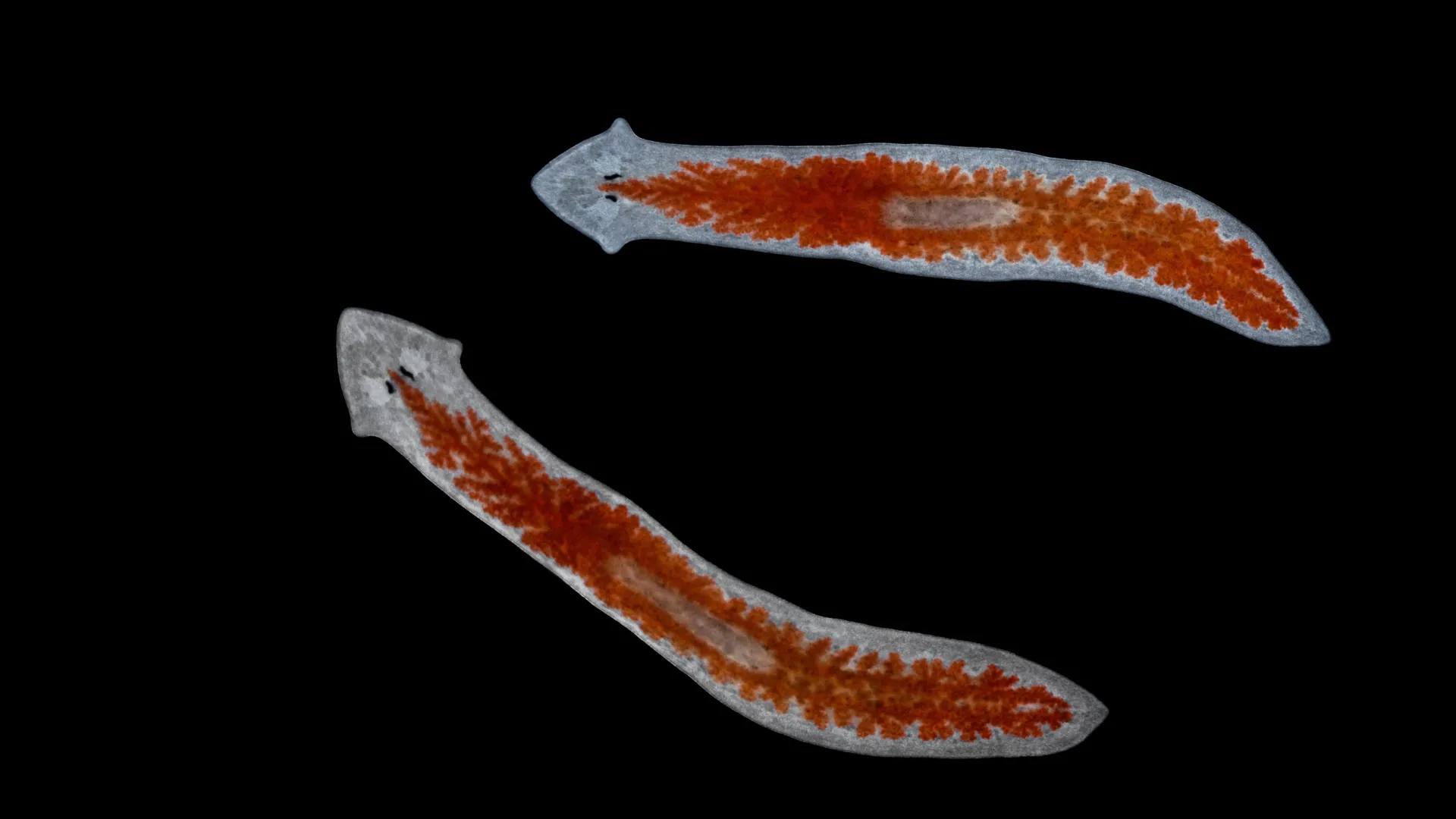
In a discovery that fundamentally alters the prevailing understanding of regenerative biology, researchers at the Stowers Institute for Medical Research have demonstrated that the stem cells of planarian flatworms operate independently of a localized "niche," instead receiving instructions from distant organs and a dynamic cellular environment. This research, published in the journal Cell Reports on October 15, 2025, challenges a cornerstone of modern biology: the belief that all stem cells require a fixed physical neighborhood of specialized cells to regulate their behavior. By decoupling stem cell function from immediate proximity, the planarian offers a radical new blueprint for how complex organisms can achieve near-infinite regenerative capacity, potentially opening new avenues for human tissue engineering and cancer research.
The study was led by Postdoctoral Research Associate Frederick "Biff" Mann, Ph.D., in the laboratory of Stowers President and Chief Scientific Officer Alejandro Sánchez Alvarado, Ph.D. For decades, the scientific consensus has maintained that adult stem cells are held in check by a "niche"—a microenvironment that acts like a biological micromanager. In humans, for example, hematopoietic (blood-forming) stem cells are sequestered within specific niches in the bone marrow. These neighboring cells provide the chemical and mechanical signals that tell the stem cells when to remain dormant, when to divide, and what specific type of blood cell to become. Without this tight local control, stem cells often "go rogue," leading to the uncontrolled proliferation characteristic of various cancers.
The Paradigm Shift in Regenerative Biology
The planarian flatworm, specifically the species Schmidtea mediterranea, has long been a source of fascination for biologists due to its ability to regenerate an entire body from a fragment as small as 1/279th of its original size. This includes the ability to regrow a fully functional brain, digestive system, and reproductive organs within two weeks of amputation. While scientists knew that a population of adult stem cells called neoblasts was responsible for this feat, the mechanism of their regulation remained a mystery.
"Understanding how stem cells are regulated in living organisms is one of the great challenges in the fields of stem cell biology and regenerative medicine," stated Sánchez Alvarado. "This finding challenges our concept of a stem cell ‘niche’ and may significantly advance our understanding of how to control stem cells’ abilities to restore damaged tissues."
The research team found that unlike the highly restricted stem cells found in mammals, planarian neoblasts are pluripotent, meaning they can become any cell type in the body. However, they do not appear to have a permanent "home." Instead of a fixed niche, these cells move through the body and interact with various tissues as needed. This flexibility allows the flatworm to respond to catastrophic injury by mobilizing cells across the entire organism rather than relying on localized pockets of regenerative potential.
Discovery of the Hecatonoblast: A New Cellular Entity
To map the intricate relationships between cells, the Stowers team employed a cutting-edge technology known as spatial transcriptomics. This method allows researchers to see not only which genes are active within a single cell but also where that cell is physically located in relation to its neighbors. By analyzing thousands of individual cells in the planarian, the researchers expected to find a specific cell type that served as a "niche" for the neoblasts.
Instead, they discovered a previously unknown cell type that defied their expectations. Characterized by a large cell body and numerous fingerlike projections extending into the surrounding tissue, the team named these cells "hecatonoblasts." The name is derived from the Hecatoncheires, the hundred-armed giants of Greek mythology.
"Because they were located so close to stem cells, we were surprised to find that hecatonoblasts were not controlling their fate nor function, which is counterintuitive to a typical stem cell-niche connection," said Mann. The presence of these complex cells so close to the stem cells, yet exerting no regulatory control over them, suggests that the planarian has evolved a completely different system of cellular organization than that of vertebrates.
Local Versus Global Communication Networks
The most significant revelation of the study was that the primary signals governing stem cell behavior came from the flatworm’s intestine—a large, branched organ that permeates most of the body. In the spatial transcriptomics dataset, the intestinal cells were identified as the most consistent influencers of stem cell position and differentiation, despite often being located far from the stem cells themselves.
Co-corresponding author Blair Benham-Pyle, Ph.D., an Assistant Professor at the Baylor College of Medicine and former Stowers researcher, described this as a shift from local to global communication. "While interactions between stem cells and their neighboring cells influence how a stem cell reacts immediately, distant interactions may control how that same stem cell responds to big changes in an organism," Benham-Pyle explained.
This "global signaling" model explains how a planarian can coordinate the regeneration of an entire head from a tail fragment. The stem cells are not waiting for a local neighbor to tell them to start building a brain; they are responding to a systemic signal that the entire organism’s structural integrity has been compromised. The environment in which the stem cells reside is dynamic and "made up by ‘friends’ that the stem cells and their progeny make along the way to differentiation," according to Sánchez Alvarado.
Chronology and Methodology of the Research
The path to this discovery involved several years of intensive data collection and computational modeling. The chronology of the project highlights the evolution of the "niche-less" theory:
- Initial Mapping (2022-2023): The team began by using single-cell RNA sequencing to identify the different types of neoblasts present in Schmidtea mediterranea. They confirmed that the stem cell population was more heterogeneous than previously thought.
- Implementation of Spatial Transcriptomics (2024): The researchers moved beyond sequencing isolated cells to mapping them in situ. This allowed them to see the physical proximity of neoblasts to other cell types, leading to the discovery of the hecatonoblast.
- Functional Testing (Early 2025): Through gene silencing (RNA interference), the team tested whether removing certain neighboring cells—including the newly discovered hecatonoblasts—would stop stem cell function. To their surprise, the stem cells continued to divide and differentiate normally.
- Identification of Distant Regulators (Mid-2025): Computational analysis of the spatial data revealed that the gene expression patterns of stem cells correlated most strongly with signals originating from the gut, rather than their immediate physical neighbors.
- Publication (October 15, 2025): The findings were finalized and published in Cell Reports, providing a new framework for understanding pluripotency in vivo.
Supporting Data and Technical Analysis
The study’s data suggests that the planarian’s "niche" is the entire body. In mammalian systems, the niche provides three main things: physical anchorage, metabolic support, and signaling molecules (like Wnt or Notch). In the planarian:
- Anchorage: Neoblasts are mobile, moving through the parenchyma (the solid tissue filling the space between organs).
- Metabolic Support: The proximity to the intestine suggests that the metabolic state of the animal—driven by the gut—directly dictates stem cell activity.
- Signaling: Instead of short-range paracrine signaling, the planarian appears to use long-range endocrine-like signals to manage its stem cell pool.
The researchers analyzed thousands of genes, finding that the "instructional" genes were expressed in a gradient across the body rather than in localized "hotspots." This gradient provides a GPS-like system for stem cells, telling them where they are in the body and what they need to become to complete the "map" of the organism.
Broader Implications for Human Medicine and Oncology
The discovery has profound implications for how scientists approach the "reprogramming" of human cells. One of the biggest hurdles in regenerative medicine is the tendency of induced pluripotent stem cells (iPSCs) to form tumors (teratomas) when implanted into a patient. This occurs because the cells lack the complex niche instructions required to keep them in check.
"Our hope is to uncover the basic rules that guide stem cells to become specific tissues as opposed to going rogue," said Sánchez Alvarado. "Most tumors in humans begin when stem cells stop following these rules."
By studying how planarians allow their stem cells to be "independent" yet highly disciplined, researchers may find ways to engineer "niche-independent" human tissues. If scientists can replicate the "global signaling" found in flatworms, they might be able to trigger regeneration in human organs that currently have limited self-repair capabilities, such as the heart or the spinal cord.
Furthermore, the study of the hecatonoblast may reveal new aspects of cellular "socializing." While these cells do not dictate stem cell fate, their unique morphology suggests they may play a role in structural support or waste removal during the rapid cell division that occurs during regeneration.
Conclusion and Future Directions
The work of Mann, Sánchez Alvarado, and their colleagues marks a departure from the "micromanagement" model of biology toward a more holistic, "decentralized" understanding of life. The planarian flatworm continues to serve as a biological pioneer, proving that the rules of life are far more flexible than previously imagined.
"The more we understand how nearby cells and overall signals in the body work together to boost the ability and power of our stem cells, the better we’ll be at creating ways to improve the body’s natural healing," Sánchez Alvarado concluded.
Future research at the Stowers Institute will focus on identifying the specific molecules secreted by the planarian intestine that reach out across the body to guide stem cells. Identifying these "global regulators" could provide the key to unlocking similar pathways in human biology, potentially transforming the future of regenerative therapies and our approach to treating degenerative diseases.
